Let’s Talk Bookish is a weekly bookish meme originally created by Rukky @ Eternity Books and hosted by Aria @ Book Nook Bits, where every Friday, bloggers write discussion posts based on a weekly prompt and Dini @ dinipandareads has cohosted since the beginning of 2025.
This week’s topic is: (whoops forgot to post this one on May 2, so here it is on May 4th ☺️)
May 2: Bookish Fandoms
Prompts:There are very popular bookish fandoms out there, especially in the romance fantasy genre (Maas, Yarros, LOTR, etc.). Are you part of a bookish fandom? If you are, what do you love about it? If not, do you think you’d ever want to be part of one? Does being part of the online book community help you connect to fandoms?
**********
Are you part of a bookish fandom?
Hmmm, I guess I am a fan of S.J.Maas and I have read all her books. I am a fan of Fourth Wing series but haven’t read anything else by Yarros. I definitely love Holly Black books and so many I can’t list them all.
If you are, what do you love about it?
I just love when you find other people and fans that love the authors or books as much as you do. It’s nice to know others feel the same way you do about a certain book or author.
Does being part of the online book community help you connect to fandoms?
Being on social media definitely connects me to fandoms, especially popular ones like S.J.Maas books. If I wasn’t online I wouldn’t know who to fangirl with! It is only now that one of my best friends have gotten back into reading and she just picked up the ACOTAR series and I gifted her the Fourth Wing series so basically I’m telling her to hurry up and catch up so I can have someone to talk about them with! 😅. I can’t say I’m active in the fandom in that I’m always posting about my favorites, (it gets tiring, I don’t know how you the social media booktokers, boostagramers, etc… do it!) but I like to see all the posts, so you people keep posting it!
May Topics:
May 2: Bookish Fandoms
Prompts:There are very popular bookish fandoms out there, especially in the romance fantasy genre (Maas, Yarros, LOTR, etc.). Are you part of a bookish fandom? If you are, what do you love about it? If not, do you think you’d ever want to be part of one? Does being part of the online book community help you connect to fandoms?
Prompts:How do you motivate yourself to sit down and concentrate on reading? Do you have a set reading time/schedule that works best for you to focus? Do you have tips/tricks that you would recommend others try?
Prompts:Have you ever experienced what seems like the whole book community raving about a book, only to discover it’s not all that? What are some story elements that put you off while reading? What about books others dislike that you love? Feel free to share examples of which books everyone loved and you didn’t, and vice versa! 🤭
May 23: Literary Palette Cleansers
Prompts:Do you ever feel like you need a reading reset? Maybe you’ve been reading dense literary fiction, or in a reading slump. Are there certain books you read to help reset? Do you ever take a break from reading? Do you find yourself needing those literary palate cleansers at certain times of year?
May 30: Freebie
Prompts:It’s the fifth Friday of the month, so this week is a freebie! Use this week to revisit an old LTB topic, or write about something you’re interested in! You can check out a bunch of topics on our blogs (Dini’s & Aria’s) and Rukky’s blog for more ideas!
+ My kids have 4 weeks of school left! They are so excited. I am too only because I have two trips coming up – one being South Korean in the 2nd week of June with my older sister. Today we are going to our tour luncheon so I can finally find out our travel information!
+ We went to Shabbat service on Friday because it was led by the kids and my son was going to have speaking parts – which he needs and is good practice for his Bar Mitzvah next year (he is NOT looking forward to it 😅). Speaking of Bar Mitzvah – I have a party to plan for next year I guess! My daughter’s class did go up to do the candle blessing and a song so that was nice.
Beyonce , Cowboy Carter concert on Tiktok (thank you to all for your service!!!!🥰)
Videos I Posted to Youtube:
How was your week? Did you get a lot done? Watch anything good? Read any amazing books or books you didn’t finish? What are you reading?…Leave me a comment below!
This unsettling adult debut from Kylie Lee Baker follows a biracial crime scene cleaner who’s haunted by both her inner trauma and hungry ghosts as she’s entangled in a series of murders in New York City’s Chinatown. Parasite meets The Only Good Indians in this sharp novel that explores harsh social edges through the lens of the horror genre.
Cora Zeng is a crime scene cleaner in New York City’s Chinatown, washing away the remains of brutal murders and suicides. But none of that seems so terrible when she’s already witnessed the most horrific thing possible: in the early months of 2020, her sister Delilah was pushed in front of a train as Cora stood next to her. Before fleeing the scene, the murderer whispered two words: bat eater.
So the bloody messes don’t really bother Cora—she’s more bothered by the possible germs on the subway railing, the bare hands of a stranger, the hidden viruses in every corner. And by the strange spots in her eyes and that food keeps going missing in her apartment. Of course, ever since Delilah was killed in front of her, Cora can’t be sure what anxiety is real and what’s in her head. She can barely keep herself together as it is.
She pushes away all feelings, ignoring the bite marks that appear on her coffee table, ignoring the advice of her aunt to burn joss paper and other paper replicas of items to send to the dead and to prepare for the Hungry Ghost Festival, when the gates of hell open. Ignores the dread in her stomach as she and her weird coworkers keep finding bat carcasses at their crime scene cleanups. Ignores the scary fact that all their recent cleanups have been the bodies of Asian women.
But as Cora will soon learn, you can’t just ignore hungry ghosts.
Book Excerpt:
ONE
April 2020
East Broadway station bleeds when it rains, water rushing down from cracks in the secret darkness of the ceiling. Someone should probably fix that, but it’s the end of the world, and New York has bigger problems than a soggy train station that no one should be inside of anyway. No one takes the subway at the end of the world. No one except Cora and Delilah Zeng.
Delilah wanders too close to the edge of the platform and Cora grabs her arm, tugging her away from the abyss of the tracks that unlatches its jaws, waiting. But Delilah settles safely behind the yellow line and the darkness clenches its teeth.
Outside the wet mouth of the station, New York is empty. The China Virus, as they call it, has cleared the streets. News stations flash through footage of China—bodies in garbage bags, guards and tanks protecting the city lines, sobbing doctors waving their last goodbyes from packed trains, families who just want to fucking live but are trapped in the plague city for the Greater Good.
On the other side of the world, New York is so empty it echoes. You can scream and the ghost of your voice will carry for blocks and blocks. The sound of footsteps lasts forever, the low hum of streetlights a warm undercurrent that was always there, waiting, but no one could hear it until now. Delilah says it’s unnerving, but Cora likes the quiet, likes how much bigger the city feels, likes that the little lights from people’s apartment windows are the only hint of their existence, no one anything more than a bright little square in the sky.
What she doesn’t like is that she can’t find any toilet paper at the end of the world.
Apparently, people do strange things when they’re scared of dying, and one of them is hoarding toilet paper. Cora and Delilah have been out for an hour trying to find some and finally managed to grab a four-pack of one-ply in Chinatown, which is better than nothing but not by much.
They had to walk in the rain because they couldn’t get an Uber. No one wants Chinese girls in their car, and they’re not the kind of Chinese that can afford their own car in a city where it isn’t necessary. But now that they have the precious paper, they’d rather not walk home in the rain and end up with a sodden mess in their arms.
“The train isn’t coming,” Cora says. She feels certain of this. She feels certain about a lot of things she can’t explain, the way some people are certain that God exists. Some thoughts just cross her mind and sink their teeth in. Besides, the screen overhead that’s supposed to tell them when the next train arrives has said DELAYS for the last ten minutes.
“It’s coming,” Delilah says, checking her phone, then tucking it away when droplets from the leaky roof splatter onto the screen. Delilah is also certain about many things, but for different reasons. Delilah chooses the things she wants to believe, while Cora’s thoughts are bear traps snapping closed around her ankles.
Sometimes Cora thinks Delilah is more of a dream than a sister, a camera flash of pretty lights in every color that you can never look at directly. She wraps herself up in pale pink and wispy silk and flower hair clips; she wears different rings on each finger that all have a special meaning; she is Alice in Wonderland who has stumbled out of a rabbit hole and somehow arrived in New York from a world much more kind and lovely than this one.
Cora hugs the toilet paper to her chest and peers into the silent train tunnel. She can’t see even a whisper of light from the other side. The darkness closes in like a wall. The train cannot be coming because trains can’t break through walls.
Or maybe Cora just doesn’t want to go home, because going home with Delilah means remembering that there is a world outside of this leaky station.
There is their dad in China, just a province away from the epicenter of body bags. And there is the man who emptied his garbage over their heads from his window and called them Chinks on the walk here. And there is the big question of What Comes Next? Because another side effect of the end of the world is getting laid off.
Cora used to work the front desk at the Met, which wasn’t exactly what an art history degree was designed for and certainly didn’t justify the debt. But it was relevant enough to her studies that for a few months it stopped shame from creeping in like black mold and coating her lungs in her sleep. But no one needs museums at the end of the world, so no one needs Cora.
Delilah answered emails and scheduled photo shoots for a local fashion magazine that went belly-up as soon as someone whispered the word pandemic, and suddenly there were two art history majors, twenty-four and twenty-six, with work experience in dead industries and New York City rent to pay. Now the money is gone and there are no careers to show for it and the worst part is that they had a chance, they had a Nai Nai who paid for half their tuition because she thought America was for dreams. They didn’t have to wait tables or strip or sell Adderall to pay for college but they somehow messed it up anyway, and Cora thinks that’s worse than having no chance at all. She thinks a lot of other things about herself too, but she lets those thoughts go quickly, snaps her hands away from them like they’re a hot pan that will burn her skin.
Cora thinks this is all Delilah’s fault but won’t say it out loud because that’s another one of her thoughts that no one wants to hear. It’s a little bit her own fault as well, for not having her own dreams. If there was anything Cora actually wanted besides existing comfortably, she would have known what to study in college, wouldn’t have had to chase after Delilah.
But not everyone has dreams. Some people just are, the way that trees and rocks and rivers are just there without a reason, the rest of the world moving around them.
Cora thinks that the water dripping down the wall looks oddly dark, more so than the usual sludge of the city, and maybe it has a reddish tinge, like the city has slit its own wrists and is dying in this empty station. But she knows better than to say this out loud, because everything looks dirty to her, and Cora Zeng thinking something is dirty doesn’t mean the average human agrees—at least, that’s what everyone tells her.
“Maybe I’ll work at a housekeeping company,” Cora says, half to herself and half to the echoing tunnel, but Delilah answers anyway.
“You know that’s a bad idea,” she says.
Cora shrugs. Objectively, she understands that if you scrub yourself raw with steel wool one singular time, no one likes it when you clean anything for the rest of your life. But things still need to be cleaned even if Delilah doesn’t like it, and Cora thinks there are worse things than leaning a little bit into the crazy parts of you. Isn’t that what artists do, after all? Isn’t that the kind of person Delilah likes? The tortured artist types who smoke indoors and paint with their own blood and feces.
“Mama cleaned toilets for rich white people because she had no choice,” Delilah says. “You have a college degree and that’s what you want to do?”
Cora doesn’t answer at first because Mama means Delilah’s mom, so Cora doesn’t see why her thoughts on Cora’s life should matter. Cora doesn’t have a Mama. She has a Mom, a white lady from Wisconsin who probably hired someone else’s mama to clean her toilet.
Cora quite likes cleaning toilets, but this is another thing she knows she shouldn’t say out loud. Instead, she says, “What I want is to make rent this month.”
Legally, Cora’s fairly certain they can’t be evicted during the pandemic, but she doesn’t want to piss off their landlord, the man who sniffs their mail and saves security camera footage of Delilah entering the building. He price-gouges them for a crappy fourth-floor walkup in the East Village with a radiator that vomits a gallon of brown water onto their floor in the winter and a marching band of pipes banging in the walls, but somehow Cora doubts they’ll find anything better without jobs.
Delilah smiles with half her mouth, her gaze distant like Cora is telling her a fairy tale. “I’ve been burning lemongrass for money energy,” Delilah says. “We’ll be fine.” This is another thing Delilah just knows.
Cora hates the smell of lemongrass. The scent coats her throat, wakes her up at night feeling like she’s drowning in oil. But she doesn’t know if the oils are a Chinese thing or just a Delilah thing, and she hates accidentally acting like a white girl around Delilah. Whenever she does, Delilah gives her this look, like she’s remembered who Cora really is, and changes the subject.
“The train is late,” Cora says instead of acknowledging the lemongrass. “I don’t think it’s coming.”
“It’s coming, Cee,” Delilah says.
“I read that they reduced service since no one’s taking the train these days,” Cora says. “What if it doesn’t stop here anymore?”
“It’s coming,” Delilah says. “It’s not like we have a choice except waiting here anyway.”
Cora’s mind flashes with the image of both their skeletons standing at the station, waiting for a train that never comes, while the world crumbles around them. They could walk— they only live in the East Village—but Delilah is made of sugar and her makeup melts off in the rain and her umbrella is too small and she said no, so that’s the end of it. Delilah is not Cora’s boss, she’s not physically intimidating, and she has no blackmail to hold over her, but Cora knows the only choice is to do what Delilah says. When you’re drowning and someone grabs your hand, you don’t ask them where they’re taking you.
A quiet breeze sighs through the tunnel, a dying exhale. It blows back Delilah’s bangs and Cora notices that Delilah has penciled in her eyebrows perfectly, even though it’s raining and they only went out to the store to buy toilet paper. Something about the sharp arch of her left eyebrow in particular triggers a thought that Cora doesn’t want to think, but it bites down all the same.
Sometimes, Cora thinks she hates her sister.
It’s strange how hate and love can so quietly exist at the same time. They are moon phases, one silently growing until one day all that’s left is darkness. It’s not something that Delilah says or does, really. Cora is used to her small annoyances.
It’s that Delilah is a daydream and standing next to her makes Cora feel real.
Cora has pores full of sweat and oil, socks with stains on the bottom, a stomach that sloshes audibly after she eats. Delilah is a pretty arrangement of refracted light who doesn’t have to worry about those things. Cora wanted to be like her for a very long time, because who doesn’t want to transcend their disgusting body and become Delilah Zeng, incorporeal, eternal? But Cora’s not so sure anymore.
Cora peers into the tunnel. We are going to be stuck here forever, Cora thinks, knows.
But then the sound begins, a rising symphony to Cora’s ears. The ground begins to rumble, puddles shivering.
“Finally,” Delilah says, pocketing her phone. “See? I told you.”
Cora nods because Delilah did tell her and sometimes Delilah is right. The things Cora thinks she knows are too often just bad dreams bleeding into her waking hours.
Far away, the headlights become visible in the darkness. A tiny mouth of white light.
“Cee,” Delilah says. Her tone is too delicate, and it makes coldness curl around Cora’s heart. Delilah tosses words out easily, dandelion parachutes carried about by the wind. But these words have weight.
Delilah toys with her bracelet—a jade bangle from their Auntie Zeng, the character for hope on the gold band. Cora has a matching one, shoved in a drawer somewhere, except the plate says love, at least that’s what Cora thinks. She’s not very good at reading Chinese.
“I’m thinking of going to see Dad,” Delilah says.
The mouth of light at the end of the tunnel has expanded into a door of brilliant white, and Cora waits because this cannot be all. Dad lives in Changsha, has lived there ever since America became too much for him, except it’s always been too much for Cora too and she has nowhere to run away to, her father hasn’t given her the words she needs. Delilah has visited him twice in the last five years, so this news isn’t enough to make Delilah’s voice sound so tight, so nervous.
“I think I might stay there awhile,” Delilah says, looking away. “Now that I’m out of work, it seems like a good time to get things settled before the pandemic blows over.”
Cora stares at the side of Delilah’s head because her sister won’t meet her gaze. Cora isn’t stupid, she knows what this is a “good time” for. Delilah started talking about being a model in China last year. Cora doesn’t know if the odds are better in China and she doubts Delilah knows either. All she knows is that Delilah tried for all of three months to make a career of modeling in New York until that dream fizzled out, smoke spiraling from it, and Delilah stopped trying because everything is disposable to her, right down to her dreams.
Cora always thought this particular dream would be too expensive, too logistically complicated for Delilah to actually follow through on. Worst-case scenario, they’d plan a three-week vacation to China that would turn into a week and a half when Delilah lost interest and started fighting with Dad again. The idea of flying during a pandemic feels like a death sentence, but Cora has already resigned herself to hunting down some N95 respirators just so Delilah could give her modeling dream an honest try.
Because even if Delilah tends to extinguish her own dreams too fast, Cora believes in them for all of their brief, brilliant lives. If Cora ever found a dream of her own, she would nurture it in soft soil, measure out each drop of water, each sunbeam, give it a chance to become. So Cora will not squash her sister’s dreams, not for anything.
“I’ll just put my half of the rent on my credit card until I find work,” Delilah says, “so you won’t need a new roommate.”
Then Cora understands, all at once, like a knife slipped between her ribs, that Delilah isn’t inviting Cora to come with her.
Of course she isn’t. Delilah has a mama who speaks Mandarin to her, so Delilah’s Chinese is good enough to live in China. But Cora’s isn’t. Delilah would have to do everything for her, go everywhere with her because she knows Cora would cry just trying to check out at the supermarket. Delilah could do it for her, but she doesn’t want to.
Cora suddenly feels like a child who has wandered too far into a cave. The echoes become ghosts and the darkness wraps in tight ribbons around your throat and you call for a mom who will never come.
Cora’s hands shake, fingers pressing holes into the plastic wrap of the toilet paper, her whole body vibrating with the sheer unfairness of it all. You can’t string someone along their whole life and then just leave them alone one day holding your toilet paper in a soggy train station.
“Or you could stay with your aunt?” Delilah says. “Then you wouldn’t have to worry about rent. It would be better for both of us, I think.”
Auntie Lois, she means. Mom’s sister, whose house smells like a magazine, who makes Cora kneel in a confessional booth until she can name all her sins. Delilah has decided that this is Cora’s life, and Delilah is the one who makes decisions.
Delilah keeps talking, but Cora can’t hear her. The world rumbles as the train draws closer. The white light is too bright now, too sharp behind Delilah, and it illuminates her silhouette, carves her into the wet darkness. Delilah has a beautiful silhouette, the kind that men would have painted hundreds of years ago. Cora thinks about the Girl with a Pearl Earring, and the Mona Lisa, and all the beautiful women immortalized in oil paint, and wonders if they said cruel things too, if their words had mattered at all or just the roundness of their eyes and softness of their cheeks, if beautiful people are allowed to break your heart and get away with it.
The man appears in a flash of a black hoodie and blue surgical mask.
He says two words, and even though the train is rushing closer, a roaring wave about to knock them off their feet, those two words are perfectly clear, sharp as if carved into Cora’s skin.
Bat eater.
Cora has heard those words a lot the past two months. The end of the world began at a wet market in Wuhan, they say, with a sick bat. Cora has never once eaten a bat, but it has somehow become common knowledge that Chinese people eat bats just to start plagues.
Cora only glances at the man’s face for a moment before her gaze snaps to his pale hand clamped around Delilah’s skinny arm like a white spider, crunching the polyester of her pink raincoat. Lots of men grab Delilah because she is the kind of girl that men want to devour. Cora thinks the man will try to kiss Delilah, or force her up the stairs and into a cab, or a thousand things better than what actually happens next.
Because he doesn’t pull her close. He pushes her away.
Delilah stumbles over the yellow line, ankle twisting, and when she crashes down there’s no ground to meet her, just the yawning chasm of the train tracks.
The first car hits her face.
All at once, Cora’s skin is scorched with something viscous and salty. Brakes scream and blue sparks fly and the wind blasts her hair back, the liquid rushing across her throat, under her shirt. Her first thought is that the train has splashed her in some sort of track sludge, and for half a second that is the worst thought in the entire world. The toilet paper falls from Cora’s arms and splashes into a puddle when it hits the ground and There goes the whole point of the trip, she thinks.
Delilah does not stand up. The train is a rushing blur of silver, a solid wall of hot air and screeching metal and Delilah is on the ground, her skirt pooling out around her. Get up, Delilah, Cora thinks, because train station floors are rainforests of bacteria tracked in from so many millions of shoes, because the puddle beneath her can’t be just rainwater—it looks oddly dark, almost black, spreading fast like a hole opening up in the floor. Cora steps closer and it almost, almost looks like Delilah is leaning over the ledge, peering over the lip of the platform.
But Delilah ends just above her shoulders.
Her throat is a jagged line, torn flaps of skin and sharp bone and the pulsing O of her open trachea. Blood runs unstopped from her throat, swirling together with the rainwater of the rotting train station, and soon the whole platform is bleeding, weeping red water into the crack between the platform and the train, feeding the darkness. Cora is screaming, a raw sound that begins somewhere deep inside her rib cage and tears its way up her throat and becomes a hurricane, a knife-sharp cry, the last sound that many women ever make.
But there’s no one to hear it because New York is a dead body, because no one rides the subway at the end of the world. No one but Cora Zeng.
About the Author:
Author Bio:
Kylie Lee Baker is the Sunday Times bestselling author of The Keeper of Night duology, The Scarlet Alchemist duology, and the forthcoming adult horror Bat Eater. She grew up in Boston and has since lived in Atlanta, Salamanca, and Seoul. Her writing is informed by her heritage (Japanese, Chinese, and Irish), as well as her experiences living abroad as both a student and teacher. She has a BA in creative writing and Spanish from Emory University and a master of library and information science degree from Simmons University.
I actually haven’t done one of these all of 2025 so far, so let’s start it up again. There are some exciting book releases coming up this month! Here is what I’m looking forward to in May!
Categories: Young Adult,Mystery, Paranormal, Thriller
Disclaimer: **I received this book free from NetGalley in exchange for an honest review. All thoughts and opinions are my own.**
Thank you to Wednesday Books for giving me a chance to read this eARC in exchange for an honest review!
Either you’re in or you’re out.
Welcome to the Thrashers, the elite friend group at New Helvetia High.
They’re everything everyone wants to be.
Jodi Dillon was never meant to be one of them. Julian, Lucy, Paige, and the infamous Zack Thrasher are rich, sophisticated, and love attention. Jodi feels out of place, but Zack’s her childhood best friend, so she’s in.
Then Emily Mills, who desperately wanted to be a Thrasher, dies—and the whispers about the Thrashers begin. As Emily’s journal surfaces, detectives close in, and Jodi faces an impossible choice: betray her friends or protect herself.
But as eerie messages and strange occurrences escalate, it becomes clear—Emily isn’t done with them yet.
A twisty thrill-ride of unforgettable drama and suspense that “encapsulates the vulnerability of adolescents playing adult games” (Ali Hazelwood) from USA Today bestselling author Julie Soto, The Thrashers will keep you up at night desperate to read just one more page.
+ I am loving how Julie Soto (one of my new favorite/must-read authors) has been branching out! I am hooked and ready to read all of it. I could not put this down. In this YA thriller, we meet a group of five friends called The Thrashers. They didn’t name themselves but it’s a reputation people at school gave them. This story is dark! It centers around a suicide and bullying, and brings up some good questions too. There is weed use and lots of underage drinking, plus the issue of alcoholism by an adult and abuse. This story is multi-layered and complicated.
+ Jodi is the only one of the Thrashers who isn’t wealthy or easily popular. She got lucky that she was best friends with Zack Thrasher in the second grade. He is like a beacon to everyone. All the girls want to be with him and all the boys want to be him or hang out with him, but he keeps an exclusive friend group with Jodi, Julian, Lucy, and Paige – Jodi being the most average of them all. This creates insecurities among the friends, mostly we see it in Jodi but later you see it in Julian and Paige. I like how the author explored the feelings one can have of being left out in a friend group – wondering what your place is in the group and if anyone actually cares.
+ A classmate of theirs, a girl named Emily, who latched onto their group and tried to become a Thrasher committed suicide. And now the Thrashers are under a microscope and some people are turning on them. Emily left a journal and what she writes about this friend group implicates them in her suicide. Is the journal real? Did Emily lie or is Jodi’s best friends lying? Who is telling the truth or are they leaving her out?
+ I was reading this late into the night, after midnight, and there were some parts that gave me slight chills. Emily was creepy but was her ghost/spirit really haunting them? Also the characters are all very unique, which I enjoyed. They are all morally gray also which makes my feelings about certain characters so complicated.
~ The ending! What was that? It’s very unexpected, and leaves me questions but also…can we get a book two? Haha, I mean I can see something happening for book two!
~ These friends, were always making their world revolve around Zack and I was questioning like…what makes him SO special besides him being super charming, nice, and drop dead gorgeous? For all of them to either be in love with him, want him, or jealous of him making other friends or dating other girls was wild to me.
Final Thoughts:
I read this in one night so I enjoyed this a lot. I loved the morally gray, complicated characters and their dynamic even though they are close and “best-friends”. Even in a friend group you can feel alone and outcasted and Jodi portrayed those insecurities very well. I was hooked to the drama happening in this friend group and seeing how everything played out. Learning about Emily and the “hauntings” was also creepy so overall, I think this was a great YA thriller and that ending. I don’t know what it means, but I want more! I can’t wait to read her fantasy debut this year also!
A nautical archaeologist searching for sunken treasure in Positano unearths a centuries-old curse, powerful witchcraft, and perilous love on the high seas in this spellbinding new novel from the New York Times bestselling author of The Lost Apothecary—perfect for fans of The Familiar and The Cloisters.
Haven Ambrose, a trailblazing nautical archaeologist, has come to the sun-soaked village of Positano to investigate the mysterious shipwrecks along the Amalfi Coast. But Haven is hoping to find more than old artifacts beneath the azure waters; she is secretly on a quest to locate a trove of priceless gemstones her late father spotted on his final dive. Upon Haven’s arrival, strange maelstroms and misfortunes start plaguing the town. Is it nature, or something more sinister at work?
In 1821, Mari DeLuca and the women of her village practice the legendary art of stregheria, a magical ability to harness the power of the ocean. As their leader, Mari protects Positano with her witchcraft, but she has been plotting to run away with her lover, Holmes – a sailor aboard a merchant ship owned by the nefarious Mazza brothers, known for their greed and brutality. When the Mazzas learn about the women of Positano, they devise a plan to kidnap several of Mari’s friends. With her fellow witches and her village in danger – and Holmes’s life threatened by his connection to the most feared woman in Positano – Mari is forced to choose between the safety of her people and the man she loves.
As Haven searches for her father’s sunken treasure, she begins to unearth a tale of perilous love and powerful sorcery. Can she unravel the Amalfi Curse before the region is destroyed forever? Against the dazzling backdrop of the Amalfi Coast, this bewitching novel shimmers with mystery, romance, and the untamed magic of the sea.
Book Excerpt:
1
MARI
Wednesday, April 11, 1821
Along a dark seashore beneath the cliffside village of Positano, twelve women, aged six to forty-four, were seated in a circle. It was two o’clock in the morning, the waxing moon directly overhead.
One of the women stood, breaking the circle. Her hair was the color of vermilion, as it had been since birth. Fully clothed, she walked waist-high into the water. A belemnite fossil clutched between her fingers, she plunged her hands beneath the waves and began to move her lips, reciting the first part of the incantesimo di riflusso she’d learned as a child. Within moments, the undercurrent she’d conjured began to swirl at her ankles, tugging southward, away from her.
She shuffled her way out of the water and back onto the shore.
A second woman with lighter hair, the color of persimmon, stood from the circle. She, too, approached the ocean and plunged her hands beneath the surface. She recited her silent spell on the sea, satisfied as the undercurrent grew even stronger. She gazed out at the horizon, a steady black line where the sky met the sea, and smiled.
Like the other villagers along the coast tonight, these women knew what was coming: a fleet of pirate ships making their way northeast from Tunis. Winds were favorable, their sources said, and the flotilla was expected within the next day.
Their destination? Perhaps Capri, Sorrento, Majori. Some thought maybe even Positano—maybe, finally, Positano.
Given this, fishermen all along the Amalfi coastline had decided to remain at home with their families tomorrow and into the night. It wouldn’t be safe on the water. The destination of these pirates was unknown, and what they sought was a mystery, as well. Greedy pirates went for all kinds of loot. Hungry pirates went for nets full of fish. Lustful pirates went for the women.
On the seashore, a third and final woman stood from the circle. Her hair was the rich, deep hue of blood. Quickly, she undressed. She didn’t like the feeling of wet fabric against her skin, and these women had seen her naked a thousand times before.
Belemnite fossil in one hand, she held the end of a rope in her other, which was tied to a heavy anchor in the sand a short distance away. She would be the one to recite the final piece of this current-curse. Her recitation was the most important, the most potent, and after it was done, the ebbing undercurrent would be even more severe—hence the rope, which she would wrap tightly around herself before finishing the spell.
It was perilous, sinister work. Still, of the twelve women by the water tonight, twenty-year-old Mari DeLuca was the most befitting for this final task.
They were streghe del mare—sea witches—with unparalleled power over the ocean. They boasted a magic found nowhere else in the world, a result of their lineage, having descended from the sirens who once inhabited the tiny Li Galli islets nearby.
The women knew that tomorrow, wherever the pirates landed, it would not be Positano. The men would not seize their goods, their food, their daughters. No matter how the pirate ships rigged their sails, they would not find easy passageway against the undercurrent the women now drew upward from the bottom of the sea. They would turn east, or west. They would go elsewhere.
They always did.
While the lineage of the other eleven women was twisted and tangled, filled with sons or muddled by marriage, Mari DeLuca’s line of descent was perfectly intact: her mother had been a strega, and her mother’s mother, and so on and so on, tracing back thousands of years to the sirens themselves. Of the women on the seashore tonight, Mari was the only strega finisima.
This placed upon her shoulders many great responsibilities. She could instinctively read the water better than any of them. Her spells were the most effective, too; she alone could do what required two or three other streghe working in unison. As such, she was the sanctioned leader of the eleven other women. The forewoman, the teacher, the decision-maker.
Oh, but what a shame she hated the sea as much as she did.
Stepping toward the water, Mari unraveled her long plait of hair. It was her most striking feature—such blood-colored hair was almost unheard of in Italy, much less in the tiny fishing village of Positano—but then, much of what Mari had inherited was unusual. She tensed as the cold waves rushed over her feet. My mother should be the one doing this, she thought bitterly. It was a resentment she’d never released, not in twelve years, since the night when eight-year-old Mari had watched the sea claim her mother, Imelda, as its own.
On that terrible night, newly motherless and reeling, Mari knew the sea was no longer her friend. But worse than this, she worried for her younger sister, Sofia. How would Mari break this news to her? How could she possibly look after spirited Sofia with as much patience and warmth as their mamma had once done?
She’d hardly had time to grieve. The next day, the other streghe had swiftly appointed young Mari as the new strega finisima. Her mother had taught her well, after all, and she was, by birthright, capable of more than any of them. No one seemed to care that young Mari was so tender and heartbroken or that she now despised the very thing she had such control over.
But most children lose their mothers at some point, don’t they? And sprightly Sofia had been reason enough to forge on—a salve to Mari’s aching heart. Sofia had kept her steady, disciplined. Even cheerful, much of the time. So long as Sofia was beside her, Mari would shoulder the responsibilities that had been placed upon her, willingly or not.
Now, toes in the water, a pang of anguish struck Mari, as it often did at times like this.
Neither Mamma nor Sofia was beside her tonight. Mari let out a slow exhale. This moment was an important one, worth remembering. It was the end of two years’ worth of agonizing indecision. No one else on the seashore knew it, but this spell, this incantation she was about to recite, would be her very last. She was leaving in only a few weeks’ time, breaking free. And the place she was going was mercifully far from the sea.
Eyes down, Mari slipped her naked body beneath the water, cursing the sting of it as it seeped into a small rash on her ankle. At once, the water around her turned from dark blue to a thick inky black, like vinegar. Mari had dealt with this all her life: the sea mirrored her mood, her temperament.
As a child, she’d found it marvelous, the way the ocean read her hidden thoughts so well. Countless times, her friends had expressed envy of the phenomenon. But now, the black water shuddering around her legs only betrayed the secrets Mari meant to keep, and she was glad for the darkness, so better to hide her feelings from those on the shore.
Halfway into the water, already she could feel the changes in the sea: the two women before her had done very well with their spells. This was encouraging, at least. A few sharp rocks, churned by the undercurrent, scraped across the top of her feet like thorns, and it took great focus to remain in place against the undertow pulling her out. She used her arms to keep herself balanced, as a tired bird might flap its wings on an unsteady branch.
She wrapped the rope twice around her forearm. Once it was secure, she began to recite the spell. With each word, tira and obbedisci—pull and obey—the rope tightened against her skin. The undercurrent was intensifying quickly, and with even more potency than she expected. She winced when the rope broke her skin, the fresh wound exposed instantly to the bite of the salt water. She began to stumble, losing her balance, and she finished the incantation as quickly as possible, lest the rope leave her arm mangled.
She wouldn’t miss nights like this, not at all.
When she was done, Mari waved, signaling to the other women that it was time to pull her in. Instantly she felt a tug on the other end of the rope. A few seconds later, she was in shallow, gentle water. On her hands and knees, she crawled the rest of the way. Safely on shore, she lay down to rest, sand and grit sticking uncomfortably to her wet skin. She would need to wash well later.
Terribly time-consuming, all of this.
A sudden shout caught her attention, and Mari sat up, peering around in the darkness. Her closest friend, Ami, was now knee-deep in the water, struggling to keep her balance.
“Lia!” Ami shouted hysterically. “Lia, where are you?”
Lia was Ami’s six-year-old daughter, a strega-in-training, her hair a delicate, rosy red. Not moments ago, she’d been situated among the circle of women, her spindly legs tucked up against her chest, watching the spells unfold.
Mari threw herself upward, tripping as she lunged toward the ocean.
“No, please, no,” she cried out. If Lia was indeed in the water, it would be impossible for the young girl to make her way back to shore. She was smaller than other girls her age, her bones fragile as seashells, and though she could swim, she’d have nothing against the power of these tides. The very purpose of the incantation had been to drive the currents toward the deep, dark sea, with enough strength to stave off a pirate ship.
Lia wasn’t wearing a cimaruta, either, which gave the women great strength and vigor in moments of distress. She was too young: streghe didn’t get their talisman necklaces until they were fifteen, when their witchcraft had matured and they were deemed proficient in the art.
At once, every woman on the shore was at the ocean’s edge, peering at the water’s choppy surface. The women might have been powerful, yes, but they were not immortal: as Mari knew all too well, they could succumb to drowning just like anyone else.
Mari spun in a circle, scanning the shore. Suddenly her belly tightened, and she bent forward, her vision going dark and bile rising in the back of her throat.
This was too familiar—her spinning in circles, scanning the horizon in search of someone.
Seeing nothing.
Then seeing the worst.
Like her younger sister’s copper-colored hair, splayed out around the shoulders of her limp body as she lay facedown in the rolling swells of the sea.
Mari had been helpless, unable to protect fourteen-year-old Sofia from whatever she’d encountered beneath the waves that day, only two years ago. Mari had spent years trying to protect her sister as their mother could not, yet in the end, she had failed. She’d failed Sofia.
That day, the sea had once again proved itself not only greedy but villainous—something to be loathed.
Something, Mari eventually decided, from which to escape.
Now, Mari fell to her knees, too dizzy to stand. It was as though her body had been hauled back in time to that ill-fated morning. She bent forward, body heaving, about to be sick—
Suddenly, she heard a giggle, high-pitched and playful. It sounded just like Sofia, and for a moment, Mari thought she’d slipped into a dream.
“I am here, Mamma,” came Lia’s voice from a short distance away. “I am digging in the sand for baby gran—” She cut off. “I forget the word.”
Ami let out a cry, relief and irritation both. She ran toward her child, clutched her to her breast. “Granchio,” she said. “And don’t you ever scare me like that again.”
Mari sat up, overwhelmed by relief. She didn’t have children, was not even married, but Lia sometimes felt like her own.
She steadied her breath. Lia is fine, she said silently to herself. She is perfectly well, on land, right here in front of all of us. Yet even as her breath slowed, she could not resist glancing once more behind her, scanning the wave tops.
The women who’d performed the spell changed into dry clothes.
Lia pulled away from Ami’s embrace, sneaking toward Mari, who welcomed her with a warm, strong hug. Mari bent over to kiss the girl’s head, breathing in her fragrance of oranges, sugar, and sweat.
Lia turned her narrow face to Mari, her lips in a frown. “The spell will protect us from the pirates forever?”
Mari smiled. If only it worked that way. She thought of the pirate ship approaching the peninsula tonight. If it did indeed make for Positano, she imagined the captain cursing under his breath. Damn these currents, he might say. I’ve had my eye on Positano. What is it with that village? He would turn to his first mate and order him to alter the rigging, set an eastward course. Anywhere but this slice of troublesome water, he’d hiss at his crew.
“No,” Mari said now. “Our magia does not work that way.”
She paused, considering what more to tell the girl. Nearly every spell the women recited dissipated in a matter of days, but there was a single spell, the vortice centuriaria, which endured for one hundred years. It could only be recited if a strega removed her protective cimaruta necklace. And the cost of performing such magic was substantial: she had to sacrifice her own life in order for the spell to be effective. As far as Mari knew, no one had performed the spell in hundreds, maybe even thousands, of years.
Such a grim topic wasn’t appropriate now, not with young Lia, so she kept her explanation simple. “Our spells last several days, at the most. No different than what a storm does to the ocean: churns it up, tosses it about. Eventually, though, the sea returns to normal. The sea always prevails.”
How much she hated to admit this. Even the vortice centuriaria, long-lasting as it was, faded eventually. The women could do powerful things with the sea, yes, but they were not masters of it.
“This is why we keep very close to our informants,” Mari went on. “There are people who tell us when pirates, or strange ships, have been spotted offshore. Knowing our spells will only last a few days, we must be diligent. We cannot curse the water too soon nor too late. Our fishermen need good, smooth water for their hauls, so we must only curse the water when we are sure there is a threat.” She smiled, feeling a tad smug. “We are very good at it, Lia.”
Lia traced her finger in the sand, making a big oval. “Mamma tells me I can do anything with the sea when I am older. Anything at all.”
It was an enticing sentiment, this idea that they had complete control over the ocean, but it was false. Their spells were really quite simple and few—there were only seven of them—and they abided by the laws of nature.
“I would like to see one of those big white bears,” Lia went on, “so I will bring an iceberg here, all the way from the Arctic.”
“Sadly,” Mari said, “I fear that is too far. We can push the pirates away because they are not all that far from us. But the Arctic? Well, there are many land masses separating us from your beloved polar bears…”
“I will go to live with other sea witches when I’m older, then,” Lia said. “Witches who live closer to the Arctic.”
“It is only us, dear. There are no other sea witches.” At Lia’s perturbed look, she explained, “We descended from the sirens, who lived on those islands—” she pointed to the horizon, where the Li Galli islets rose out of the water “—and we are the only women in the world who inherited power over the ocean.”
Lia slumped forward, let out a sigh.
“You will still be able to do many things,” Mari encouraged. “Just not everything.”
Like saving the people you love, she mused. Even to this day, the loss of little Sofia felt so senseless, so unneeded. The sisters had been in only a few feet of water, doing somersaults and handstands, diving for sea glass. They had passed the afternoon this way a thousand times before. Later, Mari would wonder if Sofia had knocked her head against the ground, or maybe she’d accidentally inhaled a mouthful of water. Whatever happened, Sofia had noiselessly slipped beneath the rippling tide.
She’s playing a trick, Mari thought as the minutes passed. She’s holding her breath and will come up any moment. The girls did this often, making games of guessing where the other might emerge. But Sofia didn’t emerge, not this time. And just a few months shy of fifteen, she hadn’t been wearing a cimaruta.
Lia began to add small lines to the edge of her circle. She was drawing an eye with lashes. “Mamma says you can do more than she can,” she chirped. “That it takes two or three of the streghe to do what you can do by yourself.”
“Yes,” Mari said. “Yes, that’s right.”
“Because of your mamma who died?”
Mari flinched at this, then quickly moved on. “Yes. And my nonna, and her mamma, and so on. All the way back many thousands of years. There is something different in our blood.”
“But not mine.”
“You are special in plenty of ways. Think of the baby needlefish, for instance. You’re always spotting them, even though they’re nearly invisible and they move terribly fast.” \
“They’re easy to spot,” Lia disputed, brows furrowed.
“Not for me. You understand? We are each skilled in our own way.”
Suddenly, Lia turned her face up to Mari. “Still, I hope you do not die, since you have the different, special blood and no one else does.”
Mari recoiled, taken aback by Lia’s comment. It was almost as though the young girl sensed Mari’s covert plans. “Go find your mamma,” she told Lia, who stood at once, ruining her sand art.
After she’d gone, Mari gazed at the hillside rising up behind them. This beach was not their normal place for practicing magic: Mari typically led the women to one of countless nearby caves or grottoes, protected from view, via a pair of small gozzi, seating six to a boat. But tonight had been different—one of the gozzi had come loose from its mooring, and it had drifted out into the open ocean. This had left the women with only one boat, and it wasn’t big enough to hold them all.
“Let’s gather on the beach instead,” she’d urged. “We’ll be out but a few minutes.” Besides, it was the middle of the night, and the moon had been mostly hidden behind clouds, so it was very dark.
While a few of the women looked at her warily, everyone had agreed in the end.
Mari stood and squeezed the water from her hair. It was nearly three o’clock, and all of the women were yawning.
She shoved the wet rope into her bag and dressed quickly, pulling her shift over her protective cimaruta necklace. Hers bore tiny amulets from the sea and coastline: a moon shell, an ammonite fossil, a kernel of gray volcanic pumice. Recently, Mari had found a tiny coral fragment in the perfect shape of a mountain, which she especially liked. Mountains made her think of inland places, which made her think of freedom.
As the women began to make their way up the hillside, Mari felt fingertips brush her arm. “Psst,” Ami whispered. In her hand was a small envelope, folded tightly in half.
Mari’s heart surged. “A letter.”
Ami winked. “It arrived yesterday.”
It had been two weeks since the last one, and as tempted as Mari was to tear open the envelope and read it in the moonlight, she tucked it against her bosom. “Thank you,” she whispered.
Suddenly, Mari caught movement in the corner of her eye, something on the dock a short distance away. At first, she thought she’d imagined it—clouds skirted across the sky, and the night was full of shadows—but then she gasped as a dark form quickly made its way off the dock, around a small building, and out of sight.
Something—someone—had most definitely been over there. A man. A late-night rendezvous, perhaps? Or had he been alone and spying on the women?
Mari turned to tell Ami, but her friend had already gone ahead, a hand protectively on Lia’s back.
As they stepped onto the dirt pathway scattered with carts and closed-up vendor stands, Mari turned around once more to glance at the dock. But there was nothing, no one. The dock lay in darkness.
Just a trick of the moonlight, she told herself.
Besides, she had a very important letter nestled against her chest—one she intended to tear open the moment she got home.
About the Author:
Author Bio:
Sarah Penner is the New York Times and internationally bestselling author of The London Seance Society and The Lost Apothecary, which will be translated into forty languages worldwide and is set to be turned into a drama series by Fox. Sarah spent thirteen years in corporate finance and now writes full-time. She and her husband live in Florida. To learn more, visit SarahPenner.com.
The idea is pretty simple, every week you dedicate a post to the three W’s:
What are you currently reading?
What have you just finished reading?
What are you going to read next?
And here we are at the end of April. WOW. May is gonna go fast because it’s the last month school for the kiddos. And I’m trying to read my July arcs, because there are so many 😅. I go on my trip to South Korea in the second week of June, so I’m trying to stay on top of things.
Vilest Things by. Chloe Gong – 15% – so I didn’t finish my library copy of this book last year, so I borrowed the audiobook to see if this will help me finish the book.
Title: The Twisted Throne (The Bridge Kingdom, #5)
Author: Danielle L. Jensen
Format: ebook (borrowed – libby)
Pages: 512
Publication Date: 4/8/25
Categories: Fantasy, Romance, Series, Political Intrigue
A commander who bled to defend her people, Ahnna is haunted by two beliefs. The first is that she failed to protect Ithicana from invasion. And the second is that saving her homeland means leaving it behind forever.
The Maridrinians left Ithicana in ruins and its people impoverished. So when the wealthy kingdom of Harendell claims her as a bride for its crown prince, Ahnna is prepared to do whatever it takes to gain influence as the future queen. And to control the gold that comes with the throne.
Yet Ahnna swiftly discovers that beneath the beautiful surface of Harendell’s court is a dark underbelly built upon schemes, duplicity, and the pursuit of power. The only individual who holds himself above the politics is not her future husband, but his infuriating half brother, James. And as she begins to question whether Harendell is the ally it claims to be, Ahnna finds herself drawn into a forbidden attraction to the wrong prince.
As deadly plots tighten around her, Ahnna must decide whether saving her people will be achieved as a bride…or as a blade.
+ This is Ahnna’s story. She is the sister of Aren, the King of Ithicana and Lara’s husband. So I was really interested to see what happens to her as she is traveling to Harendell to fulfill the marriage treaty that was set up when she was younger.
+ Ahnna is thrown into a dangerous situation and all around her is political intrigue. The Harendell court seems civil, even reminding me of the British monarchy in a sense with their propriety and rules, but underneath their mask they are vultures – there is always someone playing a game and Ahnna is in over her head.
+ I think the second half of the book was much better and moved quicker with action and so many twists and turns. Who is playing who? When it is revealed, it’s a bombshell. The ending is a cliffhanger.
~ I didn’t like Ahnna in this book because I knew her to be so fierce in the other books but in this one she came off so naive and weak. What happened to her character? I get that she feels guilt but she was making so many missteps I was hoping she would go home like everyone was telling her to do. She is so stubborn. I hope there is some growth in the next book.
~ I hated the Harendell court – clearly they didn’t care for Ahnna yet she insisted she could make this marriage work and sent every one of her people away. I questioned her decisions a lot. I just found it boring – the people, how they functioned, prim and proper yet vicious. For me it made the forbidden romance part lackluster. It was too slow of a slow burn because James is so proper and so loyal to his family. Why did James do a great job of staying away from her? 😑. I didn’t like him, which I was bummed about. There was yearning, but like I said, they weren’t together much.
~ The political intrigue is about a trade war and reminded me of our very realistic trade war taking place in the real world. Was it sometimes fascinating (at the end) – sure? But for the whole of the story, I wasn’t fully into it. There was a lull in the middle and it took me a few days to finally finish this book. I think the story could have been shorter.
Final Thoughts:
This is not my favorite in the series but the ending of the book was amazing. There wasn’t much romance, and I kind of don’t love Ahnna and James together. Or I just don’t like James? I’m not sure yet, I definitely do not like Harendell. Maybe I will have to make my verdict after the next book. .
Top 5 books set in Africa, Australia and New Zealand
Happy to add Antarctica in here too if you’ve got some, but let’s cover off your fave books the last three continents!! And I refuse to leave New Zealand off the list. (Although, can I just say, the Hobbit and LoTRs don’t count for NZ, sorry!!)
Bolivian-Argentinian Inez Olivera belongs to the glittering upper society of nineteenth century Buenos Aires, and like the rest of the world, the town is steeped in old world magic that’s been largely left behind or forgotten. Inez has everything a girl might want, except for the one thing she yearns the most: her globetrotting parents—who frequently leave her behind.
When she receives word of their tragic deaths, Inez inherits their massive fortune and a mysterious guardian, an archeologist in partnership with his Egyptian brother-in-law. Yearning for answers, Inez sails to Cairo, bringing her sketch pads and an ancient golden ring her father sent to her for safekeeping before he died. But upon her arrival, the old world magic tethered to the ring pulls her down a path where she soon discovers there’s more to her parent’s disappearance than what her guardian led her to believe.
With her guardian’s infuriatingly handsome assistant thwarting her at every turn, Inez must rely on ancient magic to uncover the truth about her parent’s disappearance—or risk becoming a pawn in a larger game that will kill her.
The Mummy meets Death on the Nile in this lush, immersive historical fantasy set in Egypt filled with adventure, a rivals-to-lovers romance, and a dangerous race.
West African Mr and Mrs Smith collide in a sentient desert palace in this inventive fantasy debut that is perfect for fans of The City of Brass and Dance of Thieves.
Zair, a reviled half-aziza (African fae) with magical powers, is determined to stop the traitors attacking her academy and kidnapping its students—especially as her beloved sister is targeted. Sent to the palace during the king’s coronation, her mission is clear: unmask the culprits behind the disappearances. But when she crosses paths with Dathan, a rival spy from another academy, his hidden motives complicate everything.
As danger escalates and more students vanish, Zair and Dathan realize they must join forces to stop the looming threat. As they close in on the traitors, a shimmering attraction pulses between them, threatening to unravel their focus. In a palace where hunger is for power and night magic guards its halls, Zair must protect her heart from the one person she cannot afford to trust and save her fellow students before it’s too late.
To save those closest to her, Simi traded away everything: her freedom, her family, and the boy she loves. Now she is sworn to serve a new god, watching over the Land of the Dead at the bottom of the ocean.
But when signs of demons begin to appear, it’s clear there are deeper consequences of Simi’s trade. These demons spell the world’s ruin . . . and because of Simi, they now have a way into the human realm.
With the fate of the world at stake, Simi must break her promise and team up with a scheming trickster of a god. And if they succeed, perhaps Simi can also unbreak her heart along the way, and find herself again.
From debut author Nina Kenwood comes a tender, funny, and compulsively readable novel about first love and its confusions, and all of the awkwardness of teen romance.
When her parents announce their impending divorce, Natalie can’t understand why no one is fighting, or at least mildly upset. Then Zach and Lucy, her two best friends, hook up, leaving her feeling slightly miffed and decidedly awkward. She’d always imagined she would end up with Zach one day―in the version of her life that played out like a TV show, with just the right amount of banter, pining, and meaningful looks. Now everything has changed, and nothing is quite making sense. Until an unexpected romance comes along and shakes things up even further.
It Sounded Better in My Head is a compulsively readable love letter to teenage romance in all of its awkward glory, perfect for fans To All the Boys I’ve Loved Before and Emergency Contact.
They killed my mother. They took our magic. They tried to bury us.
Now we rise.
Zélie Adebola remembers when the soil of Orïsha hummed with magic. Burners ignited flames, Tiders beckoned waves, and Zélie’s Reaper mother summoned forth souls.
But everything changed the night magic disappeared. Under the orders of a ruthless king, maji were killed, leaving Zélie without a mother and her people without hope.
Now Zélie has one chance to bring back magic and strike against the monarchy. With the help of a rogue princess, Zélie must outwit and outrun the crown prince, who is hell-bent on eradicating magic for good.
Danger lurks in Orïsha, where snow leoponaires prowl and vengeful spirits wait in the waters. Yet the greatest danger may be Zélie herself as she struggles to control her powers and her growing feelings for an enemy.
Top 5 Tuesday topics: April 2025
1 April: Top 5 anticipated reads for Q2 2025
It’s time to talk about all the shiny new books coming out in April, May and June in 2025. What are the books you can’t wait to hold in your hands the most?
8 April: Top 5 books set in America
North or South, we’re doing the continents. Tell us about all your fave books set in the Americas!
15 April: Top 5 books set in Europe
Heading east of the Americas (and north in some cases), what are your fave books set in Europe?
22 April: Top 5 books set in Asia
Further east again, and a bit south, what are your fave books set in Asia?
29 April: Top 5 books set in Africa, Australia and New Zealand
Happy to add Antarctica in here too if you’ve got some, but let’s cover off your fave books the last three continents!! And I refuse to leave New Zealand off the list. (Although, can I just say, the Hobbit and LoTRs don’t count for NZ, sorry!!)
***********
Top 5 Tuesday topics: May 2025
6 May: Top 5 books with a heart on the cover
Scavenger hunt time!! Find your 5 favourite books with a heart on the cover. Up to you whether it’s an anatomical heart or a symbolic heart.
13 May: Top 5 books with a star on the cover
Time to find your fave books with a (or multiple) star(s) on the cover. And in the immortal words of Nicola Yoon: The Sun is Also a Star. (Just saying!)
20 May: Top 5 books with a ballgown on the cover
We are hitting it old school and FANCY this week. Your top five books with ballgowns on the cover, if you please. State of the ballgown is up to you. (I know some of you ramtasy fans have probably got bloodstained dresses somewhere on your shelves.)
27 May: Top 5 books with no pictures on the cover
I guess this one is more of an anti-scavenger hunt? Also, it’s up to you how far you take this one. Does a pattern count as a picture? What about a single line or spot of colour? Maybe you want to go completely blank with just the words. No matter, please share your top 5 books with no pictures on the cover.
**********
Top 5 Tuesday topics: June 2025
3 June: Top 5 standalone books I wished were series
This is the week for everyone who ever wished their standalone book had more books. Maybe even a long epilogue or novella after it. You know, a Mysteries or Thorn Manor style book. Or, even a Song of Fire and Ice style never-ending series?!
10 June: Top 5 series I wished were shorter
Speaking of George (or even any Wheel of Time fans), is there a series that you wish was shorter than it is. Maybe it’s by one book — maybe it’s by eleven. You tell us!!
17 June: Top 5 series I wished never ended
Is your favoueite series long, but you wish it was longer? Do you want Julia Quinn to continue with the Bridgerton grandchildren? Is there not enough Maas to go around? Please share your deepest secrets with us, dear reader. But only those that relate to a series you wish didn’t end (or five).
Top Ten Tuesday was created by The Broke and the Bookish in June of 2010 and was moved to That Artsy Reader Girl in January of 2018. It was born of a love of lists, a love of books, and a desire to bring bookish friends together. Please check out her website for more TTT topics!
Six hundred years ago, Nightweavers, cursed beings with untamed power, claimed the continents for their own. The ocean was meant to be a safe haven for humanity, including seventeen-year-old Aster Oberon and her pirate family. But after Aster’s brother is killed in an epic battle at sea against Nightweavers, Aster and her family are thrust into a new life on land.
When a handsome Nightweaver named Will offers the Oberons protection and work at his opulent estate, Aster is suspicious. As the arrogant and entitled right hand to the wicked prince, Will is everything that she has been taught to hate. But as he shows empathy and kindness, Aster can’t ignore a blooming attraction. And even more, Will opens her eyes to a new There are monsters worse than Nightweavers, monsters who may be behind her brother’s death.
As Aster hunts the creatures responsible, dark secrets threaten to unravel everything she once believed about her family, herself, and her world.
Filled with elemental magic, forbidden romance, and breathtaking twists, this is a propulsive romantasy about an iron-willed heroine avenging her brother and discovering her destiny—perfect for fans of Powerless and Heartless Hunter.
Lore has failed. She couldn’t save King Bastian from the rotten god speaking voices in his mind. She couldn’t save her allies from being scattered across the continent—their own lesser gods whispering to them in their dreams. She couldn’t save her beautiful, corrupt city from the dark power beneath the catacombs. And she couldn’t save herself.
Banished to the Burnt Isles, Lore must use every skill she earned on the streets of Dellaire to survive the prison colony and figure out a way to defeat the power that’s captured everything and everyone she holds dear. When a surprise ally joins her on the Burnt Isles she realizes the way forward may lie on the island itself. Somehow, her friends must help her collect the far-scattered pieces of the broken Fount—the source of all the god’s powers—and bring them back together on the Burnt Isles, returning all magic to its source and destroying, once and for all, the gods corrupting the land.
But as Lore gets closer to her goal, her magic grows stronger… and to a woman who’s always had to fight for survival, that kind of power may be hard to give up.
Two princes. One prophecy. A fate she cannot outrun.
The night Fei was born, a prophecy was made: she would one day become the Empress of All Empresses.
Torn from her family as a child and raised in the palace to one day marry the Crown Prince of the most powerful empire in the land, Fei has only ever known loneliness. When the opportunity arises to seize her own destiny for the first time in her life, Fei sets out to hunt a legendary tiger, knowing it might cost her everything. What she doesn’t expect is to fall under the mercy of Yexue, the beautiful runaway prince from a rival kingdom. Blessed by the night, harboring a dangerous magic, and capable of commanding an army of deadly vampires, Yexue could be the key to Fei gaining more than just her freedom.
But to outrun destiny, Fei must spark a wave of events that will change the world as she knows it. Torn between two princes and plagued by nightmares of bloodshed, she finds that the stars might be more inescapable—and more irresistible—than she ever considered before. . . .
A red algae bloom has taken over Mercy, Louisiana. Ever since a devastating hurricane, mutated wildlife lurks in the water that rises by the day. But Mercy has always been a place where monsters walk in plain sight. Especially at its heart: The Cove, where Noon’s life was upended long before the storm at a party her older boyfriend insisted on.
Now, Noon is stuck navigating the submerged town with her mom, who believes their dead family has reincarnated as sea creatures. Alone with the pain of what happened that night at the cove, Noon buries the truth: she is not the right shape.
When Mercy’s predatory leader demands Noon and her mom capture the creature drowning residents, she reluctantly finds an ally in his deadly hunter of a daughter and friends old and new. As the next storm approaches, Noon must confront the past and decide if it’s time to answer the monster itching at her skin.
In a world at war with demons, one girl will face the ultimate test when she is forced to enter into an ancient, deadly competition for the chance to save her mother’s soul… before she loses her forever. From the New York Timesbestselling author of Song of Silver, Flame Like Night comes the beginning of a dark and opulent fantasy duology, perfect for fans of Throne of Glass.
Nine years ago, the war between the Kingdom of Night and the Kingdom of Rivers tore Àn’yīng’s family apart, leaving her mother barely alive and a baby sister to fend for. Now the mortal realm is falling into eternal night, and mó—beautiful, ravenous demons—roam the land, feasting on the flesh of humans and drinking their souls.
Àn’yīng is no longer a helpless child, though. Armed with her crescent blades and trained in the ancient art of practitioning, she has decided to enter the Immortality Trials, which are open to any mortal who can survive the journey to the immortal realm. Those who complete the Trials are granted a pill of eternal life—the one thing Àn’yīng knows can heal her dying mother. But to attain the prize, she must survive the competition.
Death is common in the Trials. Yet oddly, Àn’yīng finds that someone is helping her stay alive. A rival contestant. Powerful and handsome, Yù’chén is as secretive about his past as he is about his motives for protecting Àn’yīng.
The longer she survives the Trials, the clearer it becomes that all is not right in the immortal realm. To save her mother and herself, Àn’yīng will need to figure out whether she can truly trust the stranger she’s falling for or if he’s the most dangerous player of all . . . for herself and for all the realms.
The forest is more dangerous than ever in this highly-anticipated, pulse-pounding, and swoon-worthy conclusion to the bestselling Luminaries trilogy.
Winnie Wednesday’s future is looking bright. Hemlock Falls is no longer hunting the werewolf, she and Erica Thursday are tentative friends, and Winnie finally knows exactly where she stands with Jay Friday.
With everything finally on track, Winnie is looking forward to the Nightmare Masquerade, a week-long celebration of all things Luminary. But as Luminaries from across the world flock to the small town, uninvited guests also arrive. Winnie is confronted by a masked Diana and charged with an impossible task—one that threatens everything and everyone Winnie loves.
As Winnie fights to stop new enemies before time runs out, old mysteries won’t stop intruding. Her missing father is somehow entangled with her search for hidden witches, and as Winnie digs deeper into the long-standing war between the Luminaries and the Dianas, she discovers rifts within her own family she never could have imagined.
What does loyalty mean when family and enemies look the same?
Two bold young women defy the gods and mortals, living and dead, in this darkly mythical, Finnish folklore-inspired fantasy duology for readers of T. Kingfisher’s Nettle & Bone, Danielle L. Jensen, Thea Guanzon, Jennifer L. Armentrout, and The Witch’s Heart by Genevieve Gornichec.
In the Finnish wilderness, more than wolves roam the dark forests. For Siiri and Aina, summer’s fading light is a harbinger of unwelcome change. Land-hungry Swedes venture north, threatening the peace; a zealous Christian priest denounces the old ways; and young women have begun to disappear.
Siiri vows to protect Aina from danger. But even Siiri cannot stop a death goddess from dragging her friend to Tuonela, the mythical underworld. Determined to save Aina, Siiri braves a dangerous journey north to seek the greatest shaman of legend, the only person to venture to the realm of death and return alive.
In Tuonela, the cruel Witch Queen turns Aina’s every waking moment into a living nightmare. But armed with compassion and cleverness, Aina learns the truth of her capture: the king of the underworld himself has plans for her. To return home, Aina must bargain her heart—as Siiri plots a daring rescue of the woman she loves the most.
In this sweeping fantasy adventure perfect for fans of Katherine Arden, Naomi Novik, and H.M. Long, hope and love can conquer even death itself.
Welcome back into the Mist…in the astonishing sequel to the instant New York Times bestseller To Kill a Shadow…
Some fear the darkness. It’s the place where horror hides, concealing its rank, sharp teeth and insatiable hunger. But there is no darkness more feared than that of the mist that’s overtaken the kingdom…and its brave—and ultimately doomed— soldiers.
Except for Kiara Frey.
She has nothing to fear from the night. Not anymore.
Driven by the fury of her splintered heart, Kiara knows that the answers—and the only possible way to a future with Jude Maddox—begin with the realm’s most notorious thief, the Fox. Together, they hunt down the path to breaking Asidia’s dark curse, but in the shadows, something more horrifying than the mist lies in wait. Watching. Willing Kiara to find the game pieces set in place long ago.
As Jude and Kiara are lured to a sacred temple—a shrine that is the home to both exquisite dreams and chilling nightmares—Kiara’s newfound powers flourish but her shadows threaten to consume her.
Because here in these cursed lands, it’s not the darkness that destroys the soul…it’s love.
In The Night Country, Alice Proserpine dives back into a menacing, mesmerizing world of dark fairy tales and hidden doors of The Hazel Wood. Follow her and Ellery Finch as they learn The Hazel Wood was just the beginning, and that worlds die not with a whimper, but a bang.
With Finch’s help, Alice escaped the Hinterland and her reclusive grandmother’s dark legacy. Now she and the rest of the dregs of the fairy tale world have washed up in New York City, where Alice is trying to make a new, unmagical life. But something is stalking the Hinterland’s survivors—and she suspects their deaths may have a darker purpose. Meanwhile, in the winking out world of the Hinterland, Finch seeks his own adventure, and—if he can find it—a way back home…
A witch and a hunter. Vengeance is their mission. Love is their destiny.
Fritzi is a witch. A survivor of a brutal attack on her coven, she’s determined to find her only surviving family member and bring the hexenjägers—zealot witch hunters—to justice for the lives they ended. To do this, she will need to take down their leader—Kommandant Dieter Kirch.
Otto is a hexenjäger and a captain, the second in command to Dieter Kirch—but that’s just his cover. Years ago, the hexenjagers burned his innocent mother alive and since then, he has been planning a move against the witch hunters that tore his family apart. And now the time has come for them to pay for what they’ve done.
When Fritzi and Otto are unexpectedly thrown together, neither is sure they can trust the other, despite their common enemy. But all they have is one another, and they both crave revenge. As truths come to light and trust shifts, Fritzi and Otto uncover a far more horrifying plot at the center of the hexenjäger attacks . . . but their own growing feelings for each other may be the most powerful magic of all.
February 25: Books Set in Another Time (These can be historical, futuristic, alternate universes, or even in a world where you’re not sure when it takes place you just know it’s not right now.) March 4: Things Characters Have Said (Maybe a character said something really profound or romantic or hilarious or heartbreaking. You could share witty one-liners, mic-drop moments, snippets of funny dialogue between multiple characters, catchphrases, quotes that have become a part of pop culture–like “May the odds be ever in your favor.”, etc.) March 11: Books that Include/Feature [insert your favorite theme or plot device here] (for example: unreliable narrators, coming of age, darkness vs. light, time travel, metafiction, a specific romantic trope, good vs. evil. cliffhangers, flashbacks, plot twists, red herrings, loose ends, stories within stories, meet cutes, symbolism, etc.) (submitted by Alice @ The Wallflower Digest) March 18: Books on My Spring 2025 to-Read List March 25: Books I Did Not Finish (DNFed) (feel free to tell us why, but please no spoilers!) April 1: Books You’d be a Fool Not to Read (Happy April Fool’s Day! In honor of this silly holiday, share the books you think people must read for whatever reason. They could be your favorites, books you deem classics, books that you learned something important from, books you wish you’d read sooner, etc. You could even narrow it down to a specific genre and share the must-reads for that genre. Get creative!) April 8: Books with Springy Covers (Pastel colors, flowers, baby animals, sunshine, etc.) April 15: My Unpopular Bookish Opinions (You can share opinions surrounding being a reader, a book reviewer, etc. OR you could share your opinions on specific books that go against what everyone else is saying. Are there any books you loved that most people didn’t, or vice versa?) April 22: Books that Surprised Me (in a good or bad way) April 29: Books with the Word “[Insert Word Here]” in the Title (Choose a word and find ten books with that word in the title.)









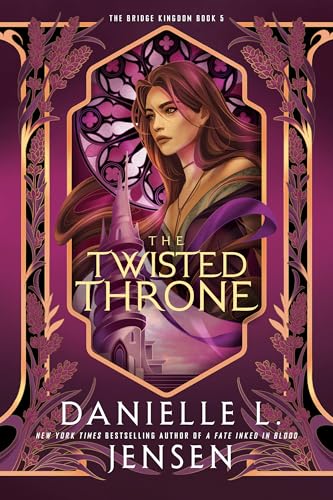



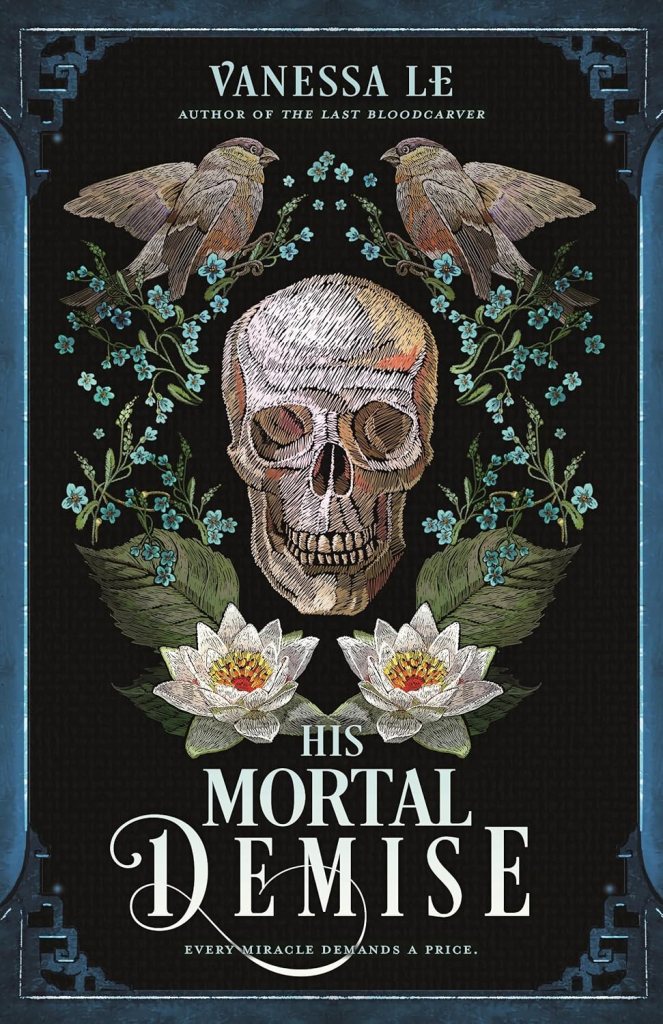




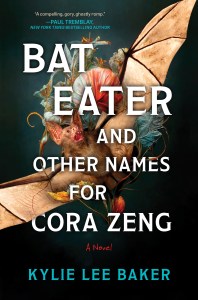






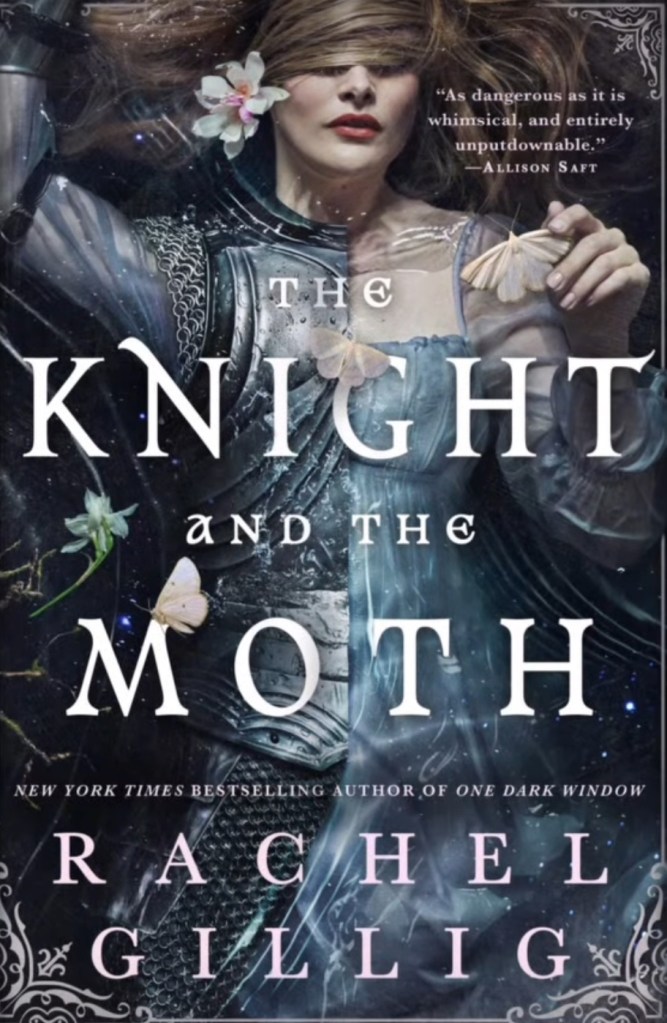






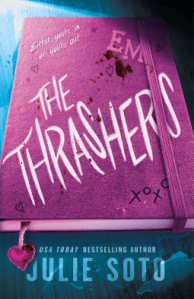





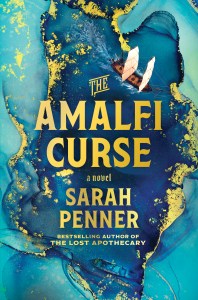




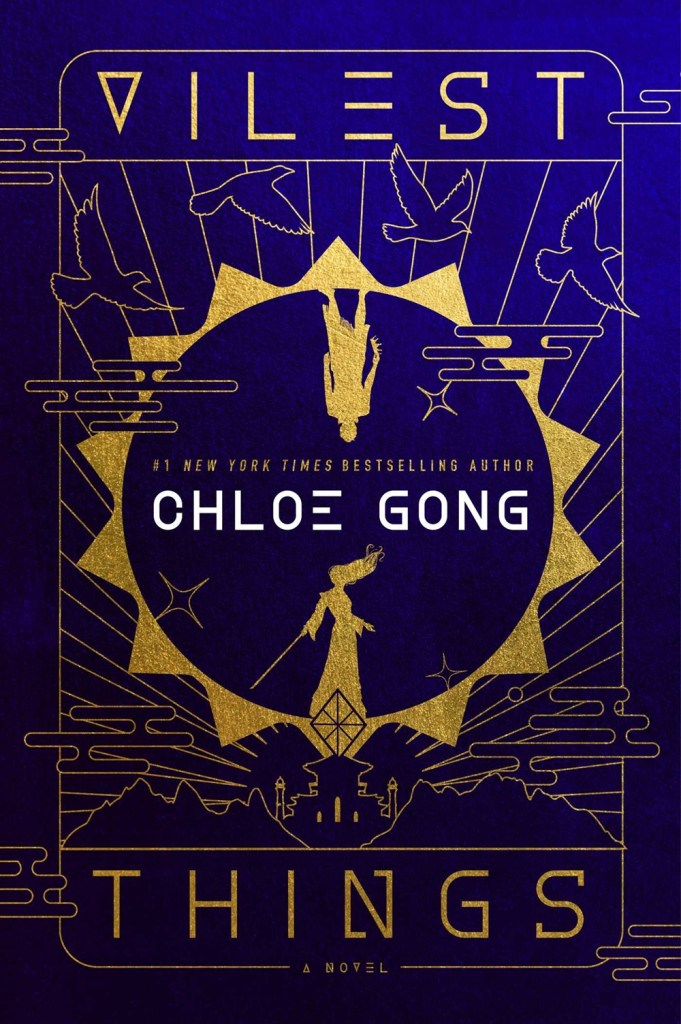

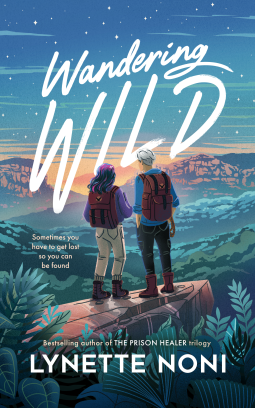
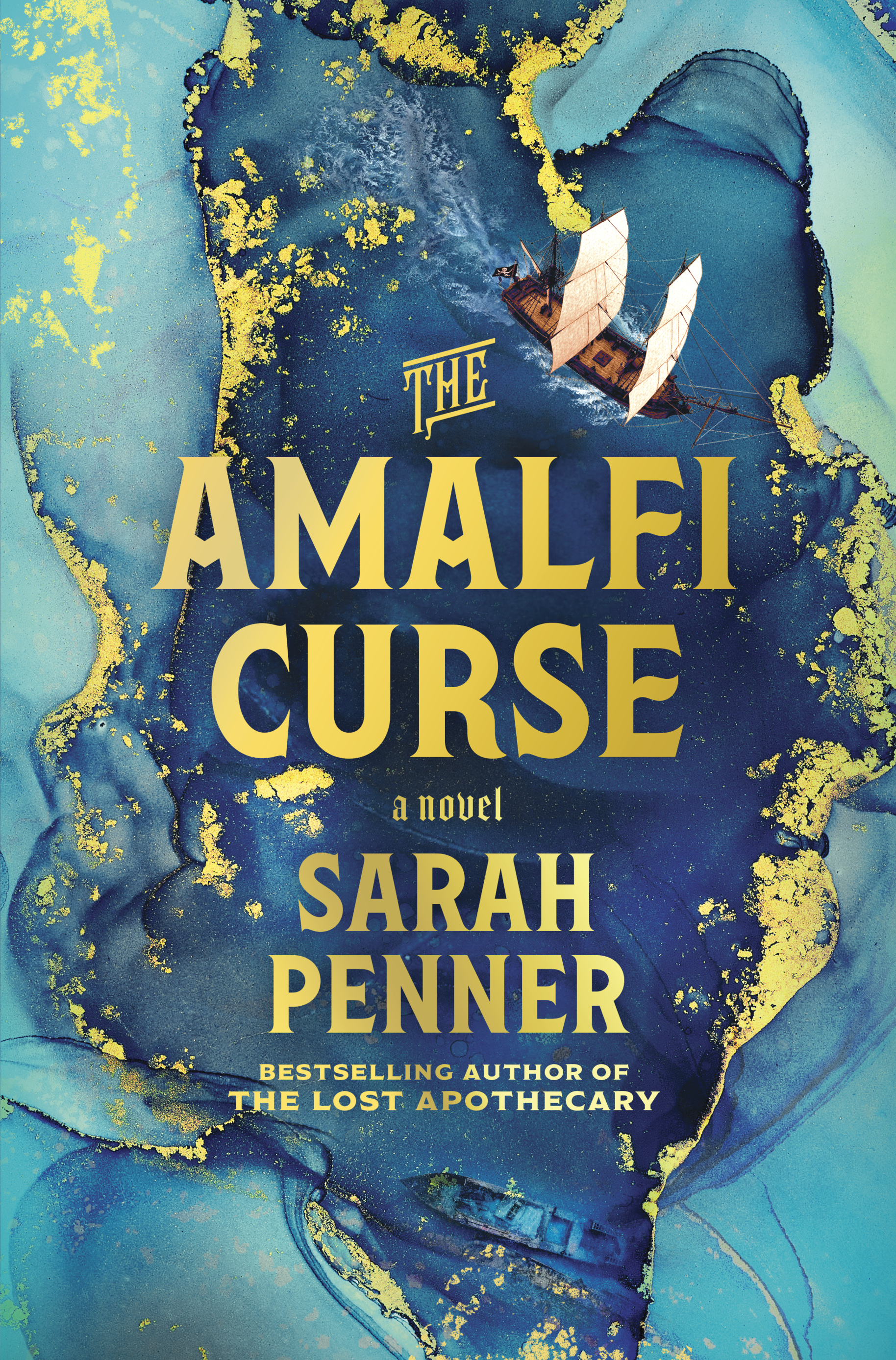







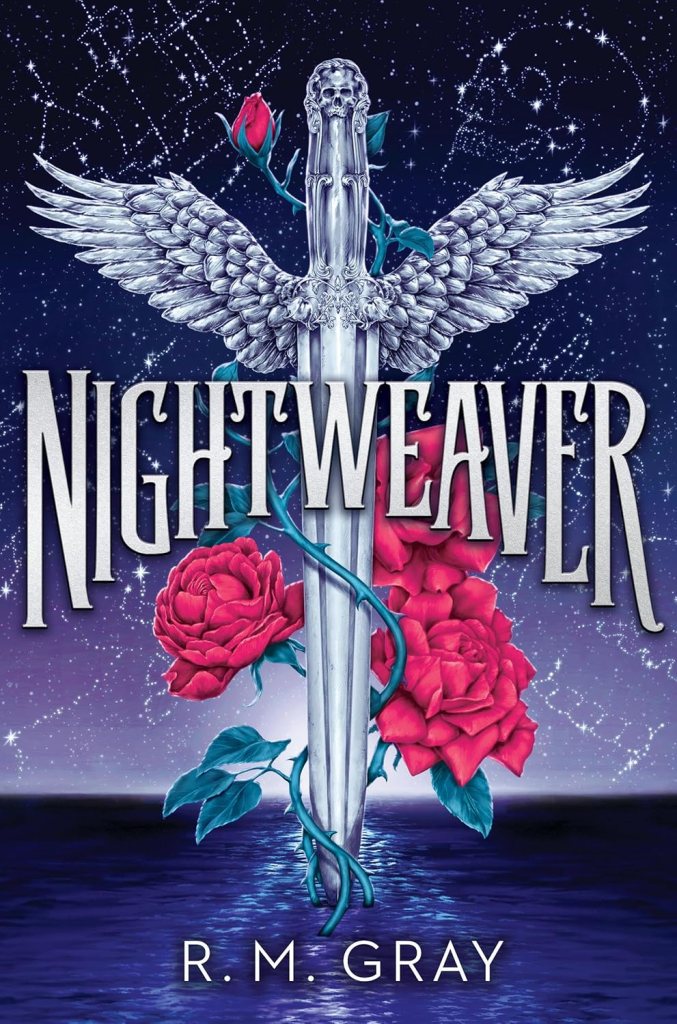




 Past Midnight Book Reviews & More