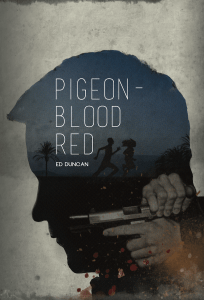
Pigeon-Blood Red by. Ed Duncan| Book Review

My Rating: ⭐️⭐️⭐️

Spice:

Title: Pigeon-Blood Red (Pigeon-Blood Red, #1)

Author: Ed Duncan

Format: ebook

Pages: 250

Publication Date: 9/2/2016

Categories: Suspense, Crime, Mystery, Thriller


For underworld enforcer Richard “Rico” Sanders, it seemed like an ordinary job: retrieve his gangster boss’s stolen goods, and teach the person responsible a lesson.

But the chase quickly goes sideways and takes Rico from the mean streets of Chicago to sunny Honolulu. There, the hardened hit man finds himself in uncharted territory, when innocent bystanders are accidentally embroiled in a crime.

As Rico pursues his new targets, hunter and prey develop an unlikely respect for one another.

Soon, he is faced with a momentous decision: follow his orders to kill the very people who have won his admiration, or refuse and endanger the life of the woman he loves?


Content Warning: violence

+ I was asked to read and review this book even though it’s not really the type of genre I usually read but I was open to trying it.

+ I liked how some of the story is set in Honolulu, Hawaii, since I’m from here. The author definitely described Waikiki really well! And though Hawaii is known as paradise, there is a dark underbelly to paradise, and I think this crime story fit well in this setting.

+ I thought the story moved quickly and it is pretty straightforward as we follow Rico doing his job. There is a lot of action and it’s also only 250 pages long so it’s a quick read.

~ It’s not a genre I usually read so I wasn’t totally into the story.

Final Thoughts:

This is definitely not the type of book genre I read these days, though I did have a phase of reading crime thrillers years ago. So I didn’t enjoy it like I do other books but it is well written so if you like fast moving crime thrillers, you might enjoy this book!

Book Links:

Goodreads | Amazon | Barnes & Noble

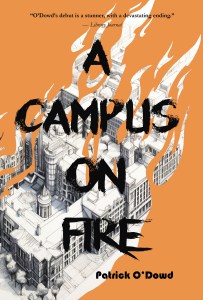
BLOG TOUR} A Campus of Fire by. Patrick O’Dowd | Book Excerpt

Title: A Campus On Fire

Author: Patrick O’Dowd

Pages: 271

BUY HERE: Bookshop | Barnes & Noble | Amazon

Publication Date: 4/29/2025

Publisher: Regal House Publishing / Publisher Instagram

Categories: Thriller, Mystery


When a shocking death rocks the exclusive writing program at a prestigious campus, a student journalist, Tess Azar, sets out to discover the truth. Rumors abound of the writing program’s cultish atmosphere and its zealous members, who will stop at nothing to ensure the sanctity of their own secrets. As an extreme right-wing student group swells in numbers, Tess finds herself in the crosshairs, dangerously at the center of the growing chaos. Simmering with tension, this provocative novel portrays the nation’s current-charged political climate, highlighting the immovable structures of our society and the dangers of navigating a post-truth world.

Book Excerpt:

1

Tess Azar’s notes on Rose Dearborn:

Tall. Sharp green eyes. A small, pointed nose. Pale. Red hair, worn down, falls just below her shoulders, framing her compact face. Her posture is pristine, and she appears to be flexing, though that may be her natural state. Her hands are folded, left over right. She sports an unblemished French manicure and light pink lipstick that you’d never notice unless you were looking for it. She has two earrings on her left ear, both in the lobe, and one on her right. They’re all diamonds, and I’m sure they’re real. She wears a light blue Oxford shirt. It looks like it was designed for her frame—towering and athletic, without succumbing to bulk. Over the shirt, she wears a light jacket, tan and slim fitted, with bronze buttons. It looks like it was born to be a man’s jacket but changed its mind when it met her.

She had me from the start. It was her wave. It showed the world she came from, the sophistication, the poise, the casual superiority. It was a wave that had been passed down, refined, choreographed. A stiff hand, a pirouette, a fold. It was elegant in its learned simplicity.

She paired it with a vacant, performative smile. It wasn’t for me. It was for the watchers. It told the world that she wasn’t, despite appearances, one of those people. She was, in fact, a normal person, perhaps even a kind one.

I nodded my acknowledgment and matched her smile. Mine was professional, a journalist’s smile, continuing the performance we were engaged in.

We were meeting at an outdoor café on campus. One of those places where students bring their laptops and pretend to work. It’s not a place to work, not true work. It’s a place to be seen to be working.

 She stood as I sat, a prosaic gesture that nonetheless endeared her to me.

I felt the cool spring breeze and heard birds singing in a tree nearby. A woman shouted in the distance, and I didn’t even turn to look. I assumed it was playful. I used to be able to assume that.

“Tess,” she said, not a question but a statement of fact. “And you’re Rose?”

“Yes.” She smiled and took a sip of her coffee. She placed it down, and I noticed it was uncovered, no lid in sight.

I looked at my own cup, a lipstick-stained plastic lid of shame sitting atop it. I felt her eyes on it, felt the judgment. I shouldn’t have had a lid. I should’ve told them I didn’t want one. Lids were plastic, single-use plastic. They were death. They were climate change. They were a stain upon you as a person.

I tore it off, and the steam burned my hand. I didn’t flinch, too afraid it would be another strike against me. Rose looked like the type of person who never flinched, who never got sick or hurt. She looked like she went to the cape on the weekends and played tackle football with her brothers and more than held her own.

I pulled out my notebook, almost knocking over my coffee as I did so. The cup rattled, but I grabbed it before it tipped and smiled an apology. I opened to a fresh page, and, as I always did when beginning an interview, I took down a description.

“Are you writing a novel?” Her voice was cold and clipped, formal and challenging.

I blushed, and my skin turned a few shades darker. I’m sure she noticed. Rose looked like she never blushed. Or at least never out of embarrassment. I imagined she did on occasion, but with a purpose.

I hid in my notebook. “No, I, uh, well…”

I hated myself. It was odd for me. I wasn’t like that. I wasn’t a stammering, stumbling fool. I wasn’t often awed. I was the one in a relationship who was distant. I was the one who was unaffected by the end of the affair, the one who needed to be wooed.

But there was something about her, an aura, a magic. Some- thing that changed me, disrupted me. I both hated and loved it. Longed to be free of this pull and to never leave it. One could chalk it up to the difference in age—Rose was twenty-one to my nineteen, but it was more than that. She had something. Something I wanted.

I twirled my pen around a finger and clicked it. It was a nervous habit, one that would take years to tame. Rose watched, a cryptic smile in her eyes. I placed my phone on the table and set it to record. “Do you mind?”

She shook her head, but I could feel her quiet disapproval. “I just like to get the setting down,” I said and motioned to

my notebook. I calmed myself by sipping the spring air, a slight scent of grass being cut somewhere in the distance. ““I was taught that if you have the time, you should overwrite, even in journalism. Easier to cut later. ‘Never trust your memory’ is what my professor says.”

This wasn’t true. My professors would be appalled by my long, florid notes. They advocated direct, blunt ones. But I wasn’t writing for them. Not anymore. I’d already developed my own strategies, my own style, and my notes were part of that.

She met my eyes, an intrigued look cresting across her face. I’ll never forget that look and the feeling that accompanied it, tracing up my spine and nesting in my skull. I felt my embarrassment disappear. I remembered who I was. I remembered that I was someone, and she knew it.

“Well.” She drank her coffee. I followed her lead. Mine was still too hot, and it scalded my throat. “I guess whatever you’re doing, it’s working.”

And there it was. The reason she’d come. It was a hint, a slight lead, but we both knew where she was taking the conversation. I may have my objective, my questions, my story, but she didn’t care. She wanted to discuss it. She met me so she could discuss it.

“I still have a lot to learn —”

“But to have an article receive national attention as a sophomore.” She cut me off with the ease of someone used to doing it. “My guess is it won’t be long before the job offers start coming.”

They already had, but she didn’t need to know that. Not yet. You need to save things. You need to build a relationship with patient precision if you want it to last.

I nodded and went back to my notebook. I should’ve steered the conversation, transitioned from my success to the work- shop. But I couldn’t, I wanted to press on, I wanted to talk more about my article. I wanted to astonish her and luxuriate in that astonishment.

That’s all it took. A little acclaim, a little attention, and, as I’m sure she’d planned, I’d forgotten my questions, my story.

“Now.” She unstacked her hands and moved one toward mine. “I’m not a journalist, just a fiction writer, but I felt your piece transcended the subject and demonstrated an uncanny ability to be informative, engaging, and unique. I couldn’t put it down, and more to the point, I found myself rereading it even after knowing the story, which I feel is a true test of great writing. Your work doesn’t read like journalism. It reads like fiction, good fiction.”

I felt the familiar warmth of praise pulse through me.

Her assessment was pretentious and vapid, it said nothing. It raised my own work by comparing it to the vaunted heights of fiction and, in doing so, denigrated journalism, but I didn’t care. “Thank you.” I tried to temper my grin. “I appreciate that.

It was a good article, and I was pleased with the exposure it received. That’s an important issue that I think will continue to pervade our society.”

I was trying to match her. Her intellectual snobbery, her placid distance, her broad generalities.

“So.” She leaned forward, and I found my eye tracing down to the opening of her shirt. I caught a glimpse of lace and looked away, landing on her forearm. It was exposed, and

 I could just make out a pale purple bruise. She noticed and dropped her arm beneath the table. “I have to ask. How did you get the interview? How did you get him to agree to that? To say all that?”

I nodded and leaned back. This was what they always asked. This was what made the article. This was why it garnered national attention, why everyone was talking about it, why I was someone.

Hearing her ask the same, tired question settled me.

I ran a finger along the seam of my pants and looked around, debating whether to do it, whether to take the leap. I felt the brief flutter of nervous excitement that we all come to know at some point.

I paused and felt my heart rattle. It felt wrong. She should be the one to ask me out, not the other way. I didn’t even know if she was gay. But somehow, I did. I could tell. I could feel an opening. This was my chance. She was curious, everyone was. I had a story, I had cache, I was someone, if only for a moment. So, I leapt. “How about this? You have dinner with me tomorrow night, and I’ll tell you how I got the interview. Deal?”

The question hung in the air as it always does, time elongating—heavy and thick with anxiety but exhilarating. All the world is packed into that pause between the question and the answer.

“What, like a date?” She tilted her head, a smile leaking out of the side of her mouth, a slight hue dampening her cheeks.

I nodded.

Someone shouted at a table not far from us, and chairs scraped against the ground.

“All right,” she said, her smile spreading. “Deal.”

And just like that, the anxiety exploded into a million shards of light. I was ebullient. I was phosphorescent. I was invincible. After that, I tried to stay present, tried to listen to what she said, to not think about the future that was already being crafted

in my mind.

But it was no use, I was gone. My mind was adrift. There were winters skiing and summers sailing. There were literary arguments and good coffee. There was an initial frigid period with her family. A tense scene with her grandfather where he reverted to his old prejudices, dismissing the whole of me based on the half that was Lebanese, but I won him over by talking history and baseball. I became one of them. And later, there were galas and houses full of antiques and rich wood.

“I guess you’re not here to talk about your article, are you?” She shifted back. “You’re here to talk about Jack.” Her face fell, her hands fidgeted in her lap. The color left her cheeks. The radiance of our previous conversation still lingered, but it was just a residual taste. We’d moved on.

I nodded but said nothing. Being a journalist is a lot like being a therapist. You need to draw them out. You need to make them comfortable and then let them talk.

“Terrible, just horrible.” She looked like a different person, like an actor trying to play Rose in a marginal play. “Such a waste.”

I let the silence linger, hoping she’d continue. When she didn’t, I eased into it. “Did you know him well?”

She nodded, and took her forefinger and thumb and pinched the bridge of her nose as if that could stop the tears and the pain. “Yes, of course. We all… I mean, you know about it, right? About the workshop? Dr. Lobo?”

I did. Everyone knew about the workshop. It was a creative writing group on campus, not an official workshop, whatever that means, just a group of students whom an acclaimed professor had taken an interest in.

Dr. Lobo’s workshop. Sylvia’s kids. The Creative Writing Cult.

Sylvia Lobo’s second novel, A Wake of Vultures, was an instant classic. She was teaching here as an associate professor when she wrote it, and after its publication, she became an instant celebrity. Now she teaches creative writing and gives few lectures. I took one during my first semester. Someone had dropped right when I was registering, otherwise, I’d have never

gotten in. It was on the erosion of the past in literature. Novels set during times of change with characters who are stuck in the past and grappling with the future. It was an eighty-person class, and I don’t think I said more than three words all year.

“Yeah,” I said. “I know about Dr. Lobo.”

“Have you read any of her work?” The energy that had left us returned.

“I’ve read A Wake of Vultures and Jezebel.”

Rose tried to hide her excitement and nodded to herself. I could tell I’d passed a test. “I’ll give you Chariot Races and Bubblegum. If you like those, we can go from there. If not…”

More tests. But that was all right. For her, I would take them.

“You’re all very close, right?”

“Yes, Sylvia’s big on that. We’re all working toward the same goals and have the same interests, and it’s essential that we spend time together. She says it makes for better writing. Look at Paris in the twenties. Do you think it was an accident so many great writers were there at the same time?”

I took my time and wrote this down verbatim. It sounded rehearsed.

“Some people even…” She laughed. “…say we’re a bit of a cult.”

Her laughter stopped, and I made sure not to smile. This wasn’t a joke. This was a repudiation of a nasty piece of gossip. I’d have to be careful with that. I’d have to watch that I never hinted at the cultish atmosphere of the workshop.

People had good reason to call them a cult. They took all the same classes, not just Sylvia’s, but everything—history, science, even phys ed. They got coffee together at the same time every day. The same table, the same café, the same black coffee, the same far-off look while they drank. They ate lunch together. They ate the same things for lunch. They ate with purpose. Refined but rapid. They walked the same, hurried steps announcing their presence, clearing a path. They talked the same. The same talking points, the same articles referenced, the same political issues discussed, same positions held with fervor. They used the same words. They spoke at the same frantic pace. Their hands moved with their every word, painting a mute portrait of their argument. They used the same pens, same notebooks, read the same books, watched the same movies, chewed the same gum, smoked the same colorful French cigarettes, not because they were addicted, but because it stoked conversation and helped with the writing process.

They were the same. They were like her.

That was how she drank her coffee, how she ate, how she walked, how she spoke, how she thought.

They idolized her. They forced her works into their conversations. They cited her. Not just her published comments and writing but personal ones from conversations they’d had with her. They attributed immense weight to these citations as if mentioning her name ended all debate. If Sylvia said it, it wasn’t to be questioned. It was fact.

The cultish atmosphere of the program was why I decided to write the story. Why I was sitting there, interviewing Rose. Jack’s suicide was a part, but not the whole. I hoped to expand it, turn it into a piece on Sylvia and the workshop. Get a glimpse behind the curtain. See what was fact and what was fiction.

Rose stared at me after the cult comment. Judging me, reading my reaction. I met her stare and held it. “Well, these days, I think gossip is the sincerest form of flattery. As for Jack, I’m sorry for your loss.”

She nodded and raised a hand to her chest. “Yes, he was, well, very talented. We came in together, same class. We were both in her freshman seminar on literature’s obsession with the past.”

“I took that class.”

“Really? Not the same one though? I’m sure I’d have noticed you.”

“No, you wouldn’t have. But it must’ve been a different year,

you’re what, a senior?”

 “She teaches it every other year. You’re fortunate you got in.”

“I could say the same to you,” I said, unable to avoid the

opening to flirt.

“Hah.” She rolled her head back. She didn’t laugh. She said, hah. Spat it. “No, I sent her my writing from high school, two awful short stories about— Oh god, I don’t even want to say… one was about my high school friends and a teacher of ours, and the other was about a ski instructor. They were dreadful, but she saw something in them, something in me.”

She looked over at the sprouting trees that lined the walk, feigning to hide her satisfied smile. “She reads the work applicants send in, as do her current students, and selections are made. If she picks you, you’re assured a spot in her freshman seminar and the creative writing major and some other class- es. See, where most creative writing programs don’t really get serious until graduate school, she starts right away. Freshmen year. She believes that you need to get to a writer early, before they learn those bad habits and become just a poor imitation of some famous writer. She wants you raw, unadulterated, malleable.”

“I thought you said she teaches that seminar every other year?”

She shook her head as if I was a mistaken child. “Oh no, just that one class on literature and the past. She teaches that in even years. She teaches a different one on female writers and the diaspora in odd years.”

I nodded and smiled and waited.

She rubbed the bruise on her arm, caught herself, and dropped her hands, resuming her practiced pose of mourning. “Yes, I was close to Jack. We were in all the same classes. I was his shadow, as we called it. Like a peer editor, you read everything they write. He was my shadow too. Sylvia thought our work complemented one another’s. He was a genius, and I don’t use that word lightly. It’s a true tragedy. Not just for him and those of us who knew him but for the world. The world lost a great writer.” Another tear, she lifted a napkin to stop it. “I edited his book. The one that we—Sylvia and I—are helping to finish. You know about that, right?”

“Yeah.”

“Sylvia worked to get it published, not that it was all that difficult, it’s a brilliant novel. But she took it on. She wanted to… She knew it was what he would’ve wanted. And now, at least, that part of him will live on. A tribute of sorts.”

“I hear the money’s going to charity?”

“A suicide prevention charity. And some will go to the creative writing program here as well, help to make it official, and I think some is going other places, but I don’t have the details on that.”

“Any to his family?”

“He didn’t have family. An uncle upstate somewhere, whom he grew up with, but they weren’t close, and I think he passed away. His parents weren’t in the picture.”

“Anyone else you think I should talk to?” I was afraid to push too hard too soon. You can always come back with more questions. You can always have a second interview, provided, of course, you remain on good terms.

“People in the workshop. I can give you some names. Intro- duce you.”

“That’d be great.” I looked down at my notebook, pretending to scan it, knowing what I needed to ask. “Look, Rose, I’m sorry to ask this, but I have to. Do you have any idea why he would’ve done this? I heard he didn’t leave a note.”

A writer not leaving a note. Seemed off.

She shook her head and forced another tear. “He was”— she ran a fingernail around the rim of her now-empty coffee cup—“troubled, like many writers are. It’s true what they say, ‘genius and madness flow from the same source.’ Good work often comes from pain, and I think, not to be unkind, but I think some can court it. Wallow in it. Again, I don’t mean to… I loved Jack, and it’s a tragedy what happened, but he lived in that pain. It’s what his work was about. He’d go into it and be down there and write, and after he finished, he’d come back up. He’d live in joy for a bit. But this time, with the novel, he was down there too long. He couldn’t surface.”

This, too, felt rehearsed. Maybe not quite scripted but planned. She knew I’d ask about it, and she was ready. There’s nothing wrong with that. Meeting with a journalist is stressful, and people like to be prepared.

But still, it felt off.

“Well,” I said, “I think that’s all I’ve got for today. I might have some follow-ups, but I’m sure you’re busy.”

“Yes, I have to decide what I’m wearing for our date.” I blushed and withdrew to my notes.

“I hope we won’t have to muddy that up with this?” she said. “No, I wouldn’t think so.”

We both stood, and I stared at her, straining my eyes, as she retreated into the falling sun.

Excerpted from A CAMPUS ON FIRE by Patrick O’Dowd © 2025 by Patrick O’Dowd, used with permission by Regal House Publishing. 

About the Author:

Author Bio:

ABOUT Patrick O’Dowd


Patrick O’Dowd’s work has appeared in a variety of publications, including Quagmire Literary Magazine, The Write Launch, and Sequoia Speaks, where he served as fiction editor. Born and raised in New Jersey, he studied at Montclair State University. A Campus on Fire is his debut novel.

ADVANCE PRAISE:

“Patrick O’Dowd’s vigorous debut is a prescient and perceptive tale, a compelling examination of a world in which fact and fiction have become blurred and weaponized. The novel portrays a deeply divided college campus rife with clashing ideologies, power imbalances and misguided passions. Would you lie to see your version of the truth win the day? And how far would you go in the pursuit of a dream? A Campus on Fire asks the best kind of uncomfortable questions.”

—Christopher J. Yates, author of Black Chalk and Grist Mill Road

“This vivid debut wrestles with essential questions about the role of personal ambition in the fight for social change. Blending richly drawn characters with timely themes, O’Dowd has written a novel about and for our tumultuous era.” 

—Wil Medearis, author of Restoration Heights

“Patrick O’Dowd’s A Campus on Fire is timely, urgent, and thrilling. Set at a campus uncomfortably close to all of us, the novel adroitly mixes a quasi-fascist student faction, a cult-like writers’ group, a love story, and a student reporter trying to maintain objectivity in the face of crisis. O’Dowd works with complex characters and presents no easy resolutions—like life itself.

—David Galef, author of How to Cope with Suburban Stress

“Patrick O’Dowd has gifted readers a phenomenal debut using a university campus setting as a microcosm of our national politics and the epicenter of clashing ideas around consent, class, gender, race, and privilege. The story’s journalistic lens through its protagonist Tess cleverly allows for varying angles of storytelling, while the interpersonal connective tissue of the plot is utterly irresistible. At the heart of this novel is the concept of power: who has it, who wants it, and the extremes that people will go to to get it. With A Campus on Fire, O’Dowd has cemented himself as a forceful new literary voice.”

—Kerri Schlottman, author of Tell Me One Thing

Author Instagram| Goodreads| Author website

Of Earthly Delights by. Goldy Moldavsky | ARC Review

My Rating: ⭐️⭐️⭐️⭐️

Title: Of Earthly Delights

Author: Goldy Moldavsky

Format: eBook (NetGalley)

Pages: 336

Publication Date: 5/13/25

Publisher: Henry Holt and Co.

Categories: Contemporary, Paranormal, Romance, Young Adult, Gothic, Horror, Thriller, Mystery

Disclaimer: **I received this book free from NetGalley in exchange for an honest review.  All thoughts and opinions are my own.**

Thank you to Henry Holt and Co. for giving me a chance to read this eARC in exchange for an honest review!


A contemporary YA gothic romance about a dark family secret, a lush, mysterious garden, and a love that never dies, from New York Times bestselling author Goldy Moldavsky.

Aspiring artist Rose Pauly is not happy moving from her home in New York City right before her senior year of high school. But on her first miserable day in Connecticut, she meets Hart Hargrove. The two share an immediate, undeniable connection.

Hart introduces Rose to his slice of paradise–the immense private garden nestled behind the Hargrove family mansion. There, the two spend a fever dream of a summer together. But as their bond blossoms into love, Rose can’t shake the feeling that all is not as it seems.

When Rose uncovers the truth about the garden, she’s forced to question how genuine her love story truly is. But Hart can’t bear to lose Rose, and he will stop at nothing to save their relationship.

Posing haunting questions about beauty and desire, this is an atmospheric and darkly romantic tale that will enthrall readers.

Content Warning: violence, grief, accident, body horror

+ The twist in this story blew my mind, it’s the one book this year that has made my jaw drop.

+ Rose is new to town, but right away she meets Hart Hargrove. He’s popular, he lives on the biggest estate in town – an estate whose gardens are infamous for secret, exclusive parties. Rose and Hart fall madly in love, almost insta-love, but there are clues along the way in this book where it feels like something is off. Something doesn’t feel right with their love story.

+ The grief that is presented in this book is heartbreaking. I could understand the decisions of Hart and his twin, Heather, but when everything is revealed, it made my heart ache for all of them involved. Without spoiling the story, I couldn’t imagine what they were going through.

+ Though the love story about Rose and Hart feels invincible and meant to be, there is a dark, sinister undertone to this story. It shows up in the garden parties and Rose’s best friend, Llowell. There is some body horror but really brief and the ending is wild with action and violence.

~ Because I knew there was something off to the romance, and some moments of the “future” sprinkled in as the story went on…I did get confused. But I’m glad I pushed through to the end – the end though, it’s an open ending which shocked me.

Final Thoughts:

This story is creative, dark, has a gothic contemporary atmosphere and the romance is heady but it’s also so sad and tragic. It explored a lot of topics like love, grief, friendship, and wishes. But if you could make your wishes come true, what would you be willing to give up? The ending of this story made my jaw drop and I think it’s one of those books that I’ll never forget.

Book Links:

Goodreads | Amazon | Barnes & Noble

Bat Eater and Other Names for Cora Zeng by. Kylie Lee Baker | ARC Review

My Rating: ⭐️⭐️⭐️⭐️⭐️

Title: Bat Eater and Other Names for Cora Zeng

Author: Kylie Lee Baker

Format: eBook (NetGalley)

Pages: 304

Publication Date: 1/7/25

Publisher:  MIRA

Categories: Horror, Mystery, Thriller, Paranormal, Social Commentary

Disclaimer: **I received this book free from NetGalley in exchange for an honest review.  All thoughts and opinions are my own.**

Thank you to  MIRA for giving me a chance to read this eARC in exchange for an honest review!


Cora Zeng is a crime scene cleaner—but the bloody messes don’t bother her, not when she’s already witnessed the most horrific thing possible: her sister being pushed in front of a train. The killer was never caught, and Cora is still haunted by his last words: “bat eater.”

These days nobody can reach Cora: not her aunt, who wants her to prepare for the Hungry Ghost Festival; not her weird colleagues; and especially not the slack-jawed shadow lurking around her door frame. After all, it can’t be real—can it? After a series of unexplained killings in Chinatown, Cora believes someone might be targeting East Asian women, and something might be targeting Cora herself.

Content Warning: violence, death, gore, parental neglect

+ I love this author and she’s a must-read author for me now. The story is set in New York City during the COVID pandemic – early 2020, remember that? This brought me back to a time of so much fear and uncertainty, it was nostalgic but not in a good way. Cora Zeng is Chinese-American and she has some issues that has been exacerbated by the pandemic, like her being a germaphobe. She’s also dealt with a traumatic childhood with parental neglect and divorce so Cora is complicated, anxious, closed-off, and now she is haunted. Literally. Cora’s voice is so honest about what she thinks about her family, society, and herself.

+ This story is filled with gore, but I was surprised with how much there was because I was grimacing for half the book I think. It is that gory but I should have expected it since Cora is a crime-scene cleaner. Outside of the gore, there is something else going on in a paranormal aspect in the story. Cora is being haunted and it is the month where the Chinese honor the dead or hungry ghosts with some rituals like putting out food for the ghosts and burning joss papers. I learned something cultural that I didn’t know much about which was cool but the way the author wove it into this story about COVID and crime against Chinese and Asian people during that time period is really amazing.

+ I really liked how the tension built in this story. Cora’s mental state is not the best, so I thought she was just going through psychosis due to PTSD but add the anxiousness about COVID during that time really upped the tension in the situation around the city. Add to that the crime scenes she is cleaning up has a pattern and then the hauntings start happening – there were times when I was laying in bed in the dark reading this that I got a chill. Because who wants a hungry ghost haunting them? Not me!

+ I loved the side characters, Cora’s co-workers, Harvey and Yifei. They brought humor but also gave Cora support even though they weren’t close friends. They were there for her even if things got super crazy. And bless her aunts too, even though they were extreme opposites – I’m glad she had people, even though it wasn’t a lot or people.

+ The social commentary of this book is what really hits home with me. The racism Cora experiences in this story made me so angry and heartbroken that racism is so prevalent in our country. The violence of the deaths in this story just makes me question how can people be so filled with hate as to want someone to suffer in these ways.

~ There was a small lull in the middle of the book, as Cora is dealing with some ghosts but nothing that stopped me from reading. Going into this book I was thinking too hard and saying what is this? Is it a horror story? Murder mystery? Paranormal haunting? What is going on? And once I just went with the flow and went along for the wild ride, I was blown away by the end.

Final Thoughts:

I loved how this author combined the time period of COVID, the social commentary of racism, the paranormal hauntings of hungry ghosts, and the possibility of a serial killer on the loose plus all the gore, violence and creep factor into one wild ride of a book. It touched on the challenges of family, friendship, mental health, grief and so much more. It’s brutal and violent and I can’t stop thinking about it. I know this story will probably stay with me forever.

Book Links:

Goodreads | Amazon | Barnes & Noble

The Scarlet Alchemist by. Kylie Lee Baker | ARC Review ⭐️⭐️⭐️⭐️💫

The Blood Orchid by. Kylie Lee Baker | ARC Review ⭐️⭐️⭐️⭐️💫

***********

BLOG TOUR} The Empress of Time by. Kylie Lee Baker | ARC Review ⭐️⭐️⭐️💫

BLOG TOUR } The Keeper of Night by. Kylie Lee Baker | ARC Review ⭐️⭐️⭐️⭐️

BLOG TOUR} Bat Eater and Other Names for Cora Zeng by. Kylie Lee Baker | Book Excerpt

Title: Bat Eater and Other Names for Cora Zeng

Author: Kylie Lee Baker

Format: eBook (NetGalley)

Pages: 304

BUY HERE: BookShop.org | HarperCollins | Barnes & Noble |

Amazon

Publication Date: 4/29/2025

Publisher: Harlequin Trade Publishing / MIRA

Categories: Contemporary, Fiction, Horror, Thriller, Mystery

This unsettling adult debut from Kylie Lee Baker follows a biracial crime scene cleaner who’s haunted by both her inner trauma and hungry ghosts as she’s entangled in a series of murders in New York City’s Chinatown. Parasite meets The Only Good Indians in this sharp novel that explores harsh social edges through the lens of the horror genre.

Cora Zeng is a crime scene cleaner in New York City’s Chinatown, washing away the remains of brutal murders and suicides. But none of that seems so terrible when she’s already witnessed the most horrific thing possible: in the early months of 2020, her sister Delilah was pushed in front of a train as Cora stood next to her. Before fleeing the scene, the murderer whispered two words: bat eater.

So the bloody messes don’t really bother Cora—she’s more bothered by the possible germs on the subway railing, the bare hands of a stranger, the hidden viruses in every corner. And by the strange spots in her eyes and that food keeps going missing in her apartment. Of course, ever since Delilah was killed in front of her, Cora can’t be sure what anxiety is real and what’s in her head. She can barely keep herself together as it is.

She pushes away all feelings, ignoring the bite marks that appear on her coffee table, ignoring the advice of her aunt to burn joss paper and other paper replicas of items to send to the dead and to prepare for the Hungry Ghost Festival, when the gates of hell open. Ignores the dread in her stomach as she and her weird coworkers keep finding bat carcasses at their crime scene cleanups. Ignores the scary fact that all their recent cleanups have been the bodies of Asian women.

But as Cora will soon learn, you can’t just ignore hungry ghosts.

Book Excerpt:

ONE 

April 2020 

East Broadway station bleeds when it rains, water rushing down from cracks in the secret darkness of the ceiling. Someone should probably fix that, but it’s the end of the world, and New York has bigger problems than a soggy train station that no one should be inside of anyway. No one takes the subway at the end of the world. No one except Cora and Delilah Zeng. 

Delilah wanders too close to the edge of the platform and Cora grabs her arm, tugging her away from the abyss of the tracks that unlatches its jaws, waiting. But Delilah settles safely behind the yellow line and the darkness clenches its teeth. 

Outside the wet mouth of the station, New York is empty. The China Virus, as they call it, has cleared the streets. News stations flash through footage of China—bodies in garbage bags, guards and tanks protecting the city lines, sobbing doctors waving their last goodbyes from packed trains, families who just want to fucking live but are trapped in the plague city for the Greater Good. 

On the other side of the world, New York is so empty it echoes. You can scream and the ghost of your voice will carry for blocks and blocks. The sound of footsteps lasts forever, the low hum of streetlights a warm undercurrent that was always there, waiting, but no one could hear it until now. Delilah says it’s unnerving, but Cora likes the quiet, likes how much bigger the city feels, likes that the little lights from people’s apartment windows are the only hint of their existence, no one anything more than a bright little square in the sky. 

What she doesn’t like is that she can’t find any toilet paper at the end of the world. 

Apparently, people do strange things when they’re scared of dying, and one of them is hoarding toilet paper. Cora and Delilah have been out for an hour trying to find some and finally managed to grab a four-pack of one-ply in Chinatown, which is better than nothing but not by much. 

They had to walk in the rain because they couldn’t get an Uber. No one wants Chinese girls in their car, and they’re not the kind of Chinese that can afford their own car in a city where it isn’t necessary. But now that they have the precious paper, they’d rather not walk home in the rain and end up with a sodden mess in their arms. 

“The train isn’t coming,” Cora says. She feels certain of this. She feels certain about a lot of things she can’t explain, the way some people are certain that God exists. Some thoughts just cross her mind and sink their teeth in. Besides, the screen overhead that’s supposed to tell them when the next train arrives has said DELAYS for the last ten minutes. 

“It’s coming,” Delilah says, checking her phone, then tucking it away when droplets from the leaky roof splatter onto the screen. Delilah is also certain about many things, but for different reasons. Delilah chooses the things she wants to believe, while Cora’s thoughts are bear traps snapping closed around her ankles. 

Sometimes Cora thinks Delilah is more of a dream than a sister, a camera flash of pretty lights in every color that you can never look at directly. She wraps herself up in pale pink and wispy silk and flower hair clips; she wears different rings on each finger that all have a special meaning; she is Alice in Wonderland who has stumbled out of a rabbit hole and somehow arrived in New York from a world much more kind and lovely than this one. 

Cora hugs the toilet paper to her chest and peers into the silent train tunnel. She can’t see even a whisper of light from the other side. The darkness closes in like a wall. The train cannot be coming because trains can’t break through walls. 

Or maybe Cora just doesn’t want to go home, because going home with Delilah means remembering that there is a world outside of this leaky station. 

There is their dad in China, just a province away from the epicenter of body bags. And there is the man who emptied his garbage over their heads from his window and called them Chinks on the walk here. And there is the big question of What Comes Next? Because another side effect of the end of the world is getting laid off. 

Cora used to work the front desk at the Met, which wasn’t exactly what an art history degree was designed for and certainly didn’t justify the debt. But it was relevant enough to her studies that for a few months it stopped shame from creeping in like black mold and coating her lungs in her sleep. But no one needs museums at the end of the world, so no one needs Cora. 

Delilah answered emails and scheduled photo shoots for a local fashion magazine that went belly-up as soon as someone whispered the word pandemic, and suddenly there were two art history majors, twenty-four and twenty-six, with work experience in dead industries and New York City rent to pay. Now the money is gone and there are no careers to show for it and the worst part is that they had a chance, they had a Nai Nai who paid for half their tuition because she thought America was for dreams. They didn’t have to wait tables or strip or sell Adderall to pay for college but they somehow messed it up anyway, and Cora thinks that’s worse than having no chance at all. She thinks a lot of other things about herself too, but she lets those thoughts go quickly, snaps her hands away from them like they’re a hot pan that will burn her skin. 

Cora thinks this is all Delilah’s fault but won’t say it out loud because that’s another one of her thoughts that no one wants to hear. It’s a little bit her own fault as well, for not having her own dreams. If there was anything Cora actually wanted besides existing comfortably, she would have known what to study in college, wouldn’t have had to chase after Delilah. 

But not everyone has dreams. Some people just are, the way that trees and rocks and rivers are just there without a reason, the rest of the world moving around them. 

Cora thinks that the water dripping down the wall looks oddly dark, more so than the usual sludge of the city, and maybe it has a reddish tinge, like the city has slit its own wrists and is dying in this empty station. But she knows better than to say this out loud, because everything looks dirty to her, and Cora Zeng thinking something is dirty doesn’t mean the average human agrees—at least, that’s what everyone tells her. 

“Maybe I’ll work at a housekeeping company,” Cora says, half to herself and half to the echoing tunnel, but Delilah answers anyway. 

“You know that’s a bad idea,” she says. 

Cora shrugs. Objectively, she understands that if you scrub yourself raw with steel wool one singular time, no one likes it when you clean anything for the rest of your life. But things still need to be cleaned even if Delilah doesn’t like it, and Cora thinks there are worse things than leaning a little bit into the crazy parts of you. Isn’t that what artists do, after all? Isn’t that the kind of person Delilah likes? The tortured artist types who smoke indoors and paint with their own blood and feces. 

“Mama cleaned toilets for rich white people because she had no choice,” Delilah says. “You have a college degree and that’s what you want to do?” 

Cora doesn’t answer at first because Mama means Delilah’s mom, so Cora doesn’t see why her thoughts on Cora’s life should matter. Cora doesn’t have a Mama. She has a Mom, a white lady from Wisconsin who probably hired someone else’s mama to clean her toilet. 

Cora quite likes cleaning toilets, but this is another thing she knows she shouldn’t say out loud. Instead, she says, “What I want is to make rent this month.” 

Legally, Cora’s fairly certain they can’t be evicted during the pandemic, but she doesn’t want to piss off their landlord, the man who sniffs their mail and saves security camera footage of Delilah entering the building. He price-gouges them for a crappy fourth-floor walkup in the East Village with a radiator that vomits a gallon of brown water onto their floor in the winter and a marching band of pipes banging in the walls, but somehow Cora doubts they’ll find anything better without jobs. 

Delilah smiles with half her mouth, her gaze distant like Cora is telling her a fairy tale. “I’ve been burning lemongrass for money energy,” Delilah says. “We’ll be fine.” This is another thing Delilah just knows

Cora hates the smell of lemongrass. The scent coats her throat, wakes her up at night feeling like she’s drowning in oil. But she doesn’t know if the oils are a Chinese thing or just a Delilah thing, and she hates accidentally acting like a white girl around Delilah. Whenever she does, Delilah gives her this look, like she’s remembered who Cora really is, and changes the subject. 

“The train is late,” Cora says instead of acknowledging the lemongrass. “I don’t think it’s coming.” 

“It’s coming, Cee,” Delilah says. 

“I read that they reduced service since no one’s taking the train these days,” Cora says. “What if it doesn’t stop here anymore?” 

“It’s coming,” Delilah says. “It’s not like we have a choice except waiting here anyway.” 

Cora’s mind flashes with the image of both their skeletons standing at the station, waiting for a train that never comes, while the world crumbles around them. They could walk— they only live in the East Village—but Delilah is made of sugar and her makeup melts off in the rain and her umbrella is too small and she said no, so that’s the end of it. Delilah is not Cora’s boss, she’s not physically intimidating, and she has no blackmail to hold over her, but Cora knows the only choice is to do what Delilah says. When you’re drowning and someone grabs your hand, you don’t ask them where they’re taking you. 

A quiet breeze sighs through the tunnel, a dying exhale. It blows back Delilah’s bangs and Cora notices that Delilah has penciled in her eyebrows perfectly, even though it’s raining and they only went out to the store to buy toilet paper. Something about the sharp arch of her left eyebrow in particular triggers a thought that Cora doesn’t want to think, but it bites down all the same. 

Sometimes, Cora thinks she hates her sister. 

It’s strange how hate and love can so quietly exist at the same time. They are moon phases, one silently growing until one day all that’s left is darkness. It’s not something that Delilah says or does, really. Cora is used to her small annoyances. 

It’s that Delilah is a daydream and standing next to her makes Cora feel real. 

Cora has pores full of sweat and oil, socks with stains on the bottom, a stomach that sloshes audibly after she eats. Delilah is a pretty arrangement of refracted light who doesn’t have to worry about those things. Cora wanted to be like her for a very long time, because who doesn’t want to transcend their disgusting body and become Delilah Zeng, incorporeal, eternal? But Cora’s not so sure anymore. 

Cora peers into the tunnel. We are going to be stuck here forever, Cora thinks, knows. 

But then the sound begins, a rising symphony to Cora’s ears. The ground begins to rumble, puddles shivering. 

“Finally,” Delilah says, pocketing her phone. “See? I told you.” 

Cora nods because Delilah did tell her and sometimes Delilah is right. The things Cora thinks she knows are too often just bad dreams bleeding into her waking hours. 

Far away, the headlights become visible in the darkness. A tiny mouth of white light. 

“Cee,” Delilah says. Her tone is too delicate, and it makes coldness curl around Cora’s heart. Delilah tosses words out easily, dandelion parachutes carried about by the wind. But these words have weight. 

Delilah toys with her bracelet—a jade bangle from their Auntie Zeng, the character for hope on the gold band. Cora has a matching one, shoved in a drawer somewhere, except the plate says love, at least that’s what Cora thinks. She’s not very good at reading Chinese. 

“I’m thinking of going to see Dad,” Delilah says. 

The mouth of light at the end of the tunnel has expanded into a door of brilliant white, and Cora waits because this cannot be all. Dad lives in Changsha, has lived there ever since America became too much for him, except it’s always been too much for Cora too and she has nowhere to run away to, her father hasn’t given her the words she needs. Delilah has visited him twice in the last five years, so this news isn’t enough to make Delilah’s voice sound so tight, so nervous. 

“I think I might stay there awhile,” Delilah says, looking away. “Now that I’m out of work, it seems like a good time to get things settled before the pandemic blows over.” 

Cora stares at the side of Delilah’s head because her sister won’t meet her gaze. Cora isn’t stupid, she knows what this is a “good time” for. Delilah started talking about being a model in China last year. Cora doesn’t know if the odds are better in China and she doubts Delilah knows either. All she knows is that Delilah tried for all of three months to make a career of modeling in New York until that dream fizzled out, smoke spiraling from it, and Delilah stopped trying because everything is disposable to her, right down to her dreams. 

Cora always thought this particular dream would be too expensive, too logistically complicated for Delilah to actually follow through on. Worst-case scenario, they’d plan a three-week vacation to China that would turn into a week and a half when Delilah lost interest and started fighting with Dad again. The idea of flying during a pandemic feels like a death sentence, but Cora has already resigned herself to hunting down some N95 respirators just so Delilah could give her modeling dream an honest try. 

Because even if Delilah tends to extinguish her own dreams too fast, Cora believes in them for all of their brief, brilliant lives. If Cora ever found a dream of her own, she would nurture it in soft soil, measure out each drop of water, each sunbeam, give it a chance to become. So Cora will not squash her sister’s dreams, not for anything. 

“I’ll just put my half of the rent on my credit card until I find work,” Delilah says, “so you won’t need a new roommate.” 

Then Cora understands, all at once, like a knife slipped between her ribs, that Delilah isn’t inviting Cora to come with her. 

Of course she isn’t. Delilah has a mama who speaks Mandarin to her, so Delilah’s Chinese is good enough to live in China. But Cora’s isn’t. Delilah would have to do everything for her, go everywhere with her because she knows Cora would cry just trying to check out at the supermarket. Delilah could do it for her, but she doesn’t want to. 

Cora suddenly feels like a child who has wandered too far into a cave. The echoes become ghosts and the darkness wraps in tight ribbons around your throat and you call for a mom who will never come. 

Cora’s hands shake, fingers pressing holes into the plastic wrap of the toilet paper, her whole body vibrating with the sheer unfairness of it all. You can’t string someone along their whole life and then just leave them alone one day holding your toilet paper in a soggy train station. 

“Or you could stay with your aunt?” Delilah says. “Then you wouldn’t have to worry about rent. It would be better for both of us, I think.” 

Auntie Lois, she means. Mom’s sister, whose house smells like a magazine, who makes Cora kneel in a confessional booth until she can name all her sins. Delilah has decided that this is Cora’s life, and Delilah is the one who makes decisions. 

Delilah keeps talking, but Cora can’t hear her. The world rumbles as the train draws closer. The white light is too bright now, too sharp behind Delilah, and it illuminates her silhouette, carves her into the wet darkness. Delilah has a beautiful silhouette, the kind that men would have painted hundreds of years ago. Cora thinks about the Girl with a Pearl Earring, and the Mona Lisa, and all the beautiful women immortalized in oil paint, and wonders if they said cruel things too, if their words had mattered at all or just the roundness of their eyes and softness of their cheeks, if beautiful people are allowed to break your heart and get away with it. 

The man appears in a flash of a black hoodie and blue surgical mask. 

He says two words, and even though the train is rushing closer, a roaring wave about to knock them off their feet, those two words are perfectly clear, sharp as if carved into Cora’s skin. 

Bat eater. 

Cora has heard those words a lot the past two months. The end of the world began at a wet market in Wuhan, they say, with a sick bat. Cora has never once eaten a bat, but it has somehow become common knowledge that Chinese people eat bats just to start plagues. 

Cora only glances at the man’s face for a moment before her gaze snaps to his pale hand clamped around Delilah’s skinny arm like a white spider, crunching the polyester of her pink raincoat. Lots of men grab Delilah because she is the kind of girl that men want to devour. Cora thinks the man will try to kiss Delilah, or force her up the stairs and into a cab, or a thousand things better than what actually happens next. 

Because he doesn’t pull her close. He pushes her away. 

Delilah stumbles over the yellow line, ankle twisting, and when she crashes down there’s no ground to meet her, just the yawning chasm of the train tracks. 

The first car hits her face. 

All at once, Cora’s skin is scorched with something viscous and salty. Brakes scream and blue sparks fly and the wind blasts her hair back, the liquid rushing across her throat, under her shirt. Her first thought is that the train has splashed her in some sort of track sludge, and for half a second that is the worst thought in the entire world. The toilet paper falls from Cora’s arms and splashes into a puddle when it hits the ground and There goes the whole point of the trip, she thinks. 

Delilah does not stand up. The train is a rushing blur of silver, a solid wall of hot air and screeching metal and Delilah is on the ground, her skirt pooling out around her. Get up, Delilah, Cora thinks, because train station floors are rainforests of bacteria tracked in from so many millions of shoes, because the puddle beneath her can’t be just rainwater—it looks oddly dark, almost black, spreading fast like a hole opening up in the floor. Cora steps closer and it almost, almost looks like Delilah is leaning over the ledge, peering over the lip of the platform. 

But Delilah ends just above her shoulders. 

Her throat is a jagged line, torn flaps of skin and sharp bone and the pulsing O of her open trachea. Blood runs unstopped from her throat, swirling together with the rainwater of the rotting train station, and soon the whole platform is bleeding, weeping red water into the crack between the platform and the train, feeding the darkness. Cora is screaming, a raw sound that begins somewhere deep inside her rib cage and tears its way up her throat and becomes a hurricane, a knife-sharp cry, the last sound that many women ever make. 

But there’s no one to hear it because New York is a dead body, because no one rides the subway at the end of the world. No one but Cora Zeng.

About the Author:

Author Bio:

Kylie Lee Baker is the Sunday Times bestselling author of The Keeper of Night duology, The Scarlet Alchemist duology, and the forthcoming adult horror Bat Eater. She grew up in Boston and has since lived in Atlanta, Salamanca, and Seoul. Her writing is informed by her heritage (Japanese, Chinese, and Irish), as well as her experiences living abroad as both a student and teacher. She has a BA in creative writing and Spanish from Emory University and a master of library and information science degree from Simmons University.

Instagram| Goodreads | X/Twitter | Author Website
The Thrashers by. Julie Soto | ARC Review

My Rating: ⭐️⭐️⭐️⭐️

Title: The Thrashers

Author: Julie Soto

Format: eBook (NetGalley)

Pages: 352

Publication Date: 5/6/25

Publisher: Wednesday Books

Categories: Young Adult, Mystery, Paranormal, Thriller

Disclaimer: **I received this book free from NetGalley in exchange for an honest review.  All thoughts and opinions are my own.**

Thank you to Wednesday Books for giving me a chance to read this eARC in exchange for an honest review!


Either you’re in or you’re out.

Welcome to the Thrashers, the elite friend group at New Helvetia High.

They’re everything everyone wants to be.

Jodi Dillon was never meant to be one of them. Julian, Lucy, Paige, and the infamous Zack Thrasher are rich, sophisticated, and love attention. Jodi feels out of place, but Zack’s her childhood best friend, so she’s in.

Then Emily Mills, who desperately wanted to be a Thrasher, dies—and the whispers about the Thrashers begin. As Emily’s journal surfaces, detectives close in, and Jodi faces an impossible choice: betray her friends or protect herself.

But as eerie messages and strange occurrences escalate, it becomes clear—Emily isn’t done with them yet.

A twisty thrill-ride of unforgettable drama and suspense that “encapsulates the vulnerability of adolescents playing adult games” (Ali Hazelwood) from USA Today bestselling author Julie Soto, The Thrashers will keep you up at night desperate to read just one more page.

Content Warning: death, accidents, injuries, weed, drinking, suicide, alcoholism, mentions of physical abuse

+ I am loving how Julie Soto (one of my new favorite/must-read authors) has been branching out! I am hooked and ready to read all of it. I could not put this down. In this YA thriller, we meet a group of five friends called The Thrashers. They didn’t name themselves but it’s a reputation people at school gave them. This story is dark! It centers around a suicide and bullying, and brings up some good questions too. There is weed use and lots of underage drinking, plus the issue of alcoholism by an adult and abuse. This story is multi-layered and complicated.

+ Jodi is the only one of the Thrashers who isn’t wealthy or easily popular. She got lucky that she was best friends with Zack Thrasher in the second grade. He is like a beacon to everyone. All the girls want to be with him and all the boys want to be him or hang out with him, but he keeps an exclusive friend group with Jodi, Julian, Lucy, and Paige – Jodi being the most average of them all. This creates insecurities among the friends, mostly we see it in Jodi but later you see it in Julian and Paige. I like how the author explored the feelings one can have of being left out in a friend group – wondering what your place is in the group and if anyone actually cares.

+ A classmate of theirs, a girl named Emily, who latched onto their group and tried to become a Thrasher committed suicide. And now the Thrashers are under a microscope and some people are turning on them. Emily left a journal and what she writes about this friend group implicates them in her suicide. Is the journal real? Did Emily lie or is Jodi’s best friends lying? Who is telling the truth or are they leaving her out?

+ I was reading this late into the night, after midnight, and there were some parts that gave me slight chills. Emily was creepy but was her ghost/spirit really haunting them? Also the characters are all very unique, which I enjoyed. They are all morally gray also which makes my feelings about certain characters so complicated.

~ The ending! What was that? It’s very unexpected, and leaves me questions but also…can we get a book two? Haha, I mean I can see something happening for book two!

~ These friends, were always making their world revolve around Zack and I was questioning like…what makes him SO special besides him being super charming, nice, and drop dead gorgeous? For all of them to either be in love with him, want him, or jealous of him making other friends or dating other girls was wild to me.

Final Thoughts:

I read this in one night so I enjoyed this a lot. I loved the morally gray, complicated characters and their dynamic even though they are close and “best-friends”. Even in a friend group you can feel alone and outcasted and Jodi portrayed those insecurities very well. I was hooked to the drama happening in this friend group and seeing how everything played out. Learning about Emily and the “hauntings” was also creepy so overall, I think this was a great YA thriller and that ending. I don’t know what it means, but I want more! I can’t wait to read her fantasy debut this year also!

Book Links:

Goodreads | Amazon | Barnes & Noble

Other Books I’ve Read From This Author:

Not Another Love Song by. Julie Soto | ARC Review ⭐️⭐️⭐️⭐️💫

Forget Me Not by. Julie Soto | Book Review ⭐️⭐️⭐️⭐️

Murder Between Friends by. Liz Lawson | ARC Review

My Rating: ⭐️⭐️⭐️

Title: Murder Between Friends

Author: Liz Lawson

Format: eBook (NetGalley)

Pages: 384

Publication Date: 4/22/25

Publisher: Delacorte Press

Categories: Young Adult, Contemporary, Mystery, Thriller

Disclaimer: **I received this book free from NetGalley in exchange for an honest review.  All thoughts and opinions are my own.**

Thank you to Delacorte Press for giving me a chance to read this eARC in exchange for an honest review!


Two years ago, the murder of a neighbor tore three best friends apart–now the killer is going to walk free and the ex-friends are going to have to face the past–and each other–in another twisty thriller from the New York Times bestselling co-author of The Agathas

Grace, Henry, and Ally grew up together on the same block. They used to be best friends–until Grace’s testimony put Henry’s brother, Jake, away for killing their English teacher. Now, two years later, Ally and Henry hate Grace, and Grace is doubting what she thinks she saw that night. 

It feels like everyone’s getting a second chance, then, when due to a mistrial, Jake is suddenly released. And Henry knows his brother is innocent, but when Grace reaches out to say she’s rethinking what she saw the night of the murder, Jake’s reaction is confusing. He doesn’t want Henry—or Grace–getting involved.

For Ally not getting involved isn’t an option, and there’s nothing Grace can say to convince Ally she’s not the enemy. But can Ally afford to push Grace out when she’s one of the only other people willing to believe in Jake’s innocence?  

The clock is ticking. Jake’s new trial date is about to be set, and he’s sure to be foud guilty again unless there’s new evidence to prove he’s innocent. Grace, Henry, and Ally are going to have to decide whether you can trust an old friend now that they’re your enemy.

Content Warning: murder

+ Jake is accused of murdering his teacher but he’s out on a technicality but will be tried again. This time the person who was a witness in the case, his younger brother’s ex best-friend, Grace, thinks maybe what she saw the night of the murder was a mistake. And this time she wants to be sure.

+ Henry (Jake’s brother), Ally, and Grace are ex-friends but now with Jake going through a possible new trial, they decide to work together to make sure they find the right killer. There are a few twists and turns in this book that was interesting but I think it was easy to predict who was the real culprit.

~ For a YA mystery I think it’s perfect for teen readers but for me it was a little bit too light.

Final Thoughts:

This one will appeal to the teen and younger YA readers of mystery and thrillers. This was a quick read but maybe just a little to light for me.

Book Links:

Goodreads | Amazon | Barnes & Noble

BLOG TOUR} Their Monstrous Hearts by. Yiğit Turhan | Book Excerpt

Title: Their Monstrous Hearts

Author: Yiğit Turhan

Format: eBook (NetGalley)

Pages: 320

BUY HERE: BookShop.org | HarperCollins | Barnes & Noble |

Amazon

Publication Date: 4/8/2025

Publisher: Harlequin Trade Publishing / MIRA

Categories: Mystery, Thriller, Horror, Gothic, Contemporary

A haunting novel about the boundaries people will cross to keep their dreams alive.

A mysterious stranger shows up at Riccardo’s apartment with some news: his grandmother Perihan has died, and Riccardo has inherited her villa in Milan along with her famed butterfly collection.

The struggling writer is out of options. He’s hoping the change of scenery in Milan will inspire him, and maybe there will be some money to keep him afloat. But Perihan’s house isn’t as opulent as he remembers. The butterflies pinned in their glass cases seem more ominous than artful. Perihan’s group of mysterious old friends is constantly lurking. And there’s something wrong in the greenhouse.

As Riccardo explores the decrepit estate, he stumbles upon Perihan’s diary, which might hold the key to her mysterious death. Or at least give him the inspiration he needs to finish his manuscript.

But he might not survive long enough to write it.

Book Excerpt:

Prologue

Perihan gazed at the opulent villas lined up like precious pearls on a necklace, feeling overwhelmed by their excessive beauty. The sight was almost terrifying, reminiscent of the antique pearls adorning her own necklace. As the dark clouds were illuminated by a sudden flash of lightning, she shook off her thoughts and quickened her pace along the deserted road. The gentle raindrops on her tired face felt like an omi­nous sign. The unexpected gust of wind, unusual for a mild November afternoon, added to her unease.

On her seventieth birthday, Perihan had indulged in a day of shopping at Milan’s most luxurious stores. Despite her age, she possessed a strong physique, with firm knees, agile move­ments, and enough strength to carry her shopping bags from the stores to her home. The kind store managers at Cartier and Valentino had offered to send the packages to her address with a courier, but she declined, insisting she could manage on her own. Though she lacked a family to celebrate with, her small group of friends had arranged to gather at the villa, refusing to let her spend the evening alone. They had asked her to leave the house and return around seven o’clock. Glancing at her watch, Perihan realized she was already half an hour late.

Oh my… Licia must have already set the table, she thought as she turned the corner onto Via Marco de Marchi, where she resided. Just then, another lightning bolt flashed across the sky, and a large monarch butterfly appeared seemingly out of nowhere. Despite the heavy rain, Perihan could hear the faint flapping of its wings. The butterfly had bright orange and black stripes, with one wing decorated with symmetric white dots. It seemed to hover in midair.

“What a miracle,” Perihan exclaimed, a smile stretching across her wrinkled face. “It’s been years since I last saw this one…and on my birthday!” Hastily shifting the heavy bags onto her shoulder, she wiped the raindrops from her eyes with her long red nails and followed the butterfly. It fluttered around in circles for a few moments, before darting straight ahead. Despite the downpour, the orange-and-black wings moved swiftly. Overwhelmed with excitement, Perihan dis­regarded the red light—and almost got hit by an old Ford passing by. The driver, an unattractive man with numerous moles and few teeth, leaned out of the window and cursed at her in an Italian dialect she couldn’t understand. Unfazed by his behavior, Perihan remained focused on following the butterfly, which flew rapidly and ascended into the sky.

“I wonder where it disappeared to,” she mused with a melancholic expression on her face. The rain intensified, the drainage problems in the area turning the road into a pool of water. Perihan’s bare feet were drenched as the rain seeped through the open toes of her green python slingbacks.

“You’re blocking my view.” The unexpected comment startled her. She looked at the stranger, hoping to recognize a friendly face, but it was no one she knew. She turned to notice the growing crowd of people with their faces hidden behind their phone screens. She wondered if they were filming her. Lacking an umbrella, her meticulously coiffed hair now wet, her makeup smudged, and her silk skirt ruined by the muddy street, Perihan was struck by the crowd’s indifference. They shifted slightly to the right, attempting to remove her from their line of sight, all the while continuing to record whatever had caught their attention. Curious, Perihan turned around and was terrified by what she saw. In shock, she dropped her red shopping bags, causing more muddy water to splatter onto her skirt and completely destroying her shoes.

“This can’t be happening,” she screamed to the sky at the top of her lungs. Her knees trembled uncontrollably, left her unsure about taking another five steps to cross the road. Peri­han noticed the cameras turning toward her in her peripheral vision, but she paid no mind to the desperation and terror that would eventually go viral on numerous social media networks in multiple countries. Her villa loomed in front of her, con­cealed by high walls covered with lush green bushes—now invaded by hundreds, if not thousands, of butterflies. They hovered over the garden, flapping their wings vigorously de­spite the pouring rain. The entire structure, partially visible through the bushes, seemed imprisoned within a butterfly sanctuary. When Perihan realized the creatures were all mon­archs, each one so exquisite and valuable, she paused. Beauty had a threshold, and beyond it, it became a captivating terror, holding people’s attention hostage to fulfill its own needs. She propelled herself into the flooded road, heading for the gar­den gate. With what little strength remained after the ordeal, she pushed her way through the floral Art Nouveau door.

“Licia! Where are you?” she shouted upon entering the gar­den. Before closing the door behind her, she turned to scream at the onlookers, “Leave! The show’s over! This is my prop­erty!” Yet, the crowd remained unaffected, mesmerized by the extraordinary natural phenomenon unfolding before them.

Licia, Perihan’s housekeeper and closest friend of nearly forty years, looked like a ghost. Her complexion was drained of color, her wet hair clung to her face in disheveled patches, and her shoes were ruined by dark mud. She trembled as she spoke. “Perihan… We did our best, but…” Licia glanced quickly at their small group of friends, who observed the scene from the kitchen window on the first floor of the house. Perihan brushed Licia aside with the back of her hand and made her way toward the large greenhouse on the left side of the gar­den. Orange butterflies continued to emerge rapidly through a broken pane in its ceiling, swarming through the air. Looking up at the vortex of butterflies resembling a brewing tornado, Perihan felt a wave of dizziness. Her bony hand reached for the intricately detailed metal handle of the greenhouse door, but fear gripped her body. She hesitated, afraid to enter, yet knowing she had no other choice. Slowly, she pushed the door open, entered, and closed it behind her.

Licia tried to conceal her sobbing behind her hands. Should she follow Perihan into the greenhouse or return to the house? The rain cascaded like a waterfall, obstructing not only her movements but her thoughts as well. She compelled herself to decide, but the sudden outburst from within the green­house froze her in place.

“No… No… No!” Perihan’s voice echoed, growing louder with each repetition—until the world fell silent, save for the raindrops tapping against any surface they encountered. The darkness beneath the swarm of butterflies gradually gave way to a dull light as they departed from the house. Licia collapsed onto her knees and allowed herself to sink into the saturated garden soil, her tears mingling with the raindrops. Once the first monarch butterfly Perihan had witnessed a few moments earlier found its way to her villa, it hovered briefly over the garden before heading in the same direction as the others. When the last of the butterflies vanished, no trace of the mi­raculous event remained.

Excerpted from THEIR MONSTROUS HEARTS by Yigit Turhan. Copyright © 2025 by Yigit Turhan. Published by MIRA, an imprint of HTP/HarperCollins.

About the Author:

Author Bio:

Yigit Turhan was born in Ankara, Turkey. A lifelong reader, he owes his love of horror to his grandmother and the films she shared with him. He has previously published a horror novel in Turkish. He lives in Milan, Italy, where he holds a C-suite role at a renowned fashion house. This is his English-language debut.

Instagram| Goodreads

Pride or Die by. CL Montblanc | ARC Review

My Rating: ⭐️⭐️⭐️

Title: Pride or Die

Author: CL Montblanc

Format: eBook (NetGalley)

Pages: 336

Publication Date: 4/15/25

Publisher: Wednesday Books

Categories: Young Adult, Contemporary, Mystery, Thriller, LGBT+

Disclaimer: **I received this book free from NetGalley in exchange for an honest review.  All thoughts and opinions are my own.**

Thank you to Wednesday Books for giving me a chance to read this eARC in exchange for an honest review!


In this delightful dark comedy debut, when the members of an LGBTQ+ club find themselves accidentally framed for attempted murder, it’s up to them to clear their names before it’s too late.

It’s kind of hard to graduate high school when you’re the prime suspect in an attempted murder.

Seventeen-year-old Eleanora Finkel just wants to finish her senior year and get the hell out of Texas. But when her club meeting inconveniently coincides with an attack on the school’s head cheerleader, she and her friends find themselves in the hot seat.

In order to clear their names and ensure the survival of their club for future queer teens, they’ll have to track down the real culprit themselves. But Eleanora is far from a professional detective; she’s riddled with anxiety, annoyingly attracted to the case’s cute victim, and her trusty crochet hook feels insufficient for fighting off a murderer. Can this ragtag group of unlikely sleuths find their way out of an entire freaking murder mystery before one of them is next?

Content Warning: violence, cursing

+ Students in an LGBT+ club are witnesses to an attack on a cheerleader, but because they were seen at the scene of the crime, people are suspicious that they were the ones who attacked her. So to prove their innocence, they decide to investigate to find who the real attacker is.

+ Eleanora and her friends in the club are funny! There is cursing but I thought it was fine. They are quite a cast of characters and they found themselves in a lot of chaos and drama. Plus I love the diversity that is being represented in the story.

~ I didn’t feel invested in the story. I was thinking it was going to be a serious mystery but it wasn’t but that’s part of it’s appeal. I eventually did enjoy the dark comedy vibes but I also felt like maybe a younger audience will definitely enjoy this book more than I did.

Final Thoughts:

I love the representation in this one! It’s got queer kids trying to solve a crime with lots of chaos and drama. Eleanora and her friends are a fun group! I think this one will appeal to young adults and teen readers.

Book Links:

Goodreads | Amazon | Barnes & Noble

Their Vicious Games by. Joelle Wellington | Audiobook Review

My Rating: ⭐️⭐️⭐️💫

Title: Their Vicious Games

Author: Joelle Wellington

Narrator: Ariel Blake

Format: audiobook (borrowed)

Pages: 416 / Audio Reading Time (approx.): 12 hours

Publication Date: 7/25/23

Categories: Young Adult, Thriller, Horror


A Black teen desperate to regain her Ivy League acceptance enters an elite competition only to discover the stakes aren’t just high, they’re deadly, in this searing thriller that’s Ace of Spades meets Squid Game with a sprinkling of The Bachelor.

You must work twice as hard to get half as much.

Adina Walker has known this the entire time she’s been on scholarship at the prestigious Edgewater Academy—a school for the rich (and mostly white) upper class of New England. It’s why she works so hard to be perfect and above reproach, no matter what she must force beneath the surface. Even one slip can cost you everything.

And it does. One fight, one moment of lost control, leaves Adina blacklisted from her top choice Ivy League college and any other. Her only chance to regain the future she’s sacrificed everything for is The Finish, a high-stakes contest sponsored by Edgewater’s founding family in which twelve young, ambitious women with exceptional promise are selected to compete in three mysterious events: the Ride, the Raid, and the Royale. The winner will be granted entry into the fold of the Remington family, whose wealth and power can open any door.

But when she arrives at the Finish, Adina quickly gets the feeling that something isn’t quite right with both the Remingtons and her competition, and soon it becomes clear that this larger-than-life prize can only come at an even greater cost. Because the Finish’s stakes aren’t just make or break…they’re life and death.

Adina knows the deck is stacked against her—it always has been—so maybe the only way to survive their vicious games is for her to change the rules.


Content Warning: violence, murder

Adina, a Black girl, who’s chances to go to Yale slips away because of an incident at school has another chance. She’s invited to the Finish, at the Remington estate. The Remington’s are a very powerful and wealthy family who could make her dreams come true – if she wins the Finish. The moment Adina enters the Remington home with the other girls invited to this event, she knows something is off and what takes place is a horror no one in the outside world is aware of.

I like the drama in this story. Adina has an enemy, Esme, and she’s also competing in the Finish. So it’s tense in the house where all these girls are trying to compete and even kill for the chance to win. The crazy thing is going to an Ivy League school isn’t the only prize, they are also going to marry the heir of the Remington wealth – Pierce. This story is like a modern day Hunger Games and The Bachelor combined.

The narrator did a wonderful job with the story. And I was entertained for sure, especially with that bloody, wild ending! It is violent – these girls have to use weapons, which is crazy. And the fact that these rich people found this entertainment was sickening.

Final Thoughts:

If you like social horror, I think you will definitely like this one. Adina is fighting against all the odds and finds out in the end, her dreams of Yale and becoming a possible Remington is not quite worth killing for. My eyes were like this 😳 as I listened to the ending!

Book Links:

Goodreads | Amazon | Barnes & Noble