Categories: Horror, Mystery, Thriller, Paranormal, Social Commentary
Disclaimer: **I received this book free from NetGalley in exchange for an honest review. All thoughts and opinions are my own.**
Thank you to MIRA for giving me a chance to read this eARC in exchange for an honest review!
Cora Zeng is a crime scene cleaner—but the bloody messes don’t bother her, not when she’s already witnessed the most horrific thing possible: her sister being pushed in front of a train. The killer was never caught, and Cora is still haunted by his last words: “bat eater.”
These days nobody can reach Cora: not her aunt, who wants her to prepare for the Hungry Ghost Festival; not her weird colleagues; and especially not the slack-jawed shadow lurking around her door frame. After all, it can’t be real—can it? After a series of unexplained killings in Chinatown, Cora believes someone might be targeting East Asian women, and something might be targeting Cora herself.
+ I love this author and she’s a must-read author for me now. The story is set in New York City during the COVID pandemic – early 2020, remember that? This brought me back to a time of so much fear and uncertainty, it was nostalgic but not in a good way. Cora Zeng is Chinese-American and she has some issues that has been exacerbated by the pandemic, like her being a germaphobe. She’s also dealt with a traumatic childhood with parental neglect and divorce so Cora is complicated, anxious, closed-off, and now she is haunted. Literally. Cora’s voice is so honest about what she thinks about her family, society, and herself.
+ This story is filled with gore, but I was surprised with how much there was because I was grimacing for half the book I think. It is that gory but I should have expected it since Cora is a crime-scene cleaner. Outside of the gore, there is something else going on in a paranormal aspect in the story. Cora is being haunted and it is the month where the Chinese honor the dead or hungry ghosts with some rituals like putting out food for the ghosts and burning joss papers. I learned something cultural that I didn’t know much about which was cool but the way the author wove it into this story about COVID and crime against Chinese and Asian people during that time period is really amazing.
+ I really liked how the tension built in this story. Cora’s mental state is not the best, so I thought she was just going through psychosis due to PTSD but add the anxiousness about COVID during that time really upped the tension in the situation around the city. Add to that the crime scenes she is cleaning up has a pattern and then the hauntings start happening – there were times when I was laying in bed in the dark reading this that I got a chill. Because who wants a hungry ghost haunting them? Not me!
+ I loved the side characters, Cora’s co-workers, Harvey and Yifei. They brought humor but also gave Cora support even though they weren’t close friends. They were there for her even if things got super crazy. And bless her aunts too, even though they were extreme opposites – I’m glad she had people, even though it wasn’t a lot or people.
+ The social commentary of this book is what really hits home with me. The racism Cora experiences in this story made me so angry and heartbroken that racism is so prevalent in our country. The violence of the deaths in this story just makes me question how can people be so filled with hate as to want someone to suffer in these ways.
~ There was a small lull in the middle of the book, as Cora is dealing with some ghosts but nothing that stopped me from reading. Going into this book I was thinking too hard and saying what is this? Is it a horror story? Murder mystery? Paranormal haunting? What is going on? And once I just went with the flow and went along for the wild ride, I was blown away by the end.
Final Thoughts:
I loved how this author combined the time period of COVID, the social commentary of racism, the paranormal hauntings of hungry ghosts, and the possibility of a serial killer on the loose plus all the gore, violence and creep factor into one wild ride of a book. It touched on the challenges of family, friendship, mental health, grief and so much more. It’s brutal and violent and I can’t stop thinking about it. I know this story will probably stay with me forever.
This unsettling adult debut from Kylie Lee Baker follows a biracial crime scene cleaner who’s haunted by both her inner trauma and hungry ghosts as she’s entangled in a series of murders in New York City’s Chinatown. Parasite meets The Only Good Indians in this sharp novel that explores harsh social edges through the lens of the horror genre.
Cora Zeng is a crime scene cleaner in New York City’s Chinatown, washing away the remains of brutal murders and suicides. But none of that seems so terrible when she’s already witnessed the most horrific thing possible: in the early months of 2020, her sister Delilah was pushed in front of a train as Cora stood next to her. Before fleeing the scene, the murderer whispered two words: bat eater.
So the bloody messes don’t really bother Cora—she’s more bothered by the possible germs on the subway railing, the bare hands of a stranger, the hidden viruses in every corner. And by the strange spots in her eyes and that food keeps going missing in her apartment. Of course, ever since Delilah was killed in front of her, Cora can’t be sure what anxiety is real and what’s in her head. She can barely keep herself together as it is.
She pushes away all feelings, ignoring the bite marks that appear on her coffee table, ignoring the advice of her aunt to burn joss paper and other paper replicas of items to send to the dead and to prepare for the Hungry Ghost Festival, when the gates of hell open. Ignores the dread in her stomach as she and her weird coworkers keep finding bat carcasses at their crime scene cleanups. Ignores the scary fact that all their recent cleanups have been the bodies of Asian women.
But as Cora will soon learn, you can’t just ignore hungry ghosts.
Book Excerpt:
ONE
April 2020
East Broadway station bleeds when it rains, water rushing down from cracks in the secret darkness of the ceiling. Someone should probably fix that, but it’s the end of the world, and New York has bigger problems than a soggy train station that no one should be inside of anyway. No one takes the subway at the end of the world. No one except Cora and Delilah Zeng.
Delilah wanders too close to the edge of the platform and Cora grabs her arm, tugging her away from the abyss of the tracks that unlatches its jaws, waiting. But Delilah settles safely behind the yellow line and the darkness clenches its teeth.
Outside the wet mouth of the station, New York is empty. The China Virus, as they call it, has cleared the streets. News stations flash through footage of China—bodies in garbage bags, guards and tanks protecting the city lines, sobbing doctors waving their last goodbyes from packed trains, families who just want to fucking live but are trapped in the plague city for the Greater Good.
On the other side of the world, New York is so empty it echoes. You can scream and the ghost of your voice will carry for blocks and blocks. The sound of footsteps lasts forever, the low hum of streetlights a warm undercurrent that was always there, waiting, but no one could hear it until now. Delilah says it’s unnerving, but Cora likes the quiet, likes how much bigger the city feels, likes that the little lights from people’s apartment windows are the only hint of their existence, no one anything more than a bright little square in the sky.
What she doesn’t like is that she can’t find any toilet paper at the end of the world.
Apparently, people do strange things when they’re scared of dying, and one of them is hoarding toilet paper. Cora and Delilah have been out for an hour trying to find some and finally managed to grab a four-pack of one-ply in Chinatown, which is better than nothing but not by much.
They had to walk in the rain because they couldn’t get an Uber. No one wants Chinese girls in their car, and they’re not the kind of Chinese that can afford their own car in a city where it isn’t necessary. But now that they have the precious paper, they’d rather not walk home in the rain and end up with a sodden mess in their arms.
“The train isn’t coming,” Cora says. She feels certain of this. She feels certain about a lot of things she can’t explain, the way some people are certain that God exists. Some thoughts just cross her mind and sink their teeth in. Besides, the screen overhead that’s supposed to tell them when the next train arrives has said DELAYS for the last ten minutes.
“It’s coming,” Delilah says, checking her phone, then tucking it away when droplets from the leaky roof splatter onto the screen. Delilah is also certain about many things, but for different reasons. Delilah chooses the things she wants to believe, while Cora’s thoughts are bear traps snapping closed around her ankles.
Sometimes Cora thinks Delilah is more of a dream than a sister, a camera flash of pretty lights in every color that you can never look at directly. She wraps herself up in pale pink and wispy silk and flower hair clips; she wears different rings on each finger that all have a special meaning; she is Alice in Wonderland who has stumbled out of a rabbit hole and somehow arrived in New York from a world much more kind and lovely than this one.
Cora hugs the toilet paper to her chest and peers into the silent train tunnel. She can’t see even a whisper of light from the other side. The darkness closes in like a wall. The train cannot be coming because trains can’t break through walls.
Or maybe Cora just doesn’t want to go home, because going home with Delilah means remembering that there is a world outside of this leaky station.
There is their dad in China, just a province away from the epicenter of body bags. And there is the man who emptied his garbage over their heads from his window and called them Chinks on the walk here. And there is the big question of What Comes Next? Because another side effect of the end of the world is getting laid off.
Cora used to work the front desk at the Met, which wasn’t exactly what an art history degree was designed for and certainly didn’t justify the debt. But it was relevant enough to her studies that for a few months it stopped shame from creeping in like black mold and coating her lungs in her sleep. But no one needs museums at the end of the world, so no one needs Cora.
Delilah answered emails and scheduled photo shoots for a local fashion magazine that went belly-up as soon as someone whispered the word pandemic, and suddenly there were two art history majors, twenty-four and twenty-six, with work experience in dead industries and New York City rent to pay. Now the money is gone and there are no careers to show for it and the worst part is that they had a chance, they had a Nai Nai who paid for half their tuition because she thought America was for dreams. They didn’t have to wait tables or strip or sell Adderall to pay for college but they somehow messed it up anyway, and Cora thinks that’s worse than having no chance at all. She thinks a lot of other things about herself too, but she lets those thoughts go quickly, snaps her hands away from them like they’re a hot pan that will burn her skin.
Cora thinks this is all Delilah’s fault but won’t say it out loud because that’s another one of her thoughts that no one wants to hear. It’s a little bit her own fault as well, for not having her own dreams. If there was anything Cora actually wanted besides existing comfortably, she would have known what to study in college, wouldn’t have had to chase after Delilah.
But not everyone has dreams. Some people just are, the way that trees and rocks and rivers are just there without a reason, the rest of the world moving around them.
Cora thinks that the water dripping down the wall looks oddly dark, more so than the usual sludge of the city, and maybe it has a reddish tinge, like the city has slit its own wrists and is dying in this empty station. But she knows better than to say this out loud, because everything looks dirty to her, and Cora Zeng thinking something is dirty doesn’t mean the average human agrees—at least, that’s what everyone tells her.
“Maybe I’ll work at a housekeeping company,” Cora says, half to herself and half to the echoing tunnel, but Delilah answers anyway.
“You know that’s a bad idea,” she says.
Cora shrugs. Objectively, she understands that if you scrub yourself raw with steel wool one singular time, no one likes it when you clean anything for the rest of your life. But things still need to be cleaned even if Delilah doesn’t like it, and Cora thinks there are worse things than leaning a little bit into the crazy parts of you. Isn’t that what artists do, after all? Isn’t that the kind of person Delilah likes? The tortured artist types who smoke indoors and paint with their own blood and feces.
“Mama cleaned toilets for rich white people because she had no choice,” Delilah says. “You have a college degree and that’s what you want to do?”
Cora doesn’t answer at first because Mama means Delilah’s mom, so Cora doesn’t see why her thoughts on Cora’s life should matter. Cora doesn’t have a Mama. She has a Mom, a white lady from Wisconsin who probably hired someone else’s mama to clean her toilet.
Cora quite likes cleaning toilets, but this is another thing she knows she shouldn’t say out loud. Instead, she says, “What I want is to make rent this month.”
Legally, Cora’s fairly certain they can’t be evicted during the pandemic, but she doesn’t want to piss off their landlord, the man who sniffs their mail and saves security camera footage of Delilah entering the building. He price-gouges them for a crappy fourth-floor walkup in the East Village with a radiator that vomits a gallon of brown water onto their floor in the winter and a marching band of pipes banging in the walls, but somehow Cora doubts they’ll find anything better without jobs.
Delilah smiles with half her mouth, her gaze distant like Cora is telling her a fairy tale. “I’ve been burning lemongrass for money energy,” Delilah says. “We’ll be fine.” This is another thing Delilah just knows.
Cora hates the smell of lemongrass. The scent coats her throat, wakes her up at night feeling like she’s drowning in oil. But she doesn’t know if the oils are a Chinese thing or just a Delilah thing, and she hates accidentally acting like a white girl around Delilah. Whenever she does, Delilah gives her this look, like she’s remembered who Cora really is, and changes the subject.
“The train is late,” Cora says instead of acknowledging the lemongrass. “I don’t think it’s coming.”
“It’s coming, Cee,” Delilah says.
“I read that they reduced service since no one’s taking the train these days,” Cora says. “What if it doesn’t stop here anymore?”
“It’s coming,” Delilah says. “It’s not like we have a choice except waiting here anyway.”
Cora’s mind flashes with the image of both their skeletons standing at the station, waiting for a train that never comes, while the world crumbles around them. They could walk— they only live in the East Village—but Delilah is made of sugar and her makeup melts off in the rain and her umbrella is too small and she said no, so that’s the end of it. Delilah is not Cora’s boss, she’s not physically intimidating, and she has no blackmail to hold over her, but Cora knows the only choice is to do what Delilah says. When you’re drowning and someone grabs your hand, you don’t ask them where they’re taking you.
A quiet breeze sighs through the tunnel, a dying exhale. It blows back Delilah’s bangs and Cora notices that Delilah has penciled in her eyebrows perfectly, even though it’s raining and they only went out to the store to buy toilet paper. Something about the sharp arch of her left eyebrow in particular triggers a thought that Cora doesn’t want to think, but it bites down all the same.
Sometimes, Cora thinks she hates her sister.
It’s strange how hate and love can so quietly exist at the same time. They are moon phases, one silently growing until one day all that’s left is darkness. It’s not something that Delilah says or does, really. Cora is used to her small annoyances.
It’s that Delilah is a daydream and standing next to her makes Cora feel real.
Cora has pores full of sweat and oil, socks with stains on the bottom, a stomach that sloshes audibly after she eats. Delilah is a pretty arrangement of refracted light who doesn’t have to worry about those things. Cora wanted to be like her for a very long time, because who doesn’t want to transcend their disgusting body and become Delilah Zeng, incorporeal, eternal? But Cora’s not so sure anymore.
Cora peers into the tunnel. We are going to be stuck here forever, Cora thinks, knows.
But then the sound begins, a rising symphony to Cora’s ears. The ground begins to rumble, puddles shivering.
“Finally,” Delilah says, pocketing her phone. “See? I told you.”
Cora nods because Delilah did tell her and sometimes Delilah is right. The things Cora thinks she knows are too often just bad dreams bleeding into her waking hours.
Far away, the headlights become visible in the darkness. A tiny mouth of white light.
“Cee,” Delilah says. Her tone is too delicate, and it makes coldness curl around Cora’s heart. Delilah tosses words out easily, dandelion parachutes carried about by the wind. But these words have weight.
Delilah toys with her bracelet—a jade bangle from their Auntie Zeng, the character for hope on the gold band. Cora has a matching one, shoved in a drawer somewhere, except the plate says love, at least that’s what Cora thinks. She’s not very good at reading Chinese.
“I’m thinking of going to see Dad,” Delilah says.
The mouth of light at the end of the tunnel has expanded into a door of brilliant white, and Cora waits because this cannot be all. Dad lives in Changsha, has lived there ever since America became too much for him, except it’s always been too much for Cora too and she has nowhere to run away to, her father hasn’t given her the words she needs. Delilah has visited him twice in the last five years, so this news isn’t enough to make Delilah’s voice sound so tight, so nervous.
“I think I might stay there awhile,” Delilah says, looking away. “Now that I’m out of work, it seems like a good time to get things settled before the pandemic blows over.”
Cora stares at the side of Delilah’s head because her sister won’t meet her gaze. Cora isn’t stupid, she knows what this is a “good time” for. Delilah started talking about being a model in China last year. Cora doesn’t know if the odds are better in China and she doubts Delilah knows either. All she knows is that Delilah tried for all of three months to make a career of modeling in New York until that dream fizzled out, smoke spiraling from it, and Delilah stopped trying because everything is disposable to her, right down to her dreams.
Cora always thought this particular dream would be too expensive, too logistically complicated for Delilah to actually follow through on. Worst-case scenario, they’d plan a three-week vacation to China that would turn into a week and a half when Delilah lost interest and started fighting with Dad again. The idea of flying during a pandemic feels like a death sentence, but Cora has already resigned herself to hunting down some N95 respirators just so Delilah could give her modeling dream an honest try.
Because even if Delilah tends to extinguish her own dreams too fast, Cora believes in them for all of their brief, brilliant lives. If Cora ever found a dream of her own, she would nurture it in soft soil, measure out each drop of water, each sunbeam, give it a chance to become. So Cora will not squash her sister’s dreams, not for anything.
“I’ll just put my half of the rent on my credit card until I find work,” Delilah says, “so you won’t need a new roommate.”
Then Cora understands, all at once, like a knife slipped between her ribs, that Delilah isn’t inviting Cora to come with her.
Of course she isn’t. Delilah has a mama who speaks Mandarin to her, so Delilah’s Chinese is good enough to live in China. But Cora’s isn’t. Delilah would have to do everything for her, go everywhere with her because she knows Cora would cry just trying to check out at the supermarket. Delilah could do it for her, but she doesn’t want to.
Cora suddenly feels like a child who has wandered too far into a cave. The echoes become ghosts and the darkness wraps in tight ribbons around your throat and you call for a mom who will never come.
Cora’s hands shake, fingers pressing holes into the plastic wrap of the toilet paper, her whole body vibrating with the sheer unfairness of it all. You can’t string someone along their whole life and then just leave them alone one day holding your toilet paper in a soggy train station.
“Or you could stay with your aunt?” Delilah says. “Then you wouldn’t have to worry about rent. It would be better for both of us, I think.”
Auntie Lois, she means. Mom’s sister, whose house smells like a magazine, who makes Cora kneel in a confessional booth until she can name all her sins. Delilah has decided that this is Cora’s life, and Delilah is the one who makes decisions.
Delilah keeps talking, but Cora can’t hear her. The world rumbles as the train draws closer. The white light is too bright now, too sharp behind Delilah, and it illuminates her silhouette, carves her into the wet darkness. Delilah has a beautiful silhouette, the kind that men would have painted hundreds of years ago. Cora thinks about the Girl with a Pearl Earring, and the Mona Lisa, and all the beautiful women immortalized in oil paint, and wonders if they said cruel things too, if their words had mattered at all or just the roundness of their eyes and softness of their cheeks, if beautiful people are allowed to break your heart and get away with it.
The man appears in a flash of a black hoodie and blue surgical mask.
He says two words, and even though the train is rushing closer, a roaring wave about to knock them off their feet, those two words are perfectly clear, sharp as if carved into Cora’s skin.
Bat eater.
Cora has heard those words a lot the past two months. The end of the world began at a wet market in Wuhan, they say, with a sick bat. Cora has never once eaten a bat, but it has somehow become common knowledge that Chinese people eat bats just to start plagues.
Cora only glances at the man’s face for a moment before her gaze snaps to his pale hand clamped around Delilah’s skinny arm like a white spider, crunching the polyester of her pink raincoat. Lots of men grab Delilah because she is the kind of girl that men want to devour. Cora thinks the man will try to kiss Delilah, or force her up the stairs and into a cab, or a thousand things better than what actually happens next.
Because he doesn’t pull her close. He pushes her away.
Delilah stumbles over the yellow line, ankle twisting, and when she crashes down there’s no ground to meet her, just the yawning chasm of the train tracks.
The first car hits her face.
All at once, Cora’s skin is scorched with something viscous and salty. Brakes scream and blue sparks fly and the wind blasts her hair back, the liquid rushing across her throat, under her shirt. Her first thought is that the train has splashed her in some sort of track sludge, and for half a second that is the worst thought in the entire world. The toilet paper falls from Cora’s arms and splashes into a puddle when it hits the ground and There goes the whole point of the trip, she thinks.
Delilah does not stand up. The train is a rushing blur of silver, a solid wall of hot air and screeching metal and Delilah is on the ground, her skirt pooling out around her. Get up, Delilah, Cora thinks, because train station floors are rainforests of bacteria tracked in from so many millions of shoes, because the puddle beneath her can’t be just rainwater—it looks oddly dark, almost black, spreading fast like a hole opening up in the floor. Cora steps closer and it almost, almost looks like Delilah is leaning over the ledge, peering over the lip of the platform.
But Delilah ends just above her shoulders.
Her throat is a jagged line, torn flaps of skin and sharp bone and the pulsing O of her open trachea. Blood runs unstopped from her throat, swirling together with the rainwater of the rotting train station, and soon the whole platform is bleeding, weeping red water into the crack between the platform and the train, feeding the darkness. Cora is screaming, a raw sound that begins somewhere deep inside her rib cage and tears its way up her throat and becomes a hurricane, a knife-sharp cry, the last sound that many women ever make.
But there’s no one to hear it because New York is a dead body, because no one rides the subway at the end of the world. No one but Cora Zeng.
About the Author:
Author Bio:
Kylie Lee Baker is the Sunday Times bestselling author of The Keeper of Night duology, The Scarlet Alchemist duology, and the forthcoming adult horror Bat Eater. She grew up in Boston and has since lived in Atlanta, Salamanca, and Seoul. Her writing is informed by her heritage (Japanese, Chinese, and Irish), as well as her experiences living abroad as both a student and teacher. She has a BA in creative writing and Spanish from Emory University and a master of library and information science degree from Simmons University.
A nautical archaeologist searching for sunken treasure in Positano unearths a centuries-old curse, powerful witchcraft, and perilous love on the high seas in this spellbinding new novel from the New York Times bestselling author of The Lost Apothecary—perfect for fans of The Familiar and The Cloisters.
Haven Ambrose, a trailblazing nautical archaeologist, has come to the sun-soaked village of Positano to investigate the mysterious shipwrecks along the Amalfi Coast. But Haven is hoping to find more than old artifacts beneath the azure waters; she is secretly on a quest to locate a trove of priceless gemstones her late father spotted on his final dive. Upon Haven’s arrival, strange maelstroms and misfortunes start plaguing the town. Is it nature, or something more sinister at work?
In 1821, Mari DeLuca and the women of her village practice the legendary art of stregheria, a magical ability to harness the power of the ocean. As their leader, Mari protects Positano with her witchcraft, but she has been plotting to run away with her lover, Holmes – a sailor aboard a merchant ship owned by the nefarious Mazza brothers, known for their greed and brutality. When the Mazzas learn about the women of Positano, they devise a plan to kidnap several of Mari’s friends. With her fellow witches and her village in danger – and Holmes’s life threatened by his connection to the most feared woman in Positano – Mari is forced to choose between the safety of her people and the man she loves.
As Haven searches for her father’s sunken treasure, she begins to unearth a tale of perilous love and powerful sorcery. Can she unravel the Amalfi Curse before the region is destroyed forever? Against the dazzling backdrop of the Amalfi Coast, this bewitching novel shimmers with mystery, romance, and the untamed magic of the sea.
Book Excerpt:
1
MARI
Wednesday, April 11, 1821
Along a dark seashore beneath the cliffside village of Positano, twelve women, aged six to forty-four, were seated in a circle. It was two o’clock in the morning, the waxing moon directly overhead.
One of the women stood, breaking the circle. Her hair was the color of vermilion, as it had been since birth. Fully clothed, she walked waist-high into the water. A belemnite fossil clutched between her fingers, she plunged her hands beneath the waves and began to move her lips, reciting the first part of the incantesimo di riflusso she’d learned as a child. Within moments, the undercurrent she’d conjured began to swirl at her ankles, tugging southward, away from her.
She shuffled her way out of the water and back onto the shore.
A second woman with lighter hair, the color of persimmon, stood from the circle. She, too, approached the ocean and plunged her hands beneath the surface. She recited her silent spell on the sea, satisfied as the undercurrent grew even stronger. She gazed out at the horizon, a steady black line where the sky met the sea, and smiled.
Like the other villagers along the coast tonight, these women knew what was coming: a fleet of pirate ships making their way northeast from Tunis. Winds were favorable, their sources said, and the flotilla was expected within the next day.
Their destination? Perhaps Capri, Sorrento, Majori. Some thought maybe even Positano—maybe, finally, Positano.
Given this, fishermen all along the Amalfi coastline had decided to remain at home with their families tomorrow and into the night. It wouldn’t be safe on the water. The destination of these pirates was unknown, and what they sought was a mystery, as well. Greedy pirates went for all kinds of loot. Hungry pirates went for nets full of fish. Lustful pirates went for the women.
On the seashore, a third and final woman stood from the circle. Her hair was the rich, deep hue of blood. Quickly, she undressed. She didn’t like the feeling of wet fabric against her skin, and these women had seen her naked a thousand times before.
Belemnite fossil in one hand, she held the end of a rope in her other, which was tied to a heavy anchor in the sand a short distance away. She would be the one to recite the final piece of this current-curse. Her recitation was the most important, the most potent, and after it was done, the ebbing undercurrent would be even more severe—hence the rope, which she would wrap tightly around herself before finishing the spell.
It was perilous, sinister work. Still, of the twelve women by the water tonight, twenty-year-old Mari DeLuca was the most befitting for this final task.
They were streghe del mare—sea witches—with unparalleled power over the ocean. They boasted a magic found nowhere else in the world, a result of their lineage, having descended from the sirens who once inhabited the tiny Li Galli islets nearby.
The women knew that tomorrow, wherever the pirates landed, it would not be Positano. The men would not seize their goods, their food, their daughters. No matter how the pirate ships rigged their sails, they would not find easy passageway against the undercurrent the women now drew upward from the bottom of the sea. They would turn east, or west. They would go elsewhere.
They always did.
While the lineage of the other eleven women was twisted and tangled, filled with sons or muddled by marriage, Mari DeLuca’s line of descent was perfectly intact: her mother had been a strega, and her mother’s mother, and so on and so on, tracing back thousands of years to the sirens themselves. Of the women on the seashore tonight, Mari was the only strega finisima.
This placed upon her shoulders many great responsibilities. She could instinctively read the water better than any of them. Her spells were the most effective, too; she alone could do what required two or three other streghe working in unison. As such, she was the sanctioned leader of the eleven other women. The forewoman, the teacher, the decision-maker.
Oh, but what a shame she hated the sea as much as she did.
Stepping toward the water, Mari unraveled her long plait of hair. It was her most striking feature—such blood-colored hair was almost unheard of in Italy, much less in the tiny fishing village of Positano—but then, much of what Mari had inherited was unusual. She tensed as the cold waves rushed over her feet. My mother should be the one doing this, she thought bitterly. It was a resentment she’d never released, not in twelve years, since the night when eight-year-old Mari had watched the sea claim her mother, Imelda, as its own.
On that terrible night, newly motherless and reeling, Mari knew the sea was no longer her friend. But worse than this, she worried for her younger sister, Sofia. How would Mari break this news to her? How could she possibly look after spirited Sofia with as much patience and warmth as their mamma had once done?
She’d hardly had time to grieve. The next day, the other streghe had swiftly appointed young Mari as the new strega finisima. Her mother had taught her well, after all, and she was, by birthright, capable of more than any of them. No one seemed to care that young Mari was so tender and heartbroken or that she now despised the very thing she had such control over.
But most children lose their mothers at some point, don’t they? And sprightly Sofia had been reason enough to forge on—a salve to Mari’s aching heart. Sofia had kept her steady, disciplined. Even cheerful, much of the time. So long as Sofia was beside her, Mari would shoulder the responsibilities that had been placed upon her, willingly or not.
Now, toes in the water, a pang of anguish struck Mari, as it often did at times like this.
Neither Mamma nor Sofia was beside her tonight. Mari let out a slow exhale. This moment was an important one, worth remembering. It was the end of two years’ worth of agonizing indecision. No one else on the seashore knew it, but this spell, this incantation she was about to recite, would be her very last. She was leaving in only a few weeks’ time, breaking free. And the place she was going was mercifully far from the sea.
Eyes down, Mari slipped her naked body beneath the water, cursing the sting of it as it seeped into a small rash on her ankle. At once, the water around her turned from dark blue to a thick inky black, like vinegar. Mari had dealt with this all her life: the sea mirrored her mood, her temperament.
As a child, she’d found it marvelous, the way the ocean read her hidden thoughts so well. Countless times, her friends had expressed envy of the phenomenon. But now, the black water shuddering around her legs only betrayed the secrets Mari meant to keep, and she was glad for the darkness, so better to hide her feelings from those on the shore.
Halfway into the water, already she could feel the changes in the sea: the two women before her had done very well with their spells. This was encouraging, at least. A few sharp rocks, churned by the undercurrent, scraped across the top of her feet like thorns, and it took great focus to remain in place against the undertow pulling her out. She used her arms to keep herself balanced, as a tired bird might flap its wings on an unsteady branch.
She wrapped the rope twice around her forearm. Once it was secure, she began to recite the spell. With each word, tira and obbedisci—pull and obey—the rope tightened against her skin. The undercurrent was intensifying quickly, and with even more potency than she expected. She winced when the rope broke her skin, the fresh wound exposed instantly to the bite of the salt water. She began to stumble, losing her balance, and she finished the incantation as quickly as possible, lest the rope leave her arm mangled.
She wouldn’t miss nights like this, not at all.
When she was done, Mari waved, signaling to the other women that it was time to pull her in. Instantly she felt a tug on the other end of the rope. A few seconds later, she was in shallow, gentle water. On her hands and knees, she crawled the rest of the way. Safely on shore, she lay down to rest, sand and grit sticking uncomfortably to her wet skin. She would need to wash well later.
Terribly time-consuming, all of this.
A sudden shout caught her attention, and Mari sat up, peering around in the darkness. Her closest friend, Ami, was now knee-deep in the water, struggling to keep her balance.
“Lia!” Ami shouted hysterically. “Lia, where are you?”
Lia was Ami’s six-year-old daughter, a strega-in-training, her hair a delicate, rosy red. Not moments ago, she’d been situated among the circle of women, her spindly legs tucked up against her chest, watching the spells unfold.
Mari threw herself upward, tripping as she lunged toward the ocean.
“No, please, no,” she cried out. If Lia was indeed in the water, it would be impossible for the young girl to make her way back to shore. She was smaller than other girls her age, her bones fragile as seashells, and though she could swim, she’d have nothing against the power of these tides. The very purpose of the incantation had been to drive the currents toward the deep, dark sea, with enough strength to stave off a pirate ship.
Lia wasn’t wearing a cimaruta, either, which gave the women great strength and vigor in moments of distress. She was too young: streghe didn’t get their talisman necklaces until they were fifteen, when their witchcraft had matured and they were deemed proficient in the art.
At once, every woman on the shore was at the ocean’s edge, peering at the water’s choppy surface. The women might have been powerful, yes, but they were not immortal: as Mari knew all too well, they could succumb to drowning just like anyone else.
Mari spun in a circle, scanning the shore. Suddenly her belly tightened, and she bent forward, her vision going dark and bile rising in the back of her throat.
This was too familiar—her spinning in circles, scanning the horizon in search of someone.
Seeing nothing.
Then seeing the worst.
Like her younger sister’s copper-colored hair, splayed out around the shoulders of her limp body as she lay facedown in the rolling swells of the sea.
Mari had been helpless, unable to protect fourteen-year-old Sofia from whatever she’d encountered beneath the waves that day, only two years ago. Mari had spent years trying to protect her sister as their mother could not, yet in the end, she had failed. She’d failed Sofia.
That day, the sea had once again proved itself not only greedy but villainous—something to be loathed.
Something, Mari eventually decided, from which to escape.
Now, Mari fell to her knees, too dizzy to stand. It was as though her body had been hauled back in time to that ill-fated morning. She bent forward, body heaving, about to be sick—
Suddenly, she heard a giggle, high-pitched and playful. It sounded just like Sofia, and for a moment, Mari thought she’d slipped into a dream.
“I am here, Mamma,” came Lia’s voice from a short distance away. “I am digging in the sand for baby gran—” She cut off. “I forget the word.”
Ami let out a cry, relief and irritation both. She ran toward her child, clutched her to her breast. “Granchio,” she said. “And don’t you ever scare me like that again.”
Mari sat up, overwhelmed by relief. She didn’t have children, was not even married, but Lia sometimes felt like her own.
She steadied her breath. Lia is fine, she said silently to herself. She is perfectly well, on land, right here in front of all of us. Yet even as her breath slowed, she could not resist glancing once more behind her, scanning the wave tops.
The women who’d performed the spell changed into dry clothes.
Lia pulled away from Ami’s embrace, sneaking toward Mari, who welcomed her with a warm, strong hug. Mari bent over to kiss the girl’s head, breathing in her fragrance of oranges, sugar, and sweat.
Lia turned her narrow face to Mari, her lips in a frown. “The spell will protect us from the pirates forever?”
Mari smiled. If only it worked that way. She thought of the pirate ship approaching the peninsula tonight. If it did indeed make for Positano, she imagined the captain cursing under his breath. Damn these currents, he might say. I’ve had my eye on Positano. What is it with that village? He would turn to his first mate and order him to alter the rigging, set an eastward course. Anywhere but this slice of troublesome water, he’d hiss at his crew.
“No,” Mari said now. “Our magia does not work that way.”
She paused, considering what more to tell the girl. Nearly every spell the women recited dissipated in a matter of days, but there was a single spell, the vortice centuriaria, which endured for one hundred years. It could only be recited if a strega removed her protective cimaruta necklace. And the cost of performing such magic was substantial: she had to sacrifice her own life in order for the spell to be effective. As far as Mari knew, no one had performed the spell in hundreds, maybe even thousands, of years.
Such a grim topic wasn’t appropriate now, not with young Lia, so she kept her explanation simple. “Our spells last several days, at the most. No different than what a storm does to the ocean: churns it up, tosses it about. Eventually, though, the sea returns to normal. The sea always prevails.”
How much she hated to admit this. Even the vortice centuriaria, long-lasting as it was, faded eventually. The women could do powerful things with the sea, yes, but they were not masters of it.
“This is why we keep very close to our informants,” Mari went on. “There are people who tell us when pirates, or strange ships, have been spotted offshore. Knowing our spells will only last a few days, we must be diligent. We cannot curse the water too soon nor too late. Our fishermen need good, smooth water for their hauls, so we must only curse the water when we are sure there is a threat.” She smiled, feeling a tad smug. “We are very good at it, Lia.”
Lia traced her finger in the sand, making a big oval. “Mamma tells me I can do anything with the sea when I am older. Anything at all.”
It was an enticing sentiment, this idea that they had complete control over the ocean, but it was false. Their spells were really quite simple and few—there were only seven of them—and they abided by the laws of nature.
“I would like to see one of those big white bears,” Lia went on, “so I will bring an iceberg here, all the way from the Arctic.”
“Sadly,” Mari said, “I fear that is too far. We can push the pirates away because they are not all that far from us. But the Arctic? Well, there are many land masses separating us from your beloved polar bears…”
“I will go to live with other sea witches when I’m older, then,” Lia said. “Witches who live closer to the Arctic.”
“It is only us, dear. There are no other sea witches.” At Lia’s perturbed look, she explained, “We descended from the sirens, who lived on those islands—” she pointed to the horizon, where the Li Galli islets rose out of the water “—and we are the only women in the world who inherited power over the ocean.”
Lia slumped forward, let out a sigh.
“You will still be able to do many things,” Mari encouraged. “Just not everything.”
Like saving the people you love, she mused. Even to this day, the loss of little Sofia felt so senseless, so unneeded. The sisters had been in only a few feet of water, doing somersaults and handstands, diving for sea glass. They had passed the afternoon this way a thousand times before. Later, Mari would wonder if Sofia had knocked her head against the ground, or maybe she’d accidentally inhaled a mouthful of water. Whatever happened, Sofia had noiselessly slipped beneath the rippling tide.
She’s playing a trick, Mari thought as the minutes passed. She’s holding her breath and will come up any moment. The girls did this often, making games of guessing where the other might emerge. But Sofia didn’t emerge, not this time. And just a few months shy of fifteen, she hadn’t been wearing a cimaruta.
Lia began to add small lines to the edge of her circle. She was drawing an eye with lashes. “Mamma says you can do more than she can,” she chirped. “That it takes two or three of the streghe to do what you can do by yourself.”
“Yes,” Mari said. “Yes, that’s right.”
“Because of your mamma who died?”
Mari flinched at this, then quickly moved on. “Yes. And my nonna, and her mamma, and so on. All the way back many thousands of years. There is something different in our blood.”
“But not mine.”
“You are special in plenty of ways. Think of the baby needlefish, for instance. You’re always spotting them, even though they’re nearly invisible and they move terribly fast.” \
“They’re easy to spot,” Lia disputed, brows furrowed.
“Not for me. You understand? We are each skilled in our own way.”
Suddenly, Lia turned her face up to Mari. “Still, I hope you do not die, since you have the different, special blood and no one else does.”
Mari recoiled, taken aback by Lia’s comment. It was almost as though the young girl sensed Mari’s covert plans. “Go find your mamma,” she told Lia, who stood at once, ruining her sand art.
After she’d gone, Mari gazed at the hillside rising up behind them. This beach was not their normal place for practicing magic: Mari typically led the women to one of countless nearby caves or grottoes, protected from view, via a pair of small gozzi, seating six to a boat. But tonight had been different—one of the gozzi had come loose from its mooring, and it had drifted out into the open ocean. This had left the women with only one boat, and it wasn’t big enough to hold them all.
“Let’s gather on the beach instead,” she’d urged. “We’ll be out but a few minutes.” Besides, it was the middle of the night, and the moon had been mostly hidden behind clouds, so it was very dark.
While a few of the women looked at her warily, everyone had agreed in the end.
Mari stood and squeezed the water from her hair. It was nearly three o’clock, and all of the women were yawning.
She shoved the wet rope into her bag and dressed quickly, pulling her shift over her protective cimaruta necklace. Hers bore tiny amulets from the sea and coastline: a moon shell, an ammonite fossil, a kernel of gray volcanic pumice. Recently, Mari had found a tiny coral fragment in the perfect shape of a mountain, which she especially liked. Mountains made her think of inland places, which made her think of freedom.
As the women began to make their way up the hillside, Mari felt fingertips brush her arm. “Psst,” Ami whispered. In her hand was a small envelope, folded tightly in half.
Mari’s heart surged. “A letter.”
Ami winked. “It arrived yesterday.”
It had been two weeks since the last one, and as tempted as Mari was to tear open the envelope and read it in the moonlight, she tucked it against her bosom. “Thank you,” she whispered.
Suddenly, Mari caught movement in the corner of her eye, something on the dock a short distance away. At first, she thought she’d imagined it—clouds skirted across the sky, and the night was full of shadows—but then she gasped as a dark form quickly made its way off the dock, around a small building, and out of sight.
Something—someone—had most definitely been over there. A man. A late-night rendezvous, perhaps? Or had he been alone and spying on the women?
Mari turned to tell Ami, but her friend had already gone ahead, a hand protectively on Lia’s back.
As they stepped onto the dirt pathway scattered with carts and closed-up vendor stands, Mari turned around once more to glance at the dock. But there was nothing, no one. The dock lay in darkness.
Just a trick of the moonlight, she told herself.
Besides, she had a very important letter nestled against her chest—one she intended to tear open the moment she got home.
About the Author:
Author Bio:
Sarah Penner is the New York Times and internationally bestselling author of The London Seance Society and The Lost Apothecary, which will be translated into forty languages worldwide and is set to be turned into a drama series by Fox. Sarah spent thirteen years in corporate finance and now writes full-time. She and her husband live in Florida. To learn more, visit SarahPenner.com.
Disclaimer: **I received this book free from NetGalley in exchange for an honest review. All thoughts and opinions are my own.**
Thank you to Park Row for giving me a chance to read this eARC in exchange for an honest review!
Powerful witchcraft. A hunt for sunken treasure. Forbidden love on the high seas. Beware the Amalfi Curse…
Haven Ambrose, a trailblazing nautical archaeologist, has come to the sun-soaked village of Positano to investigate the mysterious shipwrecks along the Amalfi Coast. But Haven is hoping to find more than old artifacts beneath the azure waters; she is secretly on a quest to locate a trove of priceless gemstones her late father spotted on his final dive. Upon Haven’s arrival, strange maelstroms and misfortunes start plaguing the town. Is it nature or something more sinister at work?
As Haven searches for her father’s sunken treasure, she begins to unearth a centuries-old tale of ancient sorcery and one woman’s quest to save her lover and her village by using the legendary art of stregheria, a magical ability to harness the ocean. Could this magic be behind Positano’s latest calamities? Haven must unravel the Amalfi Curse before the region is destroyed forever…
Against the dazzling backdrop of the Amalfi Coast, this bewitching novel shimmers with mystery, romance and the untamed magic of the sea.
Content Warning: violence, death
+ The setting for this story is perfectly set in beautiful and luscious Positano, Italy. I loved it.
+ The story flashbacks from present day to the past where Positano was home to witches who could control the sea. I thought it was fascinating to see how the search for a shipwreck and treasure coincided with the timeline of the past. Haven not only dives to the shipwreck but she uses resources like the archives. I liked the history and the reveal at the end of what happened to Mari and Holmes.
+ The story moves quickly between the past and the present. In both timelines there is tension – with Mari trying to protect the streghe (witches) and the people in her town in general against the Mazza brothers. And in the present timeline, Haven is racing against the clock because a volcano is supposed to erupt, and it puts a wrench in her job. She’s also trying to put off someone else who is trying to find the treasure of the shipwreck before her.
+ There is some romance, which I’m glad is there because it’s Positano, Italy. Haven meeting Enzo just makes everything more lush.
~ Would have loved more tension and drama between Haven and Conrad (the man who’s trying to go after the treasure) just to make things even more exciting.
Final Thoughts:
This is an entertaining read perfect for the summer! It’s set in Italy, has history, magic, witches, romance, search for a shipwreck and a mystery with an interesting reveal.
A haunting novel about the boundaries people will cross to keep their dreams alive.
A mysterious stranger shows up at Riccardo’s apartment with some news: his grandmother Perihan has died, and Riccardo has inherited her villa in Milan along with her famed butterfly collection.
The struggling writer is out of options. He’s hoping the change of scenery in Milan will inspire him, and maybe there will be some money to keep him afloat. But Perihan’s house isn’t as opulent as he remembers. The butterflies pinned in their glass cases seem more ominous than artful. Perihan’s group of mysterious old friends is constantly lurking. And there’s something wrong in the greenhouse.
As Riccardo explores the decrepit estate, he stumbles upon Perihan’s diary, which might hold the key to her mysterious death. Or at least give him the inspiration he needs to finish his manuscript.
But he might not survive long enough to write it.
Book Excerpt:
Prologue
Perihan gazed at the opulent villas lined up like precious pearls on a necklace, feeling overwhelmed by their excessive beauty. The sight was almost terrifying, reminiscent of the antique pearls adorning her own necklace. As the dark clouds were illuminated by a sudden flash of lightning, she shook off her thoughts and quickened her pace along the deserted road. The gentle raindrops on her tired face felt like an ominous sign. The unexpected gust of wind, unusual for a mild November afternoon, added to her unease.
On her seventieth birthday, Perihan had indulged in a day of shopping at Milan’s most luxurious stores. Despite her age, she possessed a strong physique, with firm knees, agile movements, and enough strength to carry her shopping bags from the stores to her home. The kind store managers at Cartier and Valentino had offered to send the packages to her address with a courier, but she declined, insisting she could manage on her own. Though she lacked a family to celebrate with, her small group of friends had arranged to gather at the villa, refusing to let her spend the evening alone. They had asked her to leave the house and return around seven o’clock. Glancing at her watch, Perihan realized she was already half an hour late.
Oh my… Licia must have already set the table, she thought as she turned the corner onto Via Marco de Marchi, where she resided. Just then, another lightning bolt flashed across the sky, and a large monarch butterfly appeared seemingly out of nowhere. Despite the heavy rain, Perihan could hear the faint flapping of its wings. The butterfly had bright orange and black stripes, with one wing decorated with symmetric white dots. It seemed to hover in midair.
“What a miracle,” Perihan exclaimed, a smile stretching across her wrinkled face. “It’s been years since I last saw this one…and on my birthday!” Hastily shifting the heavy bags onto her shoulder, she wiped the raindrops from her eyes with her long red nails and followed the butterfly. It fluttered around in circles for a few moments, before darting straight ahead. Despite the downpour, the orange-and-black wings moved swiftly. Overwhelmed with excitement, Perihan disregarded the red light—and almost got hit by an old Ford passing by. The driver, an unattractive man with numerous moles and few teeth, leaned out of the window and cursed at her in an Italian dialect she couldn’t understand. Unfazed by his behavior, Perihan remained focused on following the butterfly, which flew rapidly and ascended into the sky.
“I wonder where it disappeared to,” she mused with a melancholic expression on her face. The rain intensified, the drainage problems in the area turning the road into a pool of water. Perihan’s bare feet were drenched as the rain seeped through the open toes of her green python slingbacks.
“You’re blocking my view.” The unexpected comment startled her. She looked at the stranger, hoping to recognize a friendly face, but it was no one she knew. She turned to notice the growing crowd of people with their faces hidden behind their phone screens. She wondered if they were filming her. Lacking an umbrella, her meticulously coiffed hair now wet, her makeup smudged, and her silk skirt ruined by the muddy street, Perihan was struck by the crowd’s indifference. They shifted slightly to the right, attempting to remove her from their line of sight, all the while continuing to record whatever had caught their attention. Curious, Perihan turned around and was terrified by what she saw. In shock, she dropped her red shopping bags, causing more muddy water to splatter onto her skirt and completely destroying her shoes.
“This can’t be happening,” she screamed to the sky at the top of her lungs. Her knees trembled uncontrollably, left her unsure about taking another five steps to cross the road. Perihan noticed the cameras turning toward her in her peripheral vision, but she paid no mind to the desperation and terror that would eventually go viral on numerous social media networks in multiple countries. Her villa loomed in front of her, concealed by high walls covered with lush green bushes—now invaded by hundreds, if not thousands, of butterflies. They hovered over the garden, flapping their wings vigorously despite the pouring rain. The entire structure, partially visible through the bushes, seemed imprisoned within a butterfly sanctuary. When Perihan realized the creatures were all monarchs, each one so exquisite and valuable, she paused. Beauty had a threshold, and beyond it, it became a captivating terror, holding people’s attention hostage to fulfill its own needs. She propelled herself into the flooded road, heading for the garden gate. With what little strength remained after the ordeal, she pushed her way through the floral Art Nouveau door.
“Licia! Where are you?” she shouted upon entering the garden. Before closing the door behind her, she turned to scream at the onlookers, “Leave! The show’s over! This is my property!” Yet, the crowd remained unaffected, mesmerized by the extraordinary natural phenomenon unfolding before them.
Licia, Perihan’s housekeeper and closest friend of nearly forty years, looked like a ghost. Her complexion was drained of color, her wet hair clung to her face in disheveled patches, and her shoes were ruined by dark mud. She trembled as she spoke. “Perihan… We did our best, but…” Licia glanced quickly at their small group of friends, who observed the scene from the kitchen window on the first floor of the house. Perihan brushed Licia aside with the back of her hand and made her way toward the large greenhouse on the left side of the garden. Orange butterflies continued to emerge rapidly through a broken pane in its ceiling, swarming through the air. Looking up at the vortex of butterflies resembling a brewing tornado, Perihan felt a wave of dizziness. Her bony hand reached for the intricately detailed metal handle of the greenhouse door, but fear gripped her body. She hesitated, afraid to enter, yet knowing she had no other choice. Slowly, she pushed the door open, entered, and closed it behind her.
Licia tried to conceal her sobbing behind her hands. Should she follow Perihan into the greenhouse or return to the house? The rain cascaded like a waterfall, obstructing not only her movements but her thoughts as well. She compelled herself to decide, but the sudden outburst from within the greenhouse froze her in place.
“No… No… No!” Perihan’s voice echoed, growing louder with each repetition—until the world fell silent, save for the raindrops tapping against any surface they encountered. The darkness beneath the swarm of butterflies gradually gave way to a dull light as they departed from the house. Licia collapsed onto her knees and allowed herself to sink into the saturated garden soil, her tears mingling with the raindrops. Once the first monarch butterfly Perihan had witnessed a few moments earlier found its way to her villa, it hovered briefly over the garden before heading in the same direction as the others. When the last of the butterflies vanished, no trace of the miraculous event remained.
Yigit Turhan was born in Ankara, Turkey. A lifelong reader, he owes his love of horror to his grandmother and the films she shared with him. He has previously published a horror novel in Turkish. He lives in Milan, Italy, where he holds a C-suite role at a renowned fashion house. This is his English-language debut.
She’s got everything planned–including when she’ll have kids. Until something completely unplanned turns her world upside down.
World-famous Whitney “Sahara” Richardson is at the top of her game. With four Grammys, an Oscar nod, and a billion-dollar clothing line, her career is skyrocketing. Even her headline-grabbing dating life is looking up. And if everything goes as planned, marriage and children are just a few years away–and they will come in that order.
That is…until a mix-up at the fertility clinic where her eggs are stored puts the cart before the horse. Oops. Whitney suddenly has a daughter…whose biological father is reluctant to share her.
One in a Million is a fun celebrity rom-com with the poignancy of Abby Jimenez and a modern twist on “surprise baby” for fans of Jasmine Guillory.
Book Excerpt:
Myles Redmond was annoyed.
Scratch that. He was more than annoyed. He was pissed and currently doing his best not to glare at the woman sitting in the chair next to him.
Dear God, he’d never resented anyone more in his life, and the fact that he was married to her made the nightmare they were living through one hundred times worse.
It would be fair to say their three-year marriage hovered on the brink of failure, and the outcome of this meeting might be what sent it plunging to its demise.
Myles clenched his jaw as he regarded Holly, taking in her unsmiling face and rigid posture. His wife’s beauty turned heads everywhere they went but had failed to turn his since she’d demanded the DNA test.
“Would you stop looking at me like that?” Holly huffed, cutting a pair of ice-blue eyes at him. She sniffed and abruptly looked away, her chin notched a fraction higher as she presented him with her profile. “Whether you want to admit it or not, we’re doing the right thing.”
She’d worn a light blue dress for the occasion. As if she hadn’t made her hopes for the outcome of the meeting clear enough. Blue was her lucky color. Her long manicured nails kept up a rhythmic tapping on the wooden arm of her chair.
“And what exactly is that?” he asked, his tone like shards of glass.
Exasperated, she rolled her eyes and flicked a wavy lock of platinum-blond hair over her shoulder. “God, I hate when you’re like this. You know exactly what I’m talking about. I can’t believe you don’t want to know who she belongs to.” She addressed the empty desk in front of them more than she did him.
“She,” he stressed through gritted teeth, “has a name. Her name is Haylee, and she is our daughter.” His voice was low and controlled while he seethed inside. It didn’t matter what the DNA results revealed. Haylee was their child. After all they’d—she’d gone through to have her, how could she say otherwise? That was the thing he couldn’t understand. His part had been easy. Hers had not—as she’d frequently reminded him.
Holly huffed out a sound of deep frustration, her narrowed gaze taking a glancing stab at his face. “She’s not ours, Myles, and for the life of me, I don’t understand why you refuse to accept it. It’s as obvious as the nose on my face that she belongs to another couple.”
“She’s ours.” He was the only father Haylee had ever known, and no test was going to change that.
“I’m sure her biological parents will have something to say about that.” His wife had made up her mind and refused to be swayed.
Recognizing the pointlessness of arguing with her, Myles kept his mouth shut and averted his gaze. These days, it was impossible to look at her without feeling a profound sense of betrayal…and anger—so much anger. Feelings far removed from how he’d felt the day they’d exchanged their wedding vows.
“Myles, they have as much a right to know as we do. Wouldn’t you want to know if you were in their place?” Holly said, her voice cajoling, indicating a switch of tactics. Good cop, bad cop, meet Holly the Bully and Holly the Sweet-Talker, the same woman employing two tried-and-true methods to get her way.
Well, it’s not going to work this time.
The office door behind them opened, and Dr. Kelly Franklin walked in, saving him from more of his wife’s attempts to convince him her motivation was altruism, not selfishness.
Small in stature at barely over five feet and clad in a white lab coat, Dr. Kelly had brown shoulder-length hair and carried herself with the confidence of the framed Harvard MD degree hanging on the wall.
“Good afternoon, Mr. and Mrs. Redmond. Thank you so much for coming in on such short notice.”
The doctor’s greeting was warm and respectful. More importantly, she didn’t sound as if she was about to plunge a knife into his heart. That said, it was clear she hadn’t come bearing tidings of joy either.
Myles made a move to stand, but she stayed the act of male courtesy—ingrained in him by his father—by motioning for him to remain seated.
Quelling his instincts, he subsided back into his chair and watched as she quickly took hers behind the desk.
“Sorry to keep you waiting.”
She was nervous but doing her best not to show it. As a former defense attorney, Myles had learned to pick up on the subtleties of body language. She hadn’t blinked once since she’d greeted them, and the distinct tapping sound that began shortly after she sat down was her nervously tapping her shoe on the floor. Holly’s hands were on her lap.
“We were early,” Myles said. Fifteen minutes, to be precise. Because this was important. The rest of his life hinged on what she was about to tell them. Despite vowing to himself that he’d remain calm, he felt tenser than ever.
For a beat, her brown eyes bounced between them. Then she blinked and said, “The DNA test confirmed that—”
“She isn’t ours, is she?” Holly asked, cutting the doctor off midsentence.
Myles turned and narrowed his eyes at his wife. Why not put up a billboard? I don’t want her. Give her to someone else.
As far as he was concerned, Holly had checked out of motherhood and their marriage before she packed her bags and took off to San Diego to stay with her mother after telling him she needed space.
What kind of parent needed “space” three weeks after the birth of her daughter?
His wife, that was who.
Look, he got it. They had hired a surrogate, so Holly didn’t get to bond with Haylee the way mothers usually did, but she’d known that from the outset. They’d both gone into this with their eyes wide open…and then some. Furthermore, parents didn’t walk away just because their child didn’t turn out the way they wanted or expected. That wasn’t the way parenting worked.
At the end of the day, though, he had to face some hard truths. He was just as much to blame for what was happening. While he might be successful in other parts of his life—he was a loving father, son, brother, and uncle and a loyal friend, and had been elected president of the California Bar Association two terms in a row—he sucked when it came to romantic relationships.
How did he know?
Because he already had one failed marriage under his belt, and it looked like he was coasting for divorce number two. In sports terms, he’d soon be 0-2.
Dr. Franklin tentatively cleared her throat before continuing. “Unfortunately, your case is a little more complicated.”
“Complicated? What does that mean? Either she’s ours or she’s not.” She turned and looked at him as if expecting him to echo her demand for clarity. “Although I think it’s obvious she can’t be.” The latter she muttered as an aside meant to be heard—just in case the good doctor didn’t know where she stood on the matter.
Myles’s jaw locked. According to his wife—who’d gone from being the top-producing female real estate agent in Southern California to self-ascribed geneticist—Haylee couldn’t be the product of two white, blue-eyed parents. If she has a drop of Nordic ancestry in her, I’m the Queen of England, Holly had said in reference to her parents’ Swedish heritage and Haylee’s slightly darker complexion, dark brown curly hair, and brown eyes.
Never mind that he was a quarter Sicilian on his mother’s side, and his hair was dark and wavy. In her summation of their daughter’s parentage, it was clear Holly hadn’t factored his genes into the equation.
“Would you mind elaborating?” he said, his brow furrowed in concentration.
Dr. Franklin inhaled and treated them to another unblinking stare. “It means that you’re right. There was a problem, but not what I assumed. The error occurred during the egg selection portion of the fertilization stage, not the implantation stage.”
For the first time since they walked into the office, Holly appeared genuinely confused. “Are you saying that—” She broke off, as if unable or unwilling to give voice to whatever conclusion she’d drawn in her mind. Unusual for her.
The doctor met Holly’s puzzled stare. “I’m sorry to have to tell you this, but you aren’t your daughter’s biological mother.” Her gaze then shifted to him. “However, you are her biological father.”
Holly’s gasp cracked the air like a thunderclap. The deafening silence that followed was just as loud.
Myles was too stunned to speak, his heart pounding so loud in his ears that, for a few moments, it drowned out all possible thought or comprehension.
“No, no. That can’t be right.” Holly turned to him, her eyes wide with shock and disbelief.
If he could speak, he didn’t know what he would say, given the state of his mind. Completely blown.
The doctor’s composure—which had remained relatively calm thus far—began to show cracks. Based partly on the dates on her diploma, he guessed Dr. Franklin was in her early forties, but the depth of the lines now bracketing her mouth and fanning out from her eyes spoke of the toll this must be taking on her and made her look years older.
Swallowing visibly, she continued. “We had the test run by two different labs. The results are the same.”
Accompanying his wife’s cry of dismay came the realization that his claim to his daughter was as solid as any father’s could be. Haylee was his. Relief began to seep into every part of his being. Seconds later, it washed over him in a flood. He could breathe again.
Dr. Franklin regarded them, self-reproach stamped all over her face. “I’m sorry. I’m so very sorry. I don’t know how this happened. It’s never happened to us before. But I promise to get to the bottom of it and do whatever it takes to make this right.”
Coming into the meeting, Myles had prepared himself for only two possibilities. Either Haylee was biologically theirs, or she wasn’t. And in the latter’s case, he’d been fully prepared to fight to keep her even if his marriage would be one of the casualties of any battle he’d have to wage.
The one thing he never imagined was discovering he had a baby…with a woman he’d never laid eyes on.
BEVERLEY KENDALL has published over ten contemporary and historical romance novels. She also manages the romance review blog, Smitten by Books (smittenbybooks.com). Bev writes full-time while raising her son as a single mother. Both dual citizens of the US and Canada, they currently call Atlanta home.
Jasmine believed she found her anchor in the charismatic and mysterious Daniel. But as the glimmering facade begins to crumble at a friend’s wedding, Jasmine is thrust into a heart-wrenching revelation of betrayal. Shattered illusions, stolen glances, and a web of emotions unravel in a tale of love, trust, and the haunting echoes of a broken promise. Will she rise from the ruins, or will the shadows of the past forever eclipse the chance for a new dawn?
Years later, as Jasmine walks down the aisle, the Best Man standing tall beside the groom locks eyes with her – Daniel, the man who once ignited a flame in her heart. In that fleeting gaze, buried emotions resurface, unveiling a tumultuous journey of love and loss. The haunting question Can the heart mend when the very person who broke it stands at the precipice of her forever?
—
A Journey to Us is written in British English spellings, e.g. ‘mum’ instead of ‘mom’ and ‘realised’ instead of ‘realized’. This may appear incorrect to some readers when compared to US English books, but they are not typos.
Content Warning: accident, grief, medical issue, depression
A friend of mine sent me this book and asked me to read and review it so here it goes:
Jasmine and Daniel meet in an unexpected way and the book basically is about the journey of them getting together, hanging out, becoming friends and then trying to be something more, facing challenges in their relationship and dealing with it. It’s a realistic romance – so at times I found it triggering but I’m sure many people who have been in relationships would be able to relate to this story.
The two of them have personal challenges to deal with, whether it’s trust or insecurities, or just actually opening up to one another and telling each other the truth. At times I wish they would just tell one another their true feelings because miscommunication is one of my least favorite things in a romance. They have a push and pull kind of relationship that got a little frustrating for me.
This story spans three years, in under 300 pages, and most of the time they are not in a relationship but are just friends. So I did wish we got more happy romance scenes between them as a couple. There is hardly any spice and it’s closed door but you can tell it’s a very romantic moment for them when they finally do take their relationship there. I did like the diversity in the characters though and their chemistry was nice. They are very sweet with one another and have good banter.
Warning, this book has a sad ending. The ending is rushed though, so I didn’t quite feel the emotional impact it was supposed to hit me with.
Final Thoughts:
I’ll say that this isn’t my usual type of book to read but if you like a romance story that is focused on the ups and downs of trying to be in a relationship, and some drama, then you will enjoy this one. It’s also one without spice, so it’s sweet and romantic but has a tragic ending.
Categories: Adult, Romance, Historical Romance, Series
The third and final book in USA TODAY bestselling author Adriana Herrera’s smart, sensual Las Leonas series featuring an ambitious doctor breaking societal norms and the reluctant Duke willing to risk it all for her…
Aurora Montalban Wright has had a whirlwind summer in Paris but is finally settling down to the business she came to do: run an underground women’s clinic. This venture is risky, not only because she’s technically breaking the law, but because she is providing services to the daughters, wives and mistresses of powerful men who could get her into a lot of trouble.
When she finds herself in danger, Apollo Sinclair Robles, the new Duke of Annan, offers his assistance, even though she despises him (or wants to despise him – that doesn’t stop the several dalliances they have with one another). But he has many secrets of his own. He’s still grappling with his newfound place in the British aristocracy, especially as a Black man. Now he is part of a world he despises with more than a few enemies waiting for any opportunity to disgrace him.
He should be focusing on finding a bride that can help him further his causes and leverage himself withing the highest echelons of power, but instead he’s distracted with keeping Aurora Montalban safe. Aurora has been cut off from her family and has been living modestly for months. Once Apollo realizes the risks she’s been taking with her clinics, he makes it his business to protect her. The woman is relentless in her endeavor to help women in need, even when it means putting herself at risk. Their closeness leads to discovering new sides to Aurora, and the more he learns about her the more he’s convinced she’s the perfect woman for him. But her past is complicated and having her as his duchess would make his bid for power more difficult.
Book Excerpt:
Prologue
July 1889
Paris, France
Aurora Montalban Wright was no rebel.
At least that was what most who knew her would say. It was not an unfair assessment of her character. After all, true rebels never bothered with consequences, not when a glorious mission lay in the balance. No one would label Aurora a carefree sort, and that was fine by her. Because what she’d learned early in life was that rebellions cost blood, sweat and tears, and she had none of those to spare. This, of course, did not mean she was above bending a rule—or five—if the situation called for it.
In fact, twice in her past, she’d broken every rule set before her in order to escape her circumstances. Once, humiliatingly, for a man—which came to a disastrous end. The other—equally catastrophic—for her freedom. Despite this, Aurora was not rebellious by nature. It was simply that she was galvanized by the word no. The more she was told she could not do something, the more creative she became at conquering it.
No, Aurora was no rebel, but tonight she felt like one. The worst possible news had come at the worst possible time and she desperately wanted a distraction. In fact, she wanted far more than that, she needed the kind of oblivion that only came from terrible decisions. Thankfully she was in a city where immoral diversions were easy enough to procure, if one knew which objectionable doors to darken.
Her destination, the clandestine apartment of Apollo César Sinclair Robles—a man who’d just claimed his place as the heir to a dukedom by destroying his own father—could be considered a particularly ill-advised one.
As her fiacre came to a stop on the Rue de Volney, she fleetingly considered if there weren’t less potentially disastrous ways to deal with her current mood. Then she felt the weight of the key she’d kept in her pocket for weeks and decided there definitely were, but she still wanted to do this.
The building looked exactly as she remembered from the night she’d spent here a month earlier. It was one of those modern, luxury apartment buildings near the Parc Monceau, kept by wealthy aristocrats and business titans to commit their more slanderous peccadillos in decadent discretion.
When she reached the door, she took a moment to examine herself in the sparkling glass window. The walking suit she’d donned that morning showed the strain of the day. Her face was framed with wisps of loose curls that had escaped the braid pinned to the nape of her neck. Her hat was a bit more askew than what was fashionable and there was a stain on her left cuff she could not quite identify and was reluctant to smell.
She ought to go home, clean herself up and come another day.
She wasn’t presentable and she was certainly not in a state of mind to interact with someone who had a natural gift for trying her patience. Coming to Apollo for what she needed tonight was the furthest from sensible she’d been in a long time.
The thought sent a flash of alarm through her body. She decidedly ignored the cardiovascular admonition.
Undeterred, she pushed the door open and strode right up to the porter with the key dangling from her hand and her heart making another valiant effort at warning her off.
“Oui, madame.” The porter greeted her with the detached politeness of someone too well trained to openly scowl at her clothes, but too French not to appear at least marginally aggrieved at their deplorable state.
“Lord Darnick.” The two words did the trick, and with a nod, he stepped aside and directed her toward the lift operator, who was already pushing buttons.
Clearly, women coming to see his lordship at all hours of the night was a regular occurrence. Not exactly a surprise. From the moment she’d met the man at a soiree months earlier, he’d been an unapologetic reprobate. She’d never encountered anyone who cared less about other people’s opinions than Apollo César Sinclair Robles.
The evidence of that lay in the way he’d arrived in Edinburgh like a dark avenging angel and exposed his father as a liar and a thief. Upending in a single night, one of the oldest dukedoms in Britain while establishing himself as its rightful heir, leaving the peerage reeling, and his own father a social pariah.
He was arrogant, rude, and blatantly ridiculed the societal norms she’d so carefully ascribed to. From that first meeting, she’d found herself equally appalled and intrigued by him.
A smile tugged at her lips at the thought of what the new Earl of Darnick would do when she turned up at his apartment and told him she was there for sex, and the more depraved, the better.
He would probably think she was out of her mind.
Out of her mind or not, she had it made up, and whatever lapse this was, she would deal with it in the morning. Four steps forward and two firm knocks were all it took for her, a respected physician, to announce herself at a man’s tryst apartment somewhere between one and two in the morning.
Her heartbeat marked hurried footsteps on the other side, while she took in slow, calming breaths. The moment the door finally opened, it was suddenly very clear that she had not properly prepared herself. The rapid escalation of her pulse told the story.
He looked like the very last stop on the train to ruination. All languid grace, and the ease of a man who was well aware of the damage he could do on a woman’s good sense with a mere wink and a smile.
Aurora, to her eternal shame was not immune to either.
“Bella Doctora, I didn’t know you made house calls.” He spoke in that lazy drawl he always used with her, but there was an alertness to his gaze that betrayed his indifference.
“Don’t call me that,” she rebuked, then remembered she was here to ask for something and tempered her manner with what she hoped was a comely smile. “I came to return your key.” She held it up as she endeavored, and failed, not to gape at the triangle of bronzed, muscled chest. She didn’t dare look below his sternum lest she encountered bare forearms and swooned before she could tell the man what she was about.
“My key,” he drawled, without reaching for it. “After more than a month, you’ve decided to deliver it at one in the morning, on a Tuesday.” He’d given it to her on the night he’d brought her here, after her friend Manuela’s wedding day devolved into a scandal that had all of Paris talking for weeks. She hadn’t seen him since.
“I was looking in on a patient close by,” she retorted, truthfully, dropping the key into the pocket of his dressing gown. The other truth she failed to disclose was that she’d kept the damned key in her pocket like some kind of talisman since he’d given it to her.
“Ah yes, Doctora Montalban and her causes.” His voice dripped with cynicism, as if it amused him that she considered her profession anything serious.
“Why is it that every time you call me that it feels like an insult?”
“That might have more to do with you than with me.”
It irked her that his barbs always hit their targets. She’d made an art of letting men’s opinions roll off her back, not a difficult task, since a significant number of men she encountered were imbeciles. But not this earl, not the man who’d ambushed the British aristocracy like Simón Bolívar did with the Spanish at Boyacá.
She wished that diabolical grin of his didn’t start a sizzle under her skin. “Are you going to invite me in?”
He cocked a thick, dark eyebrow at whatever he heard in her tone, but instead of inviting her inside, he braced a large hand on the top corner of the doorjamb, until his very distracting mouth was close enough to kiss. She swallowed audibly when she caught a glimpse of the corded muscle of his forearm, thick veins and dusting of dark hair. Her salivary glands seemed to run out of fluid just then.
“First you have to tell me what you’re really here for, Doctora.” He was showing off his size for her and it was fruitless to pretend it had no effect on her. Everything about the man eroded every preservation instinct she had.
For over ten years, she’d avoided any scenario that could place her in a vulnerable position. She’d practically forgotten that under her walking suits lived a woman with very real urges and burning desires. Until this man had crossed her path. Since then, he’d been like a toothache. Making himself known, throbbing, gnawing at her, until she’d had to do something about it.
His closeness sent her blood from a canter to a gallop, and her breaths became shorter, more erratic. The undeniable biological evidence of arousal and desire. She might as well get on with it. She locked her own gaze with the new Earl of Darnick’s, took a breath and leaned in.
“I came here for sexual intercourse, Lord Darnick.” It was gratifying to see his predatory gaze replaced by genuine shock. But as expected with a hunter, he recovered quickly.
“Well, in that case, do come in, Doctora Montalban,” he told her with a wave of his hand before stepping aside.
She decided to ignore the sarcasm in his voice and walked into the apartment.
The moment she stepped inside, she was once again surprised by how different this place was to what she envisioned for Apollo’s lair. Instead of a showroom full of ostentatious furniture and excessive gilt, what she found was a comfortable, unpretentious room. He had an impressive collection of books. One of which was sitting open on the armrest of a chair by the fire, next to a tumbler of amber liquid. He also collected art, which to her astonishment were tasteful and interesting.
He was rich, handsome, well-read and had an uncanny eye for art. Not that any of it mattered, to her. She was not here for a marriage proposal, she off from the door and taking a few steps toward her place by the bookshelf. “Let’s reserve the endearments for later and see what we can do about all these clothes you’re wearing.”
“What?” She sounded like a dolt. This was what she’d told him she wanted. What did she expect after propositioning a scoundrel? Sweet nothings in her ear, passionate declarations?
“Your clothes, sweetheart.” He wiggled two fingers somewhere in the vicinity of her chest. “The infernally unending layers of fabric you insist on wearing. They give a man a devil of a time surmising what you’ve got under all that wool and linen.” He made a face, and her mouth twitched. Of all the things to fluster the wicked Earl of Darnick.
She took another look at him, those winged cheekbones, skin like the most perfect caramel, and the umber curls, which made her think of days in bed and rumpled, sweat-soaked sheets. It was a face a woman could ruin her life over. It was a good thing she’d already done that once and had no intention of ever doing it again.
“This is just for tonight.” It needed to be said, but he remained unbothered.
“That you don’t need to worry about, sweetheart.” He lifted a shoulder, his gaze still suspended somewhere below her neck. “I’ve never had much craving for seconds.”
She shrugged and looked away, what more was there to say to that?
“I’d appreciate it if this stayed between us.”
“Keeping secrets from your pride, are you?” he asked in a mocking tone. He was referring to her two dearest friends. The friends with which she arrived here in Paris four months earlier: Luz Alana and Manuela. The only two people in the world who knew every one of her secrets, except for this one now, she thought grimly.
“My dear sister-in-law will be scandalized to know you’ve come to me in your hour of need.” Of all the unlikely twists of fate the last few months in Paris had yielded, Luz Alana finding a love match with a Scottish whisky distiller, who turned out to be an earl and Apollo’s half-brother, had been one of the most surprising.
“It is not like you’re the Marquis de Sade, you’re just convenient.” He laughed again and this time it reached his eyes. “Besides, Luz Alana and Manuela have their own lives.”
“True love is miraculous.” For her friends, it seemed to be. She’d seen enough people entrapped into those cageless prisons of duty and guilt to have any use for the sentiment.
But even she had to admit, Luz Alana and Manuela seemed to have found partners worthy of their devotion. She was glad for them, but that was not what she searched for.
Her friends believed in love worth any sacrifice. That soulmates and fairy tales were possible. Aurora did not. Not for herself, at least. She was too…marked. Too jaded to ever believe in the lies of the heart.
Love, for her, had only ever served to remind her of the ways she never quite measured up, how hard it was for her to inspire that sentiment in another, and she would never again risk her freedom for that chimera. She had a feeling Apollo César Sinclair Robles, in this at least, was a kindred spirit.
“Why are you really here, Doctora?” Apollo asked, taking another step in her direction. He was merely a couple of feet away now. From this distance she could see that his lips had a pink tint to them. She allowed herself the distraction of that perfect mouth for a moment as she considered his question.
She could confess that this very evening she’d received a letter from her brothers informing her they’d suspended her ability to withdraw funds from her trust. She could tell him she’d been using those funds to operate a clandestine clinic that helped women in a certain kind of trouble. She could even say that the friend who delivered the correspondence had seen the man who’d ruined Aurora at the of age fifteen aboard a steamer headed to France. She might even admit that the possibility of running into the villain of her past made her so sick with dread and shame she’d run here, to Apollo. To ruin herself again, by choice, this time. But none of those pitiful confessions would be conducive to what she’d come here for, not comfort or solace, but escape.
“Let’s just say I’m in a fairly destructive mood,” she declared, looking at him square in the eyes. “I would very much like to do something utterly ruinous and you were the first thing that came to mind.”
USA TODAY bestselling author Adriana Herrera was born and raised in the Caribbean, but for the last fifteen years has let her job (and her spouse) take her all over the world. She loves writing stories about people who look and sound like her people getting unapologetic happy endings. Her books have received starred reviews from PW and Booklist and have been featured on The TODAY Show and NPR, in Entertainment Weekly, The New York Times and The Washington Post. Adriana is an outspoken advocate for diversity in romance and was one of the co-creators of the Queer Romance PoC Collective.
Disclaimer: **I received this book free from NetGalley in exchange for an honest review. All thoughts and opinions are my own.**
Thank you to Bramble for giving me a chance to read this eARC in exchange for an honest review!
New York Times bestselling author and BookTok sensation Carissa Broadbent returns with a brand new novel in the Crowns of Nyaxia series, Songbird and the Heart of Stone, where A Court of Thorns and Roses meets Dante’s Inferno, in an epic fantasy romance of love and treachery between mortals and gods.
Mische lost everything when she was forcibly Turned into a vampire—her home, her humanity, and most devastating of all, the love of the sun god to whom she had devoted her life. Now, sentenced to death for murdering the vampire prince who turned her, redemption feels impossible.
But when Mische is saved by Asar, the bastard prince of the House of Shadow with a past as brutal as his scars, she’s forced into a mission worse than execution: a journey to the underworld to resurrect the god of death himself.
Yet, Mische’s punishment may be the key to her salvation. In a secret meeting, her sun god commands her to help Asar in his mission, only to betray him… by killing the god of death.
Mische and Asar must travel the treacherous path to the underworld, facing trials, beasts, and the vengeful ghosts of their pasts. Yet, most dangerous of all is the alluring call of the darkness—and her forbidden attraction to Asar, a burgeoning bond that risks invoking the wrath of gods.
As her betrayal looms, the underworld closes in, and angry gods are growing restless. Mische will be forced to choose between the redemption of the sun or the damnation of the darkness.
Content Warning: death, violence, grooming
I love this series and was so surprised there was going to be a book three but I am so happy there is and that I was gifted an arc! Once I saw I was approved I had to push all books aside and read it. Here are my thoughts:
Likes:
Did I read this in two days? Yes I did! More like a day and a half because I was hooked but in a different way from how I was addicted to the first two books in this series. This is Mische’s story, Raihn’s best-friend/charge, and I was so intrigued about her. Whereas, the first two books was a story about the different vampire houses and had an intense trial – this book is about Mische’s upbringing with worshipping a God and how that worship shaped her life. There isn’t a trial in this story but a very big, dangerous quest which is filled with the dead and other monsters in the path to the underworld.
Mische was groomed as a young child to love and please a God and now that she’s a vampire she is questioning her self-worth and dealing with the dualities inside of her – the powers of both a Shadow vampire and a Dawndrinker who is devoted to Atroxus. I actually love how the author exposes her devotion to supposedly something good and show how in actuality it was harming her. It’s a toxic relationship she has with her God. What I like about Mische is her optimism and sunshine quality even if she’s only faking it to make it. She has some deep seated self-hatred and guilt festering inside her and that was sad to see.
Asar has an interesting history also – the bastard heir of the House of Shadow vampire king. He is the grumpy to Mische’s sunshine. He’s quiet, sarcastic, and has had a difficult upbringing as well as some traumas that have shaped him. He and Mische understand guilt and wanting redemption so badly, it consumes them. I like how he helped show Mische how the love for her God was harming her.
It’s such a slow, slow burn, I was craving for a nugget of romance in the beginning but this one is a slow build and I honestly didn’t mind because of the quest Asar and Mische is carrying out which is filled with so much action and danger. But when the romance finally presents itself, it’s good! I love them together.
There is a lot of background story about Mische’s past, Asar’s past and Nyaxia’s past! I find this world so fascinating and was very hooked to every detail of it. I love how the Descent is the way to the Underworld – it’s filled with spirits, monsters, wraiths, and it is filled with danger. This world keeps growing and I love it.
Dislikes:
I wanted more romance but I also liked that this wasn’t an insta-love kind of deal. They actually work as partners (even though technically they are enemies), the romance isn’t the main thing in this story, and I was surprised I didn’t mind it but by the midway point I wanted more flirting – but that’s just me.
Their quest takes them into the Descent which is the in-between space between the mortal world and the underworld. The door to the Descent is a house that is sentient, called Morthryn, but there are times where I was easily confused as to where the characters were. They always find their way back to Morthryn but sometimes I was disoriented trying to figure out where they were.
This is clearly an ARC copy and with that said, there were many typos which will probably get corrected in the final publication but it did trip me up a few times while reading.
My Thoughts:
This being Mische’s story, I felt like it was a very true Mische story. Her sunshine personality shines through even in the darkest parts of Morthryn and the Descent and that’s what I adore about her. That even with all the things she’s gone through from being groomed by a God, turning into a vampire, losing the people she loves and now being away from her friends, warring with her self-worth and questioning her path – she is able to survive and keeps going. This one is filled with so much action, darkness and light, more world-building, a super slow burn of a romance and then that ending cliffhanger! I’ll be counting the days until the next book!
Publication Date: 10/1/24 (first published on 10/19/21)
Publisher: Avon
Categories: Holiday Romance, Workplace Romance
Disclaimer: **I received this book free from NetGalley in exchange for an honest review. All thoughts and opinions are my own.**
Thank you to Avon for giving me a chance to read this ARC in exchange for an honest review!
A sizzling, standalone, feel-good holiday romance from Tessa Bailey, New York Times bestselling author of It Happened One Summer.
Two weeks before Christmas and all through Manhattan, shop windows are decorated in red and green satin. I’m standing alone in front of the famous Vivant department store, when a charming man named Aiden asks my opinion of the décor.
It’s a tragedy in tinsel, I say, unable to lie. He asks for a better idea with a twinkle in his eye. Did I know he owned the place? No. He put me on the spot. Now I’m working for that man, trying to ignore that he’s hot. But as a down on her luck girl with a difficult past, I know an opportunity when I see one—and I have to make it last.
I’ll put my heart and soul into dressing his holiday windows. I’ll work without stopping. And when we lose the battle with temptation, I’ll try and remember I’m just window shopping.
I wanted to read a holiday romance and got approved for this one so here are my thoughts:
Likes:
+ Has anyone here watched the 80’s movie Mannequin? With Kim Catrall? I LOVED that movie as a kid lol…the mannequin came to life. Anyway this book sorta reminds me of that minus the mannequins coming to life. None of that happens here but the book centers around a department store, during the holidays and a young woman who’s dream is to design storefront windows. She gets the job, but of course falls for her boss.
+ The romance has a lot of spice and maybe a little too much for me. The attraction is instant and usually I want some build-up but this is a short book so I get why it built up quick. Anyway, if you like your holiday romance spicy, you’ll like this one.
+ I did feel the holidays vibes – department store, Christmas shopping, romance.
Dislikes:
~ Though I thought their romance was cute, I didn’t really feel invested. Also did he really just hire Stella because he was attracted to her? There were some things in the story that just made me go hmmm…
~ There was nothing about Stella’s window creation that hit me in the feels and I think for a holiday romance, I want to feel cozy, heartwarming feelings and I didn’t really feel it with this one.
My Thoughts:
This one was just okay for me but if you like spicy holiday romance, you might give this one a try. Also, this one is on Kindle Unlimited so if you have that you can find it there.


















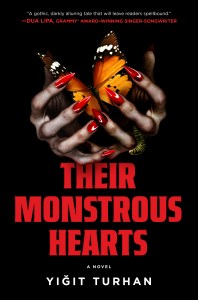





















 Past Midnight Book Reviews & More