Categories: Christian Fiction, Women’s Fiction, Romance, Friendship
Disclaimer: **I received this book free from NetGalley in exchange for an honest review. All thoughts and opinions are my own.**
February 4, 2003, is just another day for Olivia Ross—a greeting card writer whose passion project is a screenplay of her own. After she and a handsome, struggling actor have a near-magic encounter in a coffee shop, they make a spontaneous pact: in ten years, after they’ve found the success they’re just sure they’re going to achieve, they’ll return to the coffeehouse to partner up and make a film together. The only problem? Olivia neglected to get the stranger’s name. But she doesn’t forget the date.
For the next ten years, every February 4, Olivia has an exceptional day, full of coincidences and ironies. As men come and go and return to her life, and as she continues to write her screenplay, she still wonders about the guy from the coffee shop—the nameless actor she’s almost certain was Hamish McDougal, now a famous member of the Hollywood elite.
But a lot can happen in ten years, and while waiting for the curtain to rise on her fate, the true story of Olivia’s life is being written—and if she’s not careful, she’ll completely miss the epic romance playing out right before her eyes.
I love the cover!
This story follows Olivia Ross for ten years on every February 4th because something happens to her on that date that solidified it as a special day. I thought this concept was pretty cool, it definitely made me want to keep reading to see if the day mention ten years into the future will play out as Olivia hoped.
This is a slow burn, very clean romance – the only thing that happens are a few kisses.
Olivia and Fi’s best friend relationship is the long lasting one in this story. It goes through a few bumps here and there but ultimately they are besties forever.
There are a few men that come into Olivia’s life but Liam was the one that got away – or did he? It’s complicated, let’s just leave it at that.
I thought the plot twist was cute and really unexpected. I was hoping for something bigger but it turned out okay in the end.
I didn’t realize this was Christian fiction until I saw it in the thread in Goodreads. I don’t read Christian fiction but this one was really cute. Thing is, there was nothing about faith in this book, so I’m a bit confused about that. Was it “fate” or “faith” that brings Olivia all the way to February 4, 2013?
As for Olivia’s love life, it was getting a bit tiring for me. Obviously we know who is the best guy for her, and she knows it but always too late and always pushing him away when he is trying to move on? I was getting annoyed with her – I wanted her to make up her mind.
I found this story to be am engaging read especially since every chapter is a February 4th with something interesting always happening to Olivia Ross. Plot Twist is a light hearted, slow burn romance with a very fun and unique premise.
Hello readers! How has everyone been? I felt like May was a long month and I needed a lot of time to unwind because April was a busy, strenuous month for me. In this month I finished getting vaccinated, yay! I took a break from doing resin projects the last few weeks because it is HOT out here. It’s so humid and the only time I could really do resin is at 6am…and who wants to be doing that? Haha…yes, I work outdoors because of the fumes. So maybe I’ll switch to hand stamping metal keychains again while the weather is hot.
As far as reading goes? I am in a fantasy reading slump, which I’m afraid might be affecting my reviews. I am drawn more to contemporary romance lately. Funny how that happens but I always take it as a sign that I need a change of genre. Or I need to take a break from reading? I’m not sure but I’ve done both, taken a break and change the genre.
So let’s see what I’ve read this month…
What I Read and Reviewed in May:
Float Plan by. Trish Doller – 3.5/5 Stars
BLOG TOUR} The Warsaw Orphan by Kelly Rimmer – 4/5 Stars
Open book by. Jessica Simpson – 3.5/5 Stars
ARC Reviews Posted in May:
Sunny Song Will Never Be Famous by. Suzanne Park – 3.5/5 Stars
BLOG TOUR} Talk Bookish to Me by. Kate Bromley – 4/5 Stars
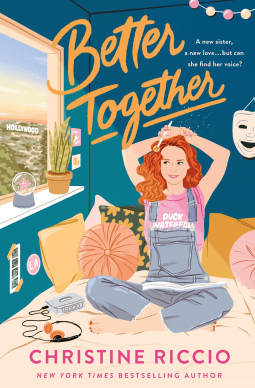
Better Together by. Christine Riccio – 2/5 STARS (DNF)
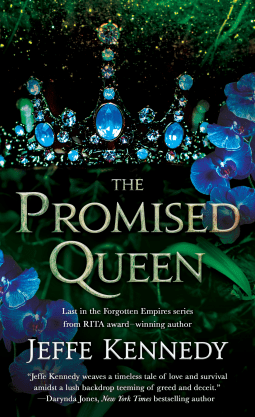
The Promised Queen by. Jeffe Kennedy – 4.5/5 Stars
14 Ways to Die by. Vincent Ralph – 3/5 Stars
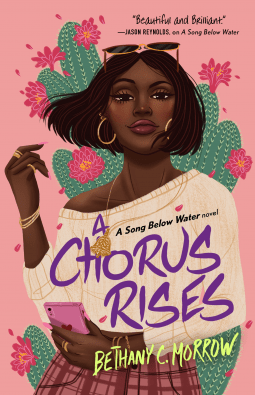
A Chorus Rises by. Bethany C. Morrow – 3.5/5 Stars
The Soulmate Equation by. Christine Lauren – 5/5 Stars
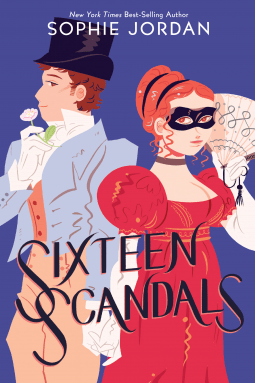
Sixteen Scandals by. Sophie Jordan – 3/5 Stars
ARCS I Read in May for Future Posts:
Actual Books Read in May: 13 books
Blog Tours: 2
I didn’t do too bad! I thought I read less actually but arcs always make the bulk of it. There were a few library books online that expired before I could get to them so once more I need to borrow them (I keep doing that!).
Let’s see if my slump continues or I can get out of it. Maybe I am fantasy’d out, for now. I’ve also considered taking a mini break from blogging, we shall see. Anyway, how did you do in May?
On the Netflix and stuff…I watched/binged:
The Last Kingdom 😳 – but season 4 is dragging for me, I think I’m tired of the killing in the name of God and land for now. 😏
Ginny & Georgia – totally unexpected and wasn’t planning on watching but sometimes I need something on while blogging. Such drama, love triangles and emo teenage moments! But I definitely want to see what happens in season 2.
#SixforSunday is… it’s really just that. You choose 6 books (normally) that you’d choose to fit whatever the prompt is that week. This meme is hosted by A Little but a Lot and you can follow the link to find the prompts for April to June.
This week’s topic:
Books on My Spring TBR
From the critically acclaimed author of The Downstairs Girlcomes the richly imagined story of Valora and Jamie Luck, twin British – Chinese acrobats traveling aboard the Titanic on its ill fated maiden voyage.
Southampton, 1912: Seventeen-year-old British-Chinese Valora Luck has quit her job and smuggled herself aboard the Titanic with two goals in mind: to reunite with her twin brother Jamie–her only family now that both their parents are dead–and to convince a part-owner of the Ringling Brothers Circus to take the twins on as acrobats. Quick-thinking Val talks her way into opulent firstclass accommodations and finds Jamie with a group of fellow Chinese laborers in third class. But in the rigidly stratified world of the luxury liner, Val’s ruse can only last so long, and after two long years apart, it’s unclear if Jamie even wants the life Val proposes. Then, one moonless night in the North Atlantic, the unthinkable happens–the supposedly unsinkable ship is dealt a fatal blow–and Val and her companions suddenly find themselves in a race to survive.
Stacey Lee, master of historical fiction, brings a fresh perspective to an infamous tragedy, loosely inspired by the recently uncovered account of six Titanic survivors of Chinese descent.
*****
Eighteen-year-old Ziva prefers metal to people. She spends her days tucked away in her forge, safe from society and the anxiety it causes her, using her magical gift to craft unique weapons imbued with power.
Then Ziva receives a commission from a powerful warlord, and the result is a sword capable of stealing its victims’ secrets. A sword that can cut far deeper than the length of its blade. A sword with the strength to topple kingdoms. When Ziva learns of the warlord’s intentions to use the weapon to enslave all the world under her rule, she takes her sister and flees.
Joined by a distractingly handsome mercenary and a young scholar with extensive knowledge of the world’s known magics, Ziva and her sister set out on a quest to keep the sword safe until they can find a worthy wielder or a way to destroy it entirely.
A teenage blacksmith with social anxiety accepts a commission from the wrong person and is forced to go on the run to protect the world from the most powerful magical sword she’s ever made.
*****
A strange darkness grows in Allward.
Even Corayne an-Amarat can feel it, tucked away in her small town at the edge of the sea.
She soon discovers the truth: She is the last of an ancient lineage—and the last hope to save the world from destruction. But she won’t be alone. Even as darkness falls, she is joined by a band of unlikely companions:
A squire, forced to choose between home and honor. An immortal, avenging a broken promise. An assassin, exiled and bloodthirsty. An ancient sorceress, whose riddles hide an eerie foresight. A forger with a secret past. A bounty hunter with a score to settle.
Together they stand against a vicious opponent, invincible and determined to burn all kingdoms to ash, and an army unlike anything the realm has ever witnessed.
*****
In this sequel to The Kinder Poison–which People magazine proclaimed a “delicious high-stakes adventure”–the magical kingdom of Orkena is on the brink of war, and the only person who can save it is Zahru, the girl they once doomed for death.
After surviving the Crossing, Zahru has sworn off adventures. While crown prince Jet navigates the looming threat of war, she’s content to simply figure out what the future holds for them. But they’re dealt a devastating blow when prince Kasta returns with a shocking claim: he’s the true winner of the Crossing and the rightful heir, and he bears the gods’ mark as proof. Even more surprising–he’s not the only one.
Somehow, Zahru possesses the very same mark, giving her equal right to the throne. The last thing she wants is to rule beside her would-be executioner, but she can’t let Orkena fall into his merciless hands. So Zahru, Jet, and their allies must race against the clock to find a way to stop Kasta, because once he’s crowned, there’s no telling what horrors he’ll unleash to win the war.
Zahru will do whatever it takes to keep Kasta from taking the throne…but to stop a villain, is she willing to become one herself?
*****
Seventeen-year-old Iris Hollow has always been strange. Something happened to her and her two older sisters when they were children, something they can’t quite remember but that left each of them with an identical half-moon scar at the base of their throats.
Iris has spent most of her teenage years trying to avoid the weirdness that sticks to her like tar. But when her eldest sister, Grey, goes missing under suspicious circumstances, Iris learns just how weird her life can get: horned men start shadowing her, a corpse falls out of her sister’s ceiling, and ugly, impossible memories start to twist their way to the forefront of her mind.
As Iris retraces Grey’s last known footsteps and follows the increasingly bizarre trail of breadcrumbs she left behind, it becomes apparent that the only way to save her sister is to decipher the mystery of what happened to them as children.
The closer Iris gets to the truth, the closer she comes to understanding that the answer is dark and dangerous – and that Grey has been keeping a terrible secret from her for years.
*****
Teen influencer Naema Bradshaw has it all: she’s famous, privileged, has “the good hair”— and she’s an Eloko, a person who’s gifted with a song that woos anyone who hears it. Everyone loves her — well, until she’s cast as the awful person who exposed Tavia’s secret siren powers.
Now, she’s being dragged by the media. No one understands her side: not her boyfriend, not her friends, nor her Eloko community. But Naema knows the truth and is determined to build herself back up — no matter what.
When a new, flourishing segment of Naema’s online supporters start targeting black girls, however, Naema must discover the true purpose of her magical voice.
*****
I’m almost finished with the A Chorus Rises arc so at least I can take that one off my list soon. What’s on your spring TBR?
Categories: Contemporary, Romance, Sailing, Grief, Mental Health
Critically acclaimed author Trish Doller’s unforgettable and romantic adult debut about setting sail, starting over, and finding yourself…
Since the loss of her fiancé, Anna has been shipwrecked by grief—until a reminder goes off about a trip they were supposed to take together. Impulsively, Anna goes to sea in their sailboat, intending to complete the voyage alone.
But after a treacherous night’s sail, she realizes she can’t do it by herself and hires Keane, a professional sailor, to help. Much like Anna, Keane is struggling with a very different future than the one he had planned. As romance rises with the tide, they discover that it’s never too late to chart a new course.
In Trish Doller’s unforgettable Float Plan, starting over doesn’t mean letting go of your past, it means making room for your future.
Love the cover because it’s so bright and yellow. Makes you think of a happy story and yet Anna our main character is dealing with grief throughout the book.
I related to Anna’s grief a lot because I lost my first husband in my late 20’s. So everything she felt, I’ve been through but I like that even though the topic is heavy – Anna being on the water, learning how to sail and navigate foreign waters was therapeutic not only for her as a character but me as a reader. It keep her moving forward, working through the grief and I appreciated that about the story. Also the dog she adopts, Queenie? I wouldn’t have gotten through my grief without my dogs. 💗 They are angels on earth.
Keane, her crew mate and eventually lover is the sweetest. I love how good he is, not only to her, but overall. Even with his own challenges about his past, his kindness is beautiful. Anna needed that.
I found all the sailing terminology go over my head because I am not a sailor but I loved learning what I could and imagining what each part of the boat is. I loved that Anna had to learn to sail because Keane wasn’t in her plans for the path home. She did it, even if she was scared. As for me, I’d suck at sailing ~ I need my comforts like a bed, a shower every day haha and internet but the idea of roughing it out there under the stars every night sounds amazing.
The setting of this book is really fantastic. I’m an island girl, I live in Hawaii, but I’m not a sailor and I have never sailed to any of the islands nearby, I think our waters are very different from the Caribbean where you can reach so many different islands, daily. So I loved island hopping with Anna and Keane! I hope to visit these islands one day and learn more about the history and people that live there. I’m glad they mentioned how the slavery trade made an impact there.
Even though Anna is grieving I didn’t feel immersed in her grief while reading this, maybe because the sailing keeps her moving. She was never really stuck and I know being stuck and grieving is one of the scariest places to be. So this book didn’t trigger me as much as I thought it would, which I liked!
I do like how Anna and Keane’s relationship progressed very slowly but for the most part, they are friends. They don’t flirt a lot with another, and that’s to respect Anna’s space as she grieves, but when they do get together, I don’t feel explosions – it’s more of a nice melting into one another that they do. It really feels like a friendship that blossoms into love, the sex is an added bonus, but you know it’s deeper than that with both of them. So don’t expect a lot of romance from the beginning of this book ~ this is Anna’s journey of grief.
As a romance book, this one is a slow burn and barely a burn at that, more like a comforting warmth by the end. As a book about a woman grieving her fiance and trying to move her life forward, I think it hit a lot of the right spots. Anna learns to sail and open her heart again on this adventure through the Caribbean. She hits some bumps along the way but ultimately she learns to navigate her life on her own again, with the help of Keane, and for someone who has experienced grief on that level, I found Anna’s journey inspirational.
Categories: WWII, Historical, Fiction, Holocaust, War, Romance
Disclaimer: **I received this book free from NetGalley in exchange for an honest review. All thoughts and opinions are my own.**
Thank you to Graydon House for giving me a chance to read this eARC in exchange for an honest review.
With the thrilling pace and historical drama of Pam Jenoff and Kristin Hannah, New York Times bestselling author Kelly Rimmer’s newest novel is an epic WWII saga and love story, based on the real-life efforts of two young people taking extraordinary risks to save their countrymen, as they try to find their way back to each other and the life they once knew.
Following on the success of The Things We Cannot Say, this is Kelly Rimmer’s return to the WWII category with a brand new novel inspired by Irena Sendler, the real-life Polish nurse who used her access to the Warsaw ghetto to smuggle Jewish children and babies to safety.
Spanning the tumultuous years between 1942 and 1945 in Poland, The Warsaw Orphan follows Emilia over the course of the war, her involvement with the Resistance, and her love for Sergiusz, a young man imprisoned in the Jewish ghetto who’s passion leads him to fight in the Warsaw Uprising. From the Warsaw ghetto to the Ravensbruck concentration camp, through Nazi occupation to the threat of a communist regime, Kelly Rimmer has penned her most meticulously researched and emotionally compelling novel to date.
Poland is ravaged on both sides in this war. The Soviet’s Red Army helps them liberate Poland from the Nazis but then the country comes under their rule. I definitely felt the anguish of the people of Poland and the exhaustion of never ending fighting for their country. We learn a lot about the Warsaw ghetto in Emilia’s (Elz-bieta) perspective being from outside the ghetto and Roman’s story from inside the ghetto.
Sara, the nurse who is helping smuggle children out of the ghetto is doing an amazing, stressful and life-threatening job. The story is loosely based on a real life nurse, Irena Sendler, who actually did smuggle children out of the Warsaw ghetto.
Through Roman, one of the main characters, we see his hunger to fight and keep fighting the Nazis and the Soviets. He is the anger in action. He joins the rebels who are fighting against the Nazis.
Emilia is an interesting character because she has a secret and she is very young in this venture of saving Jewish children in the ghetto. She’s only 14 and still so naive in some ways but she learns quickly. Emilia and Roman reminds us how kids grew up too fast in this time of war. By the end of this story one of them is tired of fighting and the tired wants to keep on. They do have a love story among the despair but even in the end I wasn’t sure if they would make it.
The ending is quite emotional, I felt for both Emilia, Roman and their friends who survived what the Nazis did to the whole of Europe.
Triggers: starvation, death, violence, mass executions, rape
This is a war story and it is graphic. There is a lot of visual accounts of the atrocities in the ghetto and concentration camp that is horrifying.
I learned a lot about the Warsaw ghetto from this book. This is an emotional and heartbreaking story. But there are strong characters in this sad story, and people fighting to do what they can to fight the Nazis and help the children that they could. It’s a story about an ugly time in history and a country being torn apart from the war and hope for a better day, one day with no fighting. If you enjoy historical fiction especially about World War II and the Holocaust, then you should read The Warsaw Orphan.
📚 ~ Yolanda
About the Author:
Kelly Rimmer is the worldwide, New York Times and USA Today bestselling author of Before I Let You Go, The Things We Cannot Say, and Truths I Never Told You. She lives in rural Australia with her husband, two children and fantastically naughty dogs, Sully and Basil. Her novels have been translated into more than twenty languages. Please visit her at https://www.kellyrimmer.com/
Facebook: @Kellymrimmer
Twitter: @KelRimmerWrites
Instagram: @kelrimmerwrites
Book Excerpt:
1
Roman
28 March, 1942
The human spirit is a miraculous thing. It is the strongest part of us—crushed under pressure, but rarely broken. Trapped within our weak and fallible bodies, but never contained. I pondered this as my brother and I walked to a street vendor on Zamenhofa Street in the Warsaw Ghetto, late in the afternoon on a blessedly warm spring day.
“There was one right there,” he said, pointing to a rare gap in the crowd on the sidewalk. I nodded but did not reply. Dawidek sometimes needed to talk me through his workday but he did not need me to comment, which was fortunate, because even after months of this ritual, I still had no idea what to say.
“Down that alleyway, there was one on the steps of a building. Not even on the sidewalk, just right there on the steps.”
I fumbled in my pocket, making sure I still had the sliver of soap my stepfather had given me. Soap was in desperate demand
in the ghetto, a place where overcrowding and lack of running water had created a perfect storm for illness. My stepfather ran a tiny dentistry practice in the front room of our apartment and needed the soap as much as anyone—maybe even more so. But as desperate as Samuel’s need for soap was, my mother’s need for food eclipsed it, and so there Dawidek and I were. It was generally considered a woman’s job to go to the market, but Mother needed to conserve every bit of strength she could, and the street vendor Samuel wanted me to speak to was blocks away from our home.
“…and Roman, one was behind a big dumpster,” he hesitated, then grimaced. “Except I think we missed that one yesterday.”
I didn’t ask how he’d come to that conclusion. I knew that the answer was liable to make my heart race and my vision darken, the way it did sometimes. Sometimes, it felt as if my anger was simmering just below the surface: at my nine-year-old brother and the rest of my family. Although, none of this was their fault. At Sala, my boss at the factory on Nowolipki Street, even though he was a good man and he’d gone out of his way to help me and my family more than once. At every damned German I laid eyes on. Always them. Especially them. A sharp, uncompromising anger tinged every interaction those days, and although that anger started and ended with the Germans who had changed our world, it cycled through everyone else I knew before it made its way back where it belonged.
“There was one here yesterday. In the middle of the road at the entrance to the market.”
Dawidek had already told me all about that one, but I let him talk anyway. I hoped this running commentary would spare him from the noxious interior that I was currently grappling with. I envied the ease with which he could talk about his day, even if hearing the details filled me with guilt. Guilt I could handle, I probably deserved it. It was the anger that scared me. I felt like my grip on control was caught between my sweaty hands and, at any given moment, all it would take was for someone to startle me, and I’d lose control.
The street stall came into view through the crowd. There was always a crush of people on the street until the last second before seven o’clock curfew. This was especially the case in summer, when the oppressive heat inside the ghetto apartments could bring people to faint, besides which, the overcrowding inside was no better than the overcrowding outside. I had no idea how many people were inside those ghetto walls—Samuel guessed a million, Mrs. Kuklin´ski in the bedroom beside ours said it was much more, Mother was quite confident that it was maybe only a hundred thousand. All I knew was that ours was not the only apartment in the ghetto designed for one family that was currently housing four—in fact, there were many living in even worse conditions. While the population was a hot topic of conversation on a regular basis, it didn’t actually matter all that much to me. I could see with my own eyes and smell with my own nose that however many people were trapped within the ghetto walls, it was far, far too many.
When the vendor’s table came into view, my heart sank: she was already packing up for the day and there was no produce left. I was disappointed but not surprised: there had been no chance of us finding food so late in the day, let alone food that someone would barter for a simple slip of soap. Dawidek and I had passed a store that was selling eggs, but they’d want zloty for the eggs, not a tiny scrap of soap.
“Wait here a minute,” I murmured to my brother, who shrugged as he sank to sit on an apartment stoop. I might have let him follow me, but even after the depths our family had sunk to over the years of occupation, I still hated for him to see me beg. I glanced at him, recording his location to memory, and then pushed through the last few feet of people mingling on the sidewalk until I reached the street vendor. She shook her head before I’d spoken a word.
“I am sorry young man; I have nothing to offer you.”
“I am Samuel Gorka’s son,” I told her. It was an oversimplification of a complicated truth, but it was the best way I could help her place me. “He fixed your tooth for you, remember? A few months ago? His practice is on Miła Street.”
Recognition dawned in her gaze, but she still regarded me warily.
“I remember Samuel and I’m grateful to him, but that doesn’t change anything. I have no food left today.”
“My brother and I…we work during the day. And Samuel too. You know how busy he is, helping people like yourself. But the thing is, we have a sick family member who hasn’t—”
“Kid, I respect your father. He’s a good man, and a good dentist. I wish I could help, but I have nothing to give you.” She waved to the table, to the empty wooden box she had packed up behind her, and then opened her palms towards me as if to prove the truth of her words.
“There is nowhere else for me to go. I can’t take no for an answer. I’m going to bed hungry tonight, but I can’t let…” I trailed off, the hopelessness hitting me right in the chest. I knew I would be going home without food for my mother that night, and the implications made me want to curl up in a ball, right there in the gutter. But hopelessness was dangerous, at least in part because it was always followed by an evil cousin. Hopelessness was a passive emotion, but its natural successor drove action, and that action rarely resulted in anything positive. I clenched my fists, and my fingers curled around the soap. I pulled it from my pocket and extended it towards the vendor. She looked from my palm to my face, then sighed impatiently and leaned close to me to hiss,
“I told you. I have nothing left to trade today. If you want food, you need to come earlier in the day.”
“That’s impossible for us. Don’t you understand?”
To get to the market early in the day one of us would have to miss work. Samuel couldn’t miss work; he could barely keep up as it was—he performed extractions from sunup to curfew most days. Rarely was this work paid now that money was in such short supply among ordinary families like his patients, but the work was important—not just because it afforded some small measure of comfort for a people group who were, in every other way, suffering immensely. But every now and again Samuel did a favor for one of the Jewish police officers or even a passing German soldier. He had a theory that one day soon, those favors were going to come in handy. I was less optimistic, but I understood that he couldn’t just close his practice. The moment Samuel stopped working would be the moment he had to perform an honest reckoning with our situation, and if he did that, he would come closer to the despair I felt every waking moment of every day.
“Do you have anything else? Or is it just the soap?” the woman asked me suddenly.
“That’s all.”
“Tomorrow. Come back this time tomorrow. I’ll keep something for you, but for that much soap?” She shook her head then pursed her lips. “It’s not going to be much. See if you can find something else to barter.”
“There is nothing else,” I said, my throat tight. But the woman’s gaze was at least sympathetic, and so I nodded at her. “I’ll do my best. I’ll see you tomorrow.”
As I turned away, I wondered if it was worth calling into that store to ask about the eggs, even though I knew that the soap wasn’t nearly enough for a whole egg. It wasn’t enough for even half an egg here on the market, and the stores were always more expensive than the street vendors. Maybe they would give me a shell? We could grind it up and Mother could drink it in a little water. We’d done that once before for her. It wasn’t as good as real food, but it might help a little overnight. It surely couldn’t hurt.
As I spun back towards our apartment, a burst of adrenaline nearly knocked me sideways. Dawidek hadn’t moved, but two Jewish police officers were now standing in front of him. Like me, my brother was tall for his age—an inheritance from our maternal grandfather that made us look bizarre when we stood with Samuel and Mother, who were both more diminutive. Even so, he looked far too small to be crowded into the doorway of an apartment by two Jewish Police officers. That situation could turn to bloodshed in a heartbeat. The Kapo operated on a spectrum from well-meaning and kindly to murderously violent, and I had no way of knowing what kind of Kapo were currently accosting Dawidek. My heart thundered against the wall of my chest as I pushed my way back to them, knowing even as I approached that intervening could well get me shot.
For everything I had been through and for everything I had seen, the only thing that kept me going was my family, especially Dawidek. He was my favorite person in the world, a burst of purity in an environment of pure evil. Some days, the only time I felt still inside was when he and I were playing or talking in the evenings—and that stillness was the only rest I got. I could not live without him, in fact—I had already decided that if it came to that, I wouldn’t even try.
“Dawidek?” I called as I neared. Both Kapo turned toward me. The one on the left, the taller one, sized me up as if an emaciated, unarmed 16-year-old was any kind of threat. I knew from bitter experience that the smart thing to do would have been to let Dawidek try to talk his own way out of this. He was nine years old but used to defending himself in the bizarrely toxic environment of the Ghetto. All day long, he was at his job alone, and I was at mine. He needed his wits about him to survive even an hour of that, and I needed to trust that he could handle himself.
But I couldn’t convince myself to be smart, even when I knew that what I was about to do was likely to earn me, at best, a severe beating. I couldn’t even stop myself when the Kapo gave me a second chance to walk away. They ignored me and kept their attention on my brother. “Hey!” I shouted, loud enough that my voice echoed up and down the street, and dozens of people turned to stare. “He’s just a kid. He hasn’t done anything wrong!”
I was mentally planning my next move. I’d make a scene, maybe push one of the Kapo, and when they turned to beat me, Dawidek could run. Pain was never pleasant, but physical pain could also be an effective distraction from mental anguish, which was the worst kind. Maybe I could even land a punch, and that might feel good. But my brother stepped forward, held his hands up to me and said fiercely, “These are my supervisors, Roman. Just supervisors on the crew. We were just talking.”
My stomach dropped. My heartbeat pounded in my ears and my hands were hot.—I knew my face was flushed raspberry, both with embarrassment and from the adrenaline. After a terse pause that seemed to stretch forever, the Kapo exchanged an amused glance, one patted Dawidek on the back, and they continued down the street, both laughing at me. Dawidek shook his head in frustration.
“Why did you do that? What would you do, even if I was in trouble?”
“I’m sorry,” I admitted, scraping my hand through my hair. “I lost my head.”
“You’re always losing your head,” Dawidek muttered, falling into step beside me, as we began to follow the Kapo back towards our own apartment. “You need to listen to Father. Keep your head down, work hard and hope for the best. You are too smart to keep making such dumb decisions.”
Hearing my little brother echoing his father’s wisdom in the same tone and with the same impatience was always jarring, but in this case, I was dizzy with relief, and so I messed up his hair, and let out a weak laugh.
“For a nine-year-old, you are awfully wise.”
“Wise enough to know that you didn’t get any food for mother.”
“We were too late,” I said, and then I swallowed the lump in my throat. “But she said that we should come back tomorrow. She will set something aside for us.”
“Let’s walk the long way home. The trashcans on Smocza Street are sometimes good.”
We were far from the only family in the ghetto who had run out of resources. We were all starving and any morsel of food was quickly found, even if it was from a trashcan. Still, I was not at all keen to return to our crowded apartment, to face the disappointment in my stepfather’s gaze or to see the starvation in my mother’s. I let Dawidek lead the way, and we walked in silence, broken by his periodic bursts of commentary.
“We picked one up here… Another over there… Mordechai helped me with one there.”
As we turned down a quiet street, I realized that Dawidek’s Kapo supervisors were right in front of us, walking a few dozen feet ahead.
“We should turn around, I don’t want any trouble with those guys,” I muttered. Dawidek shook his head.
“They like me. I work hard and don’t give them any trouble. Now that you have stopped trying to get yourself killed, they won’t bother us, even if they do notice us.”
Just then, the shorter policeman glanced towards the sidewalk on his right, and then he paused. He waved his companion ahead, then withdrew something from his pocket as he crouched low to the ground. —I was far too far away to hear the words he spoke, but I saw the sadness in his gaze. The Kapo then rose and jogged ahead to catch up with his partner. Dawidek and I continued along the street, but only when we drew near where he had stopped did I realize why.
We had been in the ghetto for almost two years. Conditions were bad to begin with, and every new day seemed to bring new trials. I learned to wear blinders—to block out the public pain and suffering of my fellow prisoners. I had walked every block of the ghetto, both the Little Ghetto with its nicer apartments where the elite and artists appeared to live in relative comport, and through the Big Ghetto, where poor families like my own were crammed in, trying to survive at a much higher density. The footbridge on Chłodna Street connected the two and elevated the Ghetto residents above the “Aryan” Poles, and even the Germans, who passed beneath it. The irony of this never failed to amuse me when I crossed. Sometimes, I crossed it just to cheer myself up.
I knew the Ghetto inside and out, and I noticed every detail, even if I had taught myself to ignore what I saw as much as I could. I learned not to react when an elderly man or woman caught my hand as I passed, clawing in the hopes that I could spare them a morsel of food. I learned not to so much as startle if someone was shot in front of my eyes. And most of all, I learned to never look at the face of any unfortunate soul who was prone on the sidewalk. The only way to survive was to remain alert so I had to see it all, but I also had to learn to look right through it. The only way to manage my own broiling fury was to bury it.
But the policeman had drawn my attention to a scene of utter carnage outside of what used to be a clothing store. The store had long ago run out of stock and had been re-purposed as accommodation for several families. The wide front window was now taped over with Hessian sacks for privacy; outside of that window, on the paved sidewalk, a child was lying on her stomach. Alive, but barely.
The Ghetto was teeming with street children. The orphanages were full to bursting which meant that those who weren’t under the care of relatives or kindly strangers were left to their own devices. I saw abandoned children, but I didn’t see them.
I’d have passed right by this child on any other day. I couldn’t even manage to keep my own family safe and well, so it was better to keep walking and spare myself the pain of powerlessness. But I was curious about what the policeman had given the child, and so even as we approached her, I was scanning—looking to see what had caught his attention and to try to figure out what he’d put down on the ground.
Starvation confused the normal growth and development of children, but even so, I guessed she was two or three. She wore the same vacant expression I saw in most children by that stage. Patches of her hair had fallen out, and her naked stomach and legs were swollen. Someone had taken her clothing except for a tattered pair of underwear, and I understood why.
This child would not be alive by morning. Once they became too weak to beg for help, it didn’t take long, and this child was long past that point. Her dull brown eyes were liquid pools of defeat and agony.
My eyes drifted to her hands. One was lying open and empty on the sidewalk beside her, her palm facing upward, as if opening her hands to God. The other was also open, slumped against the sidewalk on the other side of her, but this palm was not empty. Bread. The policeman had pressed a chunk of bread beneath the child’s hand. I stared at the food and even though it was never going to find its way to my lips, my mouth began to water. I was torturing myself, but it was much easier to look at the bread than at the girl’s dull eyes.
Dawidek stood silently beside me. I thought of my mother, and then crouched beside the little girl.
“Hello,” I said, stiff and awkward. The child did not react. I cast my gaze all over her face, taking it in. The sharp cheekbones. The way her eyes seemed too big for her face. The matted hair. Someone had once brushed this little girl’s hair, and probably pulled it into pretty braids. Someone had once bathed this child, and tucked her into bed at night, bending down to whisper in her ear that she was loved and special and wanted.
Now, her lips were dry and cracked, and blood dried into a dirty black scab in the corner of her mouth. My eyes burned, and it took me a moment to realize that I was struggling to hold back tears.
“You should eat the bread,” I urged softly. Her eyes moved, and then she blinked, but then her eyelids fluttered and fell closed. She drew in a breath, but her whole chest rattled, the sound I knew people made just before they died—when they were far too ill to even cough. A tear rolled down my cheek. I closed my eyes, but now, instead of blackness, I saw the little girl’s face.
This was why I learned to wear blinders, because if you got too close to the suffering, it would burn itself into your soul. This little girl was now a part of me, and her pain was part of mine.
Even so, I knew that she could not eat the bread. The policeman’s gesture had been well-meaning, but it had come far too late. If I didn’t take the bread, the next person who passed would. If my time in the ghetto had taught me anything, it was that life might deliver blessings, but each one would have a sting in its tail. God might deliver us fortune, but never without a cost. I would take the bread, and the child would die overnight. But that wouldn’t be the end of the tragedy. In some ways, it was only the beginning.
I wiped my cheeks roughly with the back of my hand, and then before I could allow my conscience to stop me, I reached down and plucked the bread from under the child’s hand, to swiftly hide it my pocket. Then I stood, and forced myself to not look at her again. Dawidek and I began to walk.
“The little ones should be easier. I don’t have to ask the big kids for help lifting them, and they don’t weigh anything at all. They should be easier, shouldn’t they?” Dawidek said, almost philosophically. He sighed heavily, and then added in a voice thick with confusion and pain. “I’ll be able to lift her by myself tomorrow morning, but that won’t make it easier.”
Fortune gave me a job with one of the few factories in the ghetto that was owned by a kindly Jew, rather than some German businessman only wanting to take advantage of slave labor. But this meant that when the Kapo came looking for me at home, to help collect the bodies from the streets before sunrise each day, the only other viable person in our household was my brother.
When Dawidek was first recruited to this hideous role, I wanted to quit my job so that I could relieve him of it. But corpse-collection was unpaid work and my factory job paid me in food—every single day, I sat down to a hot lunch, which meant other members of my family could share my portion of rations. This girl would die overnight, and by dawn, my little brother would have lifted her into the back of a wagon. He and a team of children and teenagers, under the supervision of the Kapo, would drag the wagon to the cemetery, where they would tip the corpses into a pit with dozens of others.
Rage, black and red and violent in its intensity, clouded the edges of my vision and I felt the thunder of the injustice in my blood. But then Dawidek drew a deep breath, and he leaned forward to catch my gaze. He gave me a smile, a brave smile, one that tilted the axis of my world until I felt it chase the rage away.
I had to maintain control. I couldn’t allow my fury to destroy me, because my family was relying on me. Dawidek was relying on me.
“Mother is going to be so excited to have bread,” he said, his big brown eyes lighting up at the thought of pleasing her. “And that means Eleonora will get better milk tomorrow, won’t she?”
“Yes,” I said, my tone as empty as the words themselves. “This bread is a real blessing.”
I haven’t done a book tag in a long, long time but when I was tagged in this one, I knew it fit me.
I was graciously tagged by Ellie @ Ace Reader. Thanks for tagging me! So let’s get to it!
The Rules:
Link back to the original tag (this post: Ace Reader and Jami!)
Complete the questions with books you want to have read but don’t want to read
Tag some people at the end to do the tag next
A book that you feel you need to read because everyone talks about it.
I have this on my kindle app and I read one chapter. I realize I have to be in the mood to read this one. I loved the action in the beginning but I was putting it down to finish arcs. So I think I’ll finish whatever arcs I have on NetGalley and then get to reading everything on my kindle shelf and my actual bookshelf. I have so many books I need to read.
A book that’s really long.
I don’t mind a long book as long as it keeps my interest.
This one is 659 pages long and I read the other two books and the thought of reading one more book in this series and 659 at that? It makes me want to cry lol…so I’m not going to do it.
A book you’ve owned / had on your TBR for too long.
Where do I begin?? LOL
Will I ever get to this book? It’s on my shelf and I keep trying to pick it up and always put it back down. I added it to my TBR because it was all people would talk about for awhile. Now I don’t know if I want to read it because the first few pages do not hold my interest. Or should I keep it for a day where I have nothing to read? (Don’t know when that will happen…). So it sits there on my book shelf.
A book that intimidates you.
The classics intimidate me. I can read Jane Eyre and the Jane Austen books but I remember when they adapted War and Peace into a tv series with Lily James in the show and I loved it! So I thought okay, as a challenge, let me try and read the book. I got as far as chapter one and said, alright…enough of that. 😂
A book that you think might be slow.
I enjoyed the Red Queen series but in the last books my interest waned. So I do want to read Realm Breaker but a lot of reviews I’ve seen say that it starts slow. I don’t mind slow as long as the characters keep me interested so I’m still on the fence about this one. The reviews look good though!
A book you need to be in the right mood for.
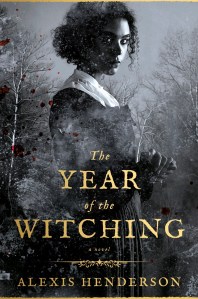
I love to read books about witches around Halloween! This one is on my TBR but I didn’t have time to read it last year so I’m saving it for this year.
A book you’re unsure if you will like.
This one comes out in a few weeks and I’m excited for it since I loved the first book, The Kinder Poison. And I love the covers for the series so far, they are so good!
Since this is a sequel, I’m always cautious and wary and have high hopes. So we shall see if I like it or not.
And that’s the tag! I think this is the first tag I’ve done of 2021 🤦🏻♀️. Why are they so hard to do?
In this irreverent regency romp by New York Times best-selling author Sophie Jordan, newly minted sixteen-year-old Primrose Ainsworth finds herself on a wayward birthday adventure through London with a mysterious hero—perfect for fans of My Lady Jane.
The youngest of four daughters, Primrose Ainsworth is used to getting lost in the shuffle. But when her parents decide to delay her debut into English society, Prim hatches a plan to go rogue on the night of her sixteenth birthday.
Donning a mask, Prim escapes to the infamous Vauxhall Gardens for one wild night. When her cover is nearly blown, a mysterious stranger intercedes, and Prim finds an unexpected partner in mischief . . . and romance. But when it’s revealed her new ally isn’t who he says he is, her one night of fun may last past dawn.
In this frothy regency romp perfect for fans of Austen-esque flirtation and Shakespearean hijinks, sometimes a little scandal can be a good thing.
In The Promised Queen, the thrilling finale to Jeffe Kennedy’s Forgotten Empires trilogy, the fate of the world hangs in the balance as Con, Lia, and their allies sacrifice everything in a final bid to destroy the corrupt empire.
Claim the hand that wears the ring, and the empire falls.
Conrí, former Crown Prince of Oriel, claimed the hand that wears the Abiding Ring, but the prophecy remains unfulfilled. Queen Euthalia of Calanthe returned to her island kingdom, but broken in mind and body. With the blood of war unleashing ancient terrors, Calanthe isn’t the haven it once was.
Lia must use her magical bond with Calanthe to save their people while Con fights to hold off the vengeful Emperor Anure and his wizards. Con and Lia will have to trust in each other—and in love—to fend off ultimate disaster.
Everyone knows the Ivies: the most coveted universities in the United States. Far more important are the Ivies. The Ivies at Claflin Academy, that is. Five girls with the same mission: to get into the Ivy League by any means necessary. I would know. I’m one of them. We disrupt class ranks, club leaderships, and academic competitions…among other things. We improve our own odds by decreasing the fortunes of others. Because hyper-elite competitive college admissions is serious business. And in some cases, it’s deadly.
Alexa Donne delivers a nail-biting and timely thriller about teens who will stop at nothing to get into the college of their dreams. Too bad no one told them murder isn’t an extracurricular.
*****
Hunter and Mercy Goode are twin witches, direct descendants of the founder of their town of Goodeville. As their ancestors have done before them, it is now time for the twins to learn what it means to be Gatekeepers–the protectors of the Gates to different underworlds, ancient portals between their world and realms where mythology rules and nightmares come to life.
When their mother becomes the first victim in a string of murders, the devastated sisters vow to avenge her death. But it will take more than magic to rein in the ancient mythological monsters who’ve infected their peaceful town.
Now Hunter and Mercy must come together and accept their destiny or risk being separated for good.
Everyone likes Humaira “Hani” Khan—she’s easy going and one of the most popular girls at school. But when she comes out to her friends as bisexual, they invalidate her identity, saying she can’t be bi if she’s only dated guys. Panicked, Hani blurts out that she’s in a relationship…with a girl her friends absolutely hate—Ishita “Ishu” Dey. Ishu is the complete opposite of Hani. She’s an academic overachiever who hopes that becoming head girl will set her on the right track for college. But Ishita agrees to help Hani, if Hani will help her become more popular so that she stands a chance of being elected head girl.
Despite their mutually beneficial pact, they start developing real feelings for each other. But relationships are complicated, and some people will do anything to stop two Bengali girls from achieving happily ever after.
Top Ten Tuesday was created by The Broke and the Bookish in June of 2010 and was moved to That Artsy Reader Girl in January of 2018. It was born of a love of lists, a love of books, and a desire to bring bookish friends together. Please check out her website for more TTT topics!
This week’s topic is:
Book Quotes I Love
“I’ll be with you every step of the way. Just don’t lock me out. You want to walk in silence for a week, I’m fine with that. So long as you talk to me at the end of it.” ― Sarah J. Maas, A Court of Silver Flames
“… all isn’t lost. We lose things, but sometimes they come back. Life doesn’t always happen in the order you want.” ― Cath Crowley, Words in Deep Blue
“The most important thing you can do in this world, the most necessary thing, is to survive it. You can’t do anything for anyone else if you don’t take care of yourself first.” ― Tracy Deonn, Legendborn
“To be perfect without suffering means no change. If you know neither hurt nor hardship, then you will not know the strength they can summon within the person. What is life’s meaning if you cannot distinguish between happiness and sorrow?” – Rin Chupeco, The Shadowglass
“But to grieve means you have loved. To love opens up the possibility for grief. There cannot be one without the other.” – Rin Chupeco, The Heart Forager
I just started saving quotes from books to add to my book review posts, especially if there are lines that call to me. So these are some of the recent ones I added to some posts and some I didn’t but I love these books.
What did you have for your TTT this week? ~ Yolanda
Categories: Murder Mystery, Social Media, Young Adult, Contemporary
Disclaimer: **I received this book free from NetGalley in exchange for an honest review. All thoughts and opinions are my own.**
A page-turning thriller for the social media age, perfect for fans of A Good Girl’s Guide to Murder and One of Us Is Lying.
Ten years ago Jess lost her mother to the Magpie Man, an infamous serial killer who is still at large and planning to kill again. She’s going to use her new platform as the star of a YouTube reality series to catch him. That is, if he doesn’t catch her first.
Jess’s online show means that everyone is talking about her mother’s murder case. But fame comes with its downsides. The whole world is watching her every move. And it’s hard to know who she can trust.
Could the Magpie Man be lurking closer to her than she thought? Is he watching her right now?
I like the concept of using social media to find a serial killer by drawing them out. It’s also a scary idea but Jess was committed to finding her mother’s killer.
The story moved very quickly because the chapters were short and to the point.
It was difficult to pinpoint who was the Magpie Man so the author did a great job of hiding him from me, the reader. I had a few suspects in mind but I was wrong.
There were some parts that was thrilling and made me wonder if I would do what Jess is doing. My answer: NO. I’d be too afraid to go running out into the night to see who was out there creeping around my house.
Triggers: suicide ideation, murder scenes, grief
I like short chapters but at one point it made the story too choppy for me, it took me out of the story at times.
I didn’t connect much to the story maybe because we are in Jess’s head a lot and I wanted more clues about the killer. Honestly, when the killer was revealed, it felt anticlimactic.
The concept of luring a serial killer with a social media reality show is fascinating. For the most part I was engaged with the story and wanting to find out who was the killer but the big reveal fell short for me. I still think people who enjoy young adult murder mysteries will enjoy this one though.
#SixforSunday is… it’s really just that. You choose 6 books (normally) that you’d choose to fit whatever the prompt is that week. This meme is hosted by A Little but a Lot and you can follow the link to find the prompts for April to June.
This week’s topic:
Best Character Arcs/Growth
If there’s one thing seventeen-year-old Maverick Carter knows, it’s that a real man takes care of his family. As the son of a former gang legend, Mav does that the only way he knows how: dealing for the King Lords. With this money he can help his mom, who works two jobs while his dad’s in prison.
Life’s not perfect, but with a fly girlfriend and a cousin who always has his back, Mav’s got everything under control.
Until, that is, Maverick finds out he’s a father.
Suddenly he has a baby, Seven, who depends on him for everything. But it’s not so easy to sling dope, finish school, and raise a child. So when he’s offered the chance to go straight, he takes it. In a world where he’s expected to amount to nothing, maybe Mav can prove he’s different.
When King Lord blood runs through your veins, though, you can’t just walk away. Loyalty, revenge, and responsibility threaten to tear Mav apart, especially after the brutal murder of a loved one. He’ll have to figure out for himself what it really means to be a man.
*****
Tilla has spent her entire life trying to make her father love her. But every six months, he leaves their family and returns to his true home: the island of Jamaica.
When Tilla’s mother tells her she’ll be spending the summer on the island, Tilla dreads the idea of seeing him again, but longs to discover what life in Jamaica has always held for him.
In an unexpected turn of events, Tilla is forced to face the storm that unravels in her own life as she learns about the dark secrets that lie beyond the veil of paradise—all in the midst of an impending hurricane.
Hurricane Summer is a powerful coming of age story that deals with colorism, classism, young love, the father-daughter dynamic—and what it means to discover your own voice in the center of complete destruction.
*****
Nesta Archeron has always been prickly-proud, swift to anger, and slow to forgive. And ever since being forced into the Cauldron and becoming High Fae against her will, she’s struggled to find a place for herself within the strange, deadly world she inhabits. Worse, she can’t seem to move past the horrors of the war with Hybern and all she lost in it.
The one person who ignites her temper more than any other is Cassian, the battle-scarred warrior whose position in Rhysand and Feyre’s Night Court keeps him constantly in Nesta’s orbit. But her temper isn’t the only thing Cassian ignites. The fire between them is undeniable, and only burns hotter as they are forced into close quarters with each other.
Meanwhile, the treacherous human queens who returned to the Continent during the last war have forged a dangerous new alliance, threatening the fragile peace that has settled over the realms. And the key to halting them might very well rely on Cassian and Nesta facing their haunting pasts.
Against the sweeping backdrop of a world seared by war and plagued with uncertainty, Nesta and Cassian battle monsters from within and without as they search for acceptance-and healing-in each other’s arms.
*****
Jayne Baek is barely getting by. She shuffles through fashion school, saddled with a deadbeat boyfriend, clout-chasing friends, and a wretched eating disorder that she’s not fully ready to confront. But that’s New York City, right? At least she isn’t in Texas anymore, and is finally living in a city that feels right for her.
On the other hand, her sister June is dazzlingly rich with a high-flying finance job and a massive apartment. Unlike Jayne, June has never struggled a day in her life. Until she’s diagnosed with uterine cancer.
Suddenly, these estranged sisters who have nothing in common are living together. Because sisterly obligations are kind of important when one of you is dying.
*****
In Rosario, Argentina, Camila Hassan lives a double life.
At home, she is a careful daughter, living within her mother’s narrow expectations, in her rising-soccer-star brother’s shadow, and under the abusive rule of her short-tempered father.
On the field, she is La Furia, a powerhouse of skill and talent. When her team qualifies for the South American tournament, Camila gets the chance to see just how far those talents can take her. In her wildest dreams, she’d get an athletic scholarship to a North American university.
But the path ahead isn’t easy. Her parents don’t know about her passion. They wouldn’t allow a girl to play fútbol—and she needs their permission to go any farther. And the boy she once loved is back in town. Since he left, Diego has become an international star, playing in Italy for the renowned team Juventus. Camila doesn’t have time to be distracted by her feelings for him. Things aren’t the same as when he left: she has her own passions and ambitions now, and La Furia cannot be denied. As her life becomes more complicated, Camila is forced to face her secrets and make her way in a world with no place for the dreams and ambition of a girl like her.
*****
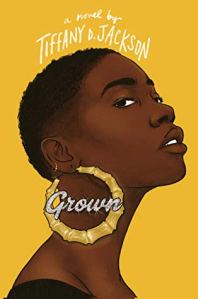
Korey Fields is dead.
When Enchanted Jones wakes with blood on her hands and zero memory of the previous night, no one—the police and Korey’s fans included—has more questions than she does. All she really knows is that this isn’t how things are supposed to be. Korey was Enchanted’s ticket to stardom.
Before there was a dead body, Enchanted was an aspiring singer, struggling with her tight knit family’s recent move to the suburbs while trying to find her place as the lone Black girl in high school. But then legendary R&B artist Korey Fields spots her at an audition. And suddenly her dream of being a professional singer takes flight.
Enchanted is dazzled by Korey’s luxurious life but soon her dream turns into a nightmare. Behind Korey’s charm and star power hides a dark side, one that wants to control her every move, with rage and consequences. Except now he’s dead and the police are at the door. Who killed Korey Fields?
All signs point to Enchanted.
*****
A few of my favorite character arcs/growths are in these books! What’s on your Six for Sunday?



































 Past Midnight Book Reviews & More