Disclaimer: **I received this book free from NetGalley in exchange for an honest review. All thoughts and opinions are my own.**
Thank you to Pantheon for giving me a chance to read this eARC in exchange for an honest review!
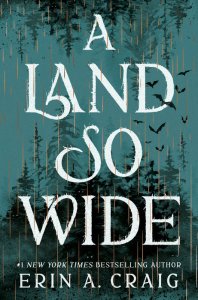
From the No. 1 New York Times bestselling author of House of Roots and Ruin, comes an irresistible blend of dark fairytale and romantic fantasy set in the beautiful but brutal Canadian wilderness.
Like everyone else in the settlement of Mistaken, Greer Mackenzie is trapped. Founded by an ambitious Scottish lumber merchant, the tiny town on the edge of the American continent is blessed with rich natural resources that have made its people prosperous—but at a cost. The same woods that have lined the townsfolks’ pockets harbor dangerous beasts: wolves, bears, and the Bright-Eyeds—monsters beyond description who have rained utter destruction down on nearby settlements. But Mistaken’s founders made a deal with the mysterious Benevolence: the Warding Stones that surround the town will keep the Bright-Eyeds out—and the town’s citizens in. Anyone who spends a night within Mistaken’s borders belongs to it forever.
Greer, a mapmaker and eccentric dreamer, has always ached to explore the world outside, even though she knows she and her longtime love, Ellis Beaufort, will never see it. Until, on the day she and Ellis are meant to finally begin their lives together, Greer watches in horror as her beloved disappears beyond the Warding Stones, pursued by a monstrous creature. Swiftly realizing that the stories she was raised on might be more myth than fact, Greer figures out a way to escape Mistaken for the very first time. Determined to rescue Ellis, she begins a trek through the cold and pitiless wilderness. But Greer is being hunted, not only by the ruthless Bright-Eyeds but by the secret truths behind Mistaken’s founding, as well as her own origins.
Playfully drawing from Scottish folklore, Erin A. Craig’s adult debut is both a deeply atmospheric and profoundly romantic exploration of freedom versus security: a stunning celebration of one woman’s relentless bravery on a quest to reclaim her lost love—and claim her own future.
Content Warning: violence, death
+ This was an interesting story that starts off with settlers in a land that wasn’t what they expected. They come to find out that there are creatures and animals out there that could kill them so they build their town of Mistaken but create a protection barrier. The atmosphere is eerie, mysterious and gave me M. Night Shyamalan (the movie, The Village, except without the crazy ending 😅) vibes – not sure why, I just kept thinking there was some twist in the story that was gonna jump out at me.
+ Greer is woman with an adventurous spirit – she loves making maps but she is stuck in Mistaken. It’s too dangerous to venture out of town with the Bright-Eyeds (monsters) lurking in the woods. Her dad is overprotective but a powerful man in their town so he’s trying to marry her off to someone to inherit their business. But she’s in love with Ellis, a boy her father doesn’t approve of. I thought Greer was a strong character, who did everything to fight for the guy she loved.
+ I found the lore of the monsters very mysterious and really got invested the more we learned about them, but that mostly comes in the second half of the story. The world-building of Mistaken was interesting. There are flashbacks to the founders of the town, and I like how things were revealed little by little until the whole picture of what happened in Mistaken and Greer’s past tied everything together.
+ The author does such a good job at story telling – I always feel like I’m reading a dark fairytale when it comes to her books. And her stories are always so unique, just like this one is.
~ This one did start off slow but once some scary events happen and the horror kicks in, that’s when it really caught my attention. I couldn’t quite envision these Bright-Eyeds and so I was left trying to figure that part out.
~ Once everything starts being explained about the Bright-Eyed, the story goes in a new direction, more fantastical. Greer has to cope with her new knowledge about them, but it’s challenging as she tries to find Ellis. There is also a love triangle situation that I wasn’t into.
Final Thoughts:
I think this one felt like Small Favors with that small-town feel, except here in A Land So Wide, in this town, people are trapped. The people have a false sense of safety – in their boundary of protection, they should be okay, but once that boundary is broken, bad things happen. The setting is great, and the atmosphere is creepy and mysterious. I think the beginning was a little slow, but it does pick up and goes into more fantasy. I found this world and the lore around the monsters very fascinating. Greer goes through a journey when she finds out the truth about some things, and I definitely was invested to see what happened to her. This author is an auto-read author for me, and her writing will always suck me in! This will make a great read for spooky season.
Categories: Young Adult, Mystery, Thriller, Horror, Paranormal, Family Curse, Romance, Gothic
Disclaimer: **I received this book free from NetGalley in exchange for an honest review. All thoughts and opinions are my own.**
Thank you to Viking Books for Young Readers for giving me a chance to read this eARC in exchange for an honest review!
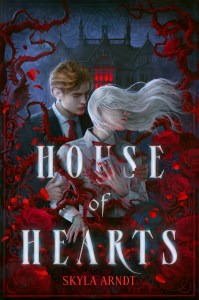
Solving her best friend’s murder means infiltrating a secret society, resisting a forbidden love, and running from a vengeful ghost in this sophomore novel by the author of Together We Rot.
Violet Harper knows her best friend was murdered. Even if everyone else has labeled her death a “freak accident,” Vi is sure she’d been trying to tell her something right before she died. Cryptic messages about her friend’s elite boarding school, her whirlwind romance, and the mysterious secret society she was entangled in all point to a more sinister fate.
So, Violet does what no one else seems willing to do: She transfers to the same fancy school to dig into the society’s murky history and find out what really happened to her friend. She knows the truth might not be pretty, but what she doesn’t bargain for is the handsome boy at the center of it all—Calvin Lockwell, the brother of her prime suspect and descendant of the school’s founder. He’s obnoxious and privileged, and Violet can’t deny their haunting attraction. It soon becomes clear his family is hiding a dark secret that may not be of this world, and suddenly Violet’s following her friend’s doomed footsteps down the rabbit hole. Even as details emerge of a deadly curse plaguing the school, she can’t escape her true feelings for Calvin. But loving him may be the last thing she ever does.
Content Warning: violence, murder, death
+ This is a dark academia story with horror and paranormal events. The setting is a gothic academy for wealthy kids, and Violet is enrolled there through scholarship because she wants answers to her best-friend’s death. She thinks she has it figured out and blames Percy Lockwell, the Headmistress’ son, for her death but while she is at the school she finds out there is more to the story.
+ There is a family curse on the Lockwell family, and the remaining siblings Calvin and Sadie are trying to break it and also find their older brother Percy, who disappeared. They create a secret society at school to gather kids who aren’t afraid of the paranormal so that they can solve this mystery about the curse and find their brother. I enjoyed the paranormal and horror aspects of the story a lot! It just added the right amount of creepiness and especially one part gave me chills.
+ The romance between Violet and Calvin is doomed because of the curse but from the start it was dislike mostly on Violet’s part and secret insta-love on Calvin’s though he hid it well. I loved their interactions and was rooting for them!
~ This is an arc but there was a lot of typos that I hope will be fixed by the time of publication. Also I don’t know if it was because the way it was formatted as an e-book but some sections blended into the next and I had to re-read because I was afraid I missed a scene or didn’t understand where I was in the story.
~ This is a quick read, just under 300 pages so I would have like a little more pages focused on the romance to draw out the tension more between them. I did love their romance journey, I just wanted more.
Final Thoughts:
I’ve been reading a lot of dark academia this year but I did love how this one stands out a little bit because of the paranormal and horror elements in the story. I loved the setting, the secret society, the dislike to lovers romance between Violet and Cal, and the family love curse. I had a few issues with typos (but this is an arc) and I did wish it was a tad bit longer just so there was more tension and yearning between Violet and Cal but overall, I enjoyed this one and will make for a thrilling, creepy fall read!
Categories: Young Adult, Mystery, Thriller, Horror, Paranormal, Romance
Disclaimer: **I received this book free from NetGalley in exchange for an honest review. All thoughts and opinions are my own.**
Thank you to Tor Teen for giving me a chance to read this eARC in exchange for an honest review!
From New York Times bestselling author Susan Dennard comes The Executioners Three, a mystery filled with rivalry, romance, best friends, and a gruesome curse that dates back centuries.
Freddie Gellar didn’t mean to get half the rival high school arrested. She’d simply heard shrieks coming from the woods, so she’d called the cops like any good human would do. How was she supposed to know it was just kids partying?
Except the next day, a body is found. And while the local sheriff might call it suicide, Freddie’s instincts tell her otherwise. So, like the aspiring sleuth (and true X-Files aficionado) she is, Freddie sets out to prove there’s a murderer at large.
Content Warning: violence, murder, death
+ This was a really interesting book and one I wasn’t quite expecting. This book is set in the 1990’s and the clues was definitely how Freddie loved the X-Files and NSYNC (she LOATHES The Backstreet Boys and hi, I was a BSB fan, not NSYNC 😅). This story gave me Stranger Things vibes minus the demi-gorgon, it was the time period that was similar and the way the characters talked and acted.
+ Freddie is a fun character. She’s trying to investigate something that has been happening in town but also, she’s a prankster. Her and her best-friend Divya are literally hanging with a group of kids at school who does pranks at their rival school. These kids are in high school, so it’s very young adult.
+ Freddie and Theo’s romance is too cute! I loved it.
+ The murder mystery was interesting and I liked how it built. The ending reveal was full of suspense and thrills.
~ I wasn’t sure what I was reading at first and how I felt about it but I’m glad I pushed through because things get dark. But for all it’s darkness because of the murders I felt like there was enough humor to keep things light.
Final Thoughts:
Here is another book you should pick up for the fall season! It’s dark (but fun) with a murder mystery and it has Stranger Things vibes. I thought it was cool it was set in the 1990’s, Freddie and her friends are fun and pranksters, and the romance is really cute.
Publisher: G.P. Putnam’s Sons Books for Young Readers
Categories: Young Adult, Mystery, Thriller, Horror, Witchcraft, Cult, Romance
Disclaimer: **I received this book free from NetGalley in exchange for an honest review. All thoughts and opinions are my own.**
Thank you to G.P. Putnam’s Sons Books for Young Readers for giving me a chance to read this eARC in exchange for an honest review!
Two teen girls must uncover the dark, occult secrets lurking in their Cape Cod town to solve a series of murders—and save themselves from the same fate—in this twisty, witchy thriller.
When Mazzy and her best friend Nora sneak down to the beach one moonlit night to cast a spell, they don’t expect to find a dead body. But as the tide rolls in, it carries the remains of a woman who is missing her hands and teeth.
The girls know they should leave the investigation to the police, but they can’t shake the weird, supernatural connection they feel with the dead woman. Using spellwork and divination, they set out to find answers of their own. But after they uncover a rash of local disappearances stretching back years—and both girls start having occult visions and hearing ghostly, whispering voices—Mazzy worries that she and Nora are in danger.
Then, Nora finds a second body. And a whispering voice is telling her where to find more. With everything spiraling, Mazzy needs to figure out who to trust and how to sever this supernatural connection—or she and Nora might be the next bodies to wash up on the beach.
+ Mazzy and Nora are best friends and dabble with witchcraft. One night they are doing a spell when they stumble upon a dead body, and then a few others. The girls try to make sense of going on and realize maybe they are next.
+ I loved Mazzy and Nora’s friendship (even with the challenges they faced), also their friend Elliot who Mazzy has a crush on. The story doesn’t focus on the romance, but I like how it’s woven in between the mystery and thrills happening throughout this book.
+ Some mysteries are too slow for me but I liked the pacing in this one because of the witchcraft and then the rumors about a cult in the town that could be behind the murders. The girls get tangled up in all of it and it’s fun to see where it all ends up! It was a nice blend of mystery, horror, suspense and thriller.
+ This book is atmospheric and set in Cape Cod. It captured the small coastal town feel, and even felt creepy especially with these bodies being found in the water. I just love how it blended the witchcraft and coastal vibes.
~ Mazzy already has a crush on Elliot when the book starts and it’s noted something was changed between them so it was just getting to the part of both of them admitting it. I did wish we knew a little more about Elliot because he is helping these girls a lot on figuring out this cult.
Final Thoughts:
This is the perfect book for the fall season when you are looking for something witchy and thrilling to read. I enjoyed it!
Disclaimer: **I received this book free from NetGalley in exchange for an honest review. All thoughts and opinions are my own.**
Thank you to Del Rey for giving me a chance to read this eARC in exchange for an honest review!
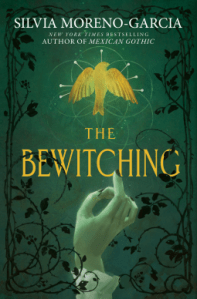
Three women in three different eras encounter danger and witchcraft in this eerie multigenerational horror saga from the New York Times bestselling author of Mexican Gothic.
“Back then, when I was a young woman, there were still witches”: That was how Nana Alba always began the stories she told her great-granddaughter Minerva—stories that have stayed with Minerva all her life. Perhaps that’s why Minerva has become a graduate student focused on the history of horror literature and is researching the life of Beatrice Tremblay, an obscure author of macabre tales.
In the course of assembling her thesis, Minerva uncovers information that reveals that Tremblay’s most famous novel, The Vanishing, was inspired by a true story: Decades earlier, during the Great Depression, Tremblay attended the same university where Minerva is now studying and became obsessed with her beautiful and otherworldly roommate, who then disappeared under mysterious circumstances.
As Minerva descends ever deeper into Tremblay’s manuscript, she begins to sense that the malign force that stalked Tremblay and the missing girl might still walk the halls of the campus. These disturbing events also echo the stories Nana Alba told about her girlhood in 1900s Mexico, where she had a terrifying encounter with a witch.
Minerva suspects that the same shadow that darkened the lives of her great-grandmother and Beatrice Tremblay is now threatening her own in 1990s Massachusetts. An academic career can be a punishing pursuit, but it might turn outright deadly when witchcraft is involved.
Content Warning: violence, death, murders, incest
+ This story is told in three timelines and I found each era fascinating. Minerva is a college student in the late 1990’s and writing her research on witchcraft. So the timeline follows her grandmother, Alba’s story in 1908 and her experiences of encountering witchcraft. But Minerva is also researching a mystery of a girl that disappeared from campus, so there is another timeline of the events concerning that time on campus in 1934.
+ I really enjoyed how the author captured the late 90’s since I was also a college student at that time. And it felt nostalgic to see Minerva using a discman and listening to bands I listened to at that time. Loved that! I also liked Minerva’s character and how she’s into horror novels.
+ Most of the horror comes at the end of the story and I did enjoy that part.
~ I did not like the incest that occurred in the book between Alba and her uncle. I actually had to go back to the beginning of the explanation of the family tree to make sure I was reading it right and I didn’t miss that he was just like an Uncle because he was a family friend. Nope. Alba and her Uncle Arturo are only a few years apart in age and it just made me feel gross.
~ As much as I found the three different stories fascinating, I felt like everything moved too slowly in this book, especially in the middle. So I did skim a little to get to the horror and action part, which was near the end of the book.
Final Thoughts:
This might be my least favorite book I’ve read from this author. The writing is great as usual and I found the timelines fascinating but for me the pacing was too slow and also, and no to the incest. I think true horror genre fans would love this because Minerva is a character who is a fan and mentions certain authors that I am not very aware of. I was not the right audience for this one but I still look forward to reading her next book!
Categories: Young Adult, Thriller, Contemporary Fantasy, Horror
Disclaimer: **I received this book free from NetGalley in exchange for an honest review. All thoughts and opinions are my own.**
Thank you to Delacorte Press for giving me a chance to read this eARC in exchange for an honest review!
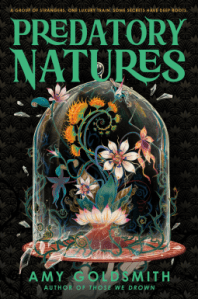
A teen girl’s dream job aboard a luxury train derails when she discovers the strange cargo being transported—a mysterious and beautiful greenhouse—but its flowering façade may hide deadly thorns beneath, in this atmospheric and lush novel from the author of Those We Drown.
Lara Williams is desperate to get away. When she gets a job working aboard the luxury train The Banebury for her gap year, she this is her chance to reinvent herself, after the incident that wrecked her relationships and her college prospects several months ago.
At first, the train is everything Lara expected—a five-star escape from her past, demanding customers and all. Even after she learns that her ex-friend, Rhys, who she definitely did not have feelings for before their relationship imploded, is one of her new coworkers, she’s determined to make things work.
But on the first night of their journey, the trip takes a strange turn when two mysterious carriages, filled with an array of beautiful and rare plants, are attached to the end of the train in the middle of the night. With them come a pair of siblings. Gwen and Gwydion are wealthy, Welsh, and alluring as they are odd–not to mention, incredibly protective of their botanical cargo.
The siblings claim the plants they’re transporting are for research, yet Lara can’t shake the feeling that there’s something…otherworldly about them. Something that calls to her, night after night, whispering in her dreams.
Soon, Lara will you can’t outrun your troubles. You have to grab them by their roots. And if she can’t dig up the secrets of the Banebury, they might just consume her whole…
+ I really like the setting of this luxury train on it’s way through Europe and Lara is working on the train meeting knew people and one person from her past, Rhys, is on the train also. They used to be close friends in high school until some things changed.
+ The setting of the train already lends a mystery to the story but then as more people leave and join the journey and Lara finds something in one of the cars – plants, she’s wondering what is going on. I liked the sense of suspicion around the people on the train and the different personalities Lara encounters. I found the plants fascinating and the Welsh mythology tied to it very interesting. As people start getting hurt and dying on the train, Lara and Rhys try to figure out what’s going on before it’s too late.
+ Lara has a history and there are flashbacks to it throughout the story because she’s on the train with Rhys who is a link to her past. Her story was a parallel to the mythology about the plants so I did like that. In those flashbacks, she’s dating a boy who changes her, molds her into what he wants her to be, is very possessive of her and we see how far Lara has come in her self journey.
~ The beginning was a bit slow because it’s setting the scene and we’re meeting all the workers and passengers on the train, but also because of the flashbacks. I didn’t mind it too much, but it did feel like the story moved slowly because of it. The flashback events do ramp up though and it coincides with what is happening on the train so I did like that.
Final Thoughts:
I enjoyed the luxury train setting and the mysterious siblings and the plants! I also did like how Lara’s personal situation and growth was a parallel with the Welsh mythology about the goddess of flowers. I think for a young adult thriller, this was enjoyable and if you like trains and some Little Shop of Horrors vibe, you’ll enjoy this one.
Categories: Contemporary, Paranormal, Romance, Young Adult, Gothic, Horror, Thriller, Mystery
Disclaimer: **I received this book free from NetGalley in exchange for an honest review. All thoughts and opinions are my own.**
Thank you to Henry Holt and Co. for giving me a chance to read this eARC in exchange for an honest review!
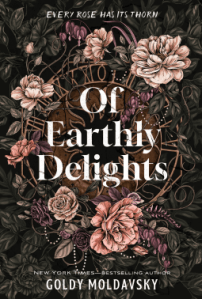
A contemporary YA gothic romance about a dark family secret, a lush, mysterious garden, and a love that never dies, from New York Times bestselling author Goldy Moldavsky.
Aspiring artist Rose Pauly is not happy moving from her home in New York City right before her senior year of high school. But on her first miserable day in Connecticut, she meets Hart Hargrove. The two share an immediate, undeniable connection.
Hart introduces Rose to his slice of paradise–the immense private garden nestled behind the Hargrove family mansion. There, the two spend a fever dream of a summer together. But as their bond blossoms into love, Rose can’t shake the feeling that all is not as it seems.
When Rose uncovers the truth about the garden, she’s forced to question how genuine her love story truly is. But Hart can’t bear to lose Rose, and he will stop at nothing to save their relationship.
Posing haunting questions about beauty and desire, this is an atmospheric and darkly romantic tale that will enthrall readers.
Content Warning: violence, grief, accident, body horror
+ The twist in this story blew my mind, it’s the one book this year that has made my jaw drop.
+ Rose is new to town, but right away she meets Hart Hargrove. He’s popular, he lives on the biggest estate in town – an estate whose gardens are infamous for secret, exclusive parties. Rose and Hart fall madly in love, almost insta-love, but there are clues along the way in this book where it feels like something is off. Something doesn’t feel right with their love story.
+ The grief that is presented in this book is heartbreaking. I could understand the decisions of Hart and his twin, Heather, but when everything is revealed, it made my heart ache for all of them involved. Without spoiling the story, I couldn’t imagine what they were going through.
+ Though the love story about Rose and Hart feels invincible and meant to be, there is a dark, sinister undertone to this story. It shows up in the garden parties and Rose’s best friend, Llowell. There is some body horror but really brief and the ending is wild with action and violence.
~ Because I knew there was something off to the romance, and some moments of the “future” sprinkled in as the story went on…I did get confused. But I’m glad I pushed through to the end – the end though, it’s an open ending which shocked me.
Final Thoughts:
This story is creative, dark, has a gothic contemporary atmosphere and the romance is heady but it’s also so sad and tragic. It explored a lot of topics like love, grief, friendship, and wishes. But if you could make your wishes come true, what would you be willing to give up? The ending of this story made my jaw drop and I think it’s one of those books that I’ll never forget.
Categories: Horror, Mystery, Thriller, Paranormal, Social Commentary
Disclaimer: **I received this book free from NetGalley in exchange for an honest review. All thoughts and opinions are my own.**
Thank you to MIRA for giving me a chance to read this eARC in exchange for an honest review!
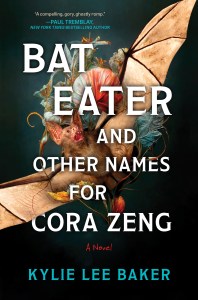
Cora Zeng is a crime scene cleaner—but the bloody messes don’t bother her, not when she’s already witnessed the most horrific thing possible: her sister being pushed in front of a train. The killer was never caught, and Cora is still haunted by his last words: “bat eater.”
These days nobody can reach Cora: not her aunt, who wants her to prepare for the Hungry Ghost Festival; not her weird colleagues; and especially not the slack-jawed shadow lurking around her door frame. After all, it can’t be real—can it? After a series of unexplained killings in Chinatown, Cora believes someone might be targeting East Asian women, and something might be targeting Cora herself.
+ I love this author and she’s a must-read author for me now. The story is set in New York City during the COVID pandemic – early 2020, remember that? This brought me back to a time of so much fear and uncertainty, it was nostalgic but not in a good way. Cora Zeng is Chinese-American and she has some issues that has been exacerbated by the pandemic, like her being a germaphobe. She’s also dealt with a traumatic childhood with parental neglect and divorce so Cora is complicated, anxious, closed-off, and now she is haunted. Literally. Cora’s voice is so honest about what she thinks about her family, society, and herself.
+ This story is filled with gore, but I was surprised with how much there was because I was grimacing for half the book I think. It is that gory but I should have expected it since Cora is a crime-scene cleaner. Outside of the gore, there is something else going on in a paranormal aspect in the story. Cora is being haunted and it is the month where the Chinese honor the dead or hungry ghosts with some rituals like putting out food for the ghosts and burning joss papers. I learned something cultural that I didn’t know much about which was cool but the way the author wove it into this story about COVID and crime against Chinese and Asian people during that time period is really amazing.
+ I really liked how the tension built in this story. Cora’s mental state is not the best, so I thought she was just going through psychosis due to PTSD but add the anxiousness about COVID during that time really upped the tension in the situation around the city. Add to that the crime scenes she is cleaning up has a pattern and then the hauntings start happening – there were times when I was laying in bed in the dark reading this that I got a chill. Because who wants a hungry ghost haunting them? Not me!
+ I loved the side characters, Cora’s co-workers, Harvey and Yifei. They brought humor but also gave Cora support even though they weren’t close friends. They were there for her even if things got super crazy. And bless her aunts too, even though they were extreme opposites – I’m glad she had people, even though it wasn’t a lot or people.
+ The social commentary of this book is what really hits home with me. The racism Cora experiences in this story made me so angry and heartbroken that racism is so prevalent in our country. The violence of the deaths in this story just makes me question how can people be so filled with hate as to want someone to suffer in these ways.
~ There was a small lull in the middle of the book, as Cora is dealing with some ghosts but nothing that stopped me from reading. Going into this book I was thinking too hard and saying what is this? Is it a horror story? Murder mystery? Paranormal haunting? What is going on? And once I just went with the flow and went along for the wild ride, I was blown away by the end.
Final Thoughts:
I loved how this author combined the time period of COVID, the social commentary of racism, the paranormal hauntings of hungry ghosts, and the possibility of a serial killer on the loose plus all the gore, violence and creep factor into one wild ride of a book. It touched on the challenges of family, friendship, mental health, grief and so much more. It’s brutal and violent and I can’t stop thinking about it. I know this story will probably stay with me forever.
This unsettling adult debut from Kylie Lee Baker follows a biracial crime scene cleaner who’s haunted by both her inner trauma and hungry ghosts as she’s entangled in a series of murders in New York City’s Chinatown. Parasite meets The Only Good Indians in this sharp novel that explores harsh social edges through the lens of the horror genre.
Cora Zeng is a crime scene cleaner in New York City’s Chinatown, washing away the remains of brutal murders and suicides. But none of that seems so terrible when she’s already witnessed the most horrific thing possible: in the early months of 2020, her sister Delilah was pushed in front of a train as Cora stood next to her. Before fleeing the scene, the murderer whispered two words: bat eater.
So the bloody messes don’t really bother Cora—she’s more bothered by the possible germs on the subway railing, the bare hands of a stranger, the hidden viruses in every corner. And by the strange spots in her eyes and that food keeps going missing in her apartment. Of course, ever since Delilah was killed in front of her, Cora can’t be sure what anxiety is real and what’s in her head. She can barely keep herself together as it is.
She pushes away all feelings, ignoring the bite marks that appear on her coffee table, ignoring the advice of her aunt to burn joss paper and other paper replicas of items to send to the dead and to prepare for the Hungry Ghost Festival, when the gates of hell open. Ignores the dread in her stomach as she and her weird coworkers keep finding bat carcasses at their crime scene cleanups. Ignores the scary fact that all their recent cleanups have been the bodies of Asian women.
But as Cora will soon learn, you can’t just ignore hungry ghosts.
Book Excerpt:
ONE
April 2020
East Broadway station bleeds when it rains, water rushing down from cracks in the secret darkness of the ceiling. Someone should probably fix that, but it’s the end of the world, and New York has bigger problems than a soggy train station that no one should be inside of anyway. No one takes the subway at the end of the world. No one except Cora and Delilah Zeng.
Delilah wanders too close to the edge of the platform and Cora grabs her arm, tugging her away from the abyss of the tracks that unlatches its jaws, waiting. But Delilah settles safely behind the yellow line and the darkness clenches its teeth.
Outside the wet mouth of the station, New York is empty. The China Virus, as they call it, has cleared the streets. News stations flash through footage of China—bodies in garbage bags, guards and tanks protecting the city lines, sobbing doctors waving their last goodbyes from packed trains, families who just want to fucking live but are trapped in the plague city for the Greater Good.
On the other side of the world, New York is so empty it echoes. You can scream and the ghost of your voice will carry for blocks and blocks. The sound of footsteps lasts forever, the low hum of streetlights a warm undercurrent that was always there, waiting, but no one could hear it until now. Delilah says it’s unnerving, but Cora likes the quiet, likes how much bigger the city feels, likes that the little lights from people’s apartment windows are the only hint of their existence, no one anything more than a bright little square in the sky.
What she doesn’t like is that she can’t find any toilet paper at the end of the world.
Apparently, people do strange things when they’re scared of dying, and one of them is hoarding toilet paper. Cora and Delilah have been out for an hour trying to find some and finally managed to grab a four-pack of one-ply in Chinatown, which is better than nothing but not by much.
They had to walk in the rain because they couldn’t get an Uber. No one wants Chinese girls in their car, and they’re not the kind of Chinese that can afford their own car in a city where it isn’t necessary. But now that they have the precious paper, they’d rather not walk home in the rain and end up with a sodden mess in their arms.
“The train isn’t coming,” Cora says. She feels certain of this. She feels certain about a lot of things she can’t explain, the way some people are certain that God exists. Some thoughts just cross her mind and sink their teeth in. Besides, the screen overhead that’s supposed to tell them when the next train arrives has said DELAYS for the last ten minutes.
“It’s coming,” Delilah says, checking her phone, then tucking it away when droplets from the leaky roof splatter onto the screen. Delilah is also certain about many things, but for different reasons. Delilah chooses the things she wants to believe, while Cora’s thoughts are bear traps snapping closed around her ankles.
Sometimes Cora thinks Delilah is more of a dream than a sister, a camera flash of pretty lights in every color that you can never look at directly. She wraps herself up in pale pink and wispy silk and flower hair clips; she wears different rings on each finger that all have a special meaning; she is Alice in Wonderland who has stumbled out of a rabbit hole and somehow arrived in New York from a world much more kind and lovely than this one.
Cora hugs the toilet paper to her chest and peers into the silent train tunnel. She can’t see even a whisper of light from the other side. The darkness closes in like a wall. The train cannot be coming because trains can’t break through walls.
Or maybe Cora just doesn’t want to go home, because going home with Delilah means remembering that there is a world outside of this leaky station.
There is their dad in China, just a province away from the epicenter of body bags. And there is the man who emptied his garbage over their heads from his window and called them Chinks on the walk here. And there is the big question of What Comes Next? Because another side effect of the end of the world is getting laid off.
Cora used to work the front desk at the Met, which wasn’t exactly what an art history degree was designed for and certainly didn’t justify the debt. But it was relevant enough to her studies that for a few months it stopped shame from creeping in like black mold and coating her lungs in her sleep. But no one needs museums at the end of the world, so no one needs Cora.
Delilah answered emails and scheduled photo shoots for a local fashion magazine that went belly-up as soon as someone whispered the word pandemic, and suddenly there were two art history majors, twenty-four and twenty-six, with work experience in dead industries and New York City rent to pay. Now the money is gone and there are no careers to show for it and the worst part is that they had a chance, they had a Nai Nai who paid for half their tuition because she thought America was for dreams. They didn’t have to wait tables or strip or sell Adderall to pay for college but they somehow messed it up anyway, and Cora thinks that’s worse than having no chance at all. She thinks a lot of other things about herself too, but she lets those thoughts go quickly, snaps her hands away from them like they’re a hot pan that will burn her skin.
Cora thinks this is all Delilah’s fault but won’t say it out loud because that’s another one of her thoughts that no one wants to hear. It’s a little bit her own fault as well, for not having her own dreams. If there was anything Cora actually wanted besides existing comfortably, she would have known what to study in college, wouldn’t have had to chase after Delilah.
But not everyone has dreams. Some people just are, the way that trees and rocks and rivers are just there without a reason, the rest of the world moving around them.
Cora thinks that the water dripping down the wall looks oddly dark, more so than the usual sludge of the city, and maybe it has a reddish tinge, like the city has slit its own wrists and is dying in this empty station. But she knows better than to say this out loud, because everything looks dirty to her, and Cora Zeng thinking something is dirty doesn’t mean the average human agrees—at least, that’s what everyone tells her.
“Maybe I’ll work at a housekeeping company,” Cora says, half to herself and half to the echoing tunnel, but Delilah answers anyway.
“You know that’s a bad idea,” she says.
Cora shrugs. Objectively, she understands that if you scrub yourself raw with steel wool one singular time, no one likes it when you clean anything for the rest of your life. But things still need to be cleaned even if Delilah doesn’t like it, and Cora thinks there are worse things than leaning a little bit into the crazy parts of you. Isn’t that what artists do, after all? Isn’t that the kind of person Delilah likes? The tortured artist types who smoke indoors and paint with their own blood and feces.
“Mama cleaned toilets for rich white people because she had no choice,” Delilah says. “You have a college degree and that’s what you want to do?”
Cora doesn’t answer at first because Mama means Delilah’s mom, so Cora doesn’t see why her thoughts on Cora’s life should matter. Cora doesn’t have a Mama. She has a Mom, a white lady from Wisconsin who probably hired someone else’s mama to clean her toilet.
Cora quite likes cleaning toilets, but this is another thing she knows she shouldn’t say out loud. Instead, she says, “What I want is to make rent this month.”
Legally, Cora’s fairly certain they can’t be evicted during the pandemic, but she doesn’t want to piss off their landlord, the man who sniffs their mail and saves security camera footage of Delilah entering the building. He price-gouges them for a crappy fourth-floor walkup in the East Village with a radiator that vomits a gallon of brown water onto their floor in the winter and a marching band of pipes banging in the walls, but somehow Cora doubts they’ll find anything better without jobs.
Delilah smiles with half her mouth, her gaze distant like Cora is telling her a fairy tale. “I’ve been burning lemongrass for money energy,” Delilah says. “We’ll be fine.” This is another thing Delilah just knows.
Cora hates the smell of lemongrass. The scent coats her throat, wakes her up at night feeling like she’s drowning in oil. But she doesn’t know if the oils are a Chinese thing or just a Delilah thing, and she hates accidentally acting like a white girl around Delilah. Whenever she does, Delilah gives her this look, like she’s remembered who Cora really is, and changes the subject.
“The train is late,” Cora says instead of acknowledging the lemongrass. “I don’t think it’s coming.”
“It’s coming, Cee,” Delilah says.
“I read that they reduced service since no one’s taking the train these days,” Cora says. “What if it doesn’t stop here anymore?”
“It’s coming,” Delilah says. “It’s not like we have a choice except waiting here anyway.”
Cora’s mind flashes with the image of both their skeletons standing at the station, waiting for a train that never comes, while the world crumbles around them. They could walk— they only live in the East Village—but Delilah is made of sugar and her makeup melts off in the rain and her umbrella is too small and she said no, so that’s the end of it. Delilah is not Cora’s boss, she’s not physically intimidating, and she has no blackmail to hold over her, but Cora knows the only choice is to do what Delilah says. When you’re drowning and someone grabs your hand, you don’t ask them where they’re taking you.
A quiet breeze sighs through the tunnel, a dying exhale. It blows back Delilah’s bangs and Cora notices that Delilah has penciled in her eyebrows perfectly, even though it’s raining and they only went out to the store to buy toilet paper. Something about the sharp arch of her left eyebrow in particular triggers a thought that Cora doesn’t want to think, but it bites down all the same.
Sometimes, Cora thinks she hates her sister.
It’s strange how hate and love can so quietly exist at the same time. They are moon phases, one silently growing until one day all that’s left is darkness. It’s not something that Delilah says or does, really. Cora is used to her small annoyances.
It’s that Delilah is a daydream and standing next to her makes Cora feel real.
Cora has pores full of sweat and oil, socks with stains on the bottom, a stomach that sloshes audibly after she eats. Delilah is a pretty arrangement of refracted light who doesn’t have to worry about those things. Cora wanted to be like her for a very long time, because who doesn’t want to transcend their disgusting body and become Delilah Zeng, incorporeal, eternal? But Cora’s not so sure anymore.
Cora peers into the tunnel. We are going to be stuck here forever, Cora thinks, knows.
But then the sound begins, a rising symphony to Cora’s ears. The ground begins to rumble, puddles shivering.
“Finally,” Delilah says, pocketing her phone. “See? I told you.”
Cora nods because Delilah did tell her and sometimes Delilah is right. The things Cora thinks she knows are too often just bad dreams bleeding into her waking hours.
Far away, the headlights become visible in the darkness. A tiny mouth of white light.
“Cee,” Delilah says. Her tone is too delicate, and it makes coldness curl around Cora’s heart. Delilah tosses words out easily, dandelion parachutes carried about by the wind. But these words have weight.
Delilah toys with her bracelet—a jade bangle from their Auntie Zeng, the character for hope on the gold band. Cora has a matching one, shoved in a drawer somewhere, except the plate says love, at least that’s what Cora thinks. She’s not very good at reading Chinese.
“I’m thinking of going to see Dad,” Delilah says.
The mouth of light at the end of the tunnel has expanded into a door of brilliant white, and Cora waits because this cannot be all. Dad lives in Changsha, has lived there ever since America became too much for him, except it’s always been too much for Cora too and she has nowhere to run away to, her father hasn’t given her the words she needs. Delilah has visited him twice in the last five years, so this news isn’t enough to make Delilah’s voice sound so tight, so nervous.
“I think I might stay there awhile,” Delilah says, looking away. “Now that I’m out of work, it seems like a good time to get things settled before the pandemic blows over.”
Cora stares at the side of Delilah’s head because her sister won’t meet her gaze. Cora isn’t stupid, she knows what this is a “good time” for. Delilah started talking about being a model in China last year. Cora doesn’t know if the odds are better in China and she doubts Delilah knows either. All she knows is that Delilah tried for all of three months to make a career of modeling in New York until that dream fizzled out, smoke spiraling from it, and Delilah stopped trying because everything is disposable to her, right down to her dreams.
Cora always thought this particular dream would be too expensive, too logistically complicated for Delilah to actually follow through on. Worst-case scenario, they’d plan a three-week vacation to China that would turn into a week and a half when Delilah lost interest and started fighting with Dad again. The idea of flying during a pandemic feels like a death sentence, but Cora has already resigned herself to hunting down some N95 respirators just so Delilah could give her modeling dream an honest try.
Because even if Delilah tends to extinguish her own dreams too fast, Cora believes in them for all of their brief, brilliant lives. If Cora ever found a dream of her own, she would nurture it in soft soil, measure out each drop of water, each sunbeam, give it a chance to become. So Cora will not squash her sister’s dreams, not for anything.
“I’ll just put my half of the rent on my credit card until I find work,” Delilah says, “so you won’t need a new roommate.”
Then Cora understands, all at once, like a knife slipped between her ribs, that Delilah isn’t inviting Cora to come with her.
Of course she isn’t. Delilah has a mama who speaks Mandarin to her, so Delilah’s Chinese is good enough to live in China. But Cora’s isn’t. Delilah would have to do everything for her, go everywhere with her because she knows Cora would cry just trying to check out at the supermarket. Delilah could do it for her, but she doesn’t want to.
Cora suddenly feels like a child who has wandered too far into a cave. The echoes become ghosts and the darkness wraps in tight ribbons around your throat and you call for a mom who will never come.
Cora’s hands shake, fingers pressing holes into the plastic wrap of the toilet paper, her whole body vibrating with the sheer unfairness of it all. You can’t string someone along their whole life and then just leave them alone one day holding your toilet paper in a soggy train station.
“Or you could stay with your aunt?” Delilah says. “Then you wouldn’t have to worry about rent. It would be better for both of us, I think.”
Auntie Lois, she means. Mom’s sister, whose house smells like a magazine, who makes Cora kneel in a confessional booth until she can name all her sins. Delilah has decided that this is Cora’s life, and Delilah is the one who makes decisions.
Delilah keeps talking, but Cora can’t hear her. The world rumbles as the train draws closer. The white light is too bright now, too sharp behind Delilah, and it illuminates her silhouette, carves her into the wet darkness. Delilah has a beautiful silhouette, the kind that men would have painted hundreds of years ago. Cora thinks about the Girl with a Pearl Earring, and the Mona Lisa, and all the beautiful women immortalized in oil paint, and wonders if they said cruel things too, if their words had mattered at all or just the roundness of their eyes and softness of their cheeks, if beautiful people are allowed to break your heart and get away with it.
The man appears in a flash of a black hoodie and blue surgical mask.
He says two words, and even though the train is rushing closer, a roaring wave about to knock them off their feet, those two words are perfectly clear, sharp as if carved into Cora’s skin.
Bat eater.
Cora has heard those words a lot the past two months. The end of the world began at a wet market in Wuhan, they say, with a sick bat. Cora has never once eaten a bat, but it has somehow become common knowledge that Chinese people eat bats just to start plagues.
Cora only glances at the man’s face for a moment before her gaze snaps to his pale hand clamped around Delilah’s skinny arm like a white spider, crunching the polyester of her pink raincoat. Lots of men grab Delilah because she is the kind of girl that men want to devour. Cora thinks the man will try to kiss Delilah, or force her up the stairs and into a cab, or a thousand things better than what actually happens next.
Because he doesn’t pull her close. He pushes her away.
Delilah stumbles over the yellow line, ankle twisting, and when she crashes down there’s no ground to meet her, just the yawning chasm of the train tracks.
The first car hits her face.
All at once, Cora’s skin is scorched with something viscous and salty. Brakes scream and blue sparks fly and the wind blasts her hair back, the liquid rushing across her throat, under her shirt. Her first thought is that the train has splashed her in some sort of track sludge, and for half a second that is the worst thought in the entire world. The toilet paper falls from Cora’s arms and splashes into a puddle when it hits the ground and There goes the whole point of the trip, she thinks.
Delilah does not stand up. The train is a rushing blur of silver, a solid wall of hot air and screeching metal and Delilah is on the ground, her skirt pooling out around her. Get up, Delilah, Cora thinks, because train station floors are rainforests of bacteria tracked in from so many millions of shoes, because the puddle beneath her can’t be just rainwater—it looks oddly dark, almost black, spreading fast like a hole opening up in the floor. Cora steps closer and it almost, almost looks like Delilah is leaning over the ledge, peering over the lip of the platform.
But Delilah ends just above her shoulders.
Her throat is a jagged line, torn flaps of skin and sharp bone and the pulsing O of her open trachea. Blood runs unstopped from her throat, swirling together with the rainwater of the rotting train station, and soon the whole platform is bleeding, weeping red water into the crack between the platform and the train, feeding the darkness. Cora is screaming, a raw sound that begins somewhere deep inside her rib cage and tears its way up her throat and becomes a hurricane, a knife-sharp cry, the last sound that many women ever make.
But there’s no one to hear it because New York is a dead body, because no one rides the subway at the end of the world. No one but Cora Zeng.
About the Author:
Author Bio:
Kylie Lee Baker is the Sunday Times bestselling author of The Keeper of Night duology, The Scarlet Alchemist duology, and the forthcoming adult horror Bat Eater. She grew up in Boston and has since lived in Atlanta, Salamanca, and Seoul. Her writing is informed by her heritage (Japanese, Chinese, and Irish), as well as her experiences living abroad as both a student and teacher. She has a BA in creative writing and Spanish from Emory University and a master of library and information science degree from Simmons University.
Disclaimer: **I received this book free from NetGalley in exchange for an honest review. All thoughts and opinions are my own.**
Thank you to MIRA for giving me a chance to read this eARC in exchange for an honest review!
A haunting novel about the boundaries people will cross to keep their dreams alive.
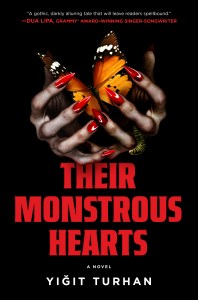
A mysterious stranger shows up at Riccardo’s apartment with some news: his grandmother Perihan has died, and Riccardo has inherited her villa in Milan along with her famed butterfly collection.
The struggling writer is out of options. He’s hoping the change of scenery in Milan will inspire him, and maybe there will be some money to keep him afloat. But Perihan’s house isn’t as opulent as he remembers. The butterflies pinned in their glass cases seem more ominous than artful. Perihan’s group of mysterious old friends is constantly lurking. And there’s something wrong in the greenhouse.
As Riccardo explores the decrepit estate, he stumbles upon Perihan’s diary, which might hold the key to her mysterious death. Or at least give him the inspiration he needs to finish his manuscript.
But he might not survive long enough to write it.
Content Warning: body horror, death, murder, insect horror
+ I almost DNF’d this at 30% – it is so slow of a mystery and yet I was intrigued by Riccardo who is a struggling and poor writer who is on a tight deadline with no manuscript to show for it. His grandmother passes, and leaves him her home in Milan, Italy. With no money and too much stress, he goes thinking he can write while he is there but instead he finds a manuscript written by his grandmother, Perihan.
+ I did find Perihan’s manuscript interesting because of the time it’s written in the past and also she is from Turkey. Her life is hard from the start but it takes her to Milan where life really flourishes for her. I couldn’t tell at first if she was a good person or not. Riccardo is doing no writing but he is reading this manuscript and learning a lot about his grandmother’s life.
+ The horror and the twist comes at the end. It’s a crazy ending! But if you don’t like monstrous butterflies, stay away from this one.
~ Like I said above, this was almost a DNF. I didn’t though and skimmed until 70% into the book where everything starts picking up. I’m already not one who enjoys mystery books, and I struggled because this one is a slow one, but I just wanted something to happen in the first half with Riccardo either staring to right his book or some horror at the start. But this is a slow building horror story that ends with a bang.
Final Thoughts:
I don’t think I was the target audience for this book. For me, it was too slow for the first two-thirds of this book. I did find the characters and Perihan’s life very fascinating and the ending is wild. If you like slow building mystery and horror then you might enjoy this one.


























 Past Midnight Book Reviews & More