Disclaimer: **I received this book free from NetGalley in exchange for an honest review. All thoughts and opinions are my own.**
Thank you to Love Inspired Trade for giving me a chance to read this eARC in exchange for an honest review!
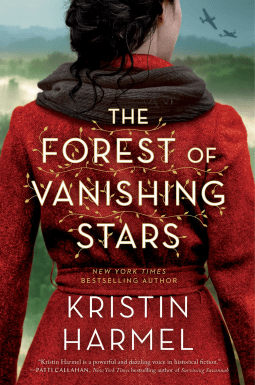
From the author of The Widows of Champagne, and inspired by true events, comes a gripping and heartwrenching story of two very different women united to bring light to the darkest days of World War II.
London, 1933
At first glance, Austrian opera singer Elsa Mayer-Braun has little in common with the young English typist she encounters on tour. Yet she and Hattie Featherstone forge an instant connection—and strike a dangerous alliance. Using their friendship as a cover, they form a secret society with a daring goal: to rescue as many Jews as possible from Nazi persecution.
Though the war’s outbreak threatens Elsa and Hattie’s network, their efforts attract the covert attention of the British government, offering more opportunities to thwart the Germans. But Elsa’s growing fame as Hitler’s favorite opera singer, coupled with her secret Jewish ancestry, make her both a weapon and a target—until her future, too, hangs in the balance.
From the glamorous stages of Covent Garden and Salzburg to the horrors of Bergen-Belsen, two ordinary women swept up by the tide of war discover an extraordinary friendship—and the courage to save countless lives.
Content Warning: holocaust, Nazis, WWII
I haven’t read a historical fiction book in a long while so I thought this would be something good to showcase on my blog. Here’s what I thought:
+ Very interesting story where two women, am Opera singer named Elsa, and am artist named Harriet befriend one another and end up helping people escape Hitler’s regime.
+ The story captured the time period very well, especially in the way they talked back then – I think the dialogue reflected that. I could feel the tension in the characters who live in that time when Hitler was taking over Europe. Harriet can’t not help, whereas her own sister Vera thought if it didn’t concern them they should stay out of trouble. Elsa was totally at risk since she was half Jewish, yet married to a German to disguise it.
+ There is a happy ending for these women after some turmoil and it’s always a strong message to show how people braved death and torture to help others.
~ I think I wanted more from the story, but it’s a quick and entertaining read regardless.
Tropes:
Why you should read it:
heroic story about two women during WWII
you love historical fiction
love how it shed light on the arts (Opera and art) during WWII
Why you might not want to read it:
My Thoughts:
I like that it focused on an opera singer who was hiding that she was half-Jewish and an artist from England. I like that we get to see how people in the art and creative world was affected by Hitler’s regime. I found it to be a quick read and if you like historical fiction set in World War II then you will definitely like this book.
Disclaimer: **I received this book free from NetGalley in exchange for an honest review. All thoughts and opinions are my own.**
Thank you to MIRA for giving me a chance to read this eARC for an honest review!
WWII historical fiction inspired by the real women of the Women’s Air Raid Defense, RADAR GIRLS follows one unlikely recruit as she trains and serves in secrecy as a radar plotter on Hawaii. A tale of resilience and sisterhood, it sees the battles of the Pacific through the eyes of these pioneering women, and will appeal to fans of Kate Quinn and Pam Jenoff.
An extraordinary story inspired by the real Women’s Air Raid Defense, where an unlikely recruit and her sisters-in-arms forge their place in WWII history.
Daisy Wilder prefers the company of horses to people, bare feet and saltwater to high heels and society parties. Then, in the dizzying aftermath of the attack on Pearl Harbor, Daisy enlists in a top-secret program, replacing male soldiers in a war zone for the first time. Under fear of imminent invasion, the WARDs guide pilots into blacked-out air strips and track unidentified planes across Pacific skies.
But not everyone thinks the women are up to the job, and the new recruits must rise above their differences and work side-by-side despite the resistance and heartache they meet along the way. With America’s future on the line, Daisy is determined to prove herself worthy. And with the man she’s falling in love with out on the front lines, she cannot fail. From radar towers on remote mountaintops to flooded bomb shelters, she’ll need her new team when the stakes are highest. Because the most important battles are fought—and won—together.
This inspiring and uplifting tale of pioneering, unsung heroines vividly transports the reader to wartime Hawaii, where one woman’s call to duty leads her to find courage, strength and sisterhood.
I was drawn to this book because it is set in Hawaii, on the island of Oahu (where I live) during World War II. The author did such a wonderful job with describing my island of Oahu.
The author got the Hawaiian words right, and I appreciated that. Even though I live here, I didn’t know about the women recruited to form the Women’s Air Raid Defense. The crazy thing is that I grew up 5 minutes from Fort Shafter where the story is set, which is pretty cool. It was nice to see Hawaii represented accurately.
I loved learning alongside Daisy and her friends about Radar. I found these women to be motivated, smart, and capable.
Daisy is our main character and she’s a strong young lady without any real family on the island. She befriends some of the other women who are recruited to WARD and they form a tight-knit grip trying to figure out men, love, life on base, and learning everything they need to to help in the war effort. I liked the woman power especially because this was set in the 1940’s when women were expected to be at home cooking, cleaning and making babies. I liked learning of these women helping the military which is a male dominant world.
Triggers: sexual assault, grief, war
I felt like Daisy’s background and the drama connected to her (a missing horse) didn’t seem to flow well into the story about her being part of WARD. I found those aspects of the story much more interesting and wanted to know more about her life as part of the program.
There is a light romance taking place in the story but I wasn’t very invested in it.
Radar Girls made me learn something new about World War II and appreciate the role of women in such a challenging time. It’s a story about Daisy and her friends, women who were recruited to help fly our boys home during the war. There were some parts of the story that didn’t engage my interest, like Daisy’s personal life problems. I did enjoy her camaraderie with her new friends though. If you love historical fiction, you will enjoy this one.
📚 ~ Yolanda
Book Excerpt~
2
The Bust
Their shack, as Daisy referred to the house, was nestled in a cluster of bent ironwood trees, all by its lonesome. Set back far from the beach to protect it from a direct blast of onshore winds, it still took a constant battering and the salty air and elements had done a fine job reclaiming it. Windowpanes had been blasted opaque, you could see through the back wall, and flowers had taken up residence in the gutters. The siding had gone from forest green to pale green to peeling gray, the roof turned to rust.
When he had first started working up at the ranch, Daisy’s father had somehow persuaded Mr. Montgomery to sell him the small parcel of beachfront property for the price of a bag of sand. Most likely because it was in no-man’s-land between Waialua and the ranch. And because her father had been the best horse trainer in Hawai’i and everyone knew it.
She flung open the front door and ran inside. “Mom?” she called.
All quiet. She tiptoed across the lauhala mat in the living room, avoiding the creaking floorboards. Her mother spent much of her life in one of two states—sleeping or staring out to sea. The bedroom door was cracked and a lump lay under the blankets, pillow over her head. There was no point in trying to wake her, so Daisy ran back outside, hopped on her bike and rode for the stables.
The air was ripe with burnt sugarcane and a scratchy feeling of dread. She bumped along a dirt road as fast as her old bike would carry her. That plume of black smoke above Schofield caused her heart to sink. So many Japanese planes could mean only one thing. An attack or invasion of some kind was happening. But the sky remained empty and she saw no signs of ships on the horizon.
By the time she reached the stables, she had worked out what to tell Mr. Silva—the only person at the ranch who was even close to being a friend—and beg that he help her find Moon. Whether or not he would risk his job was another story. Jobs were not easy to come by, especially on this side of the island. Daisy counted herself lucky to have one. When she rounded the corner by the entrance, she about fell over on her bike. Mr. Silva’s rusted truck was gone and in its place sat Mr. Montgomery’s shiny new Ford, motor running and door open.
As far as old Hal Montgomery was concerned, Daisy was mostly invisible. She had worked for him going on seven years now—since she was sixteen—but she was a girl and girls were fluffy, pretty things who wore fancy dresses and attended parties. Not short-haired, trouser-wearing, outdoorsy misfits. And certainly not horse trainers and skin divers. Nope, those jobs belonged to men. There was also the matter of her father’s death, but she preferred not to think about that.
Should she turn around and hightail it out of there before he caught sight of her? He’d find out eventually, and he would be livid. Daisy pulled her bike behind the toolshed and slipped around the back side of the stables, peering in through a cloudy window. The tension in the air from earlier had dissipated and the horses were all quiet. A tall form stood in front of the old horse—Ka‘ena—she was supposed to ride. It was hard to tell through the foggy pane, but the man looked too tall and too thin to be Hal Montgomery.
Horsefeathers! It was Walker, Montgomery’s son. A line of perspiration formed on the back of her neck and she had the strong urge to flee. Not that Daisy had had much interaction with Walker in recent years. He was aloof and intimidating and the kind of person who made her forget how to speak, but he loved Moon fiercely. Of that she was sure. Just then, he turned and started jogging toward the door. His face was in shadow but it felt like he was looking right at her. She froze. If she ducked away now, he would surely catch the movement. She did it anyway.
She had just made it to her bike when Walker tore out of the tack room with a wild look in his eye. He had a rifle hanging across his chest, and he was carrying two others. He stopped when he saw her. “Hey!” he said.
“Oh, hello, Mr. Montgomery.”
He wore his flight suit, which was only halfway buttoned, like he’d been interrupted either trying to get in it or trying to get out of it. His face was flushed and lined with sweat. “Don’t you know we’ve been attacked? You ought to head for cover, somewhere inland.”
He was visibly shaken.
“I saw the planes. What do you know?” she said.
“Wheeler and Schofield are all shot up, and they did a number on Pearl. Battleships down, bay on fire. God knows how many dead.” His gaze dropped to her body for a moment and she felt her skin burn. There had been no time to change or even think about changing, and she was still in her half-wet swimsuit, hair probably sticking out in eleven directions. “What are you doing here?” he asked.
“I was worried about the horses,” she said.
“That makes two of us. And goddamn Moon is not in his stall. You know anything about that?”
Taking Moon had been about the dumbest thing she could have done. But at the time, it seemed a perfectly sane idea. The kind of thinking that got her into plenty of trouble over the years. Why hadn’t she learned? She looked at the coconut tree just past him as she spoke. “I have no idea. Perhaps Mr. Silva has him?”
“Mr. Silva went to town last night to see his sister,” he said.
She forced herself to look at him, feeling like she had the word guilty inked onto her forehead. “Looks like you have somewhere to be. You go on, I’ll find Moon. I promise.”
Her next order of business would be scouring the coast and finding that horse before Walker returned. There would be no sleeping until Moon was safely back at the stables.
“I sure hope so. That horse is mighty important to me,” he said.
Tell him!
She was about to come clean, when he moved around her, hopped in the car and slammed the door. He leaned out the window and said, “Something tells me you know more than you’re letting on, Wilder.”
With that, he sped off, leaving her standing in a cloud of red dirt and sand.
In the stables, the horses knew the sound of her footsteps, or maybe they smelled the salt on her hair. A concert of nickers and snorts erupted in the stalls. Daisy went to the coatrack first, and slid on an oversize button-up that she kept there for chilly days. It smelled of hay.
“How is everyone?” she said, stopping at each one to rub their necks or kiss their noses. “Quite a morning, hasn’t it been?”
Peanut was pacing with nostrils flared, and she spent a few minutes stroking his long neck before moving on. Horses were her lifeblood. Feeding, grooming, riding, loving. She only wished that Mr. Montgomery would let her train them—officially, that was. Without being asked as a last resort by Mr. Silva when everyone else had tried. Lord knew she was better than the rest of the guys. When she got to Moon’s stall, all the blood rushed from her head. The door had been left open and two Japanese slippers hung from the knob. She had hidden them in the corner under some straw—apparently not well enough.
Damn.
Just then she heard another car pull up. The ranch truck. A couple of the ranch hands poured out, making a beeline to the stables. Mr. Montgomery followed on their heels with a machete in his hand and a gun on his hip. Daisy felt the skin tighten on the back of her neck. His ever-present limp seemed even more pronounced.
When he saw her, he said, “Where’s Silva?”
No mention that they were under attack.
“In town,” she answered.
“What about Walker?”
“Walker just left in a big hurry,” she answered.
One of the guys had his hunting dog with him. It was a big mutt that enjoyed staring down the horses and making them nervous, as if they needed to be any more nervous right now. Daisy wanted to tell him to get the dog out of there, but knew it would be pointless.
“The hosses in the pasture need to be secured,” Mr. M said.
“Do you need my help?” she offered.
“Nah, you should get out of here. Get home. Fuckers blew up all our planes and now paratroopers are coming down in the pineapple fields. Ain’t no place for a woman right now.”
Daisy wanted to stay and help, but also wanted to get the hell away before he noticed that Moon was not here. “Yes, sir.”
He stopped and sized her up for a moment, his thick brows pinched. “You still got that shotgun of your old man’s?”
“I do.”
“Make sure it’s loaded.”
On her way home, Daisy passed through Japanese camp, hoping to get more information from Mr. Sasaki, who always knew the latest happenings. A long row of cottages lined the road, every rock and leaf in its place. The houses were painted barn red with crisp, white trim. On any given Sunday, there would have been gangs of kids roaming the area, but now the place was eerily empty.
“Hello?” she called, letting her bike fall into the naupaka hedge.
When she knocked and no one answered, she started pounding. A curtain pulled aside and a small face peered out at her and waved her away. Mrs. Sasaki. She was torn, but chose to leave them be. With the whispers of paranoia lately, all the local Japanese folks were bound to be nervous. She didn’t blame them.
This time when Daisy ran up to the shack, her mother was sitting on the porch drinking coffee from her chipped mug.
She was still in her nightgown, staring out beyond the ocean. When she was in this state, a person could have walked into their house and made off with all of their belongings and her mother would not even bat an eye.
Daisy sat down next to her. “Mom, the Japanese Army attacked Pearl Harbor and Wheeler and who knows where else.”
Her mother clenched her jaw slightly, took a sip of her coffee, then set it down on the mango stump next to her chair. “They said it would happen,” she said flatly.
“This is serious, mom. People are dead. Civilians, too. I don’t know how many, but the islands are in danger of being invaded and there are Japanese ships and planes all around. They’re telling us to stay inside.”
A look of worry came over her mom’s face. “You should go find a safer place to stay, away from the coast.”
“And leave you here?”
“I’ll be fine.”
“I’m not leaving you.”
Her mom shrugged.
She knew Louise couldn’t help it, but a tiny part of Daisy was waiting for that day her mother would wake up and be the old Louise Wilder. The mother of red lipstick and coconut macaroons, of beach bonfires and salty hugs. The one who rode bikes with her daughter to school every day, singing with the birds along the way. The highs and lows had been there before, but now there were only lows and deeper lows.
After some time, her mother finally spoke. “Men, they do the dumbest things.”
“That may be true, but we’re at war. Does that mean anything to you?” Daisy said, her voice rising in frustration.
“Course it does, but what can we do?”
She had a point. Aside from hiding in the house or running away, what other options were there? Used to doing things, Daisy was desperate to help, but how? Their home was under attack and she felt as useful as a sack of dirt.
Louise leaned back. On days like these, she retreated so far into herself that she was unreachable. You could tell by looking in her eyes. Blank and bottomless. Mr. Silva always said that you could see the spirit in the eyes. Dull eyes, dull spirit. That Louise looked this way always made Daisy feel deeply alone. The onshore winds kicked up a notch and ruffled the surface of the ocean. She knew she should stay with her mom, but more than anything, she wanted to go in search of the horse. Moon meant more to her than just the job. She loved him something fierce.
Only one thing was clear: their lives would never be the same.
USA Today bestselling author Sara Ackerman was born and raised in Hawaii. She studied journalism and earned graduate degrees in psychology and Chinese medicine. She blames Hawaii for her addiction to writing, and sees no end to its untapped stories. When she’s not writing or teaching, you’ll find her in the mountains or in the ocean. She currently lives on the Big Island with her boyfriend and a houseful of bossy animals. Find out more about Sara and her books at http://www.ackermanbooks.com and follow her on Instagram @saraackermanbooks and on FB @ackermanbooks.
Categories: Historical Fiction, World War II, Holocaust, Survival
Disclaimer: **I received this book free from NetGalley in exchange for an honest review. All thoughts and opinions are my own.**
Thank you to Gallery Books for giving me a chance to read this eARC in exchange for an honest review.
After being stolen from her wealthy German parents and raised in the unforgiving wilderness of eastern Europe, a young woman finds herself alone in 1941 after her kidnapper dies. Her solitary existence is interrupted, however, when she happens upon a group of Jews fleeing the Nazi terror. Stunned to learn what’s happening in the outside world, she vows to teach the group all she can about surviving in the forest—and in turn, they teach her some surprising lessons about opening her heart after years of isolation. But when she is betrayed and escapes into a German-occupied village, her past and present come together in a shocking collision that could change everything.
Inspired by incredible true stories of survival against staggering odds, and suffused with the journey-from-the-wilderness elements that made Where the Crawdads Sing a worldwide phenomenon, The Forest of Vanishing Stars is a heart-wrenching and suspenseful novel.
This reads like a fairytale, at least in the beginning when Yona is taken from her biological family to be raised in the woods. I almost thought I was reading a magical realism book instead of historical fiction but we get to that part soon enough.
Yona is a young woman raised without interacting with other people except for one person, her caretaker, Jerusza. Jerusza is an elderly woman who knows how to survive the forests in Europe. Jerusza is Jewish but also worldly about many cultures and religions and she teaches Yona about everything she can, but why? Jerusza has seen the future, is more in tuned with the mystical elements of the world, maybe because of her life in the forest, and knows what is coming with the German Nazis. So she prepares Yona for what is coming.
When Jewish people flee the ghettos the Nazis have trapped them, some try to flee into the forest and that is where Yona finds her purpose. She teaches these groups how to survive living in the forest. I found the focus of this story quite unique because of Yona, her disconnect from the world and then being introduced to the horrors of it when she finally interacts with people coming in the forest. I love how the forest gave them everything they needed at a time when Jewish people were losing everything: jobs, family, friends, homes, loved ones, dignity, their way of life.
There is a little romance in this story despite how awful the circumstances but I thought it was nice it didn’t become the sole focus of the story. Yona is learning how to interact with others and belong with a group. She is trying to find out who she is after being by herself for so long and there are some harsh life lessons to learn. Despite everything that happens I love that Yona is smart, strong, optimistic and practical.
I love the overall message of this story. It’s not only one of survival but identity too. It’s also a reminder of how cruel and ruthless hate could turn people against one another and the everlasting trauma the Holocaust had on families that survived. A reminder that generations of families were wiped out.
Triggers: violence, death, kidnapping
I think the premise of this story is very unique, it almost has a mystical feel to it with Jerusza but it is intertwined with in real historical events. If you read the Author’s Notes in the back, the history of the Bielski brothers making camp in the forest during WWII is as gripping as the fictional story the author gave us.
This is the first book I’ve read from Kristin Harmel and it is an epic story. I learned a lot, and was reminded once more what survival was like in World War II for so many people and how much was lost in a span of a few years. This story was heartbreaking, and yet still full of hope. It’s a great book for someone who loves reading history or World War II stories and want something with a unique perspective.
Categories: WWII, Historical, Fiction, Holocaust, War, Romance
Disclaimer: **I received this book free from NetGalley in exchange for an honest review. All thoughts and opinions are my own.**
Thank you to Graydon House for giving me a chance to read this eARC in exchange for an honest review.
With the thrilling pace and historical drama of Pam Jenoff and Kristin Hannah, New York Times bestselling author Kelly Rimmer’s newest novel is an epic WWII saga and love story, based on the real-life efforts of two young people taking extraordinary risks to save their countrymen, as they try to find their way back to each other and the life they once knew.
Following on the success of The Things We Cannot Say, this is Kelly Rimmer’s return to the WWII category with a brand new novel inspired by Irena Sendler, the real-life Polish nurse who used her access to the Warsaw ghetto to smuggle Jewish children and babies to safety.
Spanning the tumultuous years between 1942 and 1945 in Poland, The Warsaw Orphan follows Emilia over the course of the war, her involvement with the Resistance, and her love for Sergiusz, a young man imprisoned in the Jewish ghetto who’s passion leads him to fight in the Warsaw Uprising. From the Warsaw ghetto to the Ravensbruck concentration camp, through Nazi occupation to the threat of a communist regime, Kelly Rimmer has penned her most meticulously researched and emotionally compelling novel to date.
Poland is ravaged on both sides in this war. The Soviet’s Red Army helps them liberate Poland from the Nazis but then the country comes under their rule. I definitely felt the anguish of the people of Poland and the exhaustion of never ending fighting for their country. We learn a lot about the Warsaw ghetto in Emilia’s (Elz-bieta) perspective being from outside the ghetto and Roman’s story from inside the ghetto.
Sara, the nurse who is helping smuggle children out of the ghetto is doing an amazing, stressful and life-threatening job. The story is loosely based on a real life nurse, Irena Sendler, who actually did smuggle children out of the Warsaw ghetto.
Through Roman, one of the main characters, we see his hunger to fight and keep fighting the Nazis and the Soviets. He is the anger in action. He joins the rebels who are fighting against the Nazis.
Emilia is an interesting character because she has a secret and she is very young in this venture of saving Jewish children in the ghetto. She’s only 14 and still so naive in some ways but she learns quickly. Emilia and Roman reminds us how kids grew up too fast in this time of war. By the end of this story one of them is tired of fighting and the tired wants to keep on. They do have a love story among the despair but even in the end I wasn’t sure if they would make it.
The ending is quite emotional, I felt for both Emilia, Roman and their friends who survived what the Nazis did to the whole of Europe.
Triggers: starvation, death, violence, mass executions, rape
This is a war story and it is graphic. There is a lot of visual accounts of the atrocities in the ghetto and concentration camp that is horrifying.
I learned a lot about the Warsaw ghetto from this book. This is an emotional and heartbreaking story. But there are strong characters in this sad story, and people fighting to do what they can to fight the Nazis and help the children that they could. It’s a story about an ugly time in history and a country being torn apart from the war and hope for a better day, one day with no fighting. If you enjoy historical fiction especially about World War II and the Holocaust, then you should read The Warsaw Orphan.
📚 ~ Yolanda
About the Author:
Kelly Rimmer is the worldwide, New York Times and USA Today bestselling author of Before I Let You Go, The Things We Cannot Say, and Truths I Never Told You. She lives in rural Australia with her husband, two children and fantastically naughty dogs, Sully and Basil. Her novels have been translated into more than twenty languages. Please visit her at https://www.kellyrimmer.com/
Facebook: @Kellymrimmer
Twitter: @KelRimmerWrites
Instagram: @kelrimmerwrites
Book Excerpt:
1
Roman
28 March, 1942
The human spirit is a miraculous thing. It is the strongest part of us—crushed under pressure, but rarely broken. Trapped within our weak and fallible bodies, but never contained. I pondered this as my brother and I walked to a street vendor on Zamenhofa Street in the Warsaw Ghetto, late in the afternoon on a blessedly warm spring day.
“There was one right there,” he said, pointing to a rare gap in the crowd on the sidewalk. I nodded but did not reply. Dawidek sometimes needed to talk me through his workday but he did not need me to comment, which was fortunate, because even after months of this ritual, I still had no idea what to say.
“Down that alleyway, there was one on the steps of a building. Not even on the sidewalk, just right there on the steps.”
I fumbled in my pocket, making sure I still had the sliver of soap my stepfather had given me. Soap was in desperate demand
in the ghetto, a place where overcrowding and lack of running water had created a perfect storm for illness. My stepfather ran a tiny dentistry practice in the front room of our apartment and needed the soap as much as anyone—maybe even more so. But as desperate as Samuel’s need for soap was, my mother’s need for food eclipsed it, and so there Dawidek and I were. It was generally considered a woman’s job to go to the market, but Mother needed to conserve every bit of strength she could, and the street vendor Samuel wanted me to speak to was blocks away from our home.
“…and Roman, one was behind a big dumpster,” he hesitated, then grimaced. “Except I think we missed that one yesterday.”
I didn’t ask how he’d come to that conclusion. I knew that the answer was liable to make my heart race and my vision darken, the way it did sometimes. Sometimes, it felt as if my anger was simmering just below the surface: at my nine-year-old brother and the rest of my family. Although, none of this was their fault. At Sala, my boss at the factory on Nowolipki Street, even though he was a good man and he’d gone out of his way to help me and my family more than once. At every damned German I laid eyes on. Always them. Especially them. A sharp, uncompromising anger tinged every interaction those days, and although that anger started and ended with the Germans who had changed our world, it cycled through everyone else I knew before it made its way back where it belonged.
“There was one here yesterday. In the middle of the road at the entrance to the market.”
Dawidek had already told me all about that one, but I let him talk anyway. I hoped this running commentary would spare him from the noxious interior that I was currently grappling with. I envied the ease with which he could talk about his day, even if hearing the details filled me with guilt. Guilt I could handle, I probably deserved it. It was the anger that scared me. I felt like my grip on control was caught between my sweaty hands and, at any given moment, all it would take was for someone to startle me, and I’d lose control.
The street stall came into view through the crowd. There was always a crush of people on the street until the last second before seven o’clock curfew. This was especially the case in summer, when the oppressive heat inside the ghetto apartments could bring people to faint, besides which, the overcrowding inside was no better than the overcrowding outside. I had no idea how many people were inside those ghetto walls—Samuel guessed a million, Mrs. Kuklin´ski in the bedroom beside ours said it was much more, Mother was quite confident that it was maybe only a hundred thousand. All I knew was that ours was not the only apartment in the ghetto designed for one family that was currently housing four—in fact, there were many living in even worse conditions. While the population was a hot topic of conversation on a regular basis, it didn’t actually matter all that much to me. I could see with my own eyes and smell with my own nose that however many people were trapped within the ghetto walls, it was far, far too many.
When the vendor’s table came into view, my heart sank: she was already packing up for the day and there was no produce left. I was disappointed but not surprised: there had been no chance of us finding food so late in the day, let alone food that someone would barter for a simple slip of soap. Dawidek and I had passed a store that was selling eggs, but they’d want zloty for the eggs, not a tiny scrap of soap.
“Wait here a minute,” I murmured to my brother, who shrugged as he sank to sit on an apartment stoop. I might have let him follow me, but even after the depths our family had sunk to over the years of occupation, I still hated for him to see me beg. I glanced at him, recording his location to memory, and then pushed through the last few feet of people mingling on the sidewalk until I reached the street vendor. She shook her head before I’d spoken a word.
“I am sorry young man; I have nothing to offer you.”
“I am Samuel Gorka’s son,” I told her. It was an oversimplification of a complicated truth, but it was the best way I could help her place me. “He fixed your tooth for you, remember? A few months ago? His practice is on Miła Street.”
Recognition dawned in her gaze, but she still regarded me warily.
“I remember Samuel and I’m grateful to him, but that doesn’t change anything. I have no food left today.”
“My brother and I…we work during the day. And Samuel too. You know how busy he is, helping people like yourself. But the thing is, we have a sick family member who hasn’t—”
“Kid, I respect your father. He’s a good man, and a good dentist. I wish I could help, but I have nothing to give you.” She waved to the table, to the empty wooden box she had packed up behind her, and then opened her palms towards me as if to prove the truth of her words.
“There is nowhere else for me to go. I can’t take no for an answer. I’m going to bed hungry tonight, but I can’t let…” I trailed off, the hopelessness hitting me right in the chest. I knew I would be going home without food for my mother that night, and the implications made me want to curl up in a ball, right there in the gutter. But hopelessness was dangerous, at least in part because it was always followed by an evil cousin. Hopelessness was a passive emotion, but its natural successor drove action, and that action rarely resulted in anything positive. I clenched my fists, and my fingers curled around the soap. I pulled it from my pocket and extended it towards the vendor. She looked from my palm to my face, then sighed impatiently and leaned close to me to hiss,
“I told you. I have nothing left to trade today. If you want food, you need to come earlier in the day.”
“That’s impossible for us. Don’t you understand?”
To get to the market early in the day one of us would have to miss work. Samuel couldn’t miss work; he could barely keep up as it was—he performed extractions from sunup to curfew most days. Rarely was this work paid now that money was in such short supply among ordinary families like his patients, but the work was important—not just because it afforded some small measure of comfort for a people group who were, in every other way, suffering immensely. But every now and again Samuel did a favor for one of the Jewish police officers or even a passing German soldier. He had a theory that one day soon, those favors were going to come in handy. I was less optimistic, but I understood that he couldn’t just close his practice. The moment Samuel stopped working would be the moment he had to perform an honest reckoning with our situation, and if he did that, he would come closer to the despair I felt every waking moment of every day.
“Do you have anything else? Or is it just the soap?” the woman asked me suddenly.
“That’s all.”
“Tomorrow. Come back this time tomorrow. I’ll keep something for you, but for that much soap?” She shook her head then pursed her lips. “It’s not going to be much. See if you can find something else to barter.”
“There is nothing else,” I said, my throat tight. But the woman’s gaze was at least sympathetic, and so I nodded at her. “I’ll do my best. I’ll see you tomorrow.”
As I turned away, I wondered if it was worth calling into that store to ask about the eggs, even though I knew that the soap wasn’t nearly enough for a whole egg. It wasn’t enough for even half an egg here on the market, and the stores were always more expensive than the street vendors. Maybe they would give me a shell? We could grind it up and Mother could drink it in a little water. We’d done that once before for her. It wasn’t as good as real food, but it might help a little overnight. It surely couldn’t hurt.
As I spun back towards our apartment, a burst of adrenaline nearly knocked me sideways. Dawidek hadn’t moved, but two Jewish police officers were now standing in front of him. Like me, my brother was tall for his age—an inheritance from our maternal grandfather that made us look bizarre when we stood with Samuel and Mother, who were both more diminutive. Even so, he looked far too small to be crowded into the doorway of an apartment by two Jewish Police officers. That situation could turn to bloodshed in a heartbeat. The Kapo operated on a spectrum from well-meaning and kindly to murderously violent, and I had no way of knowing what kind of Kapo were currently accosting Dawidek. My heart thundered against the wall of my chest as I pushed my way back to them, knowing even as I approached that intervening could well get me shot.
For everything I had been through and for everything I had seen, the only thing that kept me going was my family, especially Dawidek. He was my favorite person in the world, a burst of purity in an environment of pure evil. Some days, the only time I felt still inside was when he and I were playing or talking in the evenings—and that stillness was the only rest I got. I could not live without him, in fact—I had already decided that if it came to that, I wouldn’t even try.
“Dawidek?” I called as I neared. Both Kapo turned toward me. The one on the left, the taller one, sized me up as if an emaciated, unarmed 16-year-old was any kind of threat. I knew from bitter experience that the smart thing to do would have been to let Dawidek try to talk his own way out of this. He was nine years old but used to defending himself in the bizarrely toxic environment of the Ghetto. All day long, he was at his job alone, and I was at mine. He needed his wits about him to survive even an hour of that, and I needed to trust that he could handle himself.
But I couldn’t convince myself to be smart, even when I knew that what I was about to do was likely to earn me, at best, a severe beating. I couldn’t even stop myself when the Kapo gave me a second chance to walk away. They ignored me and kept their attention on my brother. “Hey!” I shouted, loud enough that my voice echoed up and down the street, and dozens of people turned to stare. “He’s just a kid. He hasn’t done anything wrong!”
I was mentally planning my next move. I’d make a scene, maybe push one of the Kapo, and when they turned to beat me, Dawidek could run. Pain was never pleasant, but physical pain could also be an effective distraction from mental anguish, which was the worst kind. Maybe I could even land a punch, and that might feel good. But my brother stepped forward, held his hands up to me and said fiercely, “These are my supervisors, Roman. Just supervisors on the crew. We were just talking.”
My stomach dropped. My heartbeat pounded in my ears and my hands were hot.—I knew my face was flushed raspberry, both with embarrassment and from the adrenaline. After a terse pause that seemed to stretch forever, the Kapo exchanged an amused glance, one patted Dawidek on the back, and they continued down the street, both laughing at me. Dawidek shook his head in frustration.
“Why did you do that? What would you do, even if I was in trouble?”
“I’m sorry,” I admitted, scraping my hand through my hair. “I lost my head.”
“You’re always losing your head,” Dawidek muttered, falling into step beside me, as we began to follow the Kapo back towards our own apartment. “You need to listen to Father. Keep your head down, work hard and hope for the best. You are too smart to keep making such dumb decisions.”
Hearing my little brother echoing his father’s wisdom in the same tone and with the same impatience was always jarring, but in this case, I was dizzy with relief, and so I messed up his hair, and let out a weak laugh.
“For a nine-year-old, you are awfully wise.”
“Wise enough to know that you didn’t get any food for mother.”
“We were too late,” I said, and then I swallowed the lump in my throat. “But she said that we should come back tomorrow. She will set something aside for us.”
“Let’s walk the long way home. The trashcans on Smocza Street are sometimes good.”
We were far from the only family in the ghetto who had run out of resources. We were all starving and any morsel of food was quickly found, even if it was from a trashcan. Still, I was not at all keen to return to our crowded apartment, to face the disappointment in my stepfather’s gaze or to see the starvation in my mother’s. I let Dawidek lead the way, and we walked in silence, broken by his periodic bursts of commentary.
“We picked one up here… Another over there… Mordechai helped me with one there.”
As we turned down a quiet street, I realized that Dawidek’s Kapo supervisors were right in front of us, walking a few dozen feet ahead.
“We should turn around, I don’t want any trouble with those guys,” I muttered. Dawidek shook his head.
“They like me. I work hard and don’t give them any trouble. Now that you have stopped trying to get yourself killed, they won’t bother us, even if they do notice us.”
Just then, the shorter policeman glanced towards the sidewalk on his right, and then he paused. He waved his companion ahead, then withdrew something from his pocket as he crouched low to the ground. —I was far too far away to hear the words he spoke, but I saw the sadness in his gaze. The Kapo then rose and jogged ahead to catch up with his partner. Dawidek and I continued along the street, but only when we drew near where he had stopped did I realize why.
We had been in the ghetto for almost two years. Conditions were bad to begin with, and every new day seemed to bring new trials. I learned to wear blinders—to block out the public pain and suffering of my fellow prisoners. I had walked every block of the ghetto, both the Little Ghetto with its nicer apartments where the elite and artists appeared to live in relative comport, and through the Big Ghetto, where poor families like my own were crammed in, trying to survive at a much higher density. The footbridge on Chłodna Street connected the two and elevated the Ghetto residents above the “Aryan” Poles, and even the Germans, who passed beneath it. The irony of this never failed to amuse me when I crossed. Sometimes, I crossed it just to cheer myself up.
I knew the Ghetto inside and out, and I noticed every detail, even if I had taught myself to ignore what I saw as much as I could. I learned not to react when an elderly man or woman caught my hand as I passed, clawing in the hopes that I could spare them a morsel of food. I learned not to so much as startle if someone was shot in front of my eyes. And most of all, I learned to never look at the face of any unfortunate soul who was prone on the sidewalk. The only way to survive was to remain alert so I had to see it all, but I also had to learn to look right through it. The only way to manage my own broiling fury was to bury it.
But the policeman had drawn my attention to a scene of utter carnage outside of what used to be a clothing store. The store had long ago run out of stock and had been re-purposed as accommodation for several families. The wide front window was now taped over with Hessian sacks for privacy; outside of that window, on the paved sidewalk, a child was lying on her stomach. Alive, but barely.
The Ghetto was teeming with street children. The orphanages were full to bursting which meant that those who weren’t under the care of relatives or kindly strangers were left to their own devices. I saw abandoned children, but I didn’t see them.
I’d have passed right by this child on any other day. I couldn’t even manage to keep my own family safe and well, so it was better to keep walking and spare myself the pain of powerlessness. But I was curious about what the policeman had given the child, and so even as we approached her, I was scanning—looking to see what had caught his attention and to try to figure out what he’d put down on the ground.
Starvation confused the normal growth and development of children, but even so, I guessed she was two or three. She wore the same vacant expression I saw in most children by that stage. Patches of her hair had fallen out, and her naked stomach and legs were swollen. Someone had taken her clothing except for a tattered pair of underwear, and I understood why.
This child would not be alive by morning. Once they became too weak to beg for help, it didn’t take long, and this child was long past that point. Her dull brown eyes were liquid pools of defeat and agony.
My eyes drifted to her hands. One was lying open and empty on the sidewalk beside her, her palm facing upward, as if opening her hands to God. The other was also open, slumped against the sidewalk on the other side of her, but this palm was not empty. Bread. The policeman had pressed a chunk of bread beneath the child’s hand. I stared at the food and even though it was never going to find its way to my lips, my mouth began to water. I was torturing myself, but it was much easier to look at the bread than at the girl’s dull eyes.
Dawidek stood silently beside me. I thought of my mother, and then crouched beside the little girl.
“Hello,” I said, stiff and awkward. The child did not react. I cast my gaze all over her face, taking it in. The sharp cheekbones. The way her eyes seemed too big for her face. The matted hair. Someone had once brushed this little girl’s hair, and probably pulled it into pretty braids. Someone had once bathed this child, and tucked her into bed at night, bending down to whisper in her ear that she was loved and special and wanted.
Now, her lips were dry and cracked, and blood dried into a dirty black scab in the corner of her mouth. My eyes burned, and it took me a moment to realize that I was struggling to hold back tears.
“You should eat the bread,” I urged softly. Her eyes moved, and then she blinked, but then her eyelids fluttered and fell closed. She drew in a breath, but her whole chest rattled, the sound I knew people made just before they died—when they were far too ill to even cough. A tear rolled down my cheek. I closed my eyes, but now, instead of blackness, I saw the little girl’s face.
This was why I learned to wear blinders, because if you got too close to the suffering, it would burn itself into your soul. This little girl was now a part of me, and her pain was part of mine.
Even so, I knew that she could not eat the bread. The policeman’s gesture had been well-meaning, but it had come far too late. If I didn’t take the bread, the next person who passed would. If my time in the ghetto had taught me anything, it was that life might deliver blessings, but each one would have a sting in its tail. God might deliver us fortune, but never without a cost. I would take the bread, and the child would die overnight. But that wouldn’t be the end of the tragedy. In some ways, it was only the beginning.
I wiped my cheeks roughly with the back of my hand, and then before I could allow my conscience to stop me, I reached down and plucked the bread from under the child’s hand, to swiftly hide it my pocket. Then I stood, and forced myself to not look at her again. Dawidek and I began to walk.
“The little ones should be easier. I don’t have to ask the big kids for help lifting them, and they don’t weigh anything at all. They should be easier, shouldn’t they?” Dawidek said, almost philosophically. He sighed heavily, and then added in a voice thick with confusion and pain. “I’ll be able to lift her by myself tomorrow morning, but that won’t make it easier.”
Fortune gave me a job with one of the few factories in the ghetto that was owned by a kindly Jew, rather than some German businessman only wanting to take advantage of slave labor. But this meant that when the Kapo came looking for me at home, to help collect the bodies from the streets before sunrise each day, the only other viable person in our household was my brother.
When Dawidek was first recruited to this hideous role, I wanted to quit my job so that I could relieve him of it. But corpse-collection was unpaid work and my factory job paid me in food—every single day, I sat down to a hot lunch, which meant other members of my family could share my portion of rations. This girl would die overnight, and by dawn, my little brother would have lifted her into the back of a wagon. He and a team of children and teenagers, under the supervision of the Kapo, would drag the wagon to the cemetery, where they would tip the corpses into a pit with dozens of others.
Rage, black and red and violent in its intensity, clouded the edges of my vision and I felt the thunder of the injustice in my blood. But then Dawidek drew a deep breath, and he leaned forward to catch my gaze. He gave me a smile, a brave smile, one that tilted the axis of my world until I felt it chase the rage away.
I had to maintain control. I couldn’t allow my fury to destroy me, because my family was relying on me. Dawidek was relying on me.
“Mother is going to be so excited to have bread,” he said, his big brown eyes lighting up at the thought of pleasing her. “And that means Eleonora will get better milk tomorrow, won’t she?”
“Yes,” I said, my tone as empty as the words themselves. “This bread is a real blessing.”




























 Past Midnight Book Reviews & More