The Song of Achilles by. Madeline Miller | Audiobook Review

My Rating: ⭐️⭐️⭐️⭐️⭐️

Title: The Song of Achilles

Author: Madeline Miller

Narrator: Frazer Douglas

Format: audiobook (borrowed)

Pages: 378

Publication Date: 9/20/2011

Categories: Greek Mythology, Romance, Adventure, LGBT+, Historical Fiction

Achilles, “the best of all the Greeks,” son of the cruel sea goddess Thetis and the legendary king Peleus, is strong, swift, and beautiful, irresistible to all who meet him. Patroclus is an awkward young prince, exiled from his homeland after an act of shocking violence. Brought together by chance, they forge an inseparable bond, despite risking the gods’ wrath.

They are trained by the centaur Chiron in the arts of war and medicine, but when word comes that Helen of Sparta has been kidnapped, all the heroes of Greece are called upon to lay siege to Troy in her name. Seduced by the promise of a glorious destiny, Achilles joins their cause, and torn between love and fear for his friend, Patroclus follows. Little do they know that the cruel Fates will test them both as never before and demand a terrible sacrifice.

Content Warning: violence, death, war, war wounds

I’ve finally read this book that apparently was published in 2011 (how did I not know this?) and yet was getting all the hype only a few years ago! I don’t know if I’m sad I didn’t read it as a book, to have the words of this story ingrained in my heart, soul and brain. Or I’m happy that I completed it as an audiobook because wow was the storytelling wonderful. It lived up to all the hype. It is such an epic, well told story…the audiobook was absolutely fantastic and this is coming from someone who struggles with audiobooks. I listened to this in 2 days and the narrator did this story justice – his narrating is perfection!

I am also someone who has been struggling reading stories based on Greek Mythology so let me tell you how happy I was to hear this story. It had everything I wanted in a Greek mythology retelling – the gods and goddesses interfering with mortal lives, the prophecies, the war and the battles for glory and honor, and a beautiful and heartbreaking love story in the middle of it all. Oh my heart…😭. I grew to care for Achilles and Patroclus from their moment as boys, to men who are fighting a war that basically meant nothing to them. Damn that Helen and her beautiful face that caused men to fight for 10 stupid long years, damn men and their prides and desire for glory and worship.

The author did such a beautiful job at showing both sides to these characters, especially Achilles and his struggle with always being told he would be a hero, but he will die if he does this one act. His mother tries to pave a path for him were he will not die…but the fates will not be denied. Achilles wants to be a hero, he wants the praise but he also loves Patroclus. And Patroclus, his lover and best friend – the boy who was awkward and never in the spotlight like Achilles. He was never as athletic, not a leader of men, never one to be heroic…oh what an ending to the story. By the way most of the action comes at the end, the beginning of the book moves a bit more slowly since it’s laying the foundation of Achilles and Patroclus’ relationship.

Mind you the only Achilles story I know is from the Brad Pitt movie, Troy which I loved (ugh…I mean sure Brad Pitt was a hot Achilles but it was Hector who had my heart!). That’s a whole different story they told in the movie and I think Patroclus was Achilles cousin in the movie? lol…I did not read the Iliad and I won’t – so I can’t nitpick about details. I just know that this story touched my heart and then broke it.

Why you should read it:

  • beautiful, heartbreaking love story
  • epic story-telling, greek mythology

Why you might not want to read it:

  • not into greek mythology

My Thoughts:

I was warned this book would break my heart and let me tell you, it did. It lived up to the hype – I can see why people love it so much and now I love it too. I did get annoyed with how long this damn war kept going on – 10 years of senseless killing? It was so pointless! But hey…it was for, Helen, glory and riches. 🤷🏻‍♀️ And all Patroclus wanted was Achilles by his side forever 😭 even knowing he it wasn’t going to happen. Okay…off to mend my broken heart.💔

Book Links:

Goodreads | Amazon | Barnes & Noble

Book Review | Circe ⭐️⭐️⭐️⭐️⭐️

BLOG TOUR} The Perfumist of Paris by. Alka Joshi | Book Spotlight and Excerpt

Welcome to the blog tour for The Perfumist of Paris by. Alka Joshi!

Title: The Perfumist of Paris (The Jaipur Trilogy #3)

Author: Alka Joshi

Format: eBook (NetGalley)

Pages: 368

Publication Date: 3/28/23

Publisher: MIRA

BUY HERE: Harlequin | Indiebound | Amazon | Barnes & Noble | Books-A-Million | Target | Google | Apple | Kobo

Categories: Historical Fiction

“A stunning portrait of a woman blossoming into her full power…this is Alka Joshi’s best book yet!” —Kate Quinn, New York Times bestselling author of The Diamond Eye

From the author of Reese’s Book Club Pick The Henna Artist, the final chapter in Alka Joshi’s New York Times bestselling Jaipur trilogy takes readers to 1970s Paris, where Radha’s budding career as a perfumer must compete with the demands of her family and the secrets of her past.

Paris, 1974. Radha is now living in Paris with her husband, Pierre, and their two daughters. She still grieves for the baby boy she gave up years ago, when she was only a child herself, but she loves being a mother to her daughters, and she’s finally found her passion—the treasure trove of scents.

She has an exciting and challenging position working for a master perfumer, helping to design completely new fragrances for clients and building her career one scent at a time. She only wishes Pierre could understand her need to work. She feels his frustration, but she can’t give up this thing that drives her.

Tasked with her first major project, Radha travels to India, where she enlists the help of her sister, Lakshmi, and the courtesans of Agra—women who use the power of fragrance to seduce, tease and entice. She’s on the cusp of a breakthrough when she finds out the son she never told her husband about is heading to Paris to find her—upending her carefully managed world and threatening to destroy a vulnerable marriage.

Paris

September 2, 1974

I pick up on the first ring; I know it’s going to be her. She always calls on his birthday. Not to remind me of the day he came into this world but to let me know I’m not alone in my remembrance.

“Jiji?” I keep my voice low. I don’t want to wake Pierre and the girls.

“Kaisa ho, choti behen?” my sister says. I hear the smile in her voice, and I respond with my own. It’s lovely to hear Lakshmi’s gentle Hindi here in my Paris apartment four thousand miles away. I’d always called her Jiji—big sister—but she hadn’t always called me choti behen. It was Malik who addressed me as little sister when I first met him in Jaipur eighteen years ago, and he wasn’t even related to Jiji and me by blood. He was simply her apprentice. My sister started calling me choti behen later, after everything in Jaipur turned topsy-turvy, forcing us to make a new home in Shimla.

Today, my sister will talk about everything except the reason she’s calling. It’s the only way she’s found to make sure I get out of bed on this particular date, to prevent me from spiraling into darkness every year on the second of September, the day my son, Niki, was born.

She started the tradition the first year I was separated from him, in 1957. I was just fourteen. Jiji arrived at my boarding school with a picnic, having arranged for the headmistress to excuse me from classes. We had recently moved from Jaipur to Shimla, and I was still getting used to our new home. I think Malik was the only one of us who adjusted easily to the cooler temperatures and thinner air of the Himalayan mountains, but I saw less of him now that he was busy with activities at his own school, Bishop Cotton.

I was in history class when Jiji appeared at the door and beckoned me with a smile. As I stepped outside the room, she said, “It’s such a beautiful day, Radha. Shall we take a hike?” I looked down at my wool blazer and skirt, my stiff patent leather shoes, and wondered what had gotten into her. She laughed and told me I could change into the clothes I wore for nature camp, the one our athletics teacher scheduled every month. I’d woken with a heaviness in my chest, and I wanted to say no, but one look at her eager face told me I couldn’t deny her. She’d cooked my favorite foods for the picnic. Makki ki roti dripping with ghee. Palak paneer so creamy I always had to take a second helping. Vegetable korma. And chole, the garbanzo bean curry with plenty of fresh cilantro.

That day, we hiked Jakhu Hill. I told her how I hated math but loved my sweet old teacher. How my roommate, Mathilde, whistled in her sleep. Jiji told me that Madho Singh, Malik’s talking parakeet, was starting to learn Punjabi words. She’d begun taking him to the Community Clinic to amuse the patients while they waited to be seen by her and Dr. Jay. “The hill people have been teaching him the words they use to herd their sheep, and he’s using those same words now to corral patients in the waiting area!” She laughed, and it made me feel lighter. I’ve always loved her laugh; it’s like the temple bells that worshippers ring to receive blessings from Bhagwan.

When we reached the temple at the top of the trail, we stopped to eat and watched the monkeys frolicking in the trees. A few of the bolder macaques eyed our lunch from just a few feet away. As I started to tell her a story about the Shakespeare play we were rehearsing after school, I stopped abruptly, remembering the plays Ravi and I used to rehearse together, the prelude to our lovemaking. When I froze, she knew it was time to steer the conversation into less dangerous territory, and she smoothly transitioned to how many times she’d beat Dr. Jay at backgammon.

“I let Jay think he’s winning until he realizes he isn’t,” Lakshmi grinned.

I liked Dr. Kumar (Dr. Jay to Malik and me), the doctor who looked after me when I was pregnant with Niki—here in Shimla. I’d been the first to notice that he couldn’t take his eyes off Lakshmi, but she’d dismissed it; she merely considered the two of them to be good friends. And here he and my sister have been married now for ten years! He’s been good for her—better than her ex-husband was. He taught her to ride horses. In the beginning, she was scared to be high off the ground (secretly, I think she was afraid of losing control), but now she can’t imagine her life without her favorite gelding, Chandra.

So lost am I in memories of the sharp scents of Shimla’s pines, the fresh hay Chandra enjoys, the fragrance of lime aftershave and antiseptic coming off Dr. Jay’s coat, that I don’t hear Lakshmi’s question. She asks again. My sister knows how to exercise infinite patience—she had to do it often enough with those society ladies in Jaipur whose bodies she spent hours decorating with henna paste.

I look at the clock on my living room wall. “Well, in another hour, I’ll get the girls up and make their breakfast.” I move to the balcony windows to draw back the drapes. It’s overcast today, but a little warmer than yesterday. Down below, a moped winds its way among parked cars on our street. An older gentleman, keys jingling in his palm, unlocks his shop door a few feet from the entrance to our apartment building. “The girls and I may walk a ways before we get on the Métro.”

“Won’t the nanny be taking them to school?”

Turning from the window, I explain to Jiji that we had to let our nanny go quite suddenly and the task of taking my daughters to the International School has fallen to me.

“What happened?”

It’s a good thing Jiji can’t see the color rise in my cheeks. It’s embarrassing to admit that Shanti, my nine-year-old daughter, struck her nanny on the arm, and Yasmin did what she would have done to one of her children back in Algeria: she slapped Shanti. Even as I say it, I feel pinpricks of guilt stab the tender skin just under my belly button. What kind of mother raises a child who attacks others? Have I not taught her right from wrong? Is it because I’m neglecting her, preferring the comfort of work to raising a girl who is presenting challenges I’m not sure I can handle? Isn’t that what Pierre has been insinuating? I can almost hear him say, “This is what happens when a mother puts her work before family.” I put a hand on my forehead. Oh, why did he fire Yasmin before talking to me? I didn’t even have a chance to understand what transpired, and now my husband expects me to find a replacement. Why am I the one who must find the solution to a problem I didn’t cause?

My sister asks how my work is going. This is safer ground. My discomfort gives way to excitement. “I’ve been working on a formula for Delphine that she thinks is going to be next season’s favorite fragrance. I’m on round three of the iteration. The way she just knows how to pull back on one ingredient and add barely a drop of another to make the fragrance a success is remarkable, Jiji.”

I can talk forever about fragrances. When I’m mixing a formula, hours can pass before I stop to look around, stretch my neck or step outside the lab for a glass of water and a chat with Celeste, Delphine’s secretary. It’s Celeste who often reminds me that it’s time for me to pick up the girls from school when I’m between nannies. And when I do have someone to look after the girls, Celeste casually asks what I’m serving for dinner, reminding me that I need to stop work and get home in time to feed them. On the days Pierre cooks, I’m only too happy to stay an extra hour before finishing work for the day. It’s peaceful in the lab. And quiet. And the scents—honey and clove and vetiver and jasmine and cedar and myrrh and gardenia and musk—are such comforting companions. They ask nothing of me except the freedom to envelop another world with their essence. My sister understands. She told me once that when she skated a reed dipped in henna paste across the palm, thigh or belly of a client to draw a Turkish fig or a boteh leaf or a sleeping baby, everything fell away—time, responsibilities, worries.

My daughter Asha’s birthday is coming up. She’s turning seven, but I know Jiji won’t bring it up. Today, my sister will refrain from any mention of birthdays, babies or pregnancies because she knows these subjects will inflame my bruised memories. Lakshmi knows how hard I’ve worked to block out the existence of my firstborn, the baby I had to give up for adoption. I’d barely finished grade eight when Jiji told me why my breasts were tender, why I felt vaguely nauseous. I wanted to share the good news with Ravi: we were going to have a baby! I’d been so sure he would marry me when he found out he was going to be a father. But before I could tell him, his parents whisked him away to England to finish high school. I haven’t laid eyes on him since. Did he know we’d had a son? Or that our baby’s name is Nikhil?

I wanted so much to keep my baby, but Jiji said I needed to finish school. At thirteen, I was too young to be a mother. What a relief it was when my sister’s closest friends, Kanta and Manu, agreed to raise the baby as their own and then offered to keep me as his nanny, his ayah. They had the means, the desire and an empty nursery. I could be with Niki all day, rock him, sing him to sleep, kiss his peppercorn toes, pretend he was all mine. It took me only four months to realize that I was doing more harm than good, hurting Kanta and Manu by wanting Niki to love only me.

When I was first separated from my son, I thought about him every hour of every day. The curl on one side of his head that refused to settle down. The way his belly button stuck out. How eagerly his fat fingers grasped the milk bottle I wasn’t supposed to give him. Having lost her own baby, Kanta was happy to feed Niki from her own breast. And that made me jealous—and furious. Why did she get to nurse my baby and pretend he was hers? I knew it was better for him to accept her as his new mother, but still. I hated her for it.

I knew that as long as I stayed in Kanta’s house, I would keep Niki from loving the woman who wanted to nurture him and was capable of caring for him in the long run. Lakshmi saw it, too. But she left the decision to me. So I made the only choice I could. I left him. And I tried my best to pretend he never existed. If I could convince myself that the hours Ravi Singh and I spent rehearsing Shakespeare—coiling our bodies around each other as Othello and Desdemona, devouring each other into exhaustion—had been a dream, surely I could convince myself our baby had been a dream, too.

And it worked. On every day but the second of September.

Ever since I left Jaipur, Kanta has been sending envelopes so thick I know what they contain without opening them: photos of Niki the baby, the toddler, the boy. I return each one, unopened, safe in the knowledge that the past can’t touch me, can’t splice my heart, can’t leave me bleeding.

The last time I saw Jiji in Shimla, she showed me a similar envelope addressed to her. I recognized the blue paper, Kanta’s elegant handwriting—letters like g and y looping gracefully—and shook my head. “When you’re ready, we can look at the photos together,” Jiji said.

But I knew I never would.

Today, I’ll make it through Niki’s seventeenth birthday in a haze, as I always do. I know tomorrow will be better. Tomorrow, I’ll be able to do what I couldn’t today. I’ll seal that memory of my firstborn as tightly as if I were securing the lid of a steel tiffin for my lunch, making sure that not a drop of the masala dal can escape.

Excerpted from The Perfumist of Paris by Alka Joshi © 2023 by Alka Joshi, used with permission from HarperCollins/MIRA Books.

About the Author:

Born in India and raised in the U.S. since she was nine, Alka Joshi has a BA from Stanford University and an MFA from California College of Arts. Joshi’s debut novel, The Henna Artist,  immediately became a NYT bestseller, a Reese Witherspoon Bookclub pick, was Longlisted for the Center for Fiction First Novel Prize, & is in development as a TV series. Her second novel, The Secret Keeper of Jaipur (2021), is followed by The Perfumist of Paris (2023).Find her online at www.alkajoshi.com.

Author Website: www.alkajoshi.com | TWITTER: @alkajoshi | FB: @alkajoshi2019 | Insta: @thealkajoshi

Goodreads: https://www.goodreads.com/author/show/18257842.Alka_Joshi

Immortality: A Love Story by. Dana Schwartz | ARC Review

My Rating: ⭐️⭐️⭐️

Title: Immortality: A Love Story (#2)

Author: Dana Schwartz

Format: eBook (NetGalley)

Pages: 400

Publication Date: 2/28/23

Publisher: Wednesday Books

Categories: Young Adult, Historical Fiction, Gothic, Romance, Mystery

Disclaimer: **I received this book free from NetGalley in exchange for an honest review.  All thoughts and opinions are my own.**

Thank you to Wednesday Books for giving me a chance to read this eARC in exchange for an honest review!

Hazel Sinnett is alone and half-convinced the events of the year before—the immortality, Beecham’s vial—were a figment of her imagination. She doesn’t even know whether Jack is alive or dead. All she can really do now is treat patients and maintain Hawthornden Castle as it starts to decay around her.

When saving a life leads to her arrest, Hazel seems doomed to rot in prison until a message intervenes: She has been specifically requested to be the personal physician of Princess Charlotte, the sickly daughter of King George IV. Soon Hazel is dragged into the glamor and romance of a court where everyone has something to hide, especially the enigmatic, brilliant members of a social club known as the Companions to the Death.

As Hazel’s work entangles her more and more with the British court, she realizes that her own future as a surgeon isn’t the only thing at stake. Malicious forces are at work in the monarchy, and Hazel may be the only one capable of setting things right.

Immortality: A Love Story is the eagerly anticipated sequel to Dana Schwartz’s bestselling gothic romance, Anatomy: A Love Story.

Content Warning: surgery, medical scenes, misogyny

I definitely had to read this sequel because the way the first book Anatomy ended was in need of some serious closure! The closure happens in this book. This is what I thought:

+ The book covers for this series are one of my favorites of all time. It’s so cool!

I like being back in Hazel Sinnett’s world as she works as a doctor and helping those that need. This time she is trying to publish a book all about medicine but life hasn’t been easy for her. But I love all the medical stuff, which seems gory but not in a horror way. I found all of it fascinating!

+ What I enjoyed so much about the first book was the gothic vibes and the historical fiction aspects of the book. There is no gothic vibes in this one because it’s set at the royal palace but I did enjoy the historical parts once more especially in reference to the royals and the immortals. I thought the secret society of immortals was kind of cool though one particular character is not very likable.

+ I’m glad Hazel and Jack got some closure – I was waiting for it since book one!

~ While I’m glad there was closure for Hazel and Jack, he only appeared almost 200 pages into the story. And the book is only 289 pages. So…I wish we got to see Jack earlier? Although it was cool to see Hazel living her life, missing him and thinking maybe she could move on. I just wish we got more of him in the book.

~ This is a quick read but I think the new things brought up in this book, the immortals, the villain, and maybe undoing the tincture just didn’t feel solid. It felt like it was thrown in to make the story longer and then it ends. I think some of this could have been added to book one or developed more to make a three book series. Or maybe this could have been a novella? I’m not sure but it didn’t seem to connect to book one as easily.

Why you should read it:

  • you want some closure if you read the first book Anatomy
  • you like medical fiction, especially historical fiction where a woman doctor is rare

Why you might not want to read it:

  • not into the gory medical stuff
  • it gives closure but the story feels like multiple separate ones at times

My Thoughts:

I love the covers for this series – they really are amazing! I really enjoyed Anatomy but I think Immortality falls a bit short of my expectations. I got the closure I wanted for Hazel and Jack but definitely not in the way I expected. I did enjoy being back in Hazel’s world of practicing medicine and see her so passionate about it. I like the time period it’s set in and having her be around the English royals. Overall, it’s entertaining an entertaining read if you like medical historical fiction.

Book Links:

Goodreads | Amazon | Barnes & Noble

Anatomy: A Love Story by. Dana Schwartz | ARC Review ⭐️⭐️⭐️⭐️

Pandora by. Susan Stokes-Chapman| ARC Review

My Rating: ⭐️⭐️⭐️

Title: Pandora

Author: Susan Stokes-Chapman

Format: eBook (NetGalley)

Pages: 416

Publication Date: 1/17/23

Publisher: Harper Perennial

Categories: Greek Mythology, Historical Fiction, Romance, Mystery

Disclaimer: **I received this book free from NetGalley in exchange for an honest review.  All thoughts and opinions are my own.**

Thank you to Harper Perennial for giving me a chance to read this eARC in exchange for an honest review!

Steeped in mystery and rich in imagination, an exhilarating historical novel set in Georgian London where the discovery of a mysterious ancient Greek vase sets in motion conspiracies, revelations, and romance.

London, 1799. Dora Blake, an aspiring jewelry artist, lives with her odious uncle atop her late parents’ once-famed shop of antiquities. After a mysterious Greek vase is delivered, her uncle begins to act suspiciously, keeping the vase locked in the store’s basement, away from prying eyes–including Dora’s. Intrigued by her uncle’s peculiar behavior, Dora turns to young, ambitious antiquarian scholar Edward Lawrence who eagerly agrees to help. Edward believes the ancient vase is the key that will unlock his academic future; Dora sees it as a chance to establish her own name.

But what Edward discovers about the vase has Dora questioning everything she has believed about her life, her family, and the world as she knows it. As Dora uncovers the truth, she comes to understand that some doors are locked and some mysteries are buried for a reason, while others are closer to the surface than they appear.

A story of myth and mystery, secrets and deception, fate and hope, Pandora is an enchanting work of historical fiction as captivating and evocative as The Song of Achilles, The Essex Serpent, and The Miniaturist.

Content Warning:

I love the cover of this book and was intrigued about the Greek mythology aspect of this book. Here’s what I thought:

+ I really enjoyed the setting and time this book takes place, which is 1799 England. Dora works for her uncle who sells antiquities – if they are genuine is another question. But Dora is a young woman, relying on her uncle but wants independence. But back then a woman surviving without a man was fairly unheard of it. I like that we see Dora find some power of her own!

+ The Greek mythology is fascinating and I like that the mystery around the pithos or vase that is at the certain of the story. It’s a mystery, it’s a curse, whatever it is Dora’s uncle Hezekiah is strangely attached to it and keeping it secret.

+ There is a mix of interesting characters in this book. Edward who is an aspiring antiquarian who befriends Dora, there is romance between them, but the both of them try and figure out the mystery with the pithos and Dora’s uncle.

~ It took me awhile to get into the story. It’s not that it’s slow but I think the characters weren’t engaging me. I felt no connection to them.

Why you should read it:

  • you like Greek mythology and Georgian England
  • there is mystery and romance

Why you might not want to read it:

  • not into historical fiction or Greek mythology

My Thoughts:

I think this was fairly entertaining even if I didn’t connect to the characters. It was an okay read for me but I definitely recommend this one for readers who enjoy mystery, historical fiction, and Greek mythology!

Book Links:

Goodreads | Amazon | Barnes & Noble

The Secret Society of Salzburg by. Renee Ryan | ARC Review

My Rating: ⭐️⭐️⭐️💫

Title: The Secret Society of Salzburg

Author: Renee Ryan

Format: eBook (NetGalley)

Pages: 368

Publication Date: 12/27/22

Publisher: Love Inspired Trade

Categories: Historical Fiction, WWII, Holocaust

Disclaimer: **I received this book free from NetGalley in exchange for an honest review.  All thoughts and opinions are my own.**

Thank you to Love Inspired Trade for giving me a chance to read this eARC in exchange for an honest review!

From the author of The Widows of Champagne, and inspired by true events, comes a gripping and heartwrenching story of two very different women united to bring light to the darkest days of World War II.
 
London, 1933
 
At first glance, Austrian opera singer Elsa Mayer-Braun has little in common with the young English typist she encounters on tour. Yet she and Hattie Featherstone forge an instant connection—and strike a dangerous alliance. Using their friendship as a cover, they form a secret society with a daring goal: to rescue as many Jews as possible from Nazi persecution.
 
Though the war’s outbreak threatens Elsa and Hattie’s network, their efforts attract the covert attention of the British government, offering more opportunities to thwart the Germans. But Elsa’s growing fame as Hitler’s favorite opera singer, coupled with her secret Jewish ancestry, make her both a weapon and a target—until her future, too, hangs in the balance.
 
From the glamorous stages of Covent Garden and Salzburg to the horrors of Bergen-Belsen,  two ordinary women swept up by the tide of war discover an extraordinary friendship—and the courage to save countless lives.

Content Warning: holocaust, Nazis, WWII

I haven’t read a historical fiction book in a long while so I thought this would be something good to showcase on my blog. Here’s what I thought:

+ Very interesting story where two women, am Opera singer named Elsa, and am artist named Harriet befriend one another and end up helping people escape Hitler’s regime.

+ The story captured the time period very well, especially in the way they talked back then – I think the dialogue reflected that. I could feel the tension in the characters who live in that time when Hitler was taking over Europe. Harriet can’t not help, whereas her own sister Vera thought if it didn’t concern them they should stay out of trouble. Elsa was totally at risk since she was half Jewish, yet married to a German to disguise it.

+ There is a happy ending for these women after some turmoil and it’s always a strong message to show how people braved death and torture to help others.

~ I think I wanted more from the story, but it’s a quick and entertaining read regardless.

Tropes:

Why you should read it:

  • heroic story about two women during WWII
  • you love historical fiction
  • love how it shed light on the arts (Opera and art) during WWII

Why you might not want to read it:

My Thoughts:

I like that it focused on an opera singer who was hiding that she was half-Jewish and an artist from England. I like that we get to see how people in the art and creative world was affected by Hitler’s regime. I found it to be a quick read and if you like historical fiction set in World War II then you will definitely like this book.

Book Links:

Goodreads | Amazon | Barnes & Noble

My Mother’s Secret: A Novel of the Jewish Autonomous Region by. Alina Adams | Book Excerpt

Title: My Mother’s Smile: A Novel of the Jewish Autonomous Region

Author: Alina Adams

Pages: 353

Publication Date: 11/21/22

Categories: Historical Fiction

With his dying breath, Lena’s father asks his family a cryptic question: “You couldn’t tell, could you?” After his passing, Lena stumbles upon the answer that changes her life forever.

As her revolutionary neighbor mysteriously disappears during Josef Stalin’s Great Terror purges, 18-year-old Regina suspects that she’s the Kremlin’s next target. Under cover of the night, she flees from her parents’ communal apartment in 1930s Moscow to the 20th century’s first Jewish state, Birobidzhan, on the border between Russia and China. Once there, Regina has to grapple with her preconceived notions of socialism and Judaism while asking herself the eternal question: What do we owe each other? How can we best help one another? While she contends with these queries and struggles to help Birobidzhan establish itself, love and war are on the horizon.

New York Times Bestselling author Alina Adams draws on her own experiences as a Jewish refugee from Odessa, USSR as she provides readers a rare glimpse into the world’s first Jewish Autonomous Region. My Mother’s Secret is rooted in detailed research about a little known chapter of Soviet and Jewish history while exploring universal themes of identity, love, loss, war, and parenthood. Readers can expect a whirlwind journey as Regina finds herself and her courage within one of the century’s most tumultuous eras.

Part One: 1935 – 1940

Chapter One

Moscow, USSR

She had her ticket. All that was necessary now was to get on the train.

Regina glanced furtively over her shoulder. Yaroslavsky Railway Station was as bustling as ever. Men in grey suits and ties, patched jackets, and caps with brims that flopped into their eyes jostled women wearing wool coats trimmed with rabbit fur, some with kerchiefs over their heads, others sporting more fashionable berets. All rushed to board trains for Vladivostok, Kirov, Tomsk, and a host of other Eastern destinations. No one had any reason to pay attention to an eighteen year old girl struggling to drag a scuffed leather bag she’d thrown together a few hours earlier, blindly tossing in random items in Regina’s haste to be gone before the black-booted militsioners returned for her. They might only want to ask her questions about people she knew, people who’d already been arrested. They might arrest and then release her… if she provided them with the answers they were seeking. Or they might put her on trial. The kind of trial where an innocent verdict wasn’t an option. If Regina were braver, she might have stuck around to find out. If Regina were braver, she might have stuck around to defend her friends, who she knew had done nothing wrong, same as her. If Regina were braver, she wouldn’t currently be at the train station, glancing furtively over her shoulder.

She had her ticket. What she didn’t have was permission to leave. Or settle elsewhere. Soviet citizens were the freest in the world. Maintaining this freedom necessitated their leaders knowing where each was at all times. This led to stability, the seedbed of liberty. There were over two dozen scheduled stops between Moscow and Regina’s destination in the Far East. At any of them, the conductor could demand to review her propiska. If she failed to provide one, he had every right to yank her off his train and deposit Regina in the care of local authorities. Who would promptly, likely under armed guard, return her to Moscow. Where Regina’s attempt to run would bury her into deeper trouble. The proper course of action for those who wished to relocate to Birobiddzhan, the newly formed Jewish Autonomous Region (JAR) between the Bira and Bidzhan rivers of the Russian-Chinese border, was to register a request with KOMZET, the Committee for the Settlement of Jewish Toilers on the Land. KOMZET would authorize the appropriate travel documents. They might also bring her name to the attention of the authorities. She couldn’t risk that. Not until everything blew over. Which it would have to, sooner or later. Regina hadn’t done anything wrong. It wasn’t her fault she’d failed to realize until it was too late that those around her might have.

If only she could make it to Birobidzhan. Comrade Kaminsky, head of the village Soviet, would surely vouch for her loyalty to the state. They’d always had a good rapport whenever he’d visited Moscow. Regina had listened, enthralled, to his tales of Birobidzhan, its rich farmland, its plump livestock, the trees full of fruit and the rivers of fish. As Comrade Stalin had pronounced one month earlier, “For the first time in the history of the Jewish people, its burning desire for a homeland, for the achievement of its own national statehood, has been fulfilled.” It was one of the many reasons why all Soviet children, dressed in school uniforms of brown dresses with black pinafores for every day, white ones for special occasions for girls, or brown pants with white shirts for boys and crimson scarves for all began their day by reciting, “Thank you, Great Comrade Stalin, for my joyous childhood.”

KOMZET flourished under the oversight of Lazar Kaganovitch, Secretary of the Central Committee, Commissar of Communications, the most powerful Jew in the Soviet Union. “The nationality of the Jew is the nationality of the merchant,” he quoted Karl Marx when establishing the JAR. “Emancipation from huckstering and money will be the self- emancipation of our time.” 

Regina had always intended to make her way there. She’d always intended to be part of the pioneer movement to build an independent, thriving, Jewish, socialist state, where Yiddish literature was taught in schools, Yiddish plays were performed in theaters, Yiddish newspapers educated the public, and Yiddish speakers could walk streets marked with Yiddish signs, safe from violent attacks. At the close of the Great October Revolution, Jews, like all worthy Soviet citizens, had been accorded their own plots of land to work. Unfortunately, the previous owners – kulaks Comrade Stalin needed to show the error of their ways a decade earlier – weren’t happy with the redistribution. Thus it was determined that, in the interest of keeping antisemitic violence to acceptable levels, the optimal course of action was to convince Jews living in the USSR and its surrounding territories to relocate to the furthest eastern point on the Trans-Siberian railroad, where they would be safe, out of the way, and no longer annoying their neighbors. 

Regina had always intended to go. She didn’t need the posters paid for by ICOR,  the American Association for Jewish Colonization in the Soviet Union; black and white lithographs promoting spending 50 kopeks on a lottery ticket to help “build a socialist Jewish Autonomous Region,” or garishly colored illustrations of workers with bulging muscles carrying sacks urging, “Let us give millions to settle poor Jews on the land and to attract them to industry.”

Regina had always intended to go. She simply hadn’t intended to go this soon. Or this hurriedly. She’d intended to finish University first. Regina was specifically studying agriculture, horticulture, animal husbandry, and medicine, human and veterinary, so that she could be of the most use once she arrived in her new home. 

She never intended to be sneaking out of town, feeling, though it was the middle of the day, like a thief in the night, a scarf tossed over her head, chin pressed nearly into her chest, not making eye contact with anyone. Regina attempted to take as little space as possible, to shuffle her feet along the concrete station floor lest the clack of her high-heels attract attention. 

She only looked up when it came time to hand her ticket to the conductor. She peered into his face, eyes open wide, lashes quivering, and offered her most dazzling smile – as well as a peek down her blouse. It was a maneuver she’d evolved during her early teens. It worked on male teachers wavering between a higher and lower grade on an exam. It worked on butchers to double-check if there was truly not a scrap of meat left for sale. It worked on boys who felt inspired to buy you a slice of Napolean cake. Regina could hope it worked on train conductors.

It did. He barely glanced at Regina’s ticket. He was too busy leering at her. And he never got around to asking for her travel documents.

The trip from Moscow to Birobidzhan took eight days. Regina passed every one sitting upright atop her barely cushioned seat, staring out the window, gritting her teeth to keep from clicking her fingernails, tapping her feet, or performing any other nervous tick which might betray her anxiety. Except whenever the conductor came by. Then, Regina lay on her side, face turned towards the seatback, knees tucked under, pretending to be asleep. It was the most stomach- churning portion of the journey. She could hear the conductor’s footsteps growing closer. Would this be the day he decided the hell with good manners and shook Regina awake to demand her travel documents? There was the moment he would pause above her, his breathing as audible as if he were puffing into her ear. Her impulse was to squinch her eyes tighter. She worried that wouldn’t look natural. Truly sleeping people weren’t tensed up. Truly sleeping people were blissfully relaxed. Regina attempted to imitate that state while her throat cramped, her lungs shriveled, and her intestines pinched each other mercilessly. For eight days, the conductor paused right above her. Then he moved on.

That wasn’t the worst part of pretending to be asleep, though. The worst part was how, the second Regina closed her eyes, her eyelids turned into a blank screen for the projection of her otherwise repressed panic. There were flickering images of her future, where she arrived in Birobidzhan to be judged wanting and unwanted. And there were images of her past. The nights of arguments and outbursts. The joking, the singing, the drinking, the planning. Comrade Berger. Comrade Kaminsky. Cecilia. They’d seemed so heroic, so united. So unaware of what was lurking on the outskirts of their grand dreams. Or maybe she’d been the one unaware. She’d been the fool. Mama and Papa had implied as much from the moment Regina first got herself entangled. They stopped implying, moving on to flat out saying it when Regina stood before them, begging for help. She’d trusted the wrong people. She’d listened to the wrong voices. She’d heeded the wrong advice. Regina vowed to never make such a mistake again.

If she ever got the chance.

Regina’s train pulled into Birobidzhan’s solitary station, Tikhonkaya, after one in the morning, the darkest possible hour. Regina suspected it would have appeared so even without the rain whipping her window. She was the only passenger disembarking. She felt like tiptoeing, as you would into a library. Or a funeral home. 

One more sweep past the conductor, one more smile, one more loosened button, and she would be home free. None of her efforts proved necessary. At one in the morning, the conductor wasn’t faking sleep like Regina had for over a week. He was deeply in it.

While in Moscow Regina had curled into herself, trying to appear insignificant, here, she strove to make a robust first impression. To appear confident, strong, the sort of woman who’d be welcomed to join in building a socialist Jewish state, not deported home in disgrace, trailed by disparaging laughter like a foul stench.

So Regina forced herself to stride down the train steps and onto the platform. A woman who had nothing to fear. A woman who had nothing to hide.

Her attempt to appear confident – and guileless – proved superfluous. There was no one there to see it. Rain poured down in torrents, soaking Regina the instant she left the cover of her train. She couldn’t make out an awning or a station door to duck through. No attendant manned the ticket office. She’d disembarked on the left side of a wooden platform between two tracks. There was a second train across from her. Not a passenger one, but freight. A flash of lightning corrected Regina’s perception. Each car was filled to burst with people. Men? Women? Regina couldn’t tell. They were pressed against the walls, faces peering out the few barred windows. They reminded Regina of Uzbekh, Kazakh, and Kyrgyz people who’d been coming to Moscow to work and study ever since their republics became members of the USSR. 

The idling train’s engine sputtered in preparation for pulling out. Which was when Regina caught sight of a second figure on the platform. A man was running alongside the departing train, holding a sack, reaching into it, pulling out a handful of something Regina couldn’t identify, and shoving it into the outstretched hands of those who’d managed to squeeze their arms through the window’s slats. As the train sped up, so did he, running so quickly he tripped at Regina’s feet, dropping his sack. She bent to help him retrieve the loaves of bread he’d fumbled. Not the kind she knew from Moscow, machine baked, uniform and soft, but misshapen lumps, coarse, heavy, soaked. He scrambled up, frantically continuing distribution as waiting hands whipped by at swifter and swifter speeds. Regina imitated his actions, lifting a grimy trio of loaves, standing on tip-toe to reach. The bread was ripped from her grip with such force that it knocked Regina down, back, and over her bag. 

She thrust out her hands behind her, hoping to break her fall, feeling the splinters of the wooden railway floor dig into her palms as her teeth painfully smacked against each other. She rolled onto her stomach and pushed herself up, first to her knees, then to her feet. Regina futilely dabbed at the front of her dress, as if a few swipes with dirty, bloodied hands would do any good against the streaks of mud, wondering why she was bothering, no one would see her. 

By the time she looked up again, the man with the sack was gone.

Regina stood, soaked, on an abandoned railway platform. She’d expected the town of Amurzet to be there, the way all of Moscow’s nine stations were within city limits. You stepped off the platform, and there you were. Regina stopped off the platform in Birobidzhan, and she was ankle deep in a swampy, unplowed field, surrounded by mountains in the distance, and the outline of a dirt road that led into more darkness. Tree branches whipped in the wind. Waist-high grasses bent and curled. The road, Regina reasoned, had to lead… somewhere. If she followed it, she would eventually emerge… somewhere. If it wasn’t the settlement she was looking for, it would likely be some other, where she could solicit directions to her desired destination. Regina started walking. No, Regina started dragging; her feet through the mud, her face through the sheets of rain, her bag behind her, bumping into every rock, slipping into every cavity. 

Her clothes clung to her skin, her feet slid in her shoes. Regina’s hair fell into her eyes and, after a half-dozen futile attempts, she quit trying to prevent it. She peered out into the world through a slit in her dripping bangs, which scratched her eyes like bugs crawling on her pupils. Regina stared ahead, willing herself to think only of her destination, ordering herself to ignore the voice in her head, the one reminding Regina she could turn around, retrace her sloshing steps, and catch the next train back to Moscow. What was waiting for her there might be worse, but at least it wasn’t the unknown. She was concentrating so hard on ignoring that voice, telling herself the danger in Moscow couldn’t possibly be less than the danger of a stroll in a light mist, it took several moments for her to comprehend the voice she was hearing – a male one – was coming not from inside her head, but from the side of the road. 

Regina craned her neck, raising an arm to rub the back of her wrist across her face to clarify her vision. Through the torrent, she caught sight of a horse, its hooves digging a parallel gulley of mud Regina’s way. Presuming it wasn’t the animal she’d heard addressing her, Regina squinted, following the horse’s reins to the accompanying wagon, where legs, wrists, and a head peeked out from beneath a loose muslin covering to beckon Regina. 

The man from the station had come back for her.

About the Author:

Alina Adams is the NYT best-selling author of soap-opera tie-ins, figure skating mysteries, and romance novels. She was born in Odessa, USSR and immigrated with her family to the United States in 1977. She combined research with family stories to write her first historical fiction, “The Nesting Dolls,” and for her November 15, 2022 release, “My Mother’s Secret: A Novel of the Jewish Autonomous Region.” Read more at: www.AlinaAdams.com

Book Links:

Goodreads | Amazon | Barnes & Noble | Author Website

The Hacienda by. Isabel Cañas | Book Review

My Rating: ⭐️⭐️⭐️⭐️

Title: The Hacienda

Author: Isabel Cañas

Format: ebooks (borrowed)

Pages: 352

Publication Date: 5/3/22

Publisher: Berkley

Categories: Gothic Horror, Historical Fiction, Forbidden Romance, Young Adult, Supernatural

In the overthrow of the Mexican government, Beatriz’s father is executed and her home destroyed. When handsome Don Rodolfo Solórzano proposes, Beatriz ignores the rumors surrounding his first wife’s sudden demise, choosing instead to seize the security his estate in the countryside provides. She will have her own home again, no matter the cost.

But Hacienda San Isidro is not the sanctuary she imagined.

When Rodolfo returns to work in the capital, visions and voices invade Beatriz’s sleep. The weight of invisible eyes follows her every move. Rodolfo’s sister, Juana, scoffs at Beatriz’s fears—but why does she refuse to enter the house at night? Why does the cook burn copal incense at the edge of the kitchen and mark its doorway with strange symbols? What really happened to the first Doña Solórzano?

Beatriz only knows two things for certain: Something is wrong with the hacienda. And no one there will help her.

Desperate for help, she clings to the young priest, Padre Andrés, as an ally. No ordinary priest, Andrés will have to rely on his skills as a witch to fight off the malevolent presence haunting the hacienda and protect the woman for whom he feels a powerful, forbidden attraction. But even he might not be enough to battle the darkness. 

Far from a refuge, San Isidro may be Beatriz’s doom.

Content Warning: abuse, gory scenes, cheating

I don’t read a lot of horror, but I really enjoy gothic horror type of stories so when I see it I try to get a copy to read it.

+ What I love about historical gothic fiction is the history facts I get in the story. This one takes place after the period of Mexico’s War of Independence which I know nothing about. I learned a lot just from this story alone about the casta system, the racial issues and socioeconomics of the hacienda owners, colonialism and religion – I mean they were threatening to bring people to the Inquisition which I knew happened a long, long time ago like in the 1300’s or something like that, but I didn’t know it was still happening in the 1800’s! A lot of eye opening information.

+ The gothic atmosphere around the hacienda was really creepy and chilling especially at night. You know something is wrong, the house is clearly haunted by some evil spirit but we don’t know why. There is a bit of a mystery about the first wife of Don Rodolfo Solórzano, and Beatriz being his second wife is the target of some entity or someone in the house.

+ There is haunts, there are scary hallucinations, there are gory bloody scenes and witchcraft. It made me even question if I should walk in the dark to the bathroom because I was reading late at night lol. That’s what I want in a horror/gothic story.

+ I liked Beatriz and found her to be really brave while dealing with a haunted house without any support and no husband by her side. Even though she was terrified night after night, she slept there – that would so NOT be me lol. I felt like she was so fed up with the spirit haunting her, I liked her fighting spirit.

~ There isn’t much scenes between Beatriz and her husband. He leaves right away to go somewhere after he drops her off at the hacienda. So her budding forbidden romance with Padre Andrés had lots of room to grow. I wasn’t into it though – and not because he was a priest – I get that it’s a forbidden love situation and what’s more forbidden than a priest and a married woman?! I understood his and his family’s reasoning to pushing him into priesthood but I did like them as friends. I didn’t quite feel the chemistry between them.

~ Like with most mysteries, it feels like a slow read, especially in the beginning when we don’t know much about the history of the house or Beatriz’ husband and his first wife. Once we get more information, it picks up. I did feel like I wish Padre Andrés had more witchcraft powers – he seemed so weak against the spirit at times. Maybe I was just expecting too much from him.

Why you should read it:

  • you like mysterious gothic, historical fiction with a bit of creep factor and lite horror
  • the time period and information we get about the state of Mexico after the War of Independence

  • thrills, chills and lush world-building

Why you might not want to read it:

  • not into horror
  • not into forbidden love between a priest and married woman
  • kinda slow at first

My Thoughts:

I enjoyed this one because it gave me scared to read at night haha – especially once night came to the hacienda! Some parts were a bit slow but once Beatriz and Padre Andrés set to exorcizing the house of the spirit, there is a bit of action. I enjoyed all the historical aspects of the book and found it an entertaining story. I look forward to reading more from this author.

📚 ~ Yolanda


Quotes From the Book:

Life has a way of taking the wind out of our dreams sometimes…”

Judy I. Lin, A Magic Steeped in Poison

Tea for me is home, is joy, is family.”

Judy I. Lin, A Magic Steeped in Poison

Human hands make mistakes, Ning, but they are the hands the gods gave us. We use them to make amends, to do good things.”

Judy I. Lin, A Magic Steeped in Poison

The Daughter of Doctor Moreau by. Silvia Moreno-Garcia | ARC Review

My Rating: ⭐️⭐️⭐️⭐️

Title: The Daughter of Doctor Moreau

Author: Silvia Moreno-Garcia

Format: eBook (NetGalley)

Pages: 320

Publication Date: 7/19/22

Publisher: Del Rey

Categories: Coming of Age, Sci-Fi, Lite Horror, Historical Fiction

Disclaimer: **I received this book free from NetGalley in exchange for an honest review.  All thoughts and opinions are my own.**


Thank you to Del Rey for giving me a chance to read this eARC in exchange for an honest review!

Carlota Moreau: a young woman, growing up in a distant and luxuriant estate, safe from the conflict and strife of the Yucatán peninsula. The only daughter of either a genius, or a madman.

Montgomery Laughton: a melancholic overseer with a tragic past and a propensity for alcohol. An outcast who assists Dr. Moreau with his scientific experiments, which are financed by the Lizaldes, owners of magnificent haciendas and plentiful coffers. 

The hybrids: the fruits of the Doctor’s labor, destined to blindly obey their creator and remain in the shadows. A motley group of part human, part animal monstrosities. 

All of them living in a perfectly balanced and static world, which is jolted by the abrupt arrival of Eduardo Lizalde, the charming and careless son of Doctor Moreau’s patron, who will unwittingly begin a dangerous chain reaction.

For Moreau keeps secrets, Carlota has questions, and in the sweltering heat of the jungle, passions may ignite.

THE DAUGHTER OF DOCTOR MOREAU is both a dazzling historical novel and a daring science fiction journey. 

Content Warning: Addiction, Abuse, Lite Horror Scenes, Colorism, Colonization, Prejudice

This is only the second book I’ve read from this author and though it is completely different from the first one I’ve read, the luscious, beautiful writing seems to be this author’s signature. So yes the author’s name was a big factor in making me request this book and also the gorgeous, colorful book cover attracted me as well. I’m only vaguely familiar with the classic The Island of Doctor Moreau but I get the gist of what the story is about.

I loved the setting of this story. It is set in the Yucatán peninsula and the author even delves into some history and strife occurring in the area in the 19th century between the Maya people and the Mexican people, and those of European descent. I found those parts very fascinating and made me want to learn more about it. It is a part of history I don’t know much about.

The characters are perfectly cast in this story. Doctor Moreau is creating hybrids of people – he thinks he can provide cheap labor by fusing human and animal genes together. These hybrids are supposed to benefit his benefactor, a very rich man by the name of Hernando Lizalde. Like anyone who think he can play at being God, Doctor Moreau has succeeded so far in his experiments except for the fact the hybrids are imperfect and die young. He is a slave to science. His daughter Carlota is gorgeous, sweet, obedient and afflicted with an illness but she loves the hybrids as if they are her own siblings because she’s grown up with them at Yaxaktun. All she wants is a happy, perfect life in Yaxaktun but she learns quickly that thoughts like that are but a dream. Montgomery is Moreau’s hired hand – he is troubled, running from his past by drinking it and gambling it away. Then there are Lupe and Cachito, two hybrids who have grown up with Carlota.

The writing is as gorgeous as ever and pulled me into the story so that I felt like I was at Yaxaktun. I could feel the humidity and imagine the lush surroundings. I could picture Carlota’s beauty. The mysteriousness and solitude of Yaxaktun lent the story an eerie feeling but one that didn’t creep me out too much – it just made me more curious about the hybrids. I was more creeped out and angry at Carlota’s father for all his ego and lies. I say lite horror because of the description of the science lab but this book was not scary or anything. I thought the real horror was how the hybrids were treated and created and the plight of the Maya people. The beginning was a little slow, but it is told like a mystery so I let it unfold and really enjoyed how the tension was built.

Why you should read it:

  • the beautiful writing
  • Carlota’s character arc – from obedient sweet girl, to a fighter
  • the historical information, deep issues about colonialism and the questions about playing God

Why you might not want to read it:

  • sci-fi/horror not your thing

My Thoughts:

This might have taken me a bit longer to get into but I am always drawn in by this author’s words. Her writing just flows so well and I like that the characters were imperfect and made me question their actions. The story unfolds slowly but I love how the tension builds until the end. I love how Carlota went from a docile young lady to one who faces the truth about her life and herself. I found the history aspects of the story quite fascinating and opened my eyes to some of the issues taking place in 19th century Mexico and it made me want to learn more. Will absolutely be reading more of this author’s work!

📚 ~ Yolanda

I Must Betray You by. Ruta Sepetys | Book Review

My Rating: ⭐️⭐️⭐️⭐️💫

Title: I Must Betray You

Author: Ruta Sepetys

Format: hardcover (borrowed)

Pages: 321

Publication Date: 2/1/22

Publisher: Penguin

Categories: Young Adult, Historical Fiction, Communism, Romania

Romania, 1989. Communist regimes are crumbling across Europe. Seventeen-year-old Cristian Florescu dreams of becoming a writer, but Romanians aren’t free to dream; they are bound by rules and force.

Amidst the tyrannical dictatorship of Nicolae Ceaușescu in a country governed by isolation and fear, Cristian is blackmailed by the secret police to become an informer. He’s left with only two choices: betray everyone and everything he loves—or use his position to creatively undermine the most notoriously evil dictator in Eastern Europe.

Cristian risks everything to unmask the truth behind the regime, give voice to fellow Romanians, and expose to the world what is happening in his country. He eagerly joins the revolution to fight for change when the time arrives. But what is the cost of freedom?

Content Warning: Death, Violence, Torture

It’s 1989 and the Berlin Wall has come down (I remember watching that on TV), and all around Romania it seems that the Iron Curtain is coming down. As a young kid I only knew what I saw on TV but this book right here gives me an insider view that is really amazing. What I love about this author is her research – it is always so in depth. It’s one of the reasons I love adult historical fiction but as a young adult fiction, she really does such a fantastic job of capturing historical events through the eyes of young people.

Cristi or Cristian is just a 17 year old kid living in Romania. His whole community, the whole country in fact is under surveillance of the government. Say anything bad about their leader and the Securitae will come after them – just like how they were coming for Cristi’s grandfather who is very outspoken about their leader, Nicolae Ceaușescu. But the way Romania is under surveillance is the sad part – it is country men informing on one another – but they do it so they can survive the dire conditions in Romania. Can you imagine living somewhere with barely heat in freezing winters and not being to trust anyone around you? The outside world doesn’t know how they go to school six days a week, how everything they watch on tv is state run, or how they are barely surviving on scheduled rations. To get any good services or products in the community you have to barter with a pack of Kents cigarettes! And Cristi loves his grandfather, and he wants to do anything to help him out even if that means betraying someone. But Cristi finds out the truth about who is betraying who in his life.

I liked Cristi and glad he had the influence of his brave grandfather. I loved the hopeful message of first love with a girl at school Lilliana, even in such tough times. You can feel Cristi’s despair and frustration at the government and his yearning to do something impactful, even at the cost of his life. I think this story resonates so much because of current events happening between Ukraine and Russia.

The only issue I had was the ending part when the revolution started and then it ended – I thought it was too fast. The story is a build up to it with the distrust around Cristi, it’s a slow beginning but I’m glad we got a sense of how dire it was in Romania but I would have like more of the revolution part because it is so inspiring. The epilogue is fantastic as we learn about the secret files the Securitae kept on all the surveillance going on in Romania. It is truly astounding the lengths the government went through to keep people in line, keep people in fear and separated from the outside world.

As always with historical fiction we get a bit more extra information from the author in the notes. I always love seeing that in the author’s notes.

Why you should read it:

  • learn about Romania in 1989, know how they lived – it’s an important story
  • it’s inspiring and relates to current events
  • you love historical fiction and beautiful writing

Why you might not want to read it:

  • not into historical fiction

My Thoughts:

Ruta Sepetys is a must read author for me because I learn something every time I read one of her books. I was so young when this moment in time happened in Romania so to look back now and read it as an adult, it makes me realize that I missed a lot of information or was too young to understand what has happening thousands of miles away from me. It’s important to hear these stories and she does a great service by telling them with her beautiful writing.

📚 ~ Yolanda


Quotes from the Book:

Paradise: If communism is Paradise, why do we need barriers, walls, and laws to keep people from escaping?” 

― Ruta Sepetys, I Must Betray You

“Mistrust is a form of terror. The regime pits us against one another” 

― Ruta Sepetys, I Must Betray You

How could we expect others to feel our pain or hear our cries for help when all we could do was whisper ?” 

― Ruta Sepetys, I Must Betray You

Your father’s hungry, Cristian, literally and figuratively. Ration cards in the 1980s? We had more food during World War II,” complained Bunu. “Do you see the lunacy of all this? They’ve got us brainwashed, standing in lines for hours, grateful for rotten beans. But what is the cost of self-worth?” 

― Ruta Sepetys, I Must Betray You

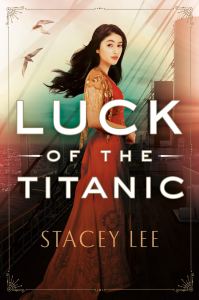
Luck of the Titanic by. Stacey Lee | Book Review

My Rating: ⭐️⭐️⭐️1/2

Title: Luck of the Titanic

Author: Stacey Lee

Format: Hardcover (borrowed)

Pages: 368

Publication Date: 5/4/21

Publisher: G.P. Putnam’s Sons Books for Young Readers

Categories: Historical Fiction, Young Adult, Family

Valora Luck has two things: a ticket for the biggest and most luxurious ocean liner in the world, and a dream of leaving England behind and making a life for herself as a circus performer in New York. Much to her surprise, though, she’s turned away at the gangway; apparently, Chinese people aren’t allowed into America.

But Val has to get on that ship. Her twin brother, Jamie, who has spent two long years at sea, is on board, as is an influential circus owner. Thankfully, there’s not much a trained acrobat like Val can’t overcome when she puts her mind to it.

As a stowaway, Val should keep her head down and stay out of sight. But the clock is ticking and she has just seven days as the ship makes its way across the Atlantic to find Jamie, audition for the circus owner, and convince him to help get them both into America.

Then one night, the unthinkable happens, and suddenly Val’s dreams of a new life are crushed under the weight of the only thing that matters: survival.

Stacey Lee knows how to write young adult historical fiction where we care about the characters. I especially love that she writes about Asian characters because I am always learning something new! I was a sophomore in college when Titanic, the movie with Leonardo DiCaprio came out and I watched it three times in the theater and countless times after on tv. It is ingrained in me. But Luck of the Titanic tells the tale loosely based on the fact that there were Chinese men and women on board the Titanic. That was news to me so I went into this book very interested.

Valora is half English/half Chinese and is looking for her twin brother. She hitches a plan to get onto the Titanic and does find her brother. The reunion between them is great and this is how we meet the other Chinese men on board and what a cast of characters they are. They grew on me as we learned some of their back stories. The story also mentions The Chinese Exclusion Act which I knew nothing about or if I did learn that in history class decades ago, I have forgotten. But this law didn’t allow Chinese immigrants into the USA for a long time, even though they found other ways to go around it. We get a taste of the discrimination and racism directed towards the Chinese from both the upper class and lower class passengers.

Valora and Jamie’s relationship is the main focus of the story as she tries to persuade him to go to America with him. They have been apart for a long time and with their parents both gone, they only have one another. Valora gets to know Jamie’s friends and they become their own chosen family. Of course they are on the Titanic though…and we know the Titanic means tragedy. So if you are looking for a happy ending, this book is not it.

The whole cast of characters were great and it’s the Titanic so there were all kinds of people on this huge ship. I think we got a glimpse of it in this book.

This was a very fast read, even as it starts slow, you know it’s building to a tragic end with the Titanic about to sink. In the span of time Valora, Jamie and their friends spend on the Titanic they become a family, Valora even experiences the beginnings of what could be love, the twins are united and even perform acrobats like they did as kids – they have a time on the Titanic before tragedy strikes.

Triggers: racism, death

The Titanic movie is ingrained in me so there were times, it reminded me of the movie! Valora getting on the ship by any means like Jack did, Jamie falling for an upper class passenger like how Jack and Rose fell for one another.

It’s a slow beginning with Valora finding Jamie and then Valora trying to convince Jamie to join the circus and move to America with her. I was waiting for the Titanic to hit ice halfway through the book because that is the exciting and tragic parts of any Titanic story but it comes more towards the end. So the ending felt rushed.

It’s a sad ending, bittersweet – there were some happy endings so that’s a good thing, but overall the whole tragedy of the Titanic is sad.

Why you should read it:

  • The story honoring the 8 Chinese onboard the Titanic is important
  • you learn a lot
  • it’s a lovely yet tragic story about family

Why you might not want to read it:

  • slow beginning, Titanic doesn’t hit ice until way late in the book
  • sad ending – the whole Titanic tragedy is sad

My Thoughts:

I ended up reading this book very quickly despite the slow beginning. I think because I know the Titanic story through the movie, I was waiting for the action and the moment the ship started to sink. In the book it doesn’t come until later so I was racing through just to get to it. Though slow, the story about Valora and Jamie is a beautifully sad one about family. When Valora befriends his crew, then the story also becomes one about chosen family. This one is tragic, but beautifully written and we learn more about what the Chinese went through in the past. Stacey Lee is a great storyteller and I look forward to her next book.

📚~ Yolanda