BLOG TOUR} The Perfumist of Paris by. Alka Joshi | Book Spotlight and Excerpt

Welcome to the blog tour for The Perfumist of Paris by. Alka Joshi!

Title: The Perfumist of Paris (The Jaipur Trilogy #3)

Author: Alka Joshi

Format: eBook (NetGalley)

Pages: 368

Publication Date: 3/28/23

Publisher: MIRA

BUY HERE: Harlequin | Indiebound | Amazon | Barnes & Noble | Books-A-Million | Target | Google | Apple | Kobo

Categories: Historical Fiction

“A stunning portrait of a woman blossoming into her full power…this is Alka Joshi’s best book yet!” —Kate Quinn, New York Times bestselling author of The Diamond Eye

From the author of Reese’s Book Club Pick The Henna Artist, the final chapter in Alka Joshi’s New York Times bestselling Jaipur trilogy takes readers to 1970s Paris, where Radha’s budding career as a perfumer must compete with the demands of her family and the secrets of her past.

Paris, 1974. Radha is now living in Paris with her husband, Pierre, and their two daughters. She still grieves for the baby boy she gave up years ago, when she was only a child herself, but she loves being a mother to her daughters, and she’s finally found her passion—the treasure trove of scents.

She has an exciting and challenging position working for a master perfumer, helping to design completely new fragrances for clients and building her career one scent at a time. She only wishes Pierre could understand her need to work. She feels his frustration, but she can’t give up this thing that drives her.

Tasked with her first major project, Radha travels to India, where she enlists the help of her sister, Lakshmi, and the courtesans of Agra—women who use the power of fragrance to seduce, tease and entice. She’s on the cusp of a breakthrough when she finds out the son she never told her husband about is heading to Paris to find her—upending her carefully managed world and threatening to destroy a vulnerable marriage.

Paris

September 2, 1974

I pick up on the first ring; I know it’s going to be her. She always calls on his birthday. Not to remind me of the day he came into this world but to let me know I’m not alone in my remembrance.

“Jiji?” I keep my voice low. I don’t want to wake Pierre and the girls.

“Kaisa ho, choti behen?” my sister says. I hear the smile in her voice, and I respond with my own. It’s lovely to hear Lakshmi’s gentle Hindi here in my Paris apartment four thousand miles away. I’d always called her Jiji—big sister—but she hadn’t always called me choti behen. It was Malik who addressed me as little sister when I first met him in Jaipur eighteen years ago, and he wasn’t even related to Jiji and me by blood. He was simply her apprentice. My sister started calling me choti behen later, after everything in Jaipur turned topsy-turvy, forcing us to make a new home in Shimla.

Today, my sister will talk about everything except the reason she’s calling. It’s the only way she’s found to make sure I get out of bed on this particular date, to prevent me from spiraling into darkness every year on the second of September, the day my son, Niki, was born.

She started the tradition the first year I was separated from him, in 1957. I was just fourteen. Jiji arrived at my boarding school with a picnic, having arranged for the headmistress to excuse me from classes. We had recently moved from Jaipur to Shimla, and I was still getting used to our new home. I think Malik was the only one of us who adjusted easily to the cooler temperatures and thinner air of the Himalayan mountains, but I saw less of him now that he was busy with activities at his own school, Bishop Cotton.

I was in history class when Jiji appeared at the door and beckoned me with a smile. As I stepped outside the room, she said, “It’s such a beautiful day, Radha. Shall we take a hike?” I looked down at my wool blazer and skirt, my stiff patent leather shoes, and wondered what had gotten into her. She laughed and told me I could change into the clothes I wore for nature camp, the one our athletics teacher scheduled every month. I’d woken with a heaviness in my chest, and I wanted to say no, but one look at her eager face told me I couldn’t deny her. She’d cooked my favorite foods for the picnic. Makki ki roti dripping with ghee. Palak paneer so creamy I always had to take a second helping. Vegetable korma. And chole, the garbanzo bean curry with plenty of fresh cilantro.

That day, we hiked Jakhu Hill. I told her how I hated math but loved my sweet old teacher. How my roommate, Mathilde, whistled in her sleep. Jiji told me that Madho Singh, Malik’s talking parakeet, was starting to learn Punjabi words. She’d begun taking him to the Community Clinic to amuse the patients while they waited to be seen by her and Dr. Jay. “The hill people have been teaching him the words they use to herd their sheep, and he’s using those same words now to corral patients in the waiting area!” She laughed, and it made me feel lighter. I’ve always loved her laugh; it’s like the temple bells that worshippers ring to receive blessings from Bhagwan.

When we reached the temple at the top of the trail, we stopped to eat and watched the monkeys frolicking in the trees. A few of the bolder macaques eyed our lunch from just a few feet away. As I started to tell her a story about the Shakespeare play we were rehearsing after school, I stopped abruptly, remembering the plays Ravi and I used to rehearse together, the prelude to our lovemaking. When I froze, she knew it was time to steer the conversation into less dangerous territory, and she smoothly transitioned to how many times she’d beat Dr. Jay at backgammon.

“I let Jay think he’s winning until he realizes he isn’t,” Lakshmi grinned.

I liked Dr. Kumar (Dr. Jay to Malik and me), the doctor who looked after me when I was pregnant with Niki—here in Shimla. I’d been the first to notice that he couldn’t take his eyes off Lakshmi, but she’d dismissed it; she merely considered the two of them to be good friends. And here he and my sister have been married now for ten years! He’s been good for her—better than her ex-husband was. He taught her to ride horses. In the beginning, she was scared to be high off the ground (secretly, I think she was afraid of losing control), but now she can’t imagine her life without her favorite gelding, Chandra.

So lost am I in memories of the sharp scents of Shimla’s pines, the fresh hay Chandra enjoys, the fragrance of lime aftershave and antiseptic coming off Dr. Jay’s coat, that I don’t hear Lakshmi’s question. She asks again. My sister knows how to exercise infinite patience—she had to do it often enough with those society ladies in Jaipur whose bodies she spent hours decorating with henna paste.

I look at the clock on my living room wall. “Well, in another hour, I’ll get the girls up and make their breakfast.” I move to the balcony windows to draw back the drapes. It’s overcast today, but a little warmer than yesterday. Down below, a moped winds its way among parked cars on our street. An older gentleman, keys jingling in his palm, unlocks his shop door a few feet from the entrance to our apartment building. “The girls and I may walk a ways before we get on the Métro.”

“Won’t the nanny be taking them to school?”

Turning from the window, I explain to Jiji that we had to let our nanny go quite suddenly and the task of taking my daughters to the International School has fallen to me.

“What happened?”

It’s a good thing Jiji can’t see the color rise in my cheeks. It’s embarrassing to admit that Shanti, my nine-year-old daughter, struck her nanny on the arm, and Yasmin did what she would have done to one of her children back in Algeria: she slapped Shanti. Even as I say it, I feel pinpricks of guilt stab the tender skin just under my belly button. What kind of mother raises a child who attacks others? Have I not taught her right from wrong? Is it because I’m neglecting her, preferring the comfort of work to raising a girl who is presenting challenges I’m not sure I can handle? Isn’t that what Pierre has been insinuating? I can almost hear him say, “This is what happens when a mother puts her work before family.” I put a hand on my forehead. Oh, why did he fire Yasmin before talking to me? I didn’t even have a chance to understand what transpired, and now my husband expects me to find a replacement. Why am I the one who must find the solution to a problem I didn’t cause?

My sister asks how my work is going. This is safer ground. My discomfort gives way to excitement. “I’ve been working on a formula for Delphine that she thinks is going to be next season’s favorite fragrance. I’m on round three of the iteration. The way she just knows how to pull back on one ingredient and add barely a drop of another to make the fragrance a success is remarkable, Jiji.”

I can talk forever about fragrances. When I’m mixing a formula, hours can pass before I stop to look around, stretch my neck or step outside the lab for a glass of water and a chat with Celeste, Delphine’s secretary. It’s Celeste who often reminds me that it’s time for me to pick up the girls from school when I’m between nannies. And when I do have someone to look after the girls, Celeste casually asks what I’m serving for dinner, reminding me that I need to stop work and get home in time to feed them. On the days Pierre cooks, I’m only too happy to stay an extra hour before finishing work for the day. It’s peaceful in the lab. And quiet. And the scents—honey and clove and vetiver and jasmine and cedar and myrrh and gardenia and musk—are such comforting companions. They ask nothing of me except the freedom to envelop another world with their essence. My sister understands. She told me once that when she skated a reed dipped in henna paste across the palm, thigh or belly of a client to draw a Turkish fig or a boteh leaf or a sleeping baby, everything fell away—time, responsibilities, worries.

My daughter Asha’s birthday is coming up. She’s turning seven, but I know Jiji won’t bring it up. Today, my sister will refrain from any mention of birthdays, babies or pregnancies because she knows these subjects will inflame my bruised memories. Lakshmi knows how hard I’ve worked to block out the existence of my firstborn, the baby I had to give up for adoption. I’d barely finished grade eight when Jiji told me why my breasts were tender, why I felt vaguely nauseous. I wanted to share the good news with Ravi: we were going to have a baby! I’d been so sure he would marry me when he found out he was going to be a father. But before I could tell him, his parents whisked him away to England to finish high school. I haven’t laid eyes on him since. Did he know we’d had a son? Or that our baby’s name is Nikhil?

I wanted so much to keep my baby, but Jiji said I needed to finish school. At thirteen, I was too young to be a mother. What a relief it was when my sister’s closest friends, Kanta and Manu, agreed to raise the baby as their own and then offered to keep me as his nanny, his ayah. They had the means, the desire and an empty nursery. I could be with Niki all day, rock him, sing him to sleep, kiss his peppercorn toes, pretend he was all mine. It took me only four months to realize that I was doing more harm than good, hurting Kanta and Manu by wanting Niki to love only me.

When I was first separated from my son, I thought about him every hour of every day. The curl on one side of his head that refused to settle down. The way his belly button stuck out. How eagerly his fat fingers grasped the milk bottle I wasn’t supposed to give him. Having lost her own baby, Kanta was happy to feed Niki from her own breast. And that made me jealous—and furious. Why did she get to nurse my baby and pretend he was hers? I knew it was better for him to accept her as his new mother, but still. I hated her for it.

I knew that as long as I stayed in Kanta’s house, I would keep Niki from loving the woman who wanted to nurture him and was capable of caring for him in the long run. Lakshmi saw it, too. But she left the decision to me. So I made the only choice I could. I left him. And I tried my best to pretend he never existed. If I could convince myself that the hours Ravi Singh and I spent rehearsing Shakespeare—coiling our bodies around each other as Othello and Desdemona, devouring each other into exhaustion—had been a dream, surely I could convince myself our baby had been a dream, too.

And it worked. On every day but the second of September.

Ever since I left Jaipur, Kanta has been sending envelopes so thick I know what they contain without opening them: photos of Niki the baby, the toddler, the boy. I return each one, unopened, safe in the knowledge that the past can’t touch me, can’t splice my heart, can’t leave me bleeding.

The last time I saw Jiji in Shimla, she showed me a similar envelope addressed to her. I recognized the blue paper, Kanta’s elegant handwriting—letters like g and y looping gracefully—and shook my head. “When you’re ready, we can look at the photos together,” Jiji said.

But I knew I never would.

Today, I’ll make it through Niki’s seventeenth birthday in a haze, as I always do. I know tomorrow will be better. Tomorrow, I’ll be able to do what I couldn’t today. I’ll seal that memory of my firstborn as tightly as if I were securing the lid of a steel tiffin for my lunch, making sure that not a drop of the masala dal can escape.

Excerpted from The Perfumist of Paris by Alka Joshi © 2023 by Alka Joshi, used with permission from HarperCollins/MIRA Books.

About the Author:

Born in India and raised in the U.S. since she was nine, Alka Joshi has a BA from Stanford University and an MFA from California College of Arts. Joshi’s debut novel, The Henna Artist,  immediately became a NYT bestseller, a Reese Witherspoon Bookclub pick, was Longlisted for the Center for Fiction First Novel Prize, & is in development as a TV series. Her second novel, The Secret Keeper of Jaipur (2021), is followed by The Perfumist of Paris (2023).Find her online at www.alkajoshi.com.

Author Website: www.alkajoshi.com | TWITTER: @alkajoshi | FB: @alkajoshi2019 | Insta: @thealkajoshi

Goodreads: https://www.goodreads.com/author/show/18257842.Alka_Joshi

BLOG TOUR} Exes & O’s by. Amy Lea | Book Spotlight and Excerpt

Welcome to the blog tour for Exes & O’s by Amy Lea!

Title: Exes & O’s

Author: Amy Lea

Format: eBook (NetGalley)

Pages: 400

Publication Date: 1/10/23

Publisher: Berkley Books

Categories: Contemporary, Romance, Close Proximity, Roommates to Lovers

CLICK HERE for MY REVIEW

A romance novel–obsessed social media influencer revisits her exes on her hunt for true love in this romantic comedy from the author of Set On You.

Romance-novel connoisseur Tara Chen has had her heart broken ten times by ten different men–all of whom dumped her because of her “stage-five clinger” tendencies. Nevertheless, Tara is determined to find The One. The only problem? Classic meet-cutes are dead thanks to modern dating apps. So Tara decides to revisit her exes in hopes of securing her very own trope-worthy second-chance romance.

Boston firefighter Trevor Metcalfe will be the first to rush into a burning building but the last to rush into a relationship. Love just isn’t his thing. When his new roommate Tara enlists him to help her reconnect with her exes, he reluctantly agrees. But Tara’s journey is leading him to discover his own new chapter.

The more time they spend together, the more Tara realizes Trevor seems to be the only one who appreciates her authentic, dramatic self. To claim their happily-ever-after, can Tara and Trevor read between the lines of their growing connection?

EXES AND O’S Non-Exclusive Excerpt

As I contemplate curling into bed to escape reality with a trusty book, there’s a soft knock at the door. “What?” I grumble.

“Tara, please open the door.”

Against my better judgment, I open it the tiniest crack. Trevor is still in his coat and boots, his chest heaving, his hair disheveled like he’s run his fingers through it a thousand times.

“I’m not talking to you until you tell me the truth,” I warn.

He tips his head back, as if to see me from a different perspective. “You want the truth?” he asks, his voice strained.

“That’s all I want,” I whisper, my hands on either side of my cheeks to cover the redness.

He sighs. “You were right. I—have feelings for you.” The declaration knocks the wind out of my chest. I tamp down the urge to ask a million questions, letting him continue. “Big feelings. To the point where  I don’t even know what to do with myself half the time. I’ve tried to get you out of my head for months, but your stubborn ass just won’t leave.”

“Really?”

“I’ve wanted to tell you so badly. Every single day since I realized it.”

“Why haven’t you?”

“Because I’m scared that I can’t give you what you need.”

“What do you think I need?” I ask, my voice barely above a whisper.

“You want a full-on fairy tale. The perfect guy from your books. Marriage. Kids. Everything. And you deserve it all. But what if I’m not capable of giving that to you?”

I consider that. I think about all the exes who’ve made me similar promises in the past. How empty their words were. How it all meant nothing. Because in the end, they all left.

“But what if you are?” I counter. “I don’t need another man who makes elaborate promises they can’t commit to, Trevor. I need someone who’s going to be open and honest with me. I want someone who is willing to try.”

A sigh that sounds like relief escapes his lips. “If there’s anyone in this world I want to try for, it’s you,” he whispers.

My chest caves, and my eyes mist. Somehow, those words mean more to me than any elaborate declaration of love from my exes. “We’re really doing this?” I confirm.

“I’m going to give this everything I have. I just . . . I might need to take thing slow. Slower than you’re used to.”

I nod. “I can do slow.”

He regards me, his lip tilting in a smirk. “Can you, though?”

“Yup.” I cover my face to hide my half-lie, and he laughs.

“You’ve already come up with baby names, haven’t you?”

My heart swells. We’ve been in a relationship all of a minute and already Trevor knows me better than any guy I’ve ever been with. “Maybe. But you’re right. We’ll go slow. Glacial slow. No marriage or baby talk. And just kissing. We’ll keep it G-rated.” I press my hand over my chest in a vow.

He’s quiet for a few beats as his eyes search mine. For a split second, I’m certain he’s about to walk it all back. “Maybe not G.”

“No? Would you prefer PG? Just light pecks and hand-holding?” I tease.

“At least PG-13, smartass. Get over here.” Before I have the chance to pounce, he pushes the door open, crosses the threshold, and pulls my wrists from my face. And then, his lips collide with mine. Hard.

Excerpted from Exes and O’s by Amy Lea Copyright © 2023 by Amy Lea. Excerpted by permission of Berkley. All rights reserved. No part of this excerpt may be reproduced or reprinted without permission in writing from the publisher.

About the Author:

Amy Lea is an Asian Canadian government analyst who runs the Bookstagram account @amyleabooks, where she promotes and reviews contemporary romance novels. Set on You is her debut novel. Learn more online at www.amyleabooks.com.  

My Mother’s Secret: A Novel of the Jewish Autonomous Region by. Alina Adams | Book Excerpt

Title: My Mother’s Smile: A Novel of the Jewish Autonomous Region

Author: Alina Adams

Pages: 353

Publication Date: 11/21/22

Categories: Historical Fiction

With his dying breath, Lena’s father asks his family a cryptic question: “You couldn’t tell, could you?” After his passing, Lena stumbles upon the answer that changes her life forever.

As her revolutionary neighbor mysteriously disappears during Josef Stalin’s Great Terror purges, 18-year-old Regina suspects that she’s the Kremlin’s next target. Under cover of the night, she flees from her parents’ communal apartment in 1930s Moscow to the 20th century’s first Jewish state, Birobidzhan, on the border between Russia and China. Once there, Regina has to grapple with her preconceived notions of socialism and Judaism while asking herself the eternal question: What do we owe each other? How can we best help one another? While she contends with these queries and struggles to help Birobidzhan establish itself, love and war are on the horizon.

New York Times Bestselling author Alina Adams draws on her own experiences as a Jewish refugee from Odessa, USSR as she provides readers a rare glimpse into the world’s first Jewish Autonomous Region. My Mother’s Secret is rooted in detailed research about a little known chapter of Soviet and Jewish history while exploring universal themes of identity, love, loss, war, and parenthood. Readers can expect a whirlwind journey as Regina finds herself and her courage within one of the century’s most tumultuous eras.

Part One: 1935 – 1940

Chapter One

Moscow, USSR

She had her ticket. All that was necessary now was to get on the train.

Regina glanced furtively over her shoulder. Yaroslavsky Railway Station was as bustling as ever. Men in grey suits and ties, patched jackets, and caps with brims that flopped into their eyes jostled women wearing wool coats trimmed with rabbit fur, some with kerchiefs over their heads, others sporting more fashionable berets. All rushed to board trains for Vladivostok, Kirov, Tomsk, and a host of other Eastern destinations. No one had any reason to pay attention to an eighteen year old girl struggling to drag a scuffed leather bag she’d thrown together a few hours earlier, blindly tossing in random items in Regina’s haste to be gone before the black-booted militsioners returned for her. They might only want to ask her questions about people she knew, people who’d already been arrested. They might arrest and then release her… if she provided them with the answers they were seeking. Or they might put her on trial. The kind of trial where an innocent verdict wasn’t an option. If Regina were braver, she might have stuck around to find out. If Regina were braver, she might have stuck around to defend her friends, who she knew had done nothing wrong, same as her. If Regina were braver, she wouldn’t currently be at the train station, glancing furtively over her shoulder.

She had her ticket. What she didn’t have was permission to leave. Or settle elsewhere. Soviet citizens were the freest in the world. Maintaining this freedom necessitated their leaders knowing where each was at all times. This led to stability, the seedbed of liberty. There were over two dozen scheduled stops between Moscow and Regina’s destination in the Far East. At any of them, the conductor could demand to review her propiska. If she failed to provide one, he had every right to yank her off his train and deposit Regina in the care of local authorities. Who would promptly, likely under armed guard, return her to Moscow. Where Regina’s attempt to run would bury her into deeper trouble. The proper course of action for those who wished to relocate to Birobiddzhan, the newly formed Jewish Autonomous Region (JAR) between the Bira and Bidzhan rivers of the Russian-Chinese border, was to register a request with KOMZET, the Committee for the Settlement of Jewish Toilers on the Land. KOMZET would authorize the appropriate travel documents. They might also bring her name to the attention of the authorities. She couldn’t risk that. Not until everything blew over. Which it would have to, sooner or later. Regina hadn’t done anything wrong. It wasn’t her fault she’d failed to realize until it was too late that those around her might have.

If only she could make it to Birobidzhan. Comrade Kaminsky, head of the village Soviet, would surely vouch for her loyalty to the state. They’d always had a good rapport whenever he’d visited Moscow. Regina had listened, enthralled, to his tales of Birobidzhan, its rich farmland, its plump livestock, the trees full of fruit and the rivers of fish. As Comrade Stalin had pronounced one month earlier, “For the first time in the history of the Jewish people, its burning desire for a homeland, for the achievement of its own national statehood, has been fulfilled.” It was one of the many reasons why all Soviet children, dressed in school uniforms of brown dresses with black pinafores for every day, white ones for special occasions for girls, or brown pants with white shirts for boys and crimson scarves for all began their day by reciting, “Thank you, Great Comrade Stalin, for my joyous childhood.”

KOMZET flourished under the oversight of Lazar Kaganovitch, Secretary of the Central Committee, Commissar of Communications, the most powerful Jew in the Soviet Union. “The nationality of the Jew is the nationality of the merchant,” he quoted Karl Marx when establishing the JAR. “Emancipation from huckstering and money will be the self- emancipation of our time.” 

Regina had always intended to make her way there. She’d always intended to be part of the pioneer movement to build an independent, thriving, Jewish, socialist state, where Yiddish literature was taught in schools, Yiddish plays were performed in theaters, Yiddish newspapers educated the public, and Yiddish speakers could walk streets marked with Yiddish signs, safe from violent attacks. At the close of the Great October Revolution, Jews, like all worthy Soviet citizens, had been accorded their own plots of land to work. Unfortunately, the previous owners – kulaks Comrade Stalin needed to show the error of their ways a decade earlier – weren’t happy with the redistribution. Thus it was determined that, in the interest of keeping antisemitic violence to acceptable levels, the optimal course of action was to convince Jews living in the USSR and its surrounding territories to relocate to the furthest eastern point on the Trans-Siberian railroad, where they would be safe, out of the way, and no longer annoying their neighbors. 

Regina had always intended to go. She didn’t need the posters paid for by ICOR,  the American Association for Jewish Colonization in the Soviet Union; black and white lithographs promoting spending 50 kopeks on a lottery ticket to help “build a socialist Jewish Autonomous Region,” or garishly colored illustrations of workers with bulging muscles carrying sacks urging, “Let us give millions to settle poor Jews on the land and to attract them to industry.”

Regina had always intended to go. She simply hadn’t intended to go this soon. Or this hurriedly. She’d intended to finish University first. Regina was specifically studying agriculture, horticulture, animal husbandry, and medicine, human and veterinary, so that she could be of the most use once she arrived in her new home. 

She never intended to be sneaking out of town, feeling, though it was the middle of the day, like a thief in the night, a scarf tossed over her head, chin pressed nearly into her chest, not making eye contact with anyone. Regina attempted to take as little space as possible, to shuffle her feet along the concrete station floor lest the clack of her high-heels attract attention. 

She only looked up when it came time to hand her ticket to the conductor. She peered into his face, eyes open wide, lashes quivering, and offered her most dazzling smile – as well as a peek down her blouse. It was a maneuver she’d evolved during her early teens. It worked on male teachers wavering between a higher and lower grade on an exam. It worked on butchers to double-check if there was truly not a scrap of meat left for sale. It worked on boys who felt inspired to buy you a slice of Napolean cake. Regina could hope it worked on train conductors.

It did. He barely glanced at Regina’s ticket. He was too busy leering at her. And he never got around to asking for her travel documents.

The trip from Moscow to Birobidzhan took eight days. Regina passed every one sitting upright atop her barely cushioned seat, staring out the window, gritting her teeth to keep from clicking her fingernails, tapping her feet, or performing any other nervous tick which might betray her anxiety. Except whenever the conductor came by. Then, Regina lay on her side, face turned towards the seatback, knees tucked under, pretending to be asleep. It was the most stomach- churning portion of the journey. She could hear the conductor’s footsteps growing closer. Would this be the day he decided the hell with good manners and shook Regina awake to demand her travel documents? There was the moment he would pause above her, his breathing as audible as if he were puffing into her ear. Her impulse was to squinch her eyes tighter. She worried that wouldn’t look natural. Truly sleeping people weren’t tensed up. Truly sleeping people were blissfully relaxed. Regina attempted to imitate that state while her throat cramped, her lungs shriveled, and her intestines pinched each other mercilessly. For eight days, the conductor paused right above her. Then he moved on.

That wasn’t the worst part of pretending to be asleep, though. The worst part was how, the second Regina closed her eyes, her eyelids turned into a blank screen for the projection of her otherwise repressed panic. There were flickering images of her future, where she arrived in Birobidzhan to be judged wanting and unwanted. And there were images of her past. The nights of arguments and outbursts. The joking, the singing, the drinking, the planning. Comrade Berger. Comrade Kaminsky. Cecilia. They’d seemed so heroic, so united. So unaware of what was lurking on the outskirts of their grand dreams. Or maybe she’d been the one unaware. She’d been the fool. Mama and Papa had implied as much from the moment Regina first got herself entangled. They stopped implying, moving on to flat out saying it when Regina stood before them, begging for help. She’d trusted the wrong people. She’d listened to the wrong voices. She’d heeded the wrong advice. Regina vowed to never make such a mistake again.

If she ever got the chance.

Regina’s train pulled into Birobidzhan’s solitary station, Tikhonkaya, after one in the morning, the darkest possible hour. Regina suspected it would have appeared so even without the rain whipping her window. She was the only passenger disembarking. She felt like tiptoeing, as you would into a library. Or a funeral home. 

One more sweep past the conductor, one more smile, one more loosened button, and she would be home free. None of her efforts proved necessary. At one in the morning, the conductor wasn’t faking sleep like Regina had for over a week. He was deeply in it.

While in Moscow Regina had curled into herself, trying to appear insignificant, here, she strove to make a robust first impression. To appear confident, strong, the sort of woman who’d be welcomed to join in building a socialist Jewish state, not deported home in disgrace, trailed by disparaging laughter like a foul stench.

So Regina forced herself to stride down the train steps and onto the platform. A woman who had nothing to fear. A woman who had nothing to hide.

Her attempt to appear confident – and guileless – proved superfluous. There was no one there to see it. Rain poured down in torrents, soaking Regina the instant she left the cover of her train. She couldn’t make out an awning or a station door to duck through. No attendant manned the ticket office. She’d disembarked on the left side of a wooden platform between two tracks. There was a second train across from her. Not a passenger one, but freight. A flash of lightning corrected Regina’s perception. Each car was filled to burst with people. Men? Women? Regina couldn’t tell. They were pressed against the walls, faces peering out the few barred windows. They reminded Regina of Uzbekh, Kazakh, and Kyrgyz people who’d been coming to Moscow to work and study ever since their republics became members of the USSR. 

The idling train’s engine sputtered in preparation for pulling out. Which was when Regina caught sight of a second figure on the platform. A man was running alongside the departing train, holding a sack, reaching into it, pulling out a handful of something Regina couldn’t identify, and shoving it into the outstretched hands of those who’d managed to squeeze their arms through the window’s slats. As the train sped up, so did he, running so quickly he tripped at Regina’s feet, dropping his sack. She bent to help him retrieve the loaves of bread he’d fumbled. Not the kind she knew from Moscow, machine baked, uniform and soft, but misshapen lumps, coarse, heavy, soaked. He scrambled up, frantically continuing distribution as waiting hands whipped by at swifter and swifter speeds. Regina imitated his actions, lifting a grimy trio of loaves, standing on tip-toe to reach. The bread was ripped from her grip with such force that it knocked Regina down, back, and over her bag. 

She thrust out her hands behind her, hoping to break her fall, feeling the splinters of the wooden railway floor dig into her palms as her teeth painfully smacked against each other. She rolled onto her stomach and pushed herself up, first to her knees, then to her feet. Regina futilely dabbed at the front of her dress, as if a few swipes with dirty, bloodied hands would do any good against the streaks of mud, wondering why she was bothering, no one would see her. 

By the time she looked up again, the man with the sack was gone.

Regina stood, soaked, on an abandoned railway platform. She’d expected the town of Amurzet to be there, the way all of Moscow’s nine stations were within city limits. You stepped off the platform, and there you were. Regina stopped off the platform in Birobidzhan, and she was ankle deep in a swampy, unplowed field, surrounded by mountains in the distance, and the outline of a dirt road that led into more darkness. Tree branches whipped in the wind. Waist-high grasses bent and curled. The road, Regina reasoned, had to lead… somewhere. If she followed it, she would eventually emerge… somewhere. If it wasn’t the settlement she was looking for, it would likely be some other, where she could solicit directions to her desired destination. Regina started walking. No, Regina started dragging; her feet through the mud, her face through the sheets of rain, her bag behind her, bumping into every rock, slipping into every cavity. 

Her clothes clung to her skin, her feet slid in her shoes. Regina’s hair fell into her eyes and, after a half-dozen futile attempts, she quit trying to prevent it. She peered out into the world through a slit in her dripping bangs, which scratched her eyes like bugs crawling on her pupils. Regina stared ahead, willing herself to think only of her destination, ordering herself to ignore the voice in her head, the one reminding Regina she could turn around, retrace her sloshing steps, and catch the next train back to Moscow. What was waiting for her there might be worse, but at least it wasn’t the unknown. She was concentrating so hard on ignoring that voice, telling herself the danger in Moscow couldn’t possibly be less than the danger of a stroll in a light mist, it took several moments for her to comprehend the voice she was hearing – a male one – was coming not from inside her head, but from the side of the road. 

Regina craned her neck, raising an arm to rub the back of her wrist across her face to clarify her vision. Through the torrent, she caught sight of a horse, its hooves digging a parallel gulley of mud Regina’s way. Presuming it wasn’t the animal she’d heard addressing her, Regina squinted, following the horse’s reins to the accompanying wagon, where legs, wrists, and a head peeked out from beneath a loose muslin covering to beckon Regina. 

The man from the station had come back for her.

About the Author:

Alina Adams is the NYT best-selling author of soap-opera tie-ins, figure skating mysteries, and romance novels. She was born in Odessa, USSR and immigrated with her family to the United States in 1977. She combined research with family stories to write her first historical fiction, “The Nesting Dolls,” and for her November 15, 2022 release, “My Mother’s Secret: A Novel of the Jewish Autonomous Region.” Read more at: www.AlinaAdams.com

Book Links:

Goodreads | Amazon | Barnes & Noble | Author Website

BLOG TOUR} Savvy Sheldon Feels Good As Hell by. Taj McCoy | Book Excerpt

Welcome to the blog tour for Savvy Sheldon Feels Good As Hell by. Taj McCoy!

My Rating: ⭐️⭐️⭐️💫

Read My Review HERE: Savvy Sheldon Feels Good As Hell

Buy HERE: Amazon | Barnes & Noble | Books a Million | BookShop.org | Google Play

A debut rom-com about a plus-size heroine who gets a full-life makeover after a brutal breakup, with the help of an irresistible cast of friends and family, a kitchen reno, and a devastatingly handsome contractor.

Savvy Sheldon spends a lot of time tiptoeing around various aspects of her life: her high-stress and low-thanks job, her clueless boyfriend, and the falling-apart kitchen she inherited from her beloved grandma who taught her how to cook and how to love people by feeding them. When Savvy’s complacency (and her sexy new lingerie) reaches a breaking point, she knows it’s time for some renovations.

Starting from the outside in, Savvy tackles her crumbling kitchen, her waistline, her work/life balance (or lack thereof,) and last (but not least): her love life. The only thing that doesn’t seem to require effort is her ride-or-die squad of close female friends. But as any HGTV junkie can tell you, something always falls apart during renovations. First, Savvy passes out during hot yoga. Then, it turns out that the contractor she hires is the same sexy stranger she unintentionally offended by judging based on appearances. Worst of all, Savvy can’t seem to go anywhere without tripping over her ex and his latest ‘upgrade.’ Savvy begins to realize that maybe she should’ve started her renovations the other way around, beginning with how she sees herself (and loves herself,) before she can build a love that lasts.


Book Excerpt:


“Shit!” Savvy whispered. A bubble of bacon grease popped on her arm, and she jumped back. Rubbing away the grease, she turned down the white knob on her gas stove to calm the crackling bacon, flipping thick slices of applewood-smoked goodness with a pair of tongs. Crisper this time.

Other than her occasional muttered curses, the only sounds in the house came from the sizzling on the stove and the deep hum of a cranky old refrigerator. The kind of hum that keeps you guessing whether it actually still functions. Tugging on the door, she ducked her head in to pull out baby portobello mushrooms, fresh spinach, and a red bell pepper from the crisper. She grabbed Gruyère cheese, a carton of eggs, and a pint of fresh strawberries, closing the door slowly to avoid its signature creak.

Savvy skillfully ran her chef’s knife through mushrooms, peppers, and onion more slowly than usual. She took great care not to wake the man sleeping down the hall. She eyed the black silk camisole and lacy short set hanging nearby, and a shiver of excitement ran down her spine. She looked down 

at Jason’s old basketball shirt, a relic from some college intramural tournament that he and his boys played in. Not exactly a seductive look. Whoever those guys were that enjoyed women with their hair tied back and no makeup on, Jason was not one of them.

She separated egg yolks from whites and tossed the veggies into a heated omelet pan, adding handfuls of fresh spinach as they softened, then the beaten egg whites a moment later. Using a handheld cheese grater, curls of Gruyère sprinkled onto the omelet, slowly expanding and flattening into a melty pool.

Savvy had moved into her childhood home eight months ago, right after Mama moved to San Jose with her new husband, leaving it empty. Very little had changed in the house since her childhood. Carpets still covered pristine hardwood floors, and plastic runners lined the hallway leading to the bedrooms. Dingy from years of wear and tear, the edges of the runners were yellowed with age. Mama’s house, with its floral decor, took clutter to hoarding levels—she never threw anything away.

The faded yellow paint on the walls, dry and peeling, reminded Savvy of the lists of contractors Mama had given her, tucked between the milk crate and the French press. She intended to renovate the house to make it feel more like her own, but work was too busy to take on a project. The tea kettle hissed hot steam, and she snatched it from the stove before whistling interrupted the morning quiet. Boiling water cascaded over finely ground Kona coffee, the aroma carrying just enough caffeine to raise her energy level.

After peeking over her shoulder, Savvy reached into the oven and grabbed a slice of chewy bacon from the tray. If it’s eaten straight from the pan, it has no calories. These are the Bacon Rules.

Sliced strawberries and cubed mangoes with a chiffonade of fresh mint joined the omelet and crispy bacon, making for a colorful, drool-worthy presentation. Savvy ran a paper towel around the rim of the plate before capturing the aesthetic for her IG Story.

She kicked off her slippers and lifted the enormous T-shirt over her head before realizing with a flash of embarrassment that the kitchen curtains were wide open. She rushed to shut them, stubbing her toe on a loose piece of tile and yelling silently into the morning. Once she regained her composure, she slipped the camisole over her head, sucking in her breath and running her fingers over the slightly taut, black fabric. Don’t overthink it, Savvy. With her silky cream kimono robe with pale pink peonies framing her sexy new pj’s and Jason’s meal on an enameled wooden tray, she shook out her hair one last time and headed down the hall.

“Good morning, Baby I have breakfast for you,” Savvy cooed softly as she reached the doorway.

Jason opened his eyes slowly, rolling toward her onto his side as he yawned. “How long you been up, Savs?” His beard was flattened on his left side from being pressed into the pillow. He smoothed a hand over the crown of his head, flattening the top of his fade, then grabbed his phone before turning to look at her. Jason took in her attempt at seduction, his deep voice thick from sleep. “What you got on?”

Dammit. “Just something new. I thought you’d like it. I was up for maybe an hour?” she lied. More like two. “Couldn’t get back to sleep, so I thought I’d surprise you.” Setting the tray on the nightstand, she stole a quick kiss.

“I taste bacon on your lips.” He dug into his plate, shoving bacon and mango into his mouth at the same time. His hooded eyes chastised her before returning back to his meal.

How does he even taste his own food eating that fast? She sat down next to him with a bowl of fresh fruit, resting her pedicured toes on the edge of the bed frame. “What do you have going on today?” 

“Need to stop by my momma’s after she gets out of church, go home and walk Ginger, and then play a couple of pickup games with the fellas. What’s on your plate today? You cookin’ tonight?” He crunched through his bacon with enthusiasm, moving half of his omelet onto a piece of toast.

“I need to check on my uncle before I go shopping for some work clothes. You could come over for dinner later.”

He grunted, looking up from his omelet on toast, cheeks threatening to burst. “What you cookin’?” he repeated.

She rolled her eyes as she fixed her mouth to give him options, but her phone pinged.

Jason hit her with a side-eye, shaking his head. His mouth bursting with food. “Is that who I think it is?” His voice peaked, like a kid three seconds away from a tantrum.

Grabbing her phone from the nightstand, Savvy eyed him carefully. “Yes, Babe, it is.” Her voice calm, she scrutinized the request from her boss. He needed data about insured millennials to present to a new insurance client, and she’d forgotten to incorporate that into her presentation slides.

“He’s interrupting quality time, Savvy.” Jason stood, bare chested in basketball shorts, his deep voice booming with displeasure. Athletic, but not overly muscular, he ran his fingers over his flat stomach, stretching his long limbs, as she pounded away on her phone’s keyboard with her thumbs. “Why am I just waking up on Sunday morning, and you’re already working?”

Shit. “Just one sec, Jay, I promise.” Biting her lip, she ran through report data in her head to pinpoint the figures her boss wanted. She’d always had a good memory for numbers. She typed her response as quickly as her thumbs allowed, noting that she would be in the office for a few hours in the afternoon if he had any additional questions. Jason didn’t need to know that last part. “There, see? Done.” Savvy smiled up at him, willing him to sit next to her. 

He did. “I don’t know anyone else who is okay with their boss interrupting their weekend. He can’t just wait till tomorrow?”

“Well, I’m not working now…” Nuzzling his shoulder, she traced her fingertips down his back. “You know, Babe, I was hoping that we could…you know.” The kimono robe slipped suggestively, exposing her shoulders.

Jason avoided eye contact as he handed Savvy his empty tray. “You ain’t got time for all that, Boss Lady.” Tsking, he shook his head, making his way to the bathroom. The sound of a shower curtain being shoved aside and water raining from the showerhead followed. As steam spread across the bathroom mirror, he called out to her. “You should probably see if you can take them clothes back. Fit’s too tight.”

Savvy set the tray down on the bed next to her, then stood, wrapping the kimono tightly around her middle. Shoulders rounded, she returned to the kitchen with Jason’s empty plate, helping herself to another slice of perfect, chewy bacon. So much for quality time.

Jason left as Savvy showered, calling out to her that he’d come back for dinner. After getting ready, she pulled containers of last night’s leftovers out of the fridge and shoved them into a heavy cloth grocery bag. Baked chicken breasts with sautéed mushrooms covered in a marsala wine sauce. Parmesan and asparagus risotto. Mixed greens with grape tomatoes and a mason jar of fresh lemon and shallot vinaigrette. After grabbing her purse and a sealed envelope from her desk, she walked out into the sunshine. The sky swirled a perfect blue, a breeze ruffled through the treetops kissing wind chimes on her neighbor’s porch. A good-looking Black man in dusty jeans, a torn T-shirt, and work boots walked by with a beautiful chocolate Lab. He raised a hand in greeting as they strolled by, and she nodded in response.

Her surroundings changed from lush greenery to concrete skyscrapers and industrial buildings, as she navigated south on the 5 freeway, past Downtown LA. Spotting USC on her right, she threw a strong side-eye at the home of the Trojans. Bruin blood for life, baby.

Big brick buildings blurred into dilapidated warehouses and older residential neighborhoods. Exiting at Century Boulevard, she steered toward Uncle’s house, which he’d inherited from Savvy’s grandparents, since Granny and PopPop had already bought the Los Feliz house for Savvy, her mom, and her brothers. Mama complained that Uncle’s place was an old money pit, always needing repairs, but Unc and Savvy loved that house.

Pulling up in the driveway, she took in the dip in the roof that Uncle described on the phone. He’d sunk the last of his savings into the front porch when the steps needed replacing. The upkeep crept up faster now, but there was no letting go of Granny and PopPop’s most prized possession.

Whenever she needed money in college, Savvy’d called her uncle to avoid stressing Mama, who worked hard to put three kids through school. Unc helped whenever he could, treating her like the daughter he never had. Now, with the stability she found at work, Savvy reciprocated as often as she could, while still building a renovation fund for her own house.

Walking up the steps, Savvy looked through the screen door into the sitting room. “Unc! Where you at?”

“Now, why do you always have to holler like you ain’t got no home training?” Uncle’s husky voice rang with amusement. He leaned hard against a crutch, swinging open the screen door for her to walk through.

Savvy grinned at him, planting a big kiss on his cheek as she walked past. “Any home training I received was undone by a certain someone.” In her childhood, Unc had been her hero; he helped to raise her and her brothers when their dad took off. Ma’s older brother, Uncle Joe always came by to check on them. When money ran short, he stepped in and made sure they were never without.

“Mmm-hmm.” His smile twitched at the corners of his mouth. “What you up to today, Baby Girl?”

Inside, her uncle’s security uniform hung on the back of a chair in a plastic cover from the dry cleaner. A retired police officer, he’d taken on part-time work as a night watchman for an office building in Inglewood. On his limited retirement pay and meager income handling security, making ends meet had been a challenge, especially after he got injured on the job. At the time, Savvy had shaken her head at his explanation. “They vandalized the side of the building—of course I chased after them.” Who did he think he was, Usain Bolt? Unc sprained his ankle running after the vandals, and, under doctor’s orders, had to take time off until he could put full weight on his foot.

Savvy waved her bag of food containers at him, carrying it into the kitchen. She put the containers in the fridge and placed the sealed envelope on the Formica countertop; she had written “ROOF” on the front with a Sharpie. “I’m supposed to run an errand, but I think I’m just going to go into the office for a few hours. How was your week?”

He stood in the doorway, rolling his eyes. “I’m bored. I want to be back at work, but they want me to be off the crutches first.”

“I support that decision.”

“Yeah, well. Ain’t got much to do, other than checkin’ in on Mabel.”

Her eyebrows shot up. “Miss Mabel, huh?” Mabel Winslow lived across the street from Savvy’s grandparents’ house most of her life. Like Unc, Miss Mabel grew up in her house. 

She’d moved away when she married but returned after a bad divorce to help care for her parents. When her parents passed within a month of each other, they left Mabel the house and their golden retriever, Samson. A smile curved across her lips. “You’ve been jonesing after Miss Mabel since I was in high school. Tell me you finally asked her out.”

Uncle Joe shook his head, fighting a smile, his upper lip curled slightly with amusement. “I’m a gentleman, Baby Girl.”

“Uh, gentlemen go on dates, Unc.” She winked at him, coaxing laughter.

“We ain’t there yet. I just stopped by to see how she’s doing. You know she was in that car accident a couple weeks ago. Tweaked her back.”

“Is she okay?” She leaned against the counter.

“Says she is, but I think she might need a couple rounds of physical therapy. Doesn’t hurt to make sure she’s fully recovered.”

Savvy eyed her uncle. “Sounds like somebody can dish advice he isn’t willing to take…”

He tsked, pursing his lips at her. “Thank you for the help with the roof, but listen, Baby Girl. You workin’ too much. And you should be putting this money toward your own house.”

She rolled her eyes, following him into the den, where his favorite leather recliner faced a big screen TV. “You are forever saying I work too much. And I want to help, Unc.”

He sat gingerly, leaning his crutch against one of his armrests. “You need a vacation.”

“You know I work the way I do because of what I learned from you and Mama. It’s just what we do.”

“Nah. We worked hard so that you wouldn’t have to, Savvy. Your mama pushes you because she thinks you have to climb the corporate ladder to stay on it.” He wagged a finger at her.

She groaned, rolling her eyes. “Well, I am my mother’s daughter, and I feel most secure knowing that if either of you need me, I am in a position to help.”

Mama carried two, sometimes three jobs when Savvy and her brothers were little to make sure they were fed, that their shoes fit, and that they could participate in sports or other activities. Their dad had a wandering eye and left to be with another woman, leaving Mama to be Wonder Woman for the family. Savvy missed one first grade field trip due to a lack of funds, and Mama worked herself ragged to avoid that ever happening again. Pops never really got his shit together, losing touch with Savvy when he started his third family.

“The roof money is from a rainy-day fund, and if you think about it, those rainy days are exactly what we need to keep out of this house. I can do my renovations anytime.” She offered Uncle a crooked smile.

He shook his head, annoyed at her humor. “I know you’re itchin’ to redo that kitchen.”

She stood, ready to leave before he could march into an assessment of her current setup. An updated kitchen was at the very top of her bucket list. “I am. But you always came through for me. Let me do that for you.”

He pursed his lips, offered his cheek, and she leaned in to kiss it.

“You’ll be back on your feet in no time. In the meantime, call me whenever you need. Got that?”

“Mmm-hmm. Love you, Baby Girl.”

“I love you more, Uncle.” Savvy winked at him and turned to leave. “Let me know when you and Miss Mabel go out on your hot date!” 

Excerpted from Savvy Sheldon Feels Good as Hell by Taj McCoy © 2022 by Taj McCoy, used with permission by MIRA/HarperCollins.


About the Author:

Oakland native and attorney Taj McCoy is committed to writing stories championing black and biracial women of color, plus-sized protagonists, and characters with a strong sense of sisterhood and familial bonds. When she’s not writing, she may be on Twitter boosting other marginalized writers, trying to zen out in yoga, sharing recipes on her website, or cooking private supper club meals for close friends.

Author website: https://www.tajmccoywrites.com/

Twitter | Instagram | Goodreads

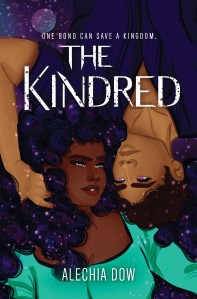
BLOG TOUR} The Kindred by. Alechia Dow | Book Excerpt

My Rating: ⭐️⭐️⭐️ >> My Review CLICK HERE

Title: The Kindred

Author: Alechia Dow

Pages: 400

Publication Date: 1/4/22

BUY HERE: Amazon | Barnes & Noble | Books a Million | IndieBound | BookShop.org | AppleBooks | Google Play

Publisher: Inkyard Press

Categories: Contemporary, Young Adult, Romance, Sci-Fi

To save a galactic kingdom from revolution, Kindred mind-pairings were created to ensure each and every person would be seen and heard, no matter how rich or poor…

Joy Abara knows her place. A commoner from the lowly planet Hali, she lives a simple life—apart from the notoriety that being Kindred to the nobility’s most infamous playboy brings.

Duke Felix Hamdi has a plan. He will exasperate his noble family to the point that they agree to let him choose his own future and finally meet his Kindred face-to-face.

Then the royal family is assassinated, putting Felix next in line for the throne…and accused of the murders. Someone will stop at nothing until he’s dead, which means they’ll target Joy, too. Meeting in person for the first time as they steal a spacecraft and flee amid chaos might not be ideal…and neither is crash-landing on the strange backward planet called Earth. But hiding might just be the perfect way to discover the true strength of the Kindred bond and expose a scandal—and a love—that may decide the future of a galaxy.


Book Excerpt:

Excerpted from The Kindred by Alechia Dow, © 2022 by Alechia Dow. Used with permission by HarperCollins/Inkyard Press.

CHAPTER 1

FELIX

Looking this pretty takes time.

The clothes must be expensive but not gaudy, complex but not as if I put in all my effort. My hair must look styled but like I’ve walked through a gentle, aimless breeze, and I cannot be sweaty, which, on a planet known for having three suns, is rather difficult.

Parties that start early are the worst anyway. Everyone should be thanking me, not giving me the stink-eye, which they are. For some reason, they expect me to actually show up on time.

“Look who decided to join us,” the drummer from The Monchoos mutters as I step into the dimly lit hallway. We’re from the same planet, Maru-Monchuri, but there’s no comradery between us. Who could be friends with a pompous, spoiled duke like me, right? I could be better, could be the person I’m expected to be, but why waste the effort?

I give him a quick wink as I look around. This coveted, hard-to-get gig’s on Outpost 32: a man-made station between XiGra and Hali-Monchuri—Joy’s homeworld. XiGra’s a rich planet that’s not a part of the Qadin Kingdom (yet), and Hali is a part of the Qadin Kingdom, but also extremely poor. Thankfully, this outpost is the perfect mash-up of the two: international enough to be popular among wealthy travelers, cool and gritty enough to reflect the rock ’n’ roll aesthetic.

The black stone walls are plastered with band posters, grime, and beneath it all, the touch of musicians that would either make it or break it onstage. I wonder which one we’ll be tonight.

Joy humphs in my brain, but doesn’t elaborate.

She said she wouldn’t watch me choke, couldn’t be a part of another concert experience that sets off her anxiety. And yet, she can’t stay out of my head.

Of course, I’d be paired with the most judgmental Kindred in the system.

A coordinator peeks out from the curtain, a detached comm-ball hovering around their blue tentacled head. Dosani. They’re music geniuses, and probably the friendliest species in the universe. They speak Dosan into the comm, and then it flies over to us, translating.

“You’re late. Get onstage.” The voice doesn’t sound all that friendly. Weird.

My bandmates stalk behind the curtain, leaving me there in the deserted hallway for just a second. My nerves begin to spiral in the pit of my stomach, and I reach out to her, because she’s there, she’s always there—well, usually there—and she knows what I need.

Joy, I say through our connection. We’ve been together since birth. I’m exactly three minutes older than her, and I had to wait for our chips to sync for those three minutes. Not that I can remember. Still, that’s the longest I’ve been without her in my life.

The Kindred Program was created decades ago, after The Second Chaos, aka “The Revolution.” Apparently, the poor rose up, feeling like their voices weren’t heard by the rich, powerful rulers, and so the lower classes threatened a reckoning. Maru’s top scientists offered a solution: the citizens of the Monchuri system could be paired, one from the upper class, one from the lower. Establishing this would allow everyone to have a voice that could be heard, blah-blah-blah, and no more revolution. How could anyone ignore a mind pairing?

Given that I’m a duke and cousin to the Qadin royals, I was supposed to be paired with someone a little closer in economic class, because not just anyone should have a voice with the royals. Yet, I got paired with Joy.

Joy, who is dreadfully poor, living on the most impoverished planet in our system. Joy, who is my best friend, my moral compass, my judge, jury, and sometimes executioner. She’s not always my biggest fan, but she supports me in whatever I choose to do. Which isn’t much. I like traveling, adventuring to new worlds as long as my amenities are acceptable, and playing in a band. We both love music. She loves listening in as I practice, hearing new melodies outside of her Halin hymns. She thinks music has the power to transform you and make you feel anything and everything. She believes in it, just like she believes in me.

Which is why I need her right now.

Because as much as I love music—and I do, with all of my small black heart—my stage fright keeps me from making it. Already, the nausea creeps up my throat and my breaths come too fast to let oxygen into my lungs.

Joy, I say again with some urgency.

Yes, Felix…? Her question whispers through our connection. She’s there inside my mind like a perfectly clear radio channel, the only one on my brain’s frequency. She can read my thoughts, converse with me, feel my emotions. She can see what I see. She’s the one consistency in my world, and I can’t live without her. Even if our worlds seem hell-bent on keeping us apart… Nah, I don’t need to be thinking about that now.

Tell me I can do it. I run a hand through my hair and blow air out between my teeth. My feet bounce on the dirty tiles. Tell me it’s not a big deal. Easy.

You’re the most talented person I know. You can do this. And I swear, if you make me sick again, Felix, I will murder you.

I chuckle. It’s not my fault you get sympathy pains.

The stronger we accept the bond in our minds, the stronger the feelings, including negative ones. Pain, illness, anxiety, sadness, anger… It can be so intense in such bonds that if one Kindred were to die, the other might follow shortly after. It occurs in maybe one in a thousand pairings, but it happens. Until recently, I would have thought Joy and I would be one of those pairs. But she’s been pulling away more and more.

Go get onstage! They’ve been waiting hours for you and your beautiful voice. She laughs, shifting her body on the couch in her apartment, nearly toppling her sketch pad off her lap. Get up there, she commands again, and then she’s gone. She’s turned the volume down to a whisper and tuned me out.

I hate when she does that. I also don’t know how she does that. Why can’t we just always stay connected? Who needs space? Not me.

With that thought, I take another deep breath and strut down the hall. I tug on the velvet red curtain and step through onto the sticky levitating stage. We lift a few feet off the ground, but thankfully, unlike in most of the more modern venues, the floor doesn’t spin. Thank the Gods.

My bandmates stare at me, wide-eyed as the crowd goes wild. The excitement in the room is palpable, like a glittery haze that coats my limbs and makes me want to sing and dance and be alive. My chest rises and falls in sync with their cheers and stomps.

I both love it and hate it up here.

The band’s set up and the microphone’s hot. The lights are low, the room’s packed, and I’m going to sing, even if my stomach churns and threatens to upchuck my dinner of steamed hopfal leaves packed with gooey black rice.

I swagger up to that mic, my legs wobbling like jelly. “Hello. I’m—”

“I love you, Felix!” someone in the audience shouts, though who it is, I can’t see. They’re all shadows and faceless bodies from up here. Just the way I like them.

The light beats down on me, and sweat prickles at the edge of my scalp.

“I love you, too.” I laugh into the mic, which earns a few grumbles from my bandmates. “Now I want to…” I trail off as a shadowed body comes into view. Their eyes bore into mine. The face is one I’d know anywhere. A face that shouldn’t be here.

My throat dries up as he stalks through the crowd, waiting for me to finish. I step back, almost stumbling over my own feet. With a fleeting glance at my bandmates, I trip offstage and toward him.

The crowd boos. My brain’s short-circuiting. He’s not supposed to be in this part of my life. He’s part of the Duke’s life, the one I shrug off and leave at home whenever the opportunity arises. His being here can only be bad for me. It can only mean trouble.

My feet are on autopilot as he nods his head over to a private booth reserved just for us. I can feel my bandmates’ glares, but they begin strumming on their guitars as if I was never really a part of their group anyway—which I wasn’t. The drums pick up and the audience forgets all about me and my promises of a good time as they dance.

My visitor wears a long black tunic embroidered with crimson thread and matching pants. His golden hair’s slicked back and his vibrant golden eyes flash as I slide into the booth first. He takes the seat opposite me, flips on the privacy switch in the center of the table, and then folds his hands on the table as a translucent wall falls around the perimeter of the booth.

We sit in silence for only a moment but it feels like a lifetime as my heart hammers unsteadily in my chest.

“Do you know why I’m here, Duke Hamdi?” he asks finally, his head tilting to the side.

I suck my teeth. “My parents think I’m at some interplanetary summit for the children of dignitaries on Kippilu and they found out I was lying?”

“I don’t work for your parents.” Arren huffs, leaning back. “I work for the Qadins. You may remember them as the royals that pay for the pricey state-of-the-art ships you use to jump planets and slum in music halls—” he waves his arm at the room “—your flashy clothes and instruments that you seemingly never play onstage, and the countless opportunities that have been provided to you over the course of your short life.” There’s a bitter edge to his words that has me sitting taller. “You are a disappointment to their name.”

Arren’s a royal advisor—the royal advisor, and he has done enough over the years to earn my fear and respect. But there has to come a time when I crack.

Tonight, I was going to finally get over my stage fright and make a name for myself that had nothing to do with my actual name. All of my hard work, practicing until late at night, and pushing myself to new limits both artistically and mentally would have paid off. Instead, I’m here, missing my chance, being scolded for chasing my dreams by the royal advisor that threatened my Kindred’s life.

I will not forget, and I will not forgive.

“Do you think by doing all the Qadins’ dirty work, it’ll make you one of them? Do you think they consider you their equal?” I try to twist my lips at the corners, even if dread sinks into the bottom of my stomach. “What’ll happen if I go into politics like they so desire and come for your job?” I’m balancing on the tip of a sword, and at any second, I’ll get cut.

“You’re a fool.” Arren chuckles, though there’s no humor in it. “I do not wish to be a Qadin. I am not their equal. And you…” He trails off suddenly to look at the carefree dancers and the band that went on without me. “You have responsibilities that come with your title.”

“There are other dukes, other cousins.” My nostrils flare as I watch him. “Why do they hold me to such high standards when the others are free to do what they want?”

“Because you are meant to be much more than you are. Soon, you’ll need to step in and step up.” He holds my gaze now, and in it, I see a flicker of something that’s not frustration. It’s a thoughtful, plotting look. Arren’s got plans, and he wants me to follow them. “Soon your Kindred will marry and move on with her life. But where will you be? Failing on the stages of dingy bars—because at some point the good ones will stop booking you no matter your title—and burning through your trust fund? Do you know how many people would kill for the opportunities you have?”

Something about that question furthers my unease. Who would kill for opportunities? The Kindred Program makes sure that people are heard and happy. Murder doesn’t happen anymore. Citizens are content with their roles in life.

“Don’t you have other things to do, like I don’t know, figure out the Ilori conflict or something? Aren’t they trying to colonize us? The Qadins should be putting their energy into that, not whatever this is. What could they possibly want with me? I have no power or ambitions in politics.”

“The Qadins didn’t send me, so I don’t rightly know.” He stands, running his hands down his spotless tunic as I digest that news. If they didn’t send him, why is he here? “I came because I am looking out for your best interests. King Qadin would have no issue ignoring your existence, but I know you have a great destiny. One day, you may have power, and you could create change. Stop this music nonsense and join me, join my side. Together, we can pave our own paths in this kingdom. You could find your voice, since you can’t seem to find it onstage, and finally reach your potential. I believe in you—can you say that about anyone else?”

I barely keep the anger from my voice as I shuffle my legs beneath the table. “Is that why you threatened my Kindred?” I remember the way he had guards surround her without her noticing, pointing their weapons at her as he made me promise to never see her. Never allow her into my heart. “Was that your way of believing in me?”

“I was following orders. I work for the Qadins, but I am not one of them, and with Princess LaTanya’s impending nuptials with her Kindred, Johann Kao, I never will be.” He shakes his head, as if he didn’t mean to say that. Admittedly, it was a weird thing to say, but then I do know from the tabloids that he’s enamored with LaTanya… Still, that thought flees my mind as he continues, “They were right to make sure you keep your distance from your Kindred. There is only one person you can rely on, Duke Hamdi, and I believe, in time, you’ll come to see that. Someday soon, you will need my help. And I won’t hesitate to give it.” He slips a card onto the table and with that, he strides off, disappearing into the dancing fray.

My fingers edge the tip of the card. It’s solid black. It’s an upload, something I’d need to stick into a holo-frame monitor to access. It probably has Arren’s private info encrypted for me, so that I can learn to live up to my potential and what—overthrow the Qadins and stage a coup with him? Why would I do that? What makes him think I want any responsibility that big? Despite what he says, I learned early that my name gets me in doors, gets me a seat at the table, but that’s it. I don’t matter. No one cares about my opinions or thoughts, so why should I have them anymore?

I shove it deep in my pocket and punch the button in the center of the table for service.

He chose this night, this moment, on purpose. He probably even had Outpost 32 book this gig for me just so he could ruin it. So I would be miserable and malleable to whatever he’s plotting. But he underestimated my indifference.

At least I’m here where I can get drunk enough to drown my sorrow as the crowd dances and the music thrums through them, and me.

At least his newest power move will keep me from thinking about Joy.


About the Author:

Alechia Dow is a former pastry chef, teacher, and librarian. When she’s not writing, you can find her having epic dance parties with her little girl, baking, reading, or traveling.

https://www.alechiadow.com/

Twitter | Instagram | Goodreads

BLOG TOUR } Talk Bookish to Me by. Kate Bromley | ARC Review + Excerpt

Welcome to the blog tour for Talk Bookish to Me by. Kate Bromley!

My Rating: 4/5 Stars

Title: Talk Bookish to Me

Author: Kate Bromley

Format: eBook (NetGalley)

Pages: 320

Publication Date: 5/25/21

Publisher: Graydon House

Buy Links: BookShop.org | Harlequin | Barnes & Noble | Amazon | Books-A-Million | Powell’s

Categories: Second Chance Romance, Contemporary

Disclaimer: **I received this book free from NetGalley in exchange for an honest review.  All thoughts and opinions are my own.**

Thank you to Graydon House for giving me a chance to read this eARC in exchange for an honest review.

Kara Sullivan is definitely not avoiding her deadline. After all, it’s the week of her best friend’s wedding and she’s the maid of honor, so she’s got lots of responsibilities. As a bestselling romance novelist with seven novels under her belt, she’s a pro and looming deadlines and writer’s block (which she definitely doesn’t have) don’t scare her. She’s just eager to support Cristina as she ties the knot with Jason.

But who should show up at Cristina and Jason’s rehearsal dinner but Kara’s college ex-boyfriend, (the gorgeous and infuriating) Ryan? Apparently, he’s one of Jason’s childhood friends, and he’s in the wedding party, too. Considering neither Kara nor Ryan were prepared to see each other again, it’s decidedly a meet-NOT-cute. There is nothing cute about this situation, and a bit of notice to mentally prepare would’ve been nice, Cristina! However, when Kara sits down to write again the next day, her writers’ block is suddenly gone. She has to wonder what’s changed. Are muses real…? And is Kara’s muse…Ryan?

  • Talk Bookish to Me is about a romance author, Kara, who is trying to finish up her next book and help her best friend with her wedding. On top of that, she runs into Ryan – her ex from college, and it seems like whatever happened in the past is still lingering between them. There is a whole emotional journey that takes place between these two from the moment they reunite to the end of the book.
  • The story really does start off light with a rom-com feel but the deeper we get into the story, we get into some bitter feelings of the past, regrets, resentment, guilt – so many feelings to work through. I wasn’t expecting where this story was headed but I had an inkling after a certain event.
  • The chemistry between them is electric as they remember how it used to be between them but I also liked that they could see how each other changed or stayed the same in some aspects. There is only really one particularly steamy scene in this story, but it was definitely a culmination of the tension between them.
  • I love Kara’s friends, but especially Maggie, she was there for her in every aspect of her life and I loved her for that.
  • How can you not love a book with a dog in it?
  • Triggers: grief, cheating
  • I’m not a fan of a having book within a book – so at times I mostly skimmed those parts.
  • This story has a great rom-com vibe and then the fun, games and sexy times end. Honestly, if it were me, I don’t think I could forgive Ryan as Kara did but they have the history together. Just for me personally, Ryan messed up bad. I will say the moment they fight about it was pretty intense and it was needed, they needed the truth out on both sides but wow…it was a emotionally heavy scene.

I enjoyed this enemies to lovers, second chance romance love story even though I don’t think I could have forgiven Ryan as Kara did. That was the only part of the story that brought my mood a bit down. I did understand though with young love, so much can go wrong as both people in the relationship grow and change. It gives us a chance to see if grown Kara and Ryan feel like what they feel for each other is what they want to fight for. Definitely check this one out if you like second chance romance stories.

📚 ~ Yolanda

*****

About the Author:

KATE BROMLEY lives in New York City with her husband, son, and her somewhat excessive collection of romance novels (It’s not hoarding if it’s books, right?). She was a preschool teacher for seven years and is now focusing full-time on combining her two great passions – writing swoon-worthy love stories and making people laugh. Talk Bookish to Me is her first novel.

Author Website

Twitter: @kbromleywrites | Instagram: @katebromleywrites | Facebook: @katebromleywrites | Goodreads

Catch Kate on tour!

The Book Revue virtual launch event at May 25th @ 7 pm ET

In conversation with Brenda Janowitz

Book Excerpt:

One

“Wait, was I supposed to bring a gift?”

I turn my gaze from the floor to the well-dressed man standing beside me. There are only two of us in the elevator, so he must be talking to me.

“I think it’s a matter of personal preference,” I answer. “I’m the maid of honor so I had to be excessive.”

His eyebrows bob up as I adjust my grip on the Great-Dane-sized gift basket I’m carrying. The cellophane wrapping paper crinkles each time I move, echoing through the confined space just loudly enough to keep things weird. Because if everyone isn’t uncomfortable for the entire ride, are you even really in an elevator?

I’m low-key ecstatic when the doors glide open ten seconds later. With my basket now on the cusp of breaking both my arms and my spirit, I beeline it out of there and stride into the rooftop lounge where my best friend is hosting her pre-wedding party, drinking in the scent of heat and champagne as I maneuver through the sea of guests.

Like most maids-of-honor, I flung myself down the Etsy rabbit hole headfirst and ordered an obscene amount of decorations for tonight’s event. Burlap “Mr. & Mrs.” banners dangle from floating shelves behind the bar as twinkle lights weave around the balcony railings like ivy. Lace-trimmed mason jars filled with pink roses sit on every candlelit cocktail table. Cristina and I worked with the tenacity of two matrimonial Spartans to get everything ready this morning, and it’s clear that our blood, sweat and tears were very much worth it.

It’s then that I spot Cristina mingling near the end of the bar. Beautiful, petite and come-hither curvy, I’d hate her if she weren’t one of my favorite people ever. Her caramel hair spills down her back and her white high-low dress sets her apart from the crowd in just the right way—she’s a princess in the forest and we’re her adoring woodland animals. I’m her feisty chipmunk sidekick to my core.

I place my gift on a nearby receiving table and give a little wave when I catch her eye. She’s waiting for me with a huge grin when I arrive at her side.

“Hey, lady!” she says, pulling me in for a hug. “Look at you, rolling in here looking all gorgeous.”

We step apart and I stand up a bit taller. “Why, thank you. I feel pretty good.”

It’s also very possible that Cristina is just so used to me dazzling the world with yoga pants and sweaters every day that my transformation seems more dramatic than it is.

“Were you able to get any writing done this afternoon?” she asks, handing me a glass of champagne from off the mahogany bar top.

I get a twisting knot in my gut at the mention of my writing, or lack thereof. Having been dying a slow literary death for almost a year, I’m never without some stomach-turning sensation for long. The final deadline for my next romancenovel is officially a month away and if I don’t deliver a bestseller by then—

“Okay, you’re making your freak-out face,” Cristina interjects. “I’m sorry, I shouldn’t have brought it up.”

I inhale a shallow breath and force a smile. “It’s fine. I’m good.”

“Let’s switch gears—are you sure it’s not weird that I’m having a pre-wedding party? Was booking the salsa band too much since I’m having one at the wedding, too?”

Beyond grateful for the booming trumpet and bongos that are drowning out my own thoughts, I turn to the corner and find the ten-piece group playing with addictive abandon. Cristina’s relatives, who are essentially non-trained professional salsa dancers, dominate the dance floor, and rightfully so. Cristina’s brother, Edgar, once tried to teach me the basics but I’m fairly confident I looked like a plank of wood that was given the gift of limbs. Cristina recommended dance lessons. Edgar suggested a bottle of aguardiente and prayer.

“The band is amazing,” I say as I swing back around, “and of course people have pre-wedding parties.” I’ve actually never heard of a pre-wedding party. An engagement party, yes. A bachelorette party, absolutely. But what’s going down tonight is basically a casual reception days before the mega-reception.

“Jason and I just have so many people coming in from out of town, plus we wanted the bridal party to get acquainted. We figured a little get-together would be fun.”

“I’m all for it. Who doesn’t want to pre-game for a wedding a week in advance?”

“I know I do,” Cristina says, lifting her own champagne and taking a sip. “Everyone is here except Jason and some groomsmen. Can you believe that creep is late to his own party?”

“Should you really be calling your fiancé a creep?”

“He’s my creep so it’s okay.”

“Valid point.”

“Picture please! Will you girls get together?”

I look to my right and find a teenage boy with wildly curly hair pointing a camera at us. He’s dressed in all black and looks so eager to take our photo that I can’t help but to find him endearing.

“Absolutely! Big smile, Kara.” Cristina throws her arm around my waist and after we withstand an intense flash, the young man is gone before my eyes can readjust. “That was Jason’s cousin, Rob. He wants to be a photographer, so I hired him for the night.”

“That was thoughtful of you,” I say, still recovering from my momentary blindness. “By the way, where is Jason?”

“He’s still at home. Two of his groomsmen are driving up and he wanted to wait for them since, apparently, grown men can’t find their way to a party by themselves.”

“Driving in Manhattan is intimidating. He probably didn’t want them to get lost.”

“Right, because neither of them has GPS? Jason should be here.”

I’m honestly shocked that Jason isn’t here. I love Cristina and Jason both to death but they’re one of those couples that rarely go out socially without each other. Even when I invite Cristina over to my apartment for a wine night, she asks to bring Jason. I’ve always thought it was a bit much, but I guess it works for them.

“Okay, forget everyone else, let’s toast.” I clear my throat and hold up my champagne. “When we were both waitressing at McMahon’s Pub in grad school, I had no idea it would lead to nine amazing years of friendship. Now I’d be lost without you. Here’s to you having a magical night. I’m so glad I’m here to celebrate with you.”

We smile and tap our glasses together, the ding of the crystal echoing my words.

I take a sip and the bubbly drink slips easily down my throat. Still savoring the sweetness, I ask, “So, who are these mystery groomsmen Jason’s waiting for?”

“One is named Beau and I can’t remember the other one. They’re two guys he grew up with when his family lived in North Carolina.”

“North Carolina? I thought Jason was from Texas?”

“He spent most of his life in Texas, but he lived in North Carolina until he was ten. He somehow kept in contact with these two through the years.”

“That’s nice, him staying friends with them for so long.”

“Yeah, it’s adorable, but they still should have gotten their asses here on their own.” Cristina is poised to elaborate when her gaze locks on something across the room. She tries and fails to look annoyed instead of excited.

“I’m guessing the groom has arrived,” I say, glancing over my shoulder. My suspicions are confirmed as I see Jason making his way toward us, smiling at Cristina like a fifth grader saying “cheese” on picture day. He’s tilting his head and everything.

“There she is! There’s my incredibly forgiving future wife.” Jason leans down and kisses Cristina before she can verbally obliterate him. He gives me a quick kiss on the cheek next and then shifts back to his fiancée’s side, sneaking an arm around her waist and pulling her to his hip.

“So, I’m going to go ahead and disregard all the semi-violent text messages you’ve sent me over the past hour. Bearing that in mind, how’s everything going?”

Cristina looks up at him, feigning disinterest. “It’s going great. Since you weren’t here, I talked to several nice men. Turns out, pre-wedding parties are a great place to meet guys.”

“I’m so happy for you.”

“I appreciate that. Four contenders, specifically, really piqued my interest.”

“Are they taller than me?” Jason asks. “Do they make a lot of money?”

“Obviously. They’re way taller and all of them are independently wealthy.”

“Nice. Kara, did you meet these freakishly tall and rich men?”

“I did and spoiler alert, I’m engaged now, too! Double wedding here we come!”

Jason smiles and pulls Cristina in even closer, his gaze holding hers. “I guess this is where being late gets you. I’m sorry I wasn’t here. Do you forgive me?”

“Don’t I always?”

He leans down and gives her another picture-perfect kiss.

It’s official. I’m dying alone. Just putting that out there.

“Now, where are these friends of yours? Oh! Let’s set one of them up with Kara!” Cristina looks at me with a dangerous matchmaker gleam in her eyes.

“Actually, I already mentioned Kara, and one of my buddies said he went to college with her.”

Went to college with me?

Jason looks towards the entrance and waves. “Hey, Ryan! Come over here!”

And then I go catatonic. I can’t move. I stand stock still, looking at Cristina like she sprouted a third arm out of her forehead and it’s giving me the middle finger.

Someone walks past me and a soft breeze ghosts across my overheating skin. I stare in a state of utter disbelief as Ryan Thompson steps into view beside Jason.

“It’s been a while, Sullivan,” he says, his voice as steady and tempting as ever.

My champagne glass falls from my fingers and shatters against the floor.

“Kara?” Cristina’s voice rings with concern as she nudges us away from the broken glass that’s now littered around our feet. She grasps my elbow, but I don’t feel it. She could backhand me across the face with a polo mallet and I wouldn’t feel it. My mind is spiraling, plummeting inwards as I come to grips with the realization that Ryan is standing two feet away from me.

Dressed in a navy suit, a crisp white button-down and brown dress shoes, he’s come a long way from the sweatshirts and jeans that were his unofficial uniform in college. His dirty-blond hair is on the shorter side, but a few wayward strands still fall across his forehead. Ten years ago, I would have reached up and brushed them aside without a thought. Now, my hand curls into a tight, unforgiving fist at my side.

If we were another former couple, seeing each other for the first time in a decade might be a dreamy, serendipitous meet-cute—a Nancy Meyers movie in pre-production. We’d have a few drinks and spend hours reminiscing about old times before picking up right where we left off. It would be comfortable and familiar as anything, like a sip of hot chocolate at Christmas with Nat King Cole crooning on vinyl in the background.

But we are not that kind of former couple, and I’m convinced that if Nat King Cole were here and knew my side of the story, he would grab Ryan by the scruff of his shirt and hold him steady as I roundhouse-kicked him in the throat.

It’s a tough pill to swallow but Ryan looks good. Like, really good. His face is harder than it was when he was twenty-one and the stubble on his chin tells me he hasn’t shaved in a few days, making him seem like he just rolled out of bed. And not rolled out of bed in a dirty way, but in a “I just rolled out of bed and yet I still look ruggedly handsome and you fully want to make out with me” kind of way.

The bastard.

“Ryan,” Cristina says, always the first to jump in, “Jason mentioned that you and Kara went to college together.”

“We did.” His eyes don’t move from mine for even a second. “It’s got to be what, ten years now?”

“Yeah, it’s been a long, long time,” I say quickly, turning to face Cristina. “I think I may have mentioned him before. Remember my friend from North Carolina?”

If someone were to look up “my friend from North Carolina” in the Dictionary of Kara, they would find the following:

My friend from North Carolina (noun): 1. Ryan Thompson. 2. My college boyfriend. 3. My first real boyfriend ever. 4. My first love. 5. Taker of my virginity. 6. Guy who massacred my heart with a rusty sledgehammer and fed the remains to rabid, ravenous dogs.

Cristina is well versed in the dictionary of Kara and recognition washes over her. “No way,” she says, her voice dropping.

“Yes way,” I answer happily, overcompensating.

Now’s it’s Cristina’s turn to panic. “Wow. Okay, wow, what a small world, huh?” She grabs Jason’s hand in an iron grip, making him wince as she blasts an over-the-top smile. “Well, we should give you guys a chance to catch up. My abuelita just got here so Jason and I are going to say hello.”

“Your abuelita died two years ago,” I hiss.

“I know, it’s a miracle. See you two later!” She drags her soon-to-be husband away before he can get a word out.

I watch them go, sailing away like the last lifeboat as I stand on deck with the string quartet, the cheerful Bach melody only further confirming that this ship is going down.

Excerpted from Talk Bookish to Me by Kate Bromley, Copyright © 2021 by Kate Bromley

Published by Graydon House Books.

BLOG TOUR | The Last Story of Mina Lee by. Nancy Jooyun Kim

Welcome to the blog tour for The Last Story of Mina Lee by. Nancy Jooyun Kim!

THE LAST STORY OF MINA LEE

Author: Nancy Jooyoun Kim

Publication Date: September 1, 2020

Publisher: Park Row Books

Buy Links: Harlequin  Barnes & Noble |Amazon | Books-A-Million |Powell’s

THE LAST STORY OF MINA LEE opens when Margot Lee’s mother, Mina, doesn’t return her calls. It’s a mystery to twenty-six-year-old Margot, until she visits her childhood apartment in Koreatown, Los Angeles, and finds that her mother has suspiciously died. The discovery sends Margot digging through the past, unraveling the tenuous and invisible strings that held together her single mother’s life as a Korean War orphan and an undocumented immigrant, only to realize how little she truly knew about her mother.

Interwoven with Margot’s present-day search is Mina’s story of her first year in Los Angeles as she navigates the promises and perils of the American myth of reinvention. While she’s barely earning a living by stocking shelves at a Korean grocery store, the last thing Mina ever expects is to fall in love. But that love story sets in motion a series of events that have consequences for years to come, leading up to the truth of what happened the night of her death.

Here is an EXCERPT:

Margot 2014

Margot’s final conversation with her mother had seemed so uneventful, so ordinary—another choppy bilingual plod. Half-understandable. 

Business was slow again today. Even all the Korean businesses downtown are closing. 

What did you eat for dinner?

Everyone is going to Target now, the big stores. It costs the same and it’s cleaner.

Margot imagined her brain like a fishing net with the loosest of weaves as she watched the Korean words swim through. She had tried to tighten the net before, but learning another language, especially her mother’s tongue, frustrated her. Why didn’t her mother learn to speak English?

But that last conversation was two weeks ago. And for the past few days, Margot had only one question on her mind: Why didn’t her mother pick up the phone?

****

Since Margot and Miguel had left Portland, the rain had been relentless and wild. Through the windshield wipers and fogged glass, they only caught glimpses of fast food and gas stations, motels and billboards, premium outlets and “family fun centers.” Margot’s hands were stiff from clenching the steering wheel. The rain had started an hour ago, right after they had made a pit stop in north Portland to see the famous 31-foot-tall Paul Bunyan sculpture with his cartoonish smile, red-and-white checkered shirt on his barrel chest, his hands resting on top of an upright axe.

Earlier that morning, Margot had stuffed a backpack and a duffel with a week’s worth of clothes, picked up Miguel from his apartment with two large suitcases and three houseplants, and merged onto the freeway away from Seattle, driving Miguel down for his big move to Los Angeles. They’d stop in Daly City to spend the night at Miguel’s family’s house, which would take about ten hours to get to. At the start of the drive, Miguel had been lively, singing along to “Don’t Stop Believing” and joking about all the men he would meet in LA. But now, almost four hours into the road trip, Miguel was silent with his forehead in his palm, taking deep breaths as if trying hard not to think about anything at all.

“Everything okay?” Margot asked.

“I’m just thinking about my parents.”

“What about your parents?” Margot lowered her foot on the gas.

“Lying to them,” he said.

“About why you’re really moving down to LA?” The rain splashed down like a waterfall. Miguel had taken a job offer at an accounting firm in a location more conducive to his dreams of working in theatre. For the last two years, they had worked together at a nonprofit for people with disabilities. She was as an administrative assistant; he crunched numbers in finance. She would miss him, but she was happy for him, too. He would finally finish writing his play while honing his acting skills with classes at night. “The theatre classes? The plays that you write? The Grindr account?”

“About it all.”

“Do you ever think about telling them?”

“All the time.” He sighed. “But it’s easier this way.”

“Do you think they know?”

“Of course, they do. But…” He brushed his hand through his hair. “Sometimes, agreeing to the same lie is what makes a family family, Margot.”

“Ha. Then what do you call people who agree to the same truth?”

“Uh, scientists?”

She laughed, having expected him to say friends. Gripping the wheel, she caught the sign for Salem.

“Do you need to use the bathroom?” she asked.

“I’m okay. We’re gonna stop in Eugene, right?”

“Yeah, should be another hour or so.”

“I’m kinda hungry.” Rustling in his pack on the floor of the backseat, he found an apple, which he rubbed clean with the edge of his shirt. “Want a bite?”

“Not now, thanks.”

His teeth crunched into the flesh, the scent cracking through the odor of wet floor mats and warm vents. Margot was struck by a memory of her mother’s serene face—the downcast eyes above the high cheekbones, the relaxed mouth—as she peeled an apple with a paring knife, conjuring a continuous ribbon of skin. The resulting spiral held the shape of its former life. As a child, Margot would delicately hold this peel like a small animal in the palm of her hand, this proof that her mother could be a kind of magician, an artist who told an origin story through scraps—this is the skin of a fruit, this is its smell, this is its color.

“I hope the weather clears up soon,” Miguel said, interrupting the memory. “It gets pretty narrow and windy for a while. There’s a scary point right at the top of California where the road is just zigzagging while you’re looking down cliffs. It’s like a test to see if you can stay on the road.”

“Oh, God,” Margot said. “Let’s not talk about it anymore.”

As she refocused on the rain-slicked road, the blurred lights, the yellow and white lines like yarn unspooling, Margot thought about her mother who hated driving on the freeway, her mother who no longer answered the phone. Where was her mother?

The windshield wipers squeaked, clearing sheets of rain.

“What about you?” Miguel asked. “Looking forward to seeing your mom? When did you see her last?”

Margot’s stomach dropped. “Last Christmas,” she said. “Actually, I’ve been trying to call her for the past few days to let her know, to let her know that we would be coming down.” Gripping the wheel, she sighed. “I didn’t really want to tell her because I wanted this to be a fun trip, but then I felt bad, so…”

“Is everything okay?”

“She hasn’t been answering the phone.”

“Hmm.” He shifted in his seat. “Maybe her phone battery died?”

“It’s a landline. Both landlines—at work and at home.”

“Maybe she’s on vacation?”

“She never goes on vacation.” The windshield fogged, revealing smudges and streaks, past attempts to wipe it clean. She cranked up the air inside.

“Hasn’t she ever wanted to go somewhere?”

“Yosemite and the Grand Canyon. I don’t know why, but she’s always wanted to go there.”

“It’s a big ol’ crack in the ground, Margot. Why wouldn’t she want to see it? It’s God’s crack.”

“It’s some kind of Korean immigrant rite of passage. National Parks, reasons to wear hats and khaki, stuff like that. It’s like America America.”

“I bet she’s okay,” Miguel said. “Maybe she’s just been busier than usual, right? We’ll be there soon enough.”

“You’re probably right. I’ll call her again when we stop.”

A heaviness expanded inside her chest. She fidgeted with the radio dial but caught only static with an occasional glimpse of a commercial or radio announcer’s voice.

Her mother was fine. They would all be fine.

With Miguel in LA, she’d have more reasons to visit now.

The road lay before them like a peel of fruit. The windshield wipers hacked away the rivers that fell from the sky.

Excerpted from The Last Story of Mina Lee by Nancy Jooyoun Kim, Copyright © 2020 by Nancy Jooyoun Kim Published by Park Row Books

About the AUTHOR:

Born and raised in Los Angeles, Nancy Jooyoun Kim is a graduate of UCLA and the MFA Creative Writing Program at the University of Washington, Seattle. Her work has appeared in the Los Angeles Review of Books, Guernica, The Rumpus, Electric Literature, Asian American Writers’ Workshop’s The Margins, The Offing, the blogs of Prairie Schooner and Kenyon Review, and elsewhere. Her essay, “Love (or Live Cargo),” was performed for NPR/PRI’s Selected Shorts in 2017 with stories by Viet Thanh Nguyen, Phil Klay, and Etgar Keret. THE LAST STORY OF MINA LEE is her first novel.

Social Links:

Author Website | Twitter: @njooyounkim | Instagram: @njooyounkim | Goodreads

Blog Tour } The Unwilling by. Kelly Braffet – Book Excerpt

Prologue

On the third day of the convocation, two of the Slonimi scouts killed a calf, and the herbalist’s boy wept because he’d watched the calf being born and grown to love it. His
mother stroked his hair and promised he would forget by the time the feast came, the following night. He told her he would never forget. She said, “Just wait.”

He spent all of the next day playing with the children from the other caravan; three days before, they’d all been strangers, but Slonimi children were used to making friends quickly. The group the boy and his mother traveled with had come across the desert to the south, and they found the cool air of the rocky plain a relief from the heat. The others had come from the grassy plains farther west, and were used to milder weather. While the adults traded news and maps and equipment, the children ran wild. Only one boy, from the other caravan, didn’t run or play: a pale boy, with fine features, who followed by habit a few feet behind one of the older women from the other caravan. “Derie’s apprentice,” the other children told him, and shrugged, as if there was nothing more to say. The older woman was the other group’s best Worker, with dark hair going to grizzle and gimlet eyes. Every time she appeared the herbalist suddenly remembered an herb her son needed to help her prepare, or something in their wagon that needed cleaning. The boy was observant, and clever, and it didn’t take him long to figure out that his mother was trying to keep him away from the older woman: she, who had always demanded he face everything head-on, who had no patience for what she called squeamishness and megrims.

After a hard day of play over the rocks and dry, grayish grass, the boy was starving. A cold wind blew down over the rocky plain from the never-melting snow that topped the high peaks of the Barriers to the east; the bonfire was warm. The meat smelled good. The boy had not forgotten the calf but when his mother brought him meat and roasted potatoes and soft pan bread on a plate, he did not think of him. Gerta—the head driver of the boy’s caravan—had spent the last three days with the other head driver, poring over bloodline records to figure out who between their two groups might be well matched for breeding, and as soon as everybody had a plate of food in front of them they announced the results. The adults and older teenagers seemed to find this all fascinating. The herbalist’s boy was nine years old and he didn’t understand the fuss. He knew how it went: the matched pairs would travel together until a child was on the way, and then most likely never see each other again. Sometimes they liked each other, sometimes they didn’t. That, his mother had told him, was what brandy was for.

The Slonimi caravans kept to well-defined territories, and any time two caravans met there was feasting and trading and music and matching, but this was no ordinary meeting, and both sides knew it. After everyone had eaten their fill, a few bottles were passed. Someone had a set of pipes and someone else had a sitar, but after a song or two, nobody wanted any more music. Gerta—who was older than the other driver—stood up. She was tall and strong, with ropy, muscular limbs. “Well,” she said, “let’s see them.”

In the back, the herbalist slid an arm around her son. He squirmed under the attention but bore it.

From opposite sides of the fire, a young man and a young woman were produced. The young man, Tobin, had been traveling with Gerta’s people for years. He was smart but not unkind, but the herbalist’s son thought him aloof. With good reason, maybe; Tobin’s power was so strong that being near him made the hair on the back of the boy’s neck stand up. Unlike all the other Workers—who were always champing at the bit to get a chance to show off—Tobin was secretive about his skills. He shared a wagon with Tash, Gerta’s best Worker, even though the two men didn’t seem particularly friendly with each other. More than once the boy had glimpsed their lantern burning late into the night, long after the main fire was embers.

The young woman had come across the plains with the others. The boy had seen her a few times; she was small, round, and pleasant-enough looking. She didn’t strike the boy as particularly remarkable. But when she came forward, the other caravan’s best Worker—the woman named Derie—came with her. Tash stood up when Tobin did, and when they all stood in front of Gerta, the caravan driver looked from one of them to the other. “Tash and Derie,” she said, “you’re sure?”

“Already decided, and by smarter heads than yours,” the gimlet-eyed woman snapped.

Tash, who wasn’t much of a talker, merely said, “Sure.”

Gerta looked back at the couple. For couple they were; the boy could see the strings tied round each wrist, to show they’d already been matched. “Hard to believe,” she said. “But I know it’s true. I can feel it down my spine. Quite a legacy you two carry; five generations’ worth, ever since mad old Martin bound up the power in the world. Five generations of working and planning and plotting and hoping; that’s the legacy you two carry.” The corner of her mouth twitched slightly. “No pressure.”

A faint ripple of mirth ran through the listeners around the fire. “Nothing to joke about, Gerta,” Derie said, lofty and hard, and Gerta nodded.

“I know it. They just seem so damn young, that’s all.” The driver sighed and shook her head. “Well, it’s a momentous occasion. We’ve come here to see the two of you off, and we send with you the hopes of all the Slonimi, all the Workers of all of our lines, back to the great John Slonim himself, whose plan this was. His blood runs in both of you. It’s strong and good and when we put it up against what’s left of Martin’s, we’re bound to prevail, and the world will be free.”

“What’ll we do with ourselves then, Gert?” someone called out from the darkness, and this time the laughter was a full burst, loud and relieved.

Gerta smiled. “Teach the rest of humanity how to use the power, that’s what we’ll do. Except you, Fausto. You can clean up after the horses.”

More laughter. Gerta let it run out, and then turned to the girl.

“Maia,” she said, serious once more. “I know Derie’s been drilling this into you since you were knee-high, but once you’re carrying, the clock is ticking. Got to be inside, at the end.”

“I know,” Maia said.

Gerta scanned the crowd. “Caterina? Cat, where are you?”

Next to the boy, the herbalist cleared her throat. “Here, Gerta.”

Gerta found her, nodded, and turned back to Maia. “Our Cat’s the best healer the Slonimi have. Go see her before you set out. If you’ve caught already, she’ll know. If you haven’t, she’ll know how to help.”

“It’s only been three days,” Tobin said, sounding slighted.

“Nothing against you, Tobe,” Gerta said. “Nature does what it will. Sometimes it takes a while.”

“Not this time,” Maia said calmly.

A murmur ran through the crowd. Derie sat up bolt-straight, her lips pressed together. “You think so?” Gerta said, matching Maia’s tone—although nobody was calm, even the boy could feel the sudden excited tension around the bonfire.

“I know so,” Maia said, laying a hand on her stomach. “I can feel her.”

The tension exploded in a mighty cheer. Instantly, Tobin wiped the sulk off his face and replaced it with pride. The boy leaned into his mother and whispered, under the roar, “Isn’t it too soon to tell?”

“For most women, far too soon, by a good ten days. For Maia?” Caterina sounded as if she were talking to herself, as much as to her son. The boy felt her arm tighten around him. “If she says there’s a baby, there’s a baby.”

After that the adults got drunk. Maia and Tobin slipped away early. Caterina knew a scout from the other group, a man named Sadao, and watching the two of them dancing together, the boy decided to make himself scarce. Tash would have an empty bunk, now that Tobin was gone, and he never brought women home. He’d probably share. If not, there would be a bed somewhere. There always was.

In the morning, the boy found Caterina by the fire, only slightly bleary, and brewing a kettle of strong-smelling tea. Her best hangover cure, she told her son. He took out his notebook and asked what was in it. Ginger, she told him, and willowbark, and a few other things; he wrote them all down carefully. Labeled the page. Caterina’s Hangover Cure.

Then he looked up to find the old woman from the bonfire, Derie, listening with shrewd, narrow eyes. Behind her hovered her apprentice, the pale boy, who this morning had a bruised cheek. “Charles, go fetch my satchel,” she said to him, and he scurried away. To Caterina, Derie said, “Your boy’s conscientious.”

“He learns quickly,” Caterina said, and maybe she just hadn’t had enough hangover tea yet, but the boy thought she sounded wary.

“And fair skinned,” Derie said. “Who’s his father?”

“Jasper Arasgain.”

Derie nodded. “Travels with Afia’s caravan, doesn’t he? Solid man.”

Caterina shrugged. The boy had only met his father a few times. He knew Caterina found Jasper boring.

“Healer’s a good trade. Everywhere needs healers.” Derie paused. “A healer could find his way in anywhere, I’d say. And with that skin—”

The boy noticed Gerta nearby, listening. Her own skin was black as obsidian. “Say what you’re thinking, Derie,” the driver said.

“Highfall,” the old woman said, and immediately, Caterina said, “No.”

“It’d be a great honor for him, Cat,” Gerta said. The boy thought he detected a hint of reluctance in Gerta’s voice.

“Has he done his first Work yet?” Derie said.

Caterina’s lips pressed together. “Not yet.”

Charles, the bruised boy, reappeared with Derie’s satchel.

“We’ll soon change that,” the old woman said, taking the satchel without a word and rooting through until she found a small leather case. Inside was a small knife, silver-colored but without the sheen of real silver.

The boy noticed his own heartbeat, hard hollow thuds in his chest. He glanced at his mother. She looked unhappy, her brow furrowed. But she said nothing.

“Come here, boy,” Derie said.

He sneaked another look at his mother, who still said nothing, and went to stand next to the woman. “Give me your arm,” she said, and he did. She held his wrist with a hand that was both soft and hard at the same time. Her eyes were the most terrifying thing he’d ever seen.

“It’s polite to ask permission before you do this,” she told him. “Not always possible, but polite. I need to see what’s in you, so if you say no, I’ll probably still cut you, but—do I have your permission?”

Behind Derie, Gerta nodded. The bruised boy watched curiously.

“Yes,” the boy said.

“Good,” Derie said. She made a quick, confident cut in the ball of her thumb, made an identical cut in his small hand, quickly drew their two sigils on her skin in the blood, and pressed the cuts together.

The world unfolded. But unfolded was too neat a word, too tidy. This was like when he’d gone wading in the western sea and been knocked off his feet, snatched underwater, tossed in a maelstrom of sand and sun and green water and foam—but this time it wasn’t merely sand and sun and water and foam that swirled around him, it was everything. All of existence, all that had ever been, all that would ever be. His mother was there, bright and hot as the bonfire the night before—not her face or her voice but the Caterina of her, her very essence rendered into flame and warmth.

But most of what he felt was Derie. Derie, immense and powerful and fierce: Derie, reaching into him, unfolding him as surely as she’d unfolded the world. And this was neat and tidy, methodical, almost cold. She unpacked him like a trunk, explored him like a new village. She sought out his secret corners and dark places. When he felt her approval, he thrilled. When he felt her contempt, he trembled. And everywhere she went she left a trace of herself behind like a scent, like the chalk marks the Slonimi sometimes left for each other. Her sigil was hard-edged, multi-cornered. It was everywhere. There was no part of him where it wasn’t.

Then it was over, and he was kneeling by the campfire, throwing up. Caterina was next to him, making soothing noises as she wrapped a cloth around his hand. He leaned against her, weak and grateful.

“It’s all right, my love,” she whispered in his ear, and the nervousness was gone. Now she sounded proud, and sad, and as if she might be crying. “You did well.”

He closed his eyes and saw, on the inside of his eyelids, the woman’s hard, angular sigil, burning like a horse brand.

“Don’t coddle him,” Derie said, and her voice reached through him, back into the places inside him where she’d left her mark. Caterina’s arm dropped away. He forced himself to open his eyes and stand up. His entire body hurt. Derie was watching him, calculating but—yes—pleased. “Well, boy,” she said. “You’ll never be anyone’s best Worker, but you’re malleable, and you’ve got the right look. There’s enough power in you to be of use, once you’re taught to use it. You want to learn?”

“Yes,” he said, without hesitating.

“Good,” she said. “Then you’re my apprentice now, as much as your mother’s. You’ll still learn herbs from your mother, so we’ll join our wagon to your group. But don’t expect the kisses and cuddles from me you get from her. For me, you’ll work hard and you’ll learn hard and maybe someday you’ll be worthy of the knowledge I’ll pass on to you. Say, Yes, Derie.”

“Yes, Derie,” he said.

“You’ve got a lot to learn,” she said. “Go with Charles. He’ll show you where you sleep.”

He hesitated, looked at his mother, because it hadn’t occurred to him that he would be leaving her. Suddenly, swiftly, Derie kicked hard at his leg. He yelped and jumped out of the way. Behind her he saw Charles—he of the bruised face—wince, unsurprised but not unsympathetic.

“Don’t ever make me ask you anything twice,” she said.

“Yes, Derie,” he said, and ran.

Excerpted from The Unwilling by Kelly Braffet. Copyright © 2020 by Kelly Braffet. Published by MIRA Books.

About the Author:

Kelly Braffet is the author of the novels Save Yourself, Last Seen Leaving and Josie & Jack. Her writing has been published in The Fairy Tale Review, Post Road, and several anthologies. She attended Sarah Lawrence College and received her MFA in Creative Writing at Columbia University. She currently lives in upstate New York with her husband, the author Owen King. A lifelong reader of speculative fiction, the idea for The Unwilling originally came to her in college; twenty years later, it’s her first fantasy novel. Visit her at kellybraffet.com.

Author website: https://www.kellybraffet.com/

Facebook: @kellybraffetfiction | Twitter: @KellyBraffet

Buy Links: Oblong Books: Signed, personalized preorders! | Barnes & Noble | Amazon