Disclaimer: **I received this book free from NetGalley in exchange for an honest review. All thoughts and opinions are my own.**
Thank you to Avon for giving me a chance to read this eARC in exchange for an honest review!
“The devil never tries to make people do the wrong thing by scaring them. He does it by tempting them.”
Lady Merritt Sterling, a strong-willed young widow who’s running her late husband’s shipping company, knows London society is dying to catch her in a scandal. So far, she’s been too smart to provide them with one. But then she meets Keir MacRae, a rough-and-rugged Scottish whisky distiller, and all her sensible plans vanish like smoke. They couldn’t be more different, but their attraction is powerful, raw and irresistible.
From the moment Keir MacRae arrives in London, he has two goals. One: don’t fall in love with the dazzling Lady Merritt Sterling. Two: avoid being killed.
So far, neither of those is going well.
Keir doesn’t know why someone wants him dead until fate reveals his secret connection to one of England’s most powerful families. His world is thrown into upheaval, and the only one he trusts is Merritt.
Their passion blazes with an intensity Merritt has never known before, making her long for the one thing she can’t have from Keir MacRae: forever. As danger draws closer, she’ll do whatever it takes to save the man she loves… even knowing he might be the devil in disguise.
I am a big fan of Lisa Kleypas and have read all her books. As this is the seventh book in the Ravenel series, I absolutely love seeing how characters from past books intersect in this series. The Wallflowers and their escapades were among my favorite of her books so seeing Sebastian, Evie, Marcus and Lillian and their kids is like having a family reunion! It’s chaotic but lovely at the same time.
Merritt is a widow and she’s got a head for running her late husband’s business. She’s smart, knows herself, nice and yes she has an instant connection with one of her clients. A sexy Scotsman who makes whiskey. Keir MacRae is in lust with Merritt right away but he knows he is beneath her station and tells himself not to make a move. But that doesn’t last long since the attraction between them is hot. Their love story is sweet though, I love how they are together.
There is a reveal in this story and without revealing it, I thought it fit well and enjoyed it but some fans may not like it.
I read this in one sitting because like I said, I am a big fan and I tend to devour Lisa Kleypas historical romances pretty quickly!
This is an arc version and near the end, a whole chunk of paragraphs need to be edited out because they are repeated haha. So that made me pause in my reading for a moment.
I devoured the Devil in Disguise and I’m ready for the next Lisa Kleypas. This book gave me everything I wanted in a historical romance! It had the perfect balance of sexiness, warmth, humor and nostalgia. If you like historical romance, definitely try out Devil in Disguise.
Categories: WWII, Historical, Fiction, Holocaust, War, Romance
Disclaimer: **I received this book free from NetGalley in exchange for an honest review. All thoughts and opinions are my own.**
Thank you to Graydon House for giving me a chance to read this eARC in exchange for an honest review.
With the thrilling pace and historical drama of Pam Jenoff and Kristin Hannah, New York Times bestselling author Kelly Rimmer’s newest novel is an epic WWII saga and love story, based on the real-life efforts of two young people taking extraordinary risks to save their countrymen, as they try to find their way back to each other and the life they once knew.
Following on the success of The Things We Cannot Say, this is Kelly Rimmer’s return to the WWII category with a brand new novel inspired by Irena Sendler, the real-life Polish nurse who used her access to the Warsaw ghetto to smuggle Jewish children and babies to safety.
Spanning the tumultuous years between 1942 and 1945 in Poland, The Warsaw Orphan follows Emilia over the course of the war, her involvement with the Resistance, and her love for Sergiusz, a young man imprisoned in the Jewish ghetto who’s passion leads him to fight in the Warsaw Uprising. From the Warsaw ghetto to the Ravensbruck concentration camp, through Nazi occupation to the threat of a communist regime, Kelly Rimmer has penned her most meticulously researched and emotionally compelling novel to date.
Poland is ravaged on both sides in this war. The Soviet’s Red Army helps them liberate Poland from the Nazis but then the country comes under their rule. I definitely felt the anguish of the people of Poland and the exhaustion of never ending fighting for their country. We learn a lot about the Warsaw ghetto in Emilia’s (Elz-bieta) perspective being from outside the ghetto and Roman’s story from inside the ghetto.
Sara, the nurse who is helping smuggle children out of the ghetto is doing an amazing, stressful and life-threatening job. The story is loosely based on a real life nurse, Irena Sendler, who actually did smuggle children out of the Warsaw ghetto.
Through Roman, one of the main characters, we see his hunger to fight and keep fighting the Nazis and the Soviets. He is the anger in action. He joins the rebels who are fighting against the Nazis.
Emilia is an interesting character because she has a secret and she is very young in this venture of saving Jewish children in the ghetto. She’s only 14 and still so naive in some ways but she learns quickly. Emilia and Roman reminds us how kids grew up too fast in this time of war. By the end of this story one of them is tired of fighting and the tired wants to keep on. They do have a love story among the despair but even in the end I wasn’t sure if they would make it.
The ending is quite emotional, I felt for both Emilia, Roman and their friends who survived what the Nazis did to the whole of Europe.
Triggers: starvation, death, violence, mass executions, rape
This is a war story and it is graphic. There is a lot of visual accounts of the atrocities in the ghetto and concentration camp that is horrifying.
I learned a lot about the Warsaw ghetto from this book. This is an emotional and heartbreaking story. But there are strong characters in this sad story, and people fighting to do what they can to fight the Nazis and help the children that they could. It’s a story about an ugly time in history and a country being torn apart from the war and hope for a better day, one day with no fighting. If you enjoy historical fiction especially about World War II and the Holocaust, then you should read The Warsaw Orphan.
📚 ~ Yolanda
About the Author:
Kelly Rimmer is the worldwide, New York Times and USA Today bestselling author of Before I Let You Go, The Things We Cannot Say, and Truths I Never Told You. She lives in rural Australia with her husband, two children and fantastically naughty dogs, Sully and Basil. Her novels have been translated into more than twenty languages. Please visit her at https://www.kellyrimmer.com/
Facebook: @Kellymrimmer
Twitter: @KelRimmerWrites
Instagram: @kelrimmerwrites
Book Excerpt:
1
Roman
28 March, 1942
The human spirit is a miraculous thing. It is the strongest part of us—crushed under pressure, but rarely broken. Trapped within our weak and fallible bodies, but never contained. I pondered this as my brother and I walked to a street vendor on Zamenhofa Street in the Warsaw Ghetto, late in the afternoon on a blessedly warm spring day.
“There was one right there,” he said, pointing to a rare gap in the crowd on the sidewalk. I nodded but did not reply. Dawidek sometimes needed to talk me through his workday but he did not need me to comment, which was fortunate, because even after months of this ritual, I still had no idea what to say.
“Down that alleyway, there was one on the steps of a building. Not even on the sidewalk, just right there on the steps.”
I fumbled in my pocket, making sure I still had the sliver of soap my stepfather had given me. Soap was in desperate demand
in the ghetto, a place where overcrowding and lack of running water had created a perfect storm for illness. My stepfather ran a tiny dentistry practice in the front room of our apartment and needed the soap as much as anyone—maybe even more so. But as desperate as Samuel’s need for soap was, my mother’s need for food eclipsed it, and so there Dawidek and I were. It was generally considered a woman’s job to go to the market, but Mother needed to conserve every bit of strength she could, and the street vendor Samuel wanted me to speak to was blocks away from our home.
“…and Roman, one was behind a big dumpster,” he hesitated, then grimaced. “Except I think we missed that one yesterday.”
I didn’t ask how he’d come to that conclusion. I knew that the answer was liable to make my heart race and my vision darken, the way it did sometimes. Sometimes, it felt as if my anger was simmering just below the surface: at my nine-year-old brother and the rest of my family. Although, none of this was their fault. At Sala, my boss at the factory on Nowolipki Street, even though he was a good man and he’d gone out of his way to help me and my family more than once. At every damned German I laid eyes on. Always them. Especially them. A sharp, uncompromising anger tinged every interaction those days, and although that anger started and ended with the Germans who had changed our world, it cycled through everyone else I knew before it made its way back where it belonged.
“There was one here yesterday. In the middle of the road at the entrance to the market.”
Dawidek had already told me all about that one, but I let him talk anyway. I hoped this running commentary would spare him from the noxious interior that I was currently grappling with. I envied the ease with which he could talk about his day, even if hearing the details filled me with guilt. Guilt I could handle, I probably deserved it. It was the anger that scared me. I felt like my grip on control was caught between my sweaty hands and, at any given moment, all it would take was for someone to startle me, and I’d lose control.
The street stall came into view through the crowd. There was always a crush of people on the street until the last second before seven o’clock curfew. This was especially the case in summer, when the oppressive heat inside the ghetto apartments could bring people to faint, besides which, the overcrowding inside was no better than the overcrowding outside. I had no idea how many people were inside those ghetto walls—Samuel guessed a million, Mrs. Kuklin´ski in the bedroom beside ours said it was much more, Mother was quite confident that it was maybe only a hundred thousand. All I knew was that ours was not the only apartment in the ghetto designed for one family that was currently housing four—in fact, there were many living in even worse conditions. While the population was a hot topic of conversation on a regular basis, it didn’t actually matter all that much to me. I could see with my own eyes and smell with my own nose that however many people were trapped within the ghetto walls, it was far, far too many.
When the vendor’s table came into view, my heart sank: she was already packing up for the day and there was no produce left. I was disappointed but not surprised: there had been no chance of us finding food so late in the day, let alone food that someone would barter for a simple slip of soap. Dawidek and I had passed a store that was selling eggs, but they’d want zloty for the eggs, not a tiny scrap of soap.
“Wait here a minute,” I murmured to my brother, who shrugged as he sank to sit on an apartment stoop. I might have let him follow me, but even after the depths our family had sunk to over the years of occupation, I still hated for him to see me beg. I glanced at him, recording his location to memory, and then pushed through the last few feet of people mingling on the sidewalk until I reached the street vendor. She shook her head before I’d spoken a word.
“I am sorry young man; I have nothing to offer you.”
“I am Samuel Gorka’s son,” I told her. It was an oversimplification of a complicated truth, but it was the best way I could help her place me. “He fixed your tooth for you, remember? A few months ago? His practice is on Miła Street.”
Recognition dawned in her gaze, but she still regarded me warily.
“I remember Samuel and I’m grateful to him, but that doesn’t change anything. I have no food left today.”
“My brother and I…we work during the day. And Samuel too. You know how busy he is, helping people like yourself. But the thing is, we have a sick family member who hasn’t—”
“Kid, I respect your father. He’s a good man, and a good dentist. I wish I could help, but I have nothing to give you.” She waved to the table, to the empty wooden box she had packed up behind her, and then opened her palms towards me as if to prove the truth of her words.
“There is nowhere else for me to go. I can’t take no for an answer. I’m going to bed hungry tonight, but I can’t let…” I trailed off, the hopelessness hitting me right in the chest. I knew I would be going home without food for my mother that night, and the implications made me want to curl up in a ball, right there in the gutter. But hopelessness was dangerous, at least in part because it was always followed by an evil cousin. Hopelessness was a passive emotion, but its natural successor drove action, and that action rarely resulted in anything positive. I clenched my fists, and my fingers curled around the soap. I pulled it from my pocket and extended it towards the vendor. She looked from my palm to my face, then sighed impatiently and leaned close to me to hiss,
“I told you. I have nothing left to trade today. If you want food, you need to come earlier in the day.”
“That’s impossible for us. Don’t you understand?”
To get to the market early in the day one of us would have to miss work. Samuel couldn’t miss work; he could barely keep up as it was—he performed extractions from sunup to curfew most days. Rarely was this work paid now that money was in such short supply among ordinary families like his patients, but the work was important—not just because it afforded some small measure of comfort for a people group who were, in every other way, suffering immensely. But every now and again Samuel did a favor for one of the Jewish police officers or even a passing German soldier. He had a theory that one day soon, those favors were going to come in handy. I was less optimistic, but I understood that he couldn’t just close his practice. The moment Samuel stopped working would be the moment he had to perform an honest reckoning with our situation, and if he did that, he would come closer to the despair I felt every waking moment of every day.
“Do you have anything else? Or is it just the soap?” the woman asked me suddenly.
“That’s all.”
“Tomorrow. Come back this time tomorrow. I’ll keep something for you, but for that much soap?” She shook her head then pursed her lips. “It’s not going to be much. See if you can find something else to barter.”
“There is nothing else,” I said, my throat tight. But the woman’s gaze was at least sympathetic, and so I nodded at her. “I’ll do my best. I’ll see you tomorrow.”
As I turned away, I wondered if it was worth calling into that store to ask about the eggs, even though I knew that the soap wasn’t nearly enough for a whole egg. It wasn’t enough for even half an egg here on the market, and the stores were always more expensive than the street vendors. Maybe they would give me a shell? We could grind it up and Mother could drink it in a little water. We’d done that once before for her. It wasn’t as good as real food, but it might help a little overnight. It surely couldn’t hurt.
As I spun back towards our apartment, a burst of adrenaline nearly knocked me sideways. Dawidek hadn’t moved, but two Jewish police officers were now standing in front of him. Like me, my brother was tall for his age—an inheritance from our maternal grandfather that made us look bizarre when we stood with Samuel and Mother, who were both more diminutive. Even so, he looked far too small to be crowded into the doorway of an apartment by two Jewish Police officers. That situation could turn to bloodshed in a heartbeat. The Kapo operated on a spectrum from well-meaning and kindly to murderously violent, and I had no way of knowing what kind of Kapo were currently accosting Dawidek. My heart thundered against the wall of my chest as I pushed my way back to them, knowing even as I approached that intervening could well get me shot.
For everything I had been through and for everything I had seen, the only thing that kept me going was my family, especially Dawidek. He was my favorite person in the world, a burst of purity in an environment of pure evil. Some days, the only time I felt still inside was when he and I were playing or talking in the evenings—and that stillness was the only rest I got. I could not live without him, in fact—I had already decided that if it came to that, I wouldn’t even try.
“Dawidek?” I called as I neared. Both Kapo turned toward me. The one on the left, the taller one, sized me up as if an emaciated, unarmed 16-year-old was any kind of threat. I knew from bitter experience that the smart thing to do would have been to let Dawidek try to talk his own way out of this. He was nine years old but used to defending himself in the bizarrely toxic environment of the Ghetto. All day long, he was at his job alone, and I was at mine. He needed his wits about him to survive even an hour of that, and I needed to trust that he could handle himself.
But I couldn’t convince myself to be smart, even when I knew that what I was about to do was likely to earn me, at best, a severe beating. I couldn’t even stop myself when the Kapo gave me a second chance to walk away. They ignored me and kept their attention on my brother. “Hey!” I shouted, loud enough that my voice echoed up and down the street, and dozens of people turned to stare. “He’s just a kid. He hasn’t done anything wrong!”
I was mentally planning my next move. I’d make a scene, maybe push one of the Kapo, and when they turned to beat me, Dawidek could run. Pain was never pleasant, but physical pain could also be an effective distraction from mental anguish, which was the worst kind. Maybe I could even land a punch, and that might feel good. But my brother stepped forward, held his hands up to me and said fiercely, “These are my supervisors, Roman. Just supervisors on the crew. We were just talking.”
My stomach dropped. My heartbeat pounded in my ears and my hands were hot.—I knew my face was flushed raspberry, both with embarrassment and from the adrenaline. After a terse pause that seemed to stretch forever, the Kapo exchanged an amused glance, one patted Dawidek on the back, and they continued down the street, both laughing at me. Dawidek shook his head in frustration.
“Why did you do that? What would you do, even if I was in trouble?”
“I’m sorry,” I admitted, scraping my hand through my hair. “I lost my head.”
“You’re always losing your head,” Dawidek muttered, falling into step beside me, as we began to follow the Kapo back towards our own apartment. “You need to listen to Father. Keep your head down, work hard and hope for the best. You are too smart to keep making such dumb decisions.”
Hearing my little brother echoing his father’s wisdom in the same tone and with the same impatience was always jarring, but in this case, I was dizzy with relief, and so I messed up his hair, and let out a weak laugh.
“For a nine-year-old, you are awfully wise.”
“Wise enough to know that you didn’t get any food for mother.”
“We were too late,” I said, and then I swallowed the lump in my throat. “But she said that we should come back tomorrow. She will set something aside for us.”
“Let’s walk the long way home. The trashcans on Smocza Street are sometimes good.”
We were far from the only family in the ghetto who had run out of resources. We were all starving and any morsel of food was quickly found, even if it was from a trashcan. Still, I was not at all keen to return to our crowded apartment, to face the disappointment in my stepfather’s gaze or to see the starvation in my mother’s. I let Dawidek lead the way, and we walked in silence, broken by his periodic bursts of commentary.
“We picked one up here… Another over there… Mordechai helped me with one there.”
As we turned down a quiet street, I realized that Dawidek’s Kapo supervisors were right in front of us, walking a few dozen feet ahead.
“We should turn around, I don’t want any trouble with those guys,” I muttered. Dawidek shook his head.
“They like me. I work hard and don’t give them any trouble. Now that you have stopped trying to get yourself killed, they won’t bother us, even if they do notice us.”
Just then, the shorter policeman glanced towards the sidewalk on his right, and then he paused. He waved his companion ahead, then withdrew something from his pocket as he crouched low to the ground. —I was far too far away to hear the words he spoke, but I saw the sadness in his gaze. The Kapo then rose and jogged ahead to catch up with his partner. Dawidek and I continued along the street, but only when we drew near where he had stopped did I realize why.
We had been in the ghetto for almost two years. Conditions were bad to begin with, and every new day seemed to bring new trials. I learned to wear blinders—to block out the public pain and suffering of my fellow prisoners. I had walked every block of the ghetto, both the Little Ghetto with its nicer apartments where the elite and artists appeared to live in relative comport, and through the Big Ghetto, where poor families like my own were crammed in, trying to survive at a much higher density. The footbridge on Chłodna Street connected the two and elevated the Ghetto residents above the “Aryan” Poles, and even the Germans, who passed beneath it. The irony of this never failed to amuse me when I crossed. Sometimes, I crossed it just to cheer myself up.
I knew the Ghetto inside and out, and I noticed every detail, even if I had taught myself to ignore what I saw as much as I could. I learned not to react when an elderly man or woman caught my hand as I passed, clawing in the hopes that I could spare them a morsel of food. I learned not to so much as startle if someone was shot in front of my eyes. And most of all, I learned to never look at the face of any unfortunate soul who was prone on the sidewalk. The only way to survive was to remain alert so I had to see it all, but I also had to learn to look right through it. The only way to manage my own broiling fury was to bury it.
But the policeman had drawn my attention to a scene of utter carnage outside of what used to be a clothing store. The store had long ago run out of stock and had been re-purposed as accommodation for several families. The wide front window was now taped over with Hessian sacks for privacy; outside of that window, on the paved sidewalk, a child was lying on her stomach. Alive, but barely.
The Ghetto was teeming with street children. The orphanages were full to bursting which meant that those who weren’t under the care of relatives or kindly strangers were left to their own devices. I saw abandoned children, but I didn’t see them.
I’d have passed right by this child on any other day. I couldn’t even manage to keep my own family safe and well, so it was better to keep walking and spare myself the pain of powerlessness. But I was curious about what the policeman had given the child, and so even as we approached her, I was scanning—looking to see what had caught his attention and to try to figure out what he’d put down on the ground.
Starvation confused the normal growth and development of children, but even so, I guessed she was two or three. She wore the same vacant expression I saw in most children by that stage. Patches of her hair had fallen out, and her naked stomach and legs were swollen. Someone had taken her clothing except for a tattered pair of underwear, and I understood why.
This child would not be alive by morning. Once they became too weak to beg for help, it didn’t take long, and this child was long past that point. Her dull brown eyes were liquid pools of defeat and agony.
My eyes drifted to her hands. One was lying open and empty on the sidewalk beside her, her palm facing upward, as if opening her hands to God. The other was also open, slumped against the sidewalk on the other side of her, but this palm was not empty. Bread. The policeman had pressed a chunk of bread beneath the child’s hand. I stared at the food and even though it was never going to find its way to my lips, my mouth began to water. I was torturing myself, but it was much easier to look at the bread than at the girl’s dull eyes.
Dawidek stood silently beside me. I thought of my mother, and then crouched beside the little girl.
“Hello,” I said, stiff and awkward. The child did not react. I cast my gaze all over her face, taking it in. The sharp cheekbones. The way her eyes seemed too big for her face. The matted hair. Someone had once brushed this little girl’s hair, and probably pulled it into pretty braids. Someone had once bathed this child, and tucked her into bed at night, bending down to whisper in her ear that she was loved and special and wanted.
Now, her lips were dry and cracked, and blood dried into a dirty black scab in the corner of her mouth. My eyes burned, and it took me a moment to realize that I was struggling to hold back tears.
“You should eat the bread,” I urged softly. Her eyes moved, and then she blinked, but then her eyelids fluttered and fell closed. She drew in a breath, but her whole chest rattled, the sound I knew people made just before they died—when they were far too ill to even cough. A tear rolled down my cheek. I closed my eyes, but now, instead of blackness, I saw the little girl’s face.
This was why I learned to wear blinders, because if you got too close to the suffering, it would burn itself into your soul. This little girl was now a part of me, and her pain was part of mine.
Even so, I knew that she could not eat the bread. The policeman’s gesture had been well-meaning, but it had come far too late. If I didn’t take the bread, the next person who passed would. If my time in the ghetto had taught me anything, it was that life might deliver blessings, but each one would have a sting in its tail. God might deliver us fortune, but never without a cost. I would take the bread, and the child would die overnight. But that wouldn’t be the end of the tragedy. In some ways, it was only the beginning.
I wiped my cheeks roughly with the back of my hand, and then before I could allow my conscience to stop me, I reached down and plucked the bread from under the child’s hand, to swiftly hide it my pocket. Then I stood, and forced myself to not look at her again. Dawidek and I began to walk.
“The little ones should be easier. I don’t have to ask the big kids for help lifting them, and they don’t weigh anything at all. They should be easier, shouldn’t they?” Dawidek said, almost philosophically. He sighed heavily, and then added in a voice thick with confusion and pain. “I’ll be able to lift her by myself tomorrow morning, but that won’t make it easier.”
Fortune gave me a job with one of the few factories in the ghetto that was owned by a kindly Jew, rather than some German businessman only wanting to take advantage of slave labor. But this meant that when the Kapo came looking for me at home, to help collect the bodies from the streets before sunrise each day, the only other viable person in our household was my brother.
When Dawidek was first recruited to this hideous role, I wanted to quit my job so that I could relieve him of it. But corpse-collection was unpaid work and my factory job paid me in food—every single day, I sat down to a hot lunch, which meant other members of my family could share my portion of rations. This girl would die overnight, and by dawn, my little brother would have lifted her into the back of a wagon. He and a team of children and teenagers, under the supervision of the Kapo, would drag the wagon to the cemetery, where they would tip the corpses into a pit with dozens of others.
Rage, black and red and violent in its intensity, clouded the edges of my vision and I felt the thunder of the injustice in my blood. But then Dawidek drew a deep breath, and he leaned forward to catch my gaze. He gave me a smile, a brave smile, one that tilted the axis of my world until I felt it chase the rage away.
I had to maintain control. I couldn’t allow my fury to destroy me, because my family was relying on me. Dawidek was relying on me.
“Mother is going to be so excited to have bread,” he said, his big brown eyes lighting up at the thought of pleasing her. “And that means Eleonora will get better milk tomorrow, won’t she?”
“Yes,” I said, my tone as empty as the words themselves. “This bread is a real blessing.”
Disclaimer: **I received this book free from NetGalley in exchange for an honest review. All thoughts and opinions are my own.**
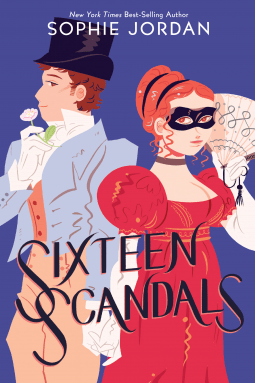
In this irreverent regency romp by New York Times best-selling author Sophie Jordan, newly minted sixteen-year-old Primrose Ainsworth finds herself on a wayward birthday adventure through London with a mysterious hero—perfect for fans of My Lady Jane.
I’ve read Sophie Jordan’s adult historical romances so I really wanted to see how a young adult romance would work out. I thought the Sixteen Candles twist to it was cute, since it’s one of my most favorite movies of the 80’s.
Prim definitely takes chances by sneaking out of the house and going to Vauxhall Pleasure Gardens. I think it’s important to remember in history and historical romances, girls got married at 16+. So Prim sneaking out, really had the risk of being caught in a scandal that could ruin her life.
Her family life is drama-filled with her sisters and a mom who is laser focused on getting each girl married, except Prim, of course, it’s like she’s too tired to care about Prim, poor girl. Glad Prim doesn’t let that hold her back though.
The romance is sweet and cute. Prim and Jacob get to know each other all in one night, but the sparks are definitely there by the end.
It’s a happy ending for Prim, thank goodness because her mom’s plan for her life was pretty harsh.
This was a quick read – and it’s meant for teens. As an adult reading it, it wasn’t for me. But this would be definitely perfect for teens – it has a little romance, adventure, and a girl trying to live her young life. I had a hard time trying to stop comparing adult historical romance and this one meant for a younger audience.
And being a Sixteen Candles fan, where was Farmer Ted?! Haha, I mean Jacob obviously is Jake (the duke). The story takes place all in one night, just like the movie, but I think because of the amazing supporting cast in the movie, Prim and Jacob’s one night escapade in this book fell so short. It had some action, the kind you would get in a pleasure garden haha.
Everything comes to such a predictable and anti-climatic ending.
I do wish there was a little more to the Sixteen Candles retelling like having more of a supporting cast like the movie did. Other than that, the story is quick and the romance is sweet. This one is perfect for teen readers who want to read a historical romance story.
Disclaimer: **I received this book free from NetGalley in exchange for an honest review. All thoughts and opinions are my own.**
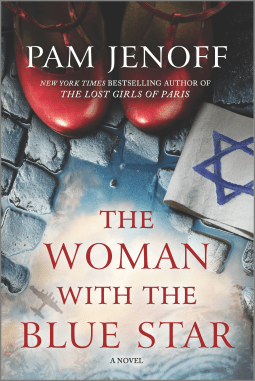
From the New York Times bestselling author of The Lost Girls of Paris comes a riveting tale of courage and unlikely friendship during World War II.
1942. Sadie Gault is eighteen and living with her parents in the Kraków Ghetto during World War II. When the Nazis liquidate the ghetto, Sadie and her pregnant mother are forced to seek refuge in the perilous tunnels beneath the city. One day Sadie looks up through a grate and sees a girl about her own age buying flowers.
Ella Stepanek is an affluent Polish girl living a life of relative ease with her stepmother, who has developed close alliances with the occupying Germans. While on an errand in the market, she catches a glimpse of something moving beneath a grate in the street. Upon closer inspection, she realizes it’s a girl hiding.
Ella begins to aid Sadie and the two become close, but as the dangers of the war worsen, their lives are set on a collision course that will test them in the face of overwhelming odds. Inspired by incredible true stories, The Woman with the Blue Star is an unforgettable testament to the power of friendship and the extraordinary strength of the human will to survive.
I thought the focus on Sadie Gault who hid in the sewers while German Nazis occupied Poland was a fascinating story. I find most WWII to be the same at times, mostly with them concentrating on the war front. I found this different and I learned something new. The harrowing events that take place from their escape to the sewer and life there is tightly woven. This was a quick read from the start.
The dual perspectives of Sadie and Ella, a Polish girl living relatively free in Krakow shows how much the Jewish people were subjected to many evils under the Nazis. Ella is trying to survive in her own way since food rations are low, she’s living with her stepmother, and her love life is in shambles. Her relationship problems are light compared to Sadie who is living in a sewer and hoping one day she will have a future. But their unlikely friendship grows steadily through a sewer grate for the most part, and they become a lifeline for one another.
Sadie’s life in the sewers is horrible and yet compared to being in a death camp, this was the safest and best place for them to be. They live in filth, barely have food and her mother is pregnant! Life and death is happening in Sadie’s life in the sewers and my heart ached for her situation many times over.
I was afraid for Sadie and Ella being caught by Nazis or Polish Police officers. Every time they had a chance to interact I prayed they would not be caught because I can only imagine worse horrors for Sadie and Ella if they were.
Really great twist in the end but I thought I had misread something and had to pause for a moment to realize what the author was doing.
Triggers: Death, claustrophobia
Abrupt ending but it is explained in the epilogue, for a moment I was confused.
I really enjoyed this historical fiction story about two girls, one Jewish and one Polish, who befriend each other in the most unexpected circumstances. I loved the focus on their friendship and their survival journey in Nazis occupied Poland. Sadie has lost her freedom and her family yet living in the sewers is the best thing to do. Ella has lost family too, her love, and yet she still has more freedom to go about life because she is Polish. I was engaged in this story. I learned something and I felt for Sadie. In the end I was grateful for the random strangers that helped her survive a horrible period in time and her strength to hold on to hope to live and keep going.
📚~ Yolanda
About the Author:
Pam Jenoff is the author of several books of historical fiction, including the NYT bestseller The Orphan’s Tale. She holds a degree in international affairs from George Washington University and a degree in history from Cambridge, and she received her JD from UPenn. Her novels are inspired by her experiences working at the Pentagon and as a diplomat for the State Department handling Holocaust issues in Poland. She lives with her husband and 3 children near Philadelphia, where she teaches law.
Everything changed the day they came for the children.
I was supposed to have been in the attic crawl space of the three-story building we shared with a dozen other families in the ghetto. Mama helped me hide there each morning before she set out to join the factory work detail, leaving me with a fresh bucket as a toilet and a stern admonishment not to leave. But I grew cold and restless alone in the tiny, frigid space where I couldn’t run or move or even stand straight. The minutes stretched silently, broken only by a scratching—unseen children, years younger than me, stowed on the other side of the wall. They were kept separate from one another without space to run and play. They sent each other messages by tapping and scratching, though, like a kind of improvised Morse code. Sometimes, in my boredom, I joined in, too.
“Freedom is where you find it,” my father often said when I complained. Papa had a way of seeing the world exactly as he wanted. “The greatest prison is in our mind.” It was easy for him to say. Though he manual ghetto labor was a far cry from his professional work as an accountant before the war, at least he was out and about each day, seeing other people. Not cooped up like me. I had scarcely left our apartment building since we were forced to move six months earlier from our apartment in the Jewish Quarter near the city center to the Podgórze neighborhood where the ghetto had been established on the southern bank of the river. I wanted a normal life, my life, free to run beyond the walls of the ghetto to all of the places I had once known and taken for granted. I imagined taking the tram to the shops on the Rynek or to the kino to see a film, exploring the ancient grassy mounds on the outskirts of the city. I wished that at least my best friend, Stefania, was one of the others hidden nearby. Instead, she lived in a separate apartment on the other side of the ghetto designated for the families of the Jewish police.
It wasn’t boredom or loneliness that had driven me from my hiding place this time, though, but hunger. I had always had a big appetite and this morning’s breakfast ration had been a half slice of bread, even less than usual. Mama had offered me her portion, but I knew she needed her strength for the long day ahead on the labor detail.
As the morning wore on in my hiding place, my empty belly had begun to ache. Visions pushed into my mind uninvited of the foods we ate before the war: rich mushroom soup and savory borscht, and pierogi, the plump, rich dumplings my grandmother used to make. By midmorning, I felt so weak from hunger that I had ventured out of my hiding place and down to the shared kitchen on the ground floor, which was really nothing more than a lone working stove burner and a sink that dripped tepid brown water. I didn’t go to take food—even if there had been any, I would never steal. Rather, I wanted to see if there were any crumbs left in the cupboard and to fill my stomach with a glass of water.
I stayed in the kitchen longer than I should, reading the dog-eared copy of the book I’d brought with me. The thing I detested most about my hiding place in the attic was the fact that it was too dark for reading. I had always loved to read and Papa had carried as many books as he could from our apartment to the ghetto, over the protests of my mother, who said we needed the space in our bags for clothes and food. It was my father who had nurtured my love of learning and encouraged my dream of studying medicine at Jagiellonian University before the German laws made that impossible, first by banning Jews and later by closing the university altogether. Even in the ghetto at the end of his long, hard days of labor, Papa loved to teach and discuss ideas with me. He had somehow found me a new book a few days earlier, too, The Count of Monte Cristo. But the hiding place in the attic was too dark for me to read and there was scarcely any time in the evening before curfew and lights-out. Just a bit longer, I told myself, turning the page in the kitchen. A few minutes wouldn’t matter at all.
I had just finished licking the dirty bread knife when I heard heavy tires screeching, followed by barking voices. I froze, nearly dropping my book. The SS and Gestapo were outside, flanked by the vile Jüdischer Ordnungsdienst, Jewish Ghetto Police, who did their bidding. It was an aktion, the sudden unannounced arrest of large groups of Jews to be taken from the ghetto to camps. The very reason I was meant to be hiding in the first place. I raced from the kitchen, across the hall and up the stairs. From below came a great crash as the front door to the apartment building splintered and the police burst through. There was no way I could make it back to the attic in time.
Instead, I raced to our third-floor apartment. My heart pounded as I looked around desperately, wishing for an armoire or other cabinet suitable for hiding in the tiny room, which was nearly bare except for a dresser and bed. There were other places, I knew, like the fake plaster wall one of the other families had constructed in the adjacent building not a week earlier. That was too far away now, impossible to reach. My eyes focused on the large steamer trunk stowed at the foot of my parents’ bed. Mama had shown me how to hide there once shortly after we first moved to the ghetto. We practiced it like a game, Mama opening the trunk so that I could climb in before she closed the lid.
The trunk was a terrible hiding place, exposed and in the middle of the room. But there was simply nowhere else. I had to try. I raced over to the bed and climbed into the trunk, then closed the lid with effort. I thanked heavens that I was tiny like Mama. I had always hated being so petite, which made me look a solid two years younger than I actually was. Now it seemed a blessing, as did the sad fact that the months of meager ghetto rations had made me thinner. I still fit in the trunk.
When we had rehearsed, we had envisioned Mama putting a blanket or some clothes over the top of the trunk. Of course, I couldn’t do that myself. So the trunk sat unmasked for anyone who walked into the room to see and open. I curled into a tiny ball and wrapped my arms around myself, feeling the white armband with the blue star on my sleeve that all Jews were required to wear.
There came a great crashing from the next building, the sound of plaster being hewn by a hammer or ax. The police had found the hiding place behind the wall, given away by the too-fresh paint. An unfamiliar cry rang out as a child was found and dragged from his hiding place. If I had gone there, I would have been caught as well.
Someone neared the door to the apartment and flung it open. My heart seized. I could hear breathing, feel eyes searching the room. I’m sorry, Mama, I thought, feeling her reproach for having left the attic. I braced myself for discovery. Would they go easier on me if I came out and gave myself up? The footsteps grew fainter as the German continued down the hall, stopping before each door, searching.
The war had come to Kraków one warm fall day two and a half years earlier when the air-raid sirens rang out for the first time and sent the playing children scurrying from the street. Life got hard before it got bad. Food disappeared and we waited in long lines for the most basic supplies. Once there was no bread for a whole week.
Then about a year ago, upon orders from the General Government, Jews teemed into Kraków by the thousands from the small towns and villages, dazed and carrying their belongings on their backs. At first I wondered how they would all find places to stay in Kazimierz, the already cramped Jewish Quarter of the city. But the new arrivals were forced to live by decree in a crowded section of the industrial Podgórze district on the far side of the river that had been cordoned off with a high wall. Mama worked with the Gmina, the local Jewish community organization, to help them resettle, and we often had friends of friends over for a meal when they first arrived, before they went to the ghetto for good. They told stories from their hometowns too awful to believe and Mama shooed me from the room so I would not hear.
Several months after the ghetto was created, we were ordered to move there as well. When Papa told me, I couldn’t believe it. We were not refugees, but residents of Kraków; we had lived in our apartment on Meiselsa Street my entire life. It was the perfect location: on the edge of the Jewish Quarter but easy walking distance to the sights and sounds of the city center and close enough to Papa’s office on Stradomska Street that he could come home for lunch. Our apartment was above an adjacent café where a pianist played every evening. Sometimes the music spilled over and Papa would whirl Mama around the kitchen to the faint strains. But according to the orders, Jews were Jews. One day. One suitcase each. And the world I had known my entire life disappeared forever.
I peered out of the thin slit opening of the trunk, trying to see across the tiny room I shared with my parents. We were lucky, I knew, to have a whole room to ourselves, a privilege we had been given because my father was a labor foreman. Others were forced to share an apartment, often two or three families together. Still, the space felt cramped compared to our real home. We were ever on top of one another, the sights and sounds and smells of daily living magnified.
“Kinder, raus!” the police called over and over again now as they patrolled the halls. Children, out. It was not the first time the Germans had come for children during the day, knowing that their parents would be at work.
But I was no longer a child. I was eighteen and might have joined the work details like others my age and some several years younger. I could see them lining up for roll call each morning before trudging to one of the factories. And I wanted to work, even though I could tell from the slow, painful way my father now walked, stooped like an old man, and how Mama’s hands were split and bleeding that it was hard and awful. Work meant a chance to get out and see and talk to people. My hiding was a subject of much debate between my parents. Papa thought I should work. Labor cards were highly prized in the ghetto. Workers were valued and less likely to be deported to one of the camps. But Mama, who seldom fought my father on anything, had forbidden it. “She doesn’t look her age. The work is too hard. She is safest out of sight.” I wondered as I hid now, about to be discovered at any second, if she would still think she was right.
The building finally went silent, the last of the awful footsteps receding. Still I didn’t move. That was one of the ways they trapped people who were hiding, by pretending to go away and lying in wait when they came out. I remained motionless, not daring to leave my hiding place. My limbs ached, then went numb. I had no idea how much time had passed. Through the slit, I could see that the room had grown dimmer, as if the sun had lowered a bit.
Sometime later, there were footsteps again, this time a shuffling sound as the laborers trudged back silent and exhausted from their day. I tried to uncurl myself from the trunk. But my muscles were stiff and sore and my movements slow. Before I could get out, the door to our apartment flung open and someone ran into the room with steps light and fluttering. “Sadie!” It was Mama, sounding hysterical.
“Jestem tutaj,” I called. I am here. Now that she was home, she could help me untangle myself and get out. But my voice was muffled by the trunk. When I tried to undo the latch, it stuck.
Mama raced from the room back into the corridor. I could hear her open the door to the attic, then run up the stairs, still searching for me. “Sadie!” she called. Then, “My child, my child,” over and over again as she searched but did not find me, her voice rising to a shriek. She thought I was gone.
“Mama!” I yelled. She was too far away to hear me, though, and her own cries were too loud. Desperately, I struggled once more to free myself from the trunk without success. Mama raced back into the room, still wailing. I heard the scraping sound of a window opening and felt a whoosh of cold air. At last I threw myself against the lid of the trunk, slamming my shoulder so hard it throbbed. The latch sprang open.
I broke free and stood up quickly. “Mama?” She was standing in the oddest position, with one foot on the window ledge, her willowy frame silhouetted against the frigid twilight sky. “What are you doing?” For a second, I thought she was looking for me outside. But her face was twisted with grief and pain. I knew then why Mama was on the window ledge. She assumed I had been taken along with the other children. And she didn’t want to live. If I hadn’t freed myself from the trunk in time, Mama would have jumped. I was her only child, her whole world. She was prepared to kill herself before she would go on without me.
A chill ran through me as I sprinted toward her. “I’m here, I’m here.” She wobbled unsteadily on the window ledge and I grabbed her arm to stop her from falling. Remorse ripped through me. I always wanted to please her, to bring that hard-won smile to her beautiful face. Now I had caused her so much pain she’d almost done the unthinkable.
“I was so worried,” she said after I’d helped her down and closed the window. As if that explained everything. “You weren’t in the attic.”
“But, Mama, I hid where you told me to.” I gestured to the trunk. “The other place, remember? Why didn’t you look for me there?”
Mama looked puzzled. “I didn’t think you would fit anymore.” There was a pause and then we both began laughing, the sound scratchy and out of place in the pitiful room. For a few seconds, it was like we were back in our old apartment on Meiselsa Street and none of this had happened at all. If we could still laugh, surely things would be all right. I clung to this last improbable thought like a life preserver at sea.
But a cry echoed through the building, then another, silencing our laughter. It was the mothers of the other children who had been taken by the police. There came a thud outside. I started for the window, but my mother blocked me. “Look away,” she ordered. It was too late. I glimpsed Helga Kolberg, who lived down the hall, lying motionless in the coal-tinged snow on the pavement below, her limbs cast at odd angles and skirt splayed around her like a fan. She had realized her children were gone and, like Mama, she didn’t want to live without them. I wondered whether jumping was a shared instinct, or if they had discussed it, a kind of suicide pact in case their worst nightmares came true.
My father raced into the room then. Neither Mama nor I said a word, but I could tell from his unusually grim expression that he already knew about the aktion and what had happened to the other families. He simply walked over and wrapped his enormous arms around both of us, hugging us tighter than usual.
As we sat, silent and still, I looked up at my parents. Mama was a striking beauty—thin and graceful, with white-blond hair the color of a Nordic princess’. She looked nothing like the other Jewish women and I had heard whispers more than once that she didn’t come from here. She might have walked away from the ghetto and lived as a non-Jew if it wasn’t for us. But I was built like Papa, with the dark, curly hair and olive skin that made the fact that we were Jews undeniable. My father looked like the laborer the Germans had made him in the ghetto, broad-shouldered and ready to lift great pipes or slabs of concrete. In fact, he was an accountant—or had been until it became illegal for his firm to employ him anymore. I always wanted to please Mama, but it was Papa who was my ally, keeper of secrets and weaver of dreams, who stayed up too late whispering secrets in the dark and had roamed the city with me, hunting for treasure. I moved closer now, trying to lose myself in the safety of his embrace.
Still, Papa’s arms could offer little shelter from the fact that everything was changing. The ghetto, despite its awful conditions, had once seemed relatively safe. We were living among Jews and the Germans had even appointed a Jewish council, the Judenrat, to run our daily affairs. Perhaps if we laid low and did as we were told, Papa said more than once, the Germans would leave us alone inside these walls until the war was over. That had been the hope. But after today, I wasn’t so sure. I looked around the apartment, seized with equal parts disgust and fear. In the beginning, I had not wanted to be here; now I was terrified we would be forced to leave.
“We have to do something,” Mama burst out, her voice a pitch higher than usual as it echoed my unspoken thoughts.
“I’ll take her tomorrow and register her for a work permit,” Papa said. This time Mama did not argue. Before the war, being a child had been a good thing. But now being useful and able to work was the only thing that might save us.
Mama was talking about more than a work visa, though. “They are going to come again and next time we won’t be so lucky.” She did not bother to hold back her words for my benefit now. I nodded in silent agreement. Things were changing, a voice inside me said. We could not stay here forever.
“It will be okay, kochana,” Papa soothed. How could he possibly say that? But Mama laid her head on his shoulder, seeming to trust him as she always had. I wanted to believe it, too. “I will think of something. At least,” Papa added as we huddled close, “we are all still together.” The words echoed through the room, equal parts promise and prayer.
Excerpted from The Woman With the Blue Star @ 2021 by Pam Jenoff, used with permission by Park Row Books.
Disclaimer: **I received this book free from NetGalley in exchange for an honest review. All thoughts and opinions are my own.**
From the New York Times bestselling author of Mexican Gothic comes a sweeping romance with a dash of magic.
They are the Beautiful Ones, Loisail’s most notable socialites, and this spring is Nina’s chance to join their ranks, courtesy of her well-connected cousin and his calculating wife. But the Grand Season has just begun, and already Nina’s debut has gone disastrously awry. She has always struggled to control her telekinesis—neighbors call her the Witch of Oldhouse—and the haphazard manifestations of her powers make her the subject of malicious gossip.
When entertainer Hector Auvray arrives to town, Nina is dazzled. A telekinetic like her, he has traveled the world performing his talents for admiring audiences. He sees Nina not as a witch, but ripe with potential to master her power under his tutelage. With Hector’s help, Nina’s talent blossoms, as does her love for him.
But great romances are for fairytales, and Hector is hiding a truth from Nina — and himself—that threatens to end their courtship before it truly begins. The Beautiful Ones is a charming tale of love and betrayal, and the struggle between conformity and passion, set in a world where scandal is a razor-sharp weapon.
This is the first novel I’ve read from this author, though I have Mexican Gothic on my TBR list and I fell in love with this story as it just pulled me in and didn’t let go. I don’t know what I really expected from it, but I found the writing so engaging, and beautiful.
I became a reader through romance novels so this was everything I want in a romance. I really was swept away and could not put the book down. There is passion, jealousy, betrayal, romance and love. I felt like my heart was being squeezed by the end of the story but in a good way.
I liked how this was an alternate historical fiction story, even though the places resembled high society in England some time in the early 1900’s perhaps, whatever time period where motorcars were being introduced. The characters attended balls, a season of parties, socializing and summer in the countryside. A fun twist is that Nina and Hector both could do telekinesis. In this world of The Beautiful Ones, it’s an extraordinary skill but looked down upon in high society. It makes Nina stand out in unpleasant ways, whereas Hector thrives with the skill being a performer. The two feel less alone when together.
Nina isn’t beautiful like her cousin’s wife Valerie, but she comes from a well known family. Unfortunately she’s too different, she talks when she’s not supposed to and it’s usually about inappropriate things like bugs, plus she can do telekinesis. She’s never made friends easily because she is different but I like how it didn’t stop her from being who she is and enjoying life. And thank goodness for her supportive family who loves her just as she is.
I love how Nina and Hector’s love grow. Their love is not quite a slow burn because Hector has been burning for Valerie, Nina’s cousin-in-law. I liked how the story explored burning passion and love versus something that forms into friendship and grows steadily into love.
Valerie ~ she is hateful but her character was done so well. So well that I hated her. Here was this woman who had the love she always wanted but he was poor. As a woman she had to marry well and she did, breaking the heart of her first love in the process. When he comes back to her, she revels in his obsession with her, they are both obsessed with one another, but whereas Hector believes it’s love, for Valerie, it’s possession. Nina is the innocent miss but Valerie is the hard, calculated woman and I was fascinated with her downward spiral.
The Beautiful Ones swept me off my romantic feet. I was hoping Nina would get some satisfaction over Hector and Valerie’s games and she does come out triumphant. This story is emotional, tragic, hopeful and everything I want in a romance. I am a new fan of this author and look forward to reading more books from her.
Categories: Historical Fiction, WWII, London, Romance, Friendship, War, Bookshop
Disclaimer: **I received this book free from NetGalley in exchange for an honest review. All thoughts and opinions are my own.**
Inspired by the true World War II history of the few bookshops to survive the Blitz, The Last Bookshop in London is a timeless story of wartime loss, love and the enduring power of literature.
August 1939: London prepares for war as Hitler’s forces sweep across Europe. Grace Bennett has always dreamed of moving to the city, but the bunkers and blackout curtains that she finds on her arrival were not what she expected. And she certainly never imagined she’d wind up working at Primrose Hill, a dusty old bookshop nestled in the heart of London.
Through blackouts and air raids as the Blitz intensifies, Grace discovers the power of storytelling to unite her community in ways she never dreamed—a force that triumphs over even the darkest nights of the war.
How can I not enjoy a story about a bookshop? This one is even more inspirational because it’s about a bookshop in London during the Blitz in World War II. London was being bombed and yet this bookshop was there to keep people’s spirits up, keep them hoping, or keep their mind off what was happening.
Almost all the characters are wholesome, especially Grace who is a nice girl just wanting to get some work experience in London. She helps turn a bookshop around but other than that she is a very caring person ~ you can see it with the way she is with her friends and the new people she meets in London.
There is a minor romance in this story and what is a war story without a love story? Thankfully this one isn’t tragic, but sweet and hopeful. It’s always nice to remember when once upon a time, people did fall for each other through letter writing! It was all about patience back in the day.
I learned a lot of historical information from the book. I got a glimpse of all the organization people could volunteer for to help in the war. I thought that moment Grace and Viv go out on the town while bombs were dropping was pretty surreal! Also I enjoyed all of the St. Paul’s Cathedral history because it was one of my favorite places to visit when I did go to London few years ago. London really did survive!
Triggers: war, death, bombing
This was a super fast read, almost like the story glossed over the many things about war. I expected depth but it felt like a light historical fiction story. There was death and such but the story never felt heavy, unless I just never connected to the characters to feel their grief. Despite lacking depth, I think it held on to the message of Grace and the bookshop being an inspiration, a candle in the dark to so many suffering in the city during that time.
If you want to read a World War II story about books and hope, you will enjoy this one. Although it lacked the heaviness and depth of typical stories set during war time, I think the message about friendship, and community is a beautiful thing.
📚 ~ Yolanda
About the Author:
Madeline Martin is a USA TODAY bestselling author of historical romance novels filled with twists and turns, adventure, steamy romance, empowered heroines and the men who are strong enough to love them.
Categories: Historical Fantasy, War, Family, Romance
Battles, revolution, and romance collide in Joanna Hathaway’s stunning, World Wars-inspired sequel to Dark of the West
Part war drama, part romance, Storm from the East is the second novel in Joanna Hathaway’s immersive, upmarket YA fantasy series that will appeal to readers of Sabaa Tahir, Marie Rutkoski, and Evelyn Skye.
War has begun, and the days of Athan’s and Aurelia’s secret, summer romance feel a world away. Led by Athan’s father, the revolutionary Safire have launched a secret assault upon the last royal kingdom in the South, hoping to depose the king and seize a powerful foothold on the continent. Athan proves a star pilot among their ranks, struggling to justify the violence his family has unleashed as he fights his way to the capital—where, unbeknownst to him, Aurelia has lived since the war’s onset. Determined to save the kingdom Athan has been ordered to destroy, she partners with a local journalist to inflame anti-Safire sentiment, all while learning this conflict might be far darker and more complex than she ever imagined.
When the two reunite at last, Athan longing to shake the nightmare of combat and Aurelia reeling from the discovery of a long-buried family truth come to light, they’ll find the shadow of war stretches well beyond the battlefield. Each of them longs to rekindle the love they once shared . . . but each has a secret they’re desperate to hide.
We return to this intriguing historical fantasy world, the second novel in the Glass Alliance series and the stakes are higher. The plane fights are more thrilling as Athan tries to advance in his career as a fighter pilot and impress his father (who is barely impressed by anything he does). Aurelia is trying to stop a war but making more of a mess of things. There are secrets, there are truth bombs, and real bombs, there is romance. There is so much I feel like this should be a movie.
The family dynamics of the Dakar’s is fascinating, toxic, riveting and I really need to know what Sinora has on the General! But the siblings in this family has been raised in an unconventional way, all they have known it seems is war – they grew up with a manipulative father and they are left hungry for his love and praise. I feel like we get snippets here and there about each boy, of course we know more about Athan, but Arrin and Kalt, are intriguing – mostly Arrin at this point. Their sister doesn’t get a lot of scenes but she seems interesting as well.
Aurelia travels to Resya and learns more about her mother’s background and some shocking truths are revealed. I kept feeling like she means well and thinks she’s a step ahead when really sometimes her involvement just messes things up more. She has a good heart and wants the war to be over because she knows how evil it is, all these lives dead for what? But she’s torn because of her family secrets as well. How does she stop a war and keep her family safe at the same time? It seems impossible.
I love how this series is written. Each chapter gets to the point quickly and it moves the story quickly. I really like how this story questions all sides fighting a war, is it ever worth it, who is the more evil one, who will benefit in the end, and will it ever end when vengeance is the motivation? And what is the true cause each side is fighting for?
PTSD gets a spotlight in this series and we see Athan really start to go through it. We already know Arrin’s affected by it, but Kalt not so much maybe because he’s on a ship? And then there are the people caught in the crossfire of war who suffer greatly as well.
The ending was a shocker and I am definitely going to be reading the arc to book three, ASAP.
Triggers: violence, war atrocities, suicide, PTSD
Athan and Aurelia have a few scenes together in this series but for the most part they are not together. There are letters written between them that aren’t sent but we feel the yearning between them.
Will war ever end? When will it be enough for General Dakar?
This sequel really keeps the story moving at a clipped pace, almost like we are the ones marching into battle along with everyone else. I felt the tension between the Dakar boys and Athan’s thrills in the plane and fears. I was shocked with Aurelia’s discoveries and Sinora’s actions, and Athan and Aurelia’s love is so bittersweet but will it stand a chance? Can peace be achieved between all sides? I’ll be reading the third book right away to find out!
Categories: Romance, Fantasy, New Adult, Paranormal
A Maiden…
Chosen from birth to usher in a new era, Poppy’s life has never been her own. The life of the Maiden is solitary. Never to be touched. Never to be looked upon. Never to be spoken to. Never to experience pleasure. Waiting for the day of her Ascension, she would rather be with the guards, fighting back the evil that took her family, than preparing to be found worthy by the gods. But the choice has never been hers.
A Duty…
The entire kingdom’s future rests on Poppy’s shoulders, something she’s not even quite sure she wants for herself. Because a Maiden has a heart. And a soul. And longing. And when Hawke, a golden-eyed guard honor bound to ensure her Ascension, enters her life, destiny and duty become tangled with desire and need. He incites her anger, makes her question everything she believes in, and tempts her with the forbidden.
A Kingdom…
Forsaken by the gods and feared by mortals, a fallen kingdom is rising once more, determined to take back what they believe is theirs through violence and vengeance. And as the shadow of those cursed draws closer, the line between what is forbidden and what is right becomes blurred. Poppy is not only on the verge of losing her heart and being found unworthy by the gods, but also her life when every blood-soaked thread that holds her world together begins to unravel.
I finally read this book that has been sitting on my ebook shelf since last year! Lately I’ve been seeing it everywhere on blogs and instagram so I finally read it and here are my thoughts:
I love me a good paranormal story with vampire/werewolf lore. It’s a classic tale, lots of forbidden love stories can come from it and it’s dark with all the danger and blood sucking. So this was an intriguing concept – a Maiden, that’s Poppy, is waiting to Ascend. To heaven? Nah, nope. For awhile it’s a mystery what these Ascended people are. We just know as a Maiden, Poppy is to be preserved, to be kept worthy of her role as a Maiden, but that life is like being a cloistered nun. So Poppy does what she can and escapes once in awhile to experience life outside the Duke’s home.
Poppy has a good crew around her, Tawny her maid/friend who I adore. Vikter her guard/who is like a father to her. And Rylan who dies protecting her. Then the hottest new guard steps in to be her royal guard and things get spicy.
The spice? The new guard Hawke is so confident, so charming, so handsome and attractive. He’s also a solid and talented protector who is dedicated to protecting Poppy. The attraction is there and things happen between them, sexy, naughty things. It’s clear they can’t resist each other.
I think my favorite part of the book was the fighting scenes! I like the action, it is thrilling. I love that Poppy can kick butt under that veil, thank goodness Vikter taught her well! And when she rages, watch out!
Triggers: abuse, kidnapping, violence
The author lays down ground work for the world building in the beginning of the story but it felt like a slow build. I remember picking this up in 2020 and putting it down after three chapter. It wasn’t catching my attention but with all the hype about it right now, I decided to give it another shot. There working for me for some reason, maybe due to the info dump?
There was a bunch of repetitive use of words…intriguing, inappropriate and Hawke being turned on by Poppy’s violence repeatedly.
Now here’s where most of my conflict with the book is ~ it’s with Hawke. And I usually love the alpha bad boys and Hawke in the second half of this book did not do it for me. He went from likable to me wishing Poppy would find a way to escape him 😏. But she is hooked on him and he knows it. It kind of grates on me how he likes to remind her of that fact even when he is the one who has been betraying her all this time. Poppy went from one prison, being the Maiden to falling for Hawke who is controlling her future as well? 🤦🏻♀️
I did enjoy Hawke and Poppy’s banter in the beginning, it was actually turning out to be a romance that had potential to be something great. I also found Poppy’s relationship with those she cares about very touching – and I really love that she can fight. I guess I like when she’s violent too, Hawke! Haha! I will be reading the sequel to see what happens and I hope Hawke redeems himself in my eyes. Overall, a fairly entertaining read even though I wasn’t into the male lead.
Disclaimer: **I received this book free from NetGalley in exchange for an honest review. All thoughts and opinions are my own.**
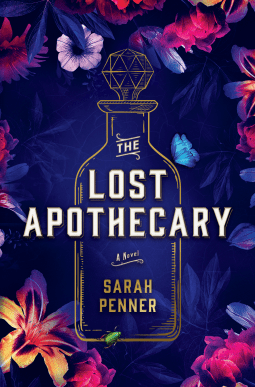
A female apothecary secretly dispenses poisons to liberate women from the men who have wronged them—setting three lives across centuries on a dangerous collision course
Rule #1: The poison must never be used to harm another woman.
Rule #2: The names of the murderer and her victim must be recorded in the apothecary’s register.
One cold February evening in 1791, at the back of a dark London alley in a hidden apothecary shop, Nella awaits her newest customer. Once a respected healer, Nella now uses her knowledge for a darker purpose—selling well-disguised poisons to desperate women who would kill to be free of the men in their lives. But when her new patron turns out to be a precocious twelve-year-old named Eliza Fanning, an unexpected friendship sets in motion a string of events that jeopardizes Nella’s world and threatens to expose the many women whose names are written in her register.
In present-day London, aspiring historian Caroline Parcewell spends her tenth wedding anniversary alone, reeling from the discovery of her husband’s infidelity. When she finds an old apothecary vial near the river Thames, she can’t resist investigating, only to realize she’s found a link to the unsolved “apothecary murders” that haunted London over two centuries ago. As she deepens her search, Caroline’s life collides with Nella’s and Eliza’s in a stunning twist of fate—and not everyone will survive.
The story is told through three perspectives, the past with Nella and Eliza and then present time with Caroline.
Caroline is going through some marriage trouble but I love how her curiosity to find out about an old apothecary bottle leads her to learning a lot of things about herself and the choices she made in life. I could relate to Caroline a lot.
Nella and Eliza’s story were fascinating ~ especially because that apothecary was one used by women to do harm. Was it okay for them to do that? In those times women had no resources to help them against men causing them harm so I can see why they resorted to poison. I felt for both Nella and Eliza and what happened to them.
The history about the apothecary is fascinating and I love how at the end of the book the author included recipes, non-harmful ones, of course!
There were moments I was more interested in Caroline’s life than Nella and Eliza’s but I think there was a good balance of both.
The twist in the end definitely tied in the women’s stories together.
I found the historical aspects of this story quite fascinating since I’ve always been drawn to stories about apothecaries and healing. It’s so interesting to learn about how people survived without modern medicine but in this case, how women survived some very bad situations they were trapped in. Caroline is the modern woman trying to get out of a situation she’s found herself in and researching Nella’s apothecary helps her find the strength to do the right thing.
📖 ~ Yolanda
About the Author:
Sarah Penner is the debut author of The Lost Apothecary, to be translated in eleven languages worldwide. She works full-time in finance and is a member of the Historical Novel Society and the Women’s Fiction Writers Association. She and her husband live in St. Petersburg, Florida, with their miniature dachshund, Zoe. To learn more, visit slpenner.com.
Categories: Young Adult, WWII Inspired World, Historical Fantasy, Romance, Family
He was raised in revolution. She was raised in a palace. Can their love stop a war? Code Name Verity meets The Winner’s Curse in Joanna Hathaway’s Dark of the West, a breathtaking YA fantasy debut.
Aurelia Isendare is a princess of a small kingdom in the North, raised in privilege but shielded from politics as her brother prepares to step up to the throne. Halfway around the world, Athan Dakar, the youngest son of a ruthless general, is a fighter pilot longing for a life away from the front lines. When Athan’s mother is shot and killed, his father is convinced it’s the work of his old rival, the Queen of Etania—Aurelia’s mother. Determined to avenge his wife’s murder, he devises a plot to overthrow the Queen, a plot which sends Athan undercover to Etania to gain intel from her children.
Athan’s mission becomes complicated when he finds himself falling for the girl he’s been tasked with spying upon. Aurelia feels the same attraction, all the while desperately seeking to stop the war threatening to break between the Southern territory and the old Northern kingdoms that control it—a war in which Athan’s father is determined to play a role. As diplomatic ties manage to just barely hold, the two teens struggle to remain loyal to their families and each other as they learn that war is not as black and white as they’ve been raised to believe.
My favorite part of this book is the intensity in brings. Athan is the youngest son of a General who is ruthless and has a reputation for fighting and winning wars. The General is a hard man who is always scheming. Aurelia is a Princess raised with rules but her mother is a Southern with a past that threatens their monarchy rule. There is a lot of political intrigue in this story and it brings the tension between all sides involved.
I was very invested in Athan and his struggles with wanting his dad’s approval, competing with his older brothers and wanting to be with his mother. I felt awful for him and what he had to deal with just to survive his family. His brothers all want to be the apple of their father’s eye and will do anything for his praise. Athan wants to disappear but he can’t because of his loyalty to his family and his mom’s memory. So what will he do?
Aurelia’s mother, the Queen of Etania is an intriguing character. She’s from Resyna but we don’t know much about the country because the story doesn’t travel there yet. All we know is what the characters tell us, and Sinora, the Queen has past that is entangled with Athan’s father. What happened exactly? We don’t know, but I hope I find out more about it in the sequel.
Having grown up in the 80’s, I was a big fan of the movie Top Gun and watched it a lot. This story is inspired by World War II but the plane fights reminded me of Top Gun and Athan is definitely Maverick. And Cyar is Goose ~ except I hope Cyar has a better storyline than Goose did in the movie! I enjoyed the flying and stunts in this book a lot though.
The political intrigue and scheming is very good and just like chess. Everyone is making moves and we aren’t sure who is going to win at this stage of the series. It’s a back and forth match but winner will take all. Unfortunately Athan and Aurelia are caught in the cross-fire.
The romance between Athan and Aurelia is sweet and very slow. They are both young, both have secrets but enjoy each other’s company. Will their bond continue to stay strong when the truth lets out?
Triggers: murder, violence, war
Aurelia at times comes off as naive but there was a moment in the end where she shows that she really isn’t just a useless princess. I’m curious to see what happens to her in the sequel.
Athan is said to be brilliant and smart but his character doesn’t seem to show it at all. He’s a good pilot, maybe shows off and disregards the rules too much, but brilliant strategist or something? I don’t see that yet. Maybe in the sequel?
I am glad I finally picked up this book. I was thoroughly entertained and was invested in the story because the tension between the warring countries was really good. The General seems to be a step ahead of everyone, or is he? I’ll need to find out more in the sequel but so far I’m enjoying this WWII inspired fantasy world with intriguing characters and a lot of political intrigue.











































 Past Midnight Book Reviews & More