Categories: Contemporary Romance, Women’s Fiction, Single Mom
Disclaimer: **I received this book free from NetGalley in exchange for an honest review. All thoughts and opinions are my own.**
Single mom Jess Davis is a data and statistics wizard, but no amount of number crunching can convince her to step back into the dating world. Raised by her grandparents–who now help raise her seven-year-old daughter, Juno–Jess has been left behind too often to feel comfortable letting anyone in. After all, her father’s never been around, her hard-partying mother disappeared when she was six, and her ex decided he wasn’t “father material” before Juno was even born. Jess holds her loved ones close, but working constantly to stay afloat is hard…and lonely.
But then Jess hears about GeneticAlly, a buzzy new DNA-based matchmaking company that’s predicted to change dating forever. Finding a soulmate through DNA? The reliability of numbers: This Jess understands. At least she thought she did, until her test shows an unheard-of 98% compatibility with another subject in the database: GeneticAlly’s founder, Dr. River Pena. This is one number she can’t wrap her head around, because she already knows Dr. Pena. The stuck-up, stubborn man is without a doubt not her soulmate. But GeneticAlly has a proposition: Get to know him and we’ll pay you. Jess–who is barely making ends meet–is in no position to turn it down, despite her skepticism about the project and her dislike for River. As the pair are dragged from one event to the next as the “Diamond” pairing that could make GeneticAlly a mint in stock prices, Jess begins to realize that there might be more to the scientist–and the science behind a soulmate–than she thought.
Funny, warm, and full of heart, The Soulmate Equation proves that the delicate balance between fate and choice can never be calculated.
Jess is a single parent of a 7 year old girl, Juno. I totally related to Jess as a mom being frazzled and just trying to get through the day. I’m not a single mom, but there are times when I feel like one haha, so I admired how Jess did what she had to do to keep them afloat with the help of her grandparents and best friend.
Jess’s best friend Fizzy is the BEST ever. 😍 I love how she’s a romance author. Fizzy is funny, adventurous, says what she wants to say, does what she wants to do and she and Jess have the best relationship. The two of them together made me laugh so much! Their dialogue was perfect.
The importance of family comes through in this one, not only because Jess is a mom, but her own mother gave her up, and was out of her life for a very long time. Jess was raised by her grandparents and they are the sweetest. I love their little family.
What is it about the geeky guy turning handsome/hot/successful that I love? Revenge of the nerds much? I love how River is this gorgeous guy, very much into his work…but he used to be the unpopular geeky kid in high school. Awww!
The romance is so good! The chemistry is palpable. I love how they meet, how they get together, how they grow as a couple and try to figure out their feelings. This story made me feel good and happy. 😍
I found the matchmaking app using DNA very interesting. Some of the science and statistics went over my head but it was still very fascinating.
Jess’s mom is a recovering addict or she’s supposed to be. She shows up in Jess’s life to ask for money and I feel for Jess but like River says, she definitely takes charge when she has to and is decisive.
I thoroughly and happily love The Soulmate Equation. I was invested with Jess and River’s love story and their chemistry is off the charts. I love how they could talk science and statistics and understand one another even when I didn’t understand them. I laughed a lot because Jess’s best friend is fantastic and for me that was the other love story in this book, the love in friendship. This is that kind of book where I wanted to find out what happens after the ending because I fell in love with this little family. This story is heartfelt, fun, smart, and I wish it never had to end.
Disclaimer: **I received this book free from NetGalley in exchange for an honest review. All thoughts and opinions are my own.**
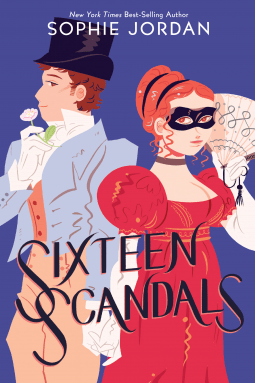
In this irreverent regency romp by New York Times best-selling author Sophie Jordan, newly minted sixteen-year-old Primrose Ainsworth finds herself on a wayward birthday adventure through London with a mysterious hero—perfect for fans of My Lady Jane.
I’ve read Sophie Jordan’s adult historical romances so I really wanted to see how a young adult romance would work out. I thought the Sixteen Candles twist to it was cute, since it’s one of my most favorite movies of the 80’s.
Prim definitely takes chances by sneaking out of the house and going to Vauxhall Pleasure Gardens. I think it’s important to remember in history and historical romances, girls got married at 16+. So Prim sneaking out, really had the risk of being caught in a scandal that could ruin her life.
Her family life is drama-filled with her sisters and a mom who is laser focused on getting each girl married, except Prim, of course, it’s like she’s too tired to care about Prim, poor girl. Glad Prim doesn’t let that hold her back though.
The romance is sweet and cute. Prim and Jacob get to know each other all in one night, but the sparks are definitely there by the end.
It’s a happy ending for Prim, thank goodness because her mom’s plan for her life was pretty harsh.
This was a quick read – and it’s meant for teens. As an adult reading it, it wasn’t for me. But this would be definitely perfect for teens – it has a little romance, adventure, and a girl trying to live her young life. I had a hard time trying to stop comparing adult historical romance and this one meant for a younger audience.
And being a Sixteen Candles fan, where was Farmer Ted?! Haha, I mean Jacob obviously is Jake (the duke). The story takes place all in one night, just like the movie, but I think because of the amazing supporting cast in the movie, Prim and Jacob’s one night escapade in this book fell so short. It had some action, the kind you would get in a pleasure garden haha.
Everything comes to such a predictable and anti-climatic ending.
I do wish there was a little more to the Sixteen Candles retelling like having more of a supporting cast like the movie did. Other than that, the story is quick and the romance is sweet. This one is perfect for teen readers who want to read a historical romance story.
Categories: Young Adult, Friendship, Romance, Abuse, Mental Health, Identity, Contemporary
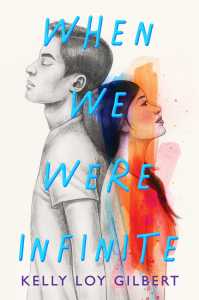
All Beth wants is for her tight-knit circle of friends — Grace Nakamura, Brandon Lin, Sunny Chen, and Jason Tsou — to stay together. With her family splintered and her future a question mark, these friends are all she has — even if she sometimes wonders if she truly fits in with them. Besides, she’s certain she’ll never be able to tell Jason how she really feels about him, so friendship will have to be enough.
Then Beth witnesses a private act of violence in Jason’s home, and the whole group is shaken. Beth and her friends make a pact to do whatever it takes to protect Jason, no matter the sacrifice. But when even their fierce loyalty isn’t enough to stop Jason from making a life-altering choice, Beth must decide how far she’s willing to go for him—and how much of herself she’s willing to give up.
This story starts off so happy and then it’s a slow descent into heartbreak and then healing. It starts off as this story about a tight knit group of five friends, most of them Taiwanese except for Grace who is Japanese American, and Beth who is half-white and Chinese, who has no deep to connection to either side of her cultures. These kids are smart, goal oriented, talented and have everything going for themselves, their futures are so bright and they all seem so perfect – on the outside. Their friendship is a beautiful thing but even though they are the closest and most supportive of friends, there were things they couldn’t prevent. Through Beth we see that as their time comes to an end in high school, pressures start building, more for Jason the boy she’s in love with, and a series of events happen that shakes their tight knit group.
But let’s talk about Beth. We are in her head a lot and I was scared at times being in that head because some things I could really relate to. She’s the most quiet among her friends, and so talented with a violin. She is that type of person ready to appease everyone, at least she is with her friends. Beth lives her life in a way so that she won’t repeat the mistakes of her mother who she blames for the divorce and making her dad leave. As a teen, I would have understood Beth a lot with the anger at her parents. Now that I am a mom and way older, Beth was breaking my heart blaming her mom for everything. She comes off selfish (when it comes to her mother) but so unselfish when it comes to her friends and Jason. The story comes around full circle from Senior year in high school to them being in college which I’m glad about because there were so many things Beth needed to learn about herself, she needed to actually grow without these amazing friends of hers and she does. It’s not easy, but she does it, little by little.
Mental health is a big topic in this story. From the very high expectations of immigrant Asian parents (I know how that feels but not to the extent of what Beth and her friends are going through), abuse in a family and is it considered “abuse” and should you tell anyone, dating someone with mental health issues, and seeking help when you do have mental health episodes among other things.
I love how music is interwoven into the storyline because of Beth and her friends being in the school symphony club. The place Beth is her true self is with her violin. Music is what brings her back to life that is worth living.
This story is written beautifully and I hope to read more of this author’s work. I was really drawn into this story of perfect friends as thing unraveled. By the end of it, I wanted them to all be fixed and the ending made me cry. I think I was just so happy that Beth and Jason were okay despite everything.
This is heavy reading material and so very triggering. Beth’s anxiety chaffed at me, it gave me anxiety. I wanted to shake sense into her because I’m an adult now but I saw some of myself in her. Jason’s withdrawal made me nervous for him. I felt helpless for both of them. I felt quite drained by the end of this book, so read at your own pace if any of these topics are a trigger for you.
The romance between Jason and Beth in the end becomes a beautiful thing but the beginning of it is toxic. It’s a bad idea, but Beth is diving into it head first, she is all in without a care for her own well-being. To me their love story wasn’t something comforting to me at all when it began…but by the end of the book, I was tearing up because they both did a lot of work to meet each other half way.
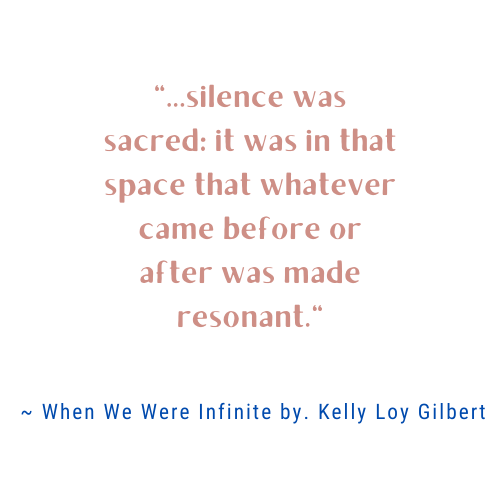
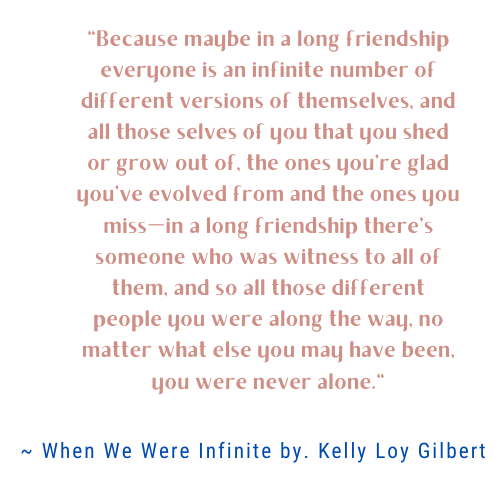
When We Were Infinite is an emotional journey about at a time when the transition from high school to college is full of pressure. It’s a story about Beth, who seems okay at the beginning of the book and we slowly uncover all the layers to see she is not doing okay at all at home, or at life in general. I was invested in the story the whole way through and saw parts of me in it that made me uncomfortable but seen, which I appreciated. This is a powerfully layered story that will stay in my head for awhile.
Categories: High School, Young Adult, Friendship, Family, Coming of Age
Disclaimer: **I received this book free from NetGalley in exchange for an honest review. All thoughts and opinions are my own.**
The first book in the beloved, New York Times bestselling series—now with a new foreword from New York Timesbestselling author Rebecca Serle
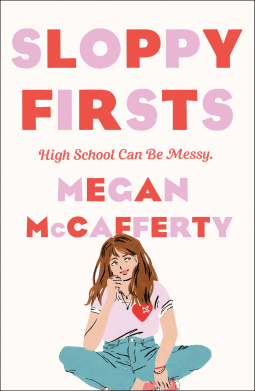
Jessica Darling is devastated when her best friend moves away from Pineville, New Jersey. With Hope gone, Jessica has no one she can really talk to. She doesn’t relate to the boy-and-shopping obsessed girls at school, or her dad’s obsession with track meets, and her mom is too busy planning big sister Bethany’s lavish wedding. Jessica is lost more than ever, and her nonexistent love life is only making things worse.
Fresh, funny, and utterly compelling, readers fell in love with Jessica Darling’s poignant, hilarious voice and have stayed with her through her ups and downs (and her mixed-up feelings about her first love, Marcus Flutie). A modern classic, readers will be excited to return to Pineville, New Jersey and Jessica Darling’s world with Sloppy Firsts.
I read this when it was first published years ago and at that time, I thought Jessica’s voice was very strong, even though at most times she is really unlikable. But I like a problematic character and she has a lot going on in her family and her best friend moving away.
It doesn’t shy away from high school students having sex, using drugs, and all the gossiping.
This is written like how one would speak because it’s like a diary – it was funny to me 20 years ago because I was a young adult back when it came out! Today as I read it, as an adult, it was a little too loud and too much for me. There is a lot going on in Jessica’s head, and we are in her thoughts 24/7. I found a lot of it nostalgic and some of it, wondering if teens today could even relate?
The main thing I loved about this series and it still stands today as the thing that sucked me into this series is the Jessica and Marcus love story. It’s definitely dramatic and it still got to me as I re-read this book. It’s a slow burn with not much happening in this first book until the end of it.
Triggers: drug use, grief
Reading this twenty years later, I feel like so much of the first half could be cut out – get to Marcus and Jessica quicker! I have no time to be in Jessica’s thoughts.
Ha! I saw my Goodreads star review I gave this years ago (I didn’t have Goodreads in 2001 so I posted it in 2014) and I gave it a 3 star rating like I’m giving it today.
Twenty years later, I can still say I read this whole series because of Jessica and Marcus’ love story. I can’t say I remember how it ended? But I do remember being on this journey with Jessica at a time when she was going to college in the series (I was just out of college), so this story is full of nostalgia for me. This is an all out, in Jessica Darling’s head, coming-of-age teen young adult story. Jessica is lost, she hates her parents, sad that her best friend moved, navigating the jungle that is the high school social scene, and falling for Marcus Flutie, of all people. Will young adult relate to it in this day and age? Not sure ~ it was a mess then and still a mess now, but it was one I totally related to back in the early 2000’s.
Categories: Young Adult, Contemporary, Coming of Age, Family, Fatherhood, Gangs
International phenomenon Angie Thomas revisits Garden Heights seventeen years before the events of The Hate U Givein this searing and poignant exploration of Black boyhood and manhood.
If there’s one thing seventeen-year-old Maverick Carter knows, it’s that a real man takes care of his family. As the son of a former gang legend, Mav does that the only way he knows how: dealing for the King Lords. With this money he can help his mom, who works two jobs while his dad’s in prison.
Life’s not perfect, but with a fly girlfriend and a cousin who always has his back, Mav’s got everything under control.
Until, that is, Maverick finds out he’s a father.
Suddenly he has a baby, Seven, who depends on him for everything. But it’s not so easy to sling dope, finish school, and raise a child. So when he’s offered the chance to go straight, he takes it. In a world where he’s expected to amount to nothing, maybe Mav can prove he’s different.
When King Lord blood runs through your veins, though, you can’t just walk away. Loyalty, revenge, and responsibility threaten to tear Mav apart, especially after the brutal murder of a loved one. He’ll have to figure out for himself what it really means to be a man.
Angie Thomas is a must-read author for me. Her writing is so good! Once I start reading, I feel my body just settling into her words, into the story and there I am watching things unfold for Maverick in real time, at least that’s what it feels like for me. It’s an enjoyable reading experience, and it’s almost soothing even though the topics in Concrete Rose are anything but calming.
This story is about a teen boy turning into a father too fast – and honestly, I grew up in this period that the story is set. Pagers were the thing to have (my parents never let me have one), Boyz to Men was being played everywhere, and teenage pregnancy was happening at a high rate. All my high school male cousins, some drop outs, all got their girlfriends pregnant in high school so they were very young dads. A few female friends of mine also got pregnant in high school, so I love that this was from Maverick’s perspective and his struggles of becoming a father almost overnight, because it is relatable to me. I was baby-sitting my cousin’s kids a lot and I was barely in high school myself! Parenting at any age is hard, but doing it when you barely have money and a high school diploma is rough.
Maverick isn’t perfect – he sells drugs to make ends meet, he is in a gang, he is grieving, but he tries his best when Seven (his son) comes into his life to do the right thing. He gives up the high paying drug business and gets a regular low paying job, he goes to school even though he is failing, he is helping his mom pay the house bills (his dad is in jail), he has no time to hang with friends…but his struggle to stay on the good path is hard, especially when having no money is a problem. I felt for him but was seriously proud of him too for trying to own up and be a “man” so his son could have a father around. He had to make a few tough decisions on different matters and I’m so glad he chose to do the right thing.
His community had his back. Yes, he thought it was the King Lord gang that had his back and maybe they did in some ways when it came to protection in their neighborhood but it was his neighbors and family that really got his back. They gave him a job, gave him advice/direction/a listening ear/patience/forgiveness, they helped him babysit Seven and that was a beautiful thing!
I feel like this one didn’t have much action, like The Hate U Give but it works…it’s beautiful and introspective as we get to know Maverick and his struggles. Very well done!
Triggers: gun violence, violence, drugs, teen pregnancy, grief
There were a lot of parenting advice in this one that I wasn’t expecting but it was relatable and I’m in my 40’s! So I definitely loved all the parenting advice in this one.
There was a moment I thought it was like the Boyz n the Hood movie (has anyone seen that? Talk about my childhood, that movie was big and eye opening) and I was scared for that “moment” to happen. 😭
Speaking of movies, all of Angie’s books should be movies.
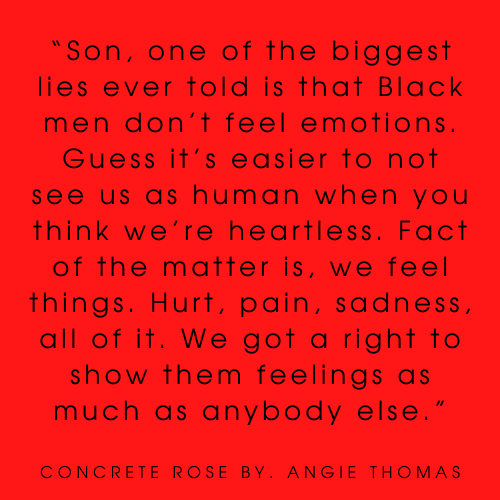
I may be biased because I am female, but I always gravitate to stories about girls, young women, women – because it’s been so hard for us to be heard. But this story reminded me boys need to be understood too. As I was reading, I was wondering if this was how my boy cousins felt when they had gotten their girlfriends pregnant and became teen dads. Did they feel the pressures, the fears and behaved in ways to get away from those feelings? I connected to Maverick as a parent especially in those first few months of parenthood.
Concrete Rose is the perfect prequel to The Hate U Give. We get Maverick’s point of view and learn about his relationship with King and how Starr, his daughter and Seven, his son, came to be. We see his struggles and there is many coming from school, parenting, working to make ends meet, his parents, his ex-girlfriend, losing family and friends. Angie Thomas is one of my favorite authors and her books always has a powerful message. There are many messages in this book about parenting, owning up to your mistakes, and trying to change your life path. Teens and young adults should definitely read this one, but adults can enjoy this one as well, just like I did.
Disclaimer: **I received this book free from NetGalley in exchange for an honest review. All thoughts and opinions are my own.**
From the New York Times bestselling author of The Lost Girls of Paris comes a riveting tale of courage and unlikely friendship during World War II.
1942. Sadie Gault is eighteen and living with her parents in the Kraków Ghetto during World War II. When the Nazis liquidate the ghetto, Sadie and her pregnant mother are forced to seek refuge in the perilous tunnels beneath the city. One day Sadie looks up through a grate and sees a girl about her own age buying flowers.
Ella Stepanek is an affluent Polish girl living a life of relative ease with her stepmother, who has developed close alliances with the occupying Germans. While on an errand in the market, she catches a glimpse of something moving beneath a grate in the street. Upon closer inspection, she realizes it’s a girl hiding.
Ella begins to aid Sadie and the two become close, but as the dangers of the war worsen, their lives are set on a collision course that will test them in the face of overwhelming odds. Inspired by incredible true stories, The Woman with the Blue Star is an unforgettable testament to the power of friendship and the extraordinary strength of the human will to survive.
I thought the focus on Sadie Gault who hid in the sewers while German Nazis occupied Poland was a fascinating story. I find most WWII to be the same at times, mostly with them concentrating on the war front. I found this different and I learned something new. The harrowing events that take place from their escape to the sewer and life there is tightly woven. This was a quick read from the start.
The dual perspectives of Sadie and Ella, a Polish girl living relatively free in Krakow shows how much the Jewish people were subjected to many evils under the Nazis. Ella is trying to survive in her own way since food rations are low, she’s living with her stepmother, and her love life is in shambles. Her relationship problems are light compared to Sadie who is living in a sewer and hoping one day she will have a future. But their unlikely friendship grows steadily through a sewer grate for the most part, and they become a lifeline for one another.
Sadie’s life in the sewers is horrible and yet compared to being in a death camp, this was the safest and best place for them to be. They live in filth, barely have food and her mother is pregnant! Life and death is happening in Sadie’s life in the sewers and my heart ached for her situation many times over.
I was afraid for Sadie and Ella being caught by Nazis or Polish Police officers. Every time they had a chance to interact I prayed they would not be caught because I can only imagine worse horrors for Sadie and Ella if they were.
Really great twist in the end but I thought I had misread something and had to pause for a moment to realize what the author was doing.
Triggers: Death, claustrophobia
Abrupt ending but it is explained in the epilogue, for a moment I was confused.
I really enjoyed this historical fiction story about two girls, one Jewish and one Polish, who befriend each other in the most unexpected circumstances. I loved the focus on their friendship and their survival journey in Nazis occupied Poland. Sadie has lost her freedom and her family yet living in the sewers is the best thing to do. Ella has lost family too, her love, and yet she still has more freedom to go about life because she is Polish. I was engaged in this story. I learned something and I felt for Sadie. In the end I was grateful for the random strangers that helped her survive a horrible period in time and her strength to hold on to hope to live and keep going.
📚~ Yolanda
About the Author:
Pam Jenoff is the author of several books of historical fiction, including the NYT bestseller The Orphan’s Tale. She holds a degree in international affairs from George Washington University and a degree in history from Cambridge, and she received her JD from UPenn. Her novels are inspired by her experiences working at the Pentagon and as a diplomat for the State Department handling Holocaust issues in Poland. She lives with her husband and 3 children near Philadelphia, where she teaches law.
Everything changed the day they came for the children.
I was supposed to have been in the attic crawl space of the three-story building we shared with a dozen other families in the ghetto. Mama helped me hide there each morning before she set out to join the factory work detail, leaving me with a fresh bucket as a toilet and a stern admonishment not to leave. But I grew cold and restless alone in the tiny, frigid space where I couldn’t run or move or even stand straight. The minutes stretched silently, broken only by a scratching—unseen children, years younger than me, stowed on the other side of the wall. They were kept separate from one another without space to run and play. They sent each other messages by tapping and scratching, though, like a kind of improvised Morse code. Sometimes, in my boredom, I joined in, too.
“Freedom is where you find it,” my father often said when I complained. Papa had a way of seeing the world exactly as he wanted. “The greatest prison is in our mind.” It was easy for him to say. Though he manual ghetto labor was a far cry from his professional work as an accountant before the war, at least he was out and about each day, seeing other people. Not cooped up like me. I had scarcely left our apartment building since we were forced to move six months earlier from our apartment in the Jewish Quarter near the city center to the Podgórze neighborhood where the ghetto had been established on the southern bank of the river. I wanted a normal life, my life, free to run beyond the walls of the ghetto to all of the places I had once known and taken for granted. I imagined taking the tram to the shops on the Rynek or to the kino to see a film, exploring the ancient grassy mounds on the outskirts of the city. I wished that at least my best friend, Stefania, was one of the others hidden nearby. Instead, she lived in a separate apartment on the other side of the ghetto designated for the families of the Jewish police.
It wasn’t boredom or loneliness that had driven me from my hiding place this time, though, but hunger. I had always had a big appetite and this morning’s breakfast ration had been a half slice of bread, even less than usual. Mama had offered me her portion, but I knew she needed her strength for the long day ahead on the labor detail.
As the morning wore on in my hiding place, my empty belly had begun to ache. Visions pushed into my mind uninvited of the foods we ate before the war: rich mushroom soup and savory borscht, and pierogi, the plump, rich dumplings my grandmother used to make. By midmorning, I felt so weak from hunger that I had ventured out of my hiding place and down to the shared kitchen on the ground floor, which was really nothing more than a lone working stove burner and a sink that dripped tepid brown water. I didn’t go to take food—even if there had been any, I would never steal. Rather, I wanted to see if there were any crumbs left in the cupboard and to fill my stomach with a glass of water.
I stayed in the kitchen longer than I should, reading the dog-eared copy of the book I’d brought with me. The thing I detested most about my hiding place in the attic was the fact that it was too dark for reading. I had always loved to read and Papa had carried as many books as he could from our apartment to the ghetto, over the protests of my mother, who said we needed the space in our bags for clothes and food. It was my father who had nurtured my love of learning and encouraged my dream of studying medicine at Jagiellonian University before the German laws made that impossible, first by banning Jews and later by closing the university altogether. Even in the ghetto at the end of his long, hard days of labor, Papa loved to teach and discuss ideas with me. He had somehow found me a new book a few days earlier, too, The Count of Monte Cristo. But the hiding place in the attic was too dark for me to read and there was scarcely any time in the evening before curfew and lights-out. Just a bit longer, I told myself, turning the page in the kitchen. A few minutes wouldn’t matter at all.
I had just finished licking the dirty bread knife when I heard heavy tires screeching, followed by barking voices. I froze, nearly dropping my book. The SS and Gestapo were outside, flanked by the vile Jüdischer Ordnungsdienst, Jewish Ghetto Police, who did their bidding. It was an aktion, the sudden unannounced arrest of large groups of Jews to be taken from the ghetto to camps. The very reason I was meant to be hiding in the first place. I raced from the kitchen, across the hall and up the stairs. From below came a great crash as the front door to the apartment building splintered and the police burst through. There was no way I could make it back to the attic in time.
Instead, I raced to our third-floor apartment. My heart pounded as I looked around desperately, wishing for an armoire or other cabinet suitable for hiding in the tiny room, which was nearly bare except for a dresser and bed. There were other places, I knew, like the fake plaster wall one of the other families had constructed in the adjacent building not a week earlier. That was too far away now, impossible to reach. My eyes focused on the large steamer trunk stowed at the foot of my parents’ bed. Mama had shown me how to hide there once shortly after we first moved to the ghetto. We practiced it like a game, Mama opening the trunk so that I could climb in before she closed the lid.
The trunk was a terrible hiding place, exposed and in the middle of the room. But there was simply nowhere else. I had to try. I raced over to the bed and climbed into the trunk, then closed the lid with effort. I thanked heavens that I was tiny like Mama. I had always hated being so petite, which made me look a solid two years younger than I actually was. Now it seemed a blessing, as did the sad fact that the months of meager ghetto rations had made me thinner. I still fit in the trunk.
When we had rehearsed, we had envisioned Mama putting a blanket or some clothes over the top of the trunk. Of course, I couldn’t do that myself. So the trunk sat unmasked for anyone who walked into the room to see and open. I curled into a tiny ball and wrapped my arms around myself, feeling the white armband with the blue star on my sleeve that all Jews were required to wear.
There came a great crashing from the next building, the sound of plaster being hewn by a hammer or ax. The police had found the hiding place behind the wall, given away by the too-fresh paint. An unfamiliar cry rang out as a child was found and dragged from his hiding place. If I had gone there, I would have been caught as well.
Someone neared the door to the apartment and flung it open. My heart seized. I could hear breathing, feel eyes searching the room. I’m sorry, Mama, I thought, feeling her reproach for having left the attic. I braced myself for discovery. Would they go easier on me if I came out and gave myself up? The footsteps grew fainter as the German continued down the hall, stopping before each door, searching.
The war had come to Kraków one warm fall day two and a half years earlier when the air-raid sirens rang out for the first time and sent the playing children scurrying from the street. Life got hard before it got bad. Food disappeared and we waited in long lines for the most basic supplies. Once there was no bread for a whole week.
Then about a year ago, upon orders from the General Government, Jews teemed into Kraków by the thousands from the small towns and villages, dazed and carrying their belongings on their backs. At first I wondered how they would all find places to stay in Kazimierz, the already cramped Jewish Quarter of the city. But the new arrivals were forced to live by decree in a crowded section of the industrial Podgórze district on the far side of the river that had been cordoned off with a high wall. Mama worked with the Gmina, the local Jewish community organization, to help them resettle, and we often had friends of friends over for a meal when they first arrived, before they went to the ghetto for good. They told stories from their hometowns too awful to believe and Mama shooed me from the room so I would not hear.
Several months after the ghetto was created, we were ordered to move there as well. When Papa told me, I couldn’t believe it. We were not refugees, but residents of Kraków; we had lived in our apartment on Meiselsa Street my entire life. It was the perfect location: on the edge of the Jewish Quarter but easy walking distance to the sights and sounds of the city center and close enough to Papa’s office on Stradomska Street that he could come home for lunch. Our apartment was above an adjacent café where a pianist played every evening. Sometimes the music spilled over and Papa would whirl Mama around the kitchen to the faint strains. But according to the orders, Jews were Jews. One day. One suitcase each. And the world I had known my entire life disappeared forever.
I peered out of the thin slit opening of the trunk, trying to see across the tiny room I shared with my parents. We were lucky, I knew, to have a whole room to ourselves, a privilege we had been given because my father was a labor foreman. Others were forced to share an apartment, often two or three families together. Still, the space felt cramped compared to our real home. We were ever on top of one another, the sights and sounds and smells of daily living magnified.
“Kinder, raus!” the police called over and over again now as they patrolled the halls. Children, out. It was not the first time the Germans had come for children during the day, knowing that their parents would be at work.
But I was no longer a child. I was eighteen and might have joined the work details like others my age and some several years younger. I could see them lining up for roll call each morning before trudging to one of the factories. And I wanted to work, even though I could tell from the slow, painful way my father now walked, stooped like an old man, and how Mama’s hands were split and bleeding that it was hard and awful. Work meant a chance to get out and see and talk to people. My hiding was a subject of much debate between my parents. Papa thought I should work. Labor cards were highly prized in the ghetto. Workers were valued and less likely to be deported to one of the camps. But Mama, who seldom fought my father on anything, had forbidden it. “She doesn’t look her age. The work is too hard. She is safest out of sight.” I wondered as I hid now, about to be discovered at any second, if she would still think she was right.
The building finally went silent, the last of the awful footsteps receding. Still I didn’t move. That was one of the ways they trapped people who were hiding, by pretending to go away and lying in wait when they came out. I remained motionless, not daring to leave my hiding place. My limbs ached, then went numb. I had no idea how much time had passed. Through the slit, I could see that the room had grown dimmer, as if the sun had lowered a bit.
Sometime later, there were footsteps again, this time a shuffling sound as the laborers trudged back silent and exhausted from their day. I tried to uncurl myself from the trunk. But my muscles were stiff and sore and my movements slow. Before I could get out, the door to our apartment flung open and someone ran into the room with steps light and fluttering. “Sadie!” It was Mama, sounding hysterical.
“Jestem tutaj,” I called. I am here. Now that she was home, she could help me untangle myself and get out. But my voice was muffled by the trunk. When I tried to undo the latch, it stuck.
Mama raced from the room back into the corridor. I could hear her open the door to the attic, then run up the stairs, still searching for me. “Sadie!” she called. Then, “My child, my child,” over and over again as she searched but did not find me, her voice rising to a shriek. She thought I was gone.
“Mama!” I yelled. She was too far away to hear me, though, and her own cries were too loud. Desperately, I struggled once more to free myself from the trunk without success. Mama raced back into the room, still wailing. I heard the scraping sound of a window opening and felt a whoosh of cold air. At last I threw myself against the lid of the trunk, slamming my shoulder so hard it throbbed. The latch sprang open.
I broke free and stood up quickly. “Mama?” She was standing in the oddest position, with one foot on the window ledge, her willowy frame silhouetted against the frigid twilight sky. “What are you doing?” For a second, I thought she was looking for me outside. But her face was twisted with grief and pain. I knew then why Mama was on the window ledge. She assumed I had been taken along with the other children. And she didn’t want to live. If I hadn’t freed myself from the trunk in time, Mama would have jumped. I was her only child, her whole world. She was prepared to kill herself before she would go on without me.
A chill ran through me as I sprinted toward her. “I’m here, I’m here.” She wobbled unsteadily on the window ledge and I grabbed her arm to stop her from falling. Remorse ripped through me. I always wanted to please her, to bring that hard-won smile to her beautiful face. Now I had caused her so much pain she’d almost done the unthinkable.
“I was so worried,” she said after I’d helped her down and closed the window. As if that explained everything. “You weren’t in the attic.”
“But, Mama, I hid where you told me to.” I gestured to the trunk. “The other place, remember? Why didn’t you look for me there?”
Mama looked puzzled. “I didn’t think you would fit anymore.” There was a pause and then we both began laughing, the sound scratchy and out of place in the pitiful room. For a few seconds, it was like we were back in our old apartment on Meiselsa Street and none of this had happened at all. If we could still laugh, surely things would be all right. I clung to this last improbable thought like a life preserver at sea.
But a cry echoed through the building, then another, silencing our laughter. It was the mothers of the other children who had been taken by the police. There came a thud outside. I started for the window, but my mother blocked me. “Look away,” she ordered. It was too late. I glimpsed Helga Kolberg, who lived down the hall, lying motionless in the coal-tinged snow on the pavement below, her limbs cast at odd angles and skirt splayed around her like a fan. She had realized her children were gone and, like Mama, she didn’t want to live without them. I wondered whether jumping was a shared instinct, or if they had discussed it, a kind of suicide pact in case their worst nightmares came true.
My father raced into the room then. Neither Mama nor I said a word, but I could tell from his unusually grim expression that he already knew about the aktion and what had happened to the other families. He simply walked over and wrapped his enormous arms around both of us, hugging us tighter than usual.
As we sat, silent and still, I looked up at my parents. Mama was a striking beauty—thin and graceful, with white-blond hair the color of a Nordic princess’. She looked nothing like the other Jewish women and I had heard whispers more than once that she didn’t come from here. She might have walked away from the ghetto and lived as a non-Jew if it wasn’t for us. But I was built like Papa, with the dark, curly hair and olive skin that made the fact that we were Jews undeniable. My father looked like the laborer the Germans had made him in the ghetto, broad-shouldered and ready to lift great pipes or slabs of concrete. In fact, he was an accountant—or had been until it became illegal for his firm to employ him anymore. I always wanted to please Mama, but it was Papa who was my ally, keeper of secrets and weaver of dreams, who stayed up too late whispering secrets in the dark and had roamed the city with me, hunting for treasure. I moved closer now, trying to lose myself in the safety of his embrace.
Still, Papa’s arms could offer little shelter from the fact that everything was changing. The ghetto, despite its awful conditions, had once seemed relatively safe. We were living among Jews and the Germans had even appointed a Jewish council, the Judenrat, to run our daily affairs. Perhaps if we laid low and did as we were told, Papa said more than once, the Germans would leave us alone inside these walls until the war was over. That had been the hope. But after today, I wasn’t so sure. I looked around the apartment, seized with equal parts disgust and fear. In the beginning, I had not wanted to be here; now I was terrified we would be forced to leave.
“We have to do something,” Mama burst out, her voice a pitch higher than usual as it echoed my unspoken thoughts.
“I’ll take her tomorrow and register her for a work permit,” Papa said. This time Mama did not argue. Before the war, being a child had been a good thing. But now being useful and able to work was the only thing that might save us.
Mama was talking about more than a work visa, though. “They are going to come again and next time we won’t be so lucky.” She did not bother to hold back her words for my benefit now. I nodded in silent agreement. Things were changing, a voice inside me said. We could not stay here forever.
“It will be okay, kochana,” Papa soothed. How could he possibly say that? But Mama laid her head on his shoulder, seeming to trust him as she always had. I wanted to believe it, too. “I will think of something. At least,” Papa added as we huddled close, “we are all still together.” The words echoed through the room, equal parts promise and prayer.
Excerpted from The Woman With the Blue Star @ 2021 by Pam Jenoff, used with permission by Park Row Books.
Categories: Witches, Young Adult, Twins, Contemporary, Paranormal
Disclaimer: **I received this book free from NetGalley in exchange for an honest review. All thoughts and opinions are my own.**
Double double, twins spell trouble…
Hunter and Mercy Goode are twin witches, direct descendants of the founder of their town of Goodeville. As their ancestors have done before them, it is now time for the twins to learn what it means to be Gatekeepers–the protectors of the Gates to different underworlds, ancient portals between their world and realms where mythology rules and nightmares come to life.
When their mother becomes the first victim in a string of murders, the devastated sisters vow to avenge her death. But it will take more than magic to rein in the ancient mythological monsters who’ve infected their peaceful town.
Now Hunter and Mercy must come together and accept their destiny or risk being separated for good.
I DNF’ed this book at 25% because it was just not for me. But let’s look at what I liked ~
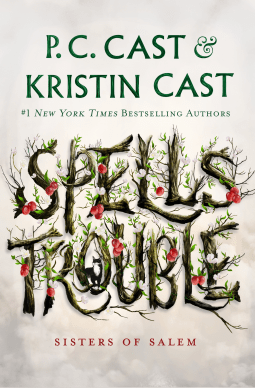
Love the cover, it’s what drew me to the story in the first place and a book about witches? I was definitely interested.
Right away there is some crazy action with the girls 16th birthday ritual night but I can’t say for the rest of the book because I wasn’t interested in finishing.
The Goode twins, Hunter and Mercy, are different and have distinct voices.
Their familiar, a cat named Xena turns into a human, so that was fun.
The one time I read this mother/daughter duo is when they came out with the House of Night series back in 2007! I followed it up until book 5 maybe? It was fun and I was obsessed with it in 2007-2009 and then I outgrew it. The writing is much more suited for teen readers (except there is detailed sexual content). At times the story felt superficial and rushed especially when their mom died.
I felt no connection to any of the characters.
I really wish this held my interest because the concept is good and witches always make for a fun and thrilling story.
Overall this one is definitely not for me because of the writing style which felt rushed. At times I felt like I was in my 20’s reading a young adult novel again, but not in a good way because times have changed in the young adult world and I did not finish it but I think many people will still enjoy this one. I feel like it’s written for teen readers except for the detailed sexual scene.
Categories: Coming of Age, Identity, Family, Culture, Contemporary, Romance
Disclaimer: **I received this book free from NetGalley in exchange for an honest review. All thoughts and opinions are my own.**
In this sweeping debut, actress Asha Bromfield takes readers to the heart of Jamaica, and into the soul of a girl coming to terms with her family, and herself, set against the backdrop of a hurricane.
Sometimes the storm is inside of you…
Tilla has spent her entire life trying to make her father love her. But every six months, he leaves their family and returns to his true home: the island of Jamaica.
When Tilla’s mother tells her she’ll be spending the summer on the island, Tilla dreads the idea of seeing him again, but longs to discover what life in Jamaica has always held for him.
In an unexpected turn of events, Tilla is forced to face the storm that unravels in her own life as she learns about the dark secrets that lie beyond the veil of paradise—all in the midst of an impending hurricane.
Hurricane Summer is a powerful coming of age story that deals with colorism, classism, young love, the father-daughter dynamic—and what it means to discover your own voice in the center of complete destruction.
Hurricane Summer is a story about a girl, Tilla who is sent to Jamaica from Canada, with her sister for the summer to spend time with her father and other family members. The family members she meet though aren’t as welcoming as she thought they would be and her father is as non-existent in her life as ever.
Colorism and classism is evident in this story and even though I’m Filipino-American, I could relate to it a little, especially when my parents brought me to the Philippines to visit for the second third time. The first two times I was too young to notice these things. The lighter the skin in Filipino culture, the prettier you are. In Hurricane Summer, Tilla witnesses colorism in her own family, as one of her cousins has the darkest skin out of them all. The way they treat Andre, her cousin, is horrible and not something Cilla understands. Classism shows when her cousin Diana interact with her and the fact that she gets to go to school and not the country boys was an interesting dynamic.
Tilla’s relationship with her father is so sad because she is yearning to understand why he doesn’t want to be a part of their family. He really just dumps them off in the countryside of Jamaica – really? I was so angry at him. But I’m glad in the end she reaches some heart breaking conclusions about her relationship with him.
Tilla’s trip to Jamaica really is a hurricane – she’s is a swirling mess of emotion, rage and hurt. So much took place in this one trip, I likened it the summer from hell! The way her family members treated her, the way her cousin sabotaged her, I was livid at them in some parts in this story. But Tilla’s relationship with Andre was the best part! At least she had one cousin who had her back, thank goodness.
The ending is powerful. Tilla’s emotions and her confrontation with her dad and her feelings was so deep. I was highlighting sentences that spoke to me, that I needed to hear myself. So many of her thoughts resonated with me a lot and I appreciate seeing her take the steps to start to heal what was broken inside of her.
Triggers: abuse, bullying, slut shaming, death, grief, sexual assault
This is not at easy read – there are so many heavy topics going on in this book. There is physical, emotional and sexual abuse happening in the family. Tilla’s family members slut-shame her, and her own cousin does something so reprehensible – I wanted Cilla to cut them off forever! I’d never go and visit them if that was my family, I’d have called my mom up ASAP and tell her to book my flight back to Canada.
Tilla has some moments on the island where she’s meeting boys and yes, she is attracted to a guy who’s already spoken for but it’s complicated because of how it’s set up. There were a few times I was frustrated with Tilla because I could see what was about to happen but I also understood how she wanted to escape everything that was going on. But I’m glad Tilla realized her interest in these guys was because she was trying to fill a void left by her dad. I understood that deeply.
The story takes place in Jamaica so the language of the island, Patois, and the story uses the language throughout. There is a glossary of words and their definition. After awhile though, you catch on to their way of talking and meaning.
This story swept me away to Jamaica, but we get to see the parts of Jamaica that aren’t the tourist destinations, we get to see it as someone’s home in the countryside. This story is about Tilla coming to find some truths there that are hard to face. She goes through a hurricane of life events in one summer that tests her resolve but she comes out stronger in the end. This is not an easy book to read but there is so much in it that resonated with me. Hurricane Summer is raw, heart wrenching, cathartic and powerful.
Categories: High School, Rom-Com, Enemies to Lovers, Movies, Music, Young Adult, Contemporary
Disclaimer: **I received this book free from NetGalley in exchange for an honest review. All thoughts and opinions are my own.**
In this rom-com about rom-coms, in the spirit of Kasie West and Jenn Bennett, a hopeless romantic teen attempts to secure a happily-ever-after moment with her forever crush, but finds herself reluctantly drawn to the boy next door.
Perpetual daydreamer Liz Buxbaum gave her heart to Michael a long time ago. But her cool, aloof forever crush never really saw her before he moved away. Now that he’s back in town, Liz will do whatever it takes to get on his radar—and maybe snag him as a prom date—even befriend Wes Bennet.
The annoyingly attractive next-door neighbor might seem like a prime candidate for romantic comedy fantasies, but Wes has only been a pain in Liz’s butt since they were kids. Pranks involving frogs and decapitated lawn gnomes do not a potential boyfriend make. Yet, somehow, Wes and Michael are hitting it off, which means Wes is Liz’s in.
But as Liz and Wes scheme to get Liz noticed by Michael so she can have her magical prom moment, she’s shocked to discover that she likes being around Wes. And as they continue to grow closer, she must reexamine everything she thought she knew about love—and rethink her own ideas of what Happily Ever After should look like.
I grew up in the age of amazing rom-com movies so this story is nostalgic with the movie quotes and the music soundtrack/playlists. It was just a fun blend of humor and romance combined!
Liz and Wes are neighbors and enemies that become frenemies so that Liz can get the guy she really wants, Michael. Who doesn’t love a boy-next-door, fake-dating, enemies-to-lovers trope? I can’t get enough of it! I love Liz and Wes’ banter, it made me laugh out loud and honestly as I read this I wished this WAS a movie. I love them together!
Now Liz isn’t just romance loving girl trying to find her own happily-ever-after, she does have some issues going on. Her mom died years ago in a car accident, she has a new step-mom and with Senior year coming to a close, she misses her mom as she hits all these milestones. Keeping things to herself starts making her hurt people that she cares about, even if it’s not intentional.
This book is funny, especially because Liz, who is unique, finds herself in the most crazy situations like getting barfed on at a party.
The romance of Liz and Wes getting together was perfection. I loved it all from them hating each other, to pretending to be into each other and then of course, the falling in love. And it stays pretty PG rated with maybe one hot kiss but it was enough to put some sizzle into the book without going overboard.
The best friend storyline was the only thing that made me want to shake Liz, that, and of course when she is mooning over Michael when Wes is perfect for her. Supposedly Joss is her best-friend but she lies to her the whole time about Wes just because she knows she’ll judge her. It would have been nice if Liz could trust her best friend and tell her stuff about missing her mom during Senior year. But I’m glad they talk it out in the end.
Better Than the Movies would actually make a great teen movie. I love Liz and Wes’ relationship, it really did remind me of those rom-coms that were popular years ago. I’ve been missing them a lot lately! Like Liz, I love rom-coms too and I used to always have a “soundtrack” to my life also. I think that’s why I related so much to her personality. This story left me feeling giddy, happy and smiling. If you love rom-coms, I think you will definitely enjoy this one.
Categories: Young Adult, Teen Readers, Friendship, Family, Romance, Coming of Age, Contemporary
Disclaimer: **I received this book free from NetGalley in exchange for an honest review. All thoughts and opinions are my own.**
Ferris Bueller’s Day Off meets Nick and Nora’s Infinite Playlist in this romp through the city that never sleeps from the New York Times bestselling author of Since You’ve Been Gone, Morgan Matson.
Two girls. One night. Zero phones.
Kat and Stevie—best friends, theater kids, polar opposites—have snuck away from the suburbs to spend a night in New York City. They have it all planned out. They’ll see a play, eat at the city’s hottest restaurant, and have the best. Night. Ever. What could go wrong?
Well. Kind of a lot?
They’re barely off the train before they’re dealing with destroyed phones, family drama, and unexpected Pomeranians. Over the next few hours, they’ll have to grapple with old flames, terrible theater, and unhelpful cab drivers. But there are also cute boys to kiss, parties to crash, dry cleaning to deliver (don’t ask), and the world’s best museum to explore.
Over the course of a wild night in the city that never sleeps, both Kat and Stevie will get a wake-up call about their friendship, their choices…and finally discover what they really want for their future.
That is, assuming they can make it to Grand Central before the clock strikes midnight.
The title ALWAYS makes me sing that 80’s song, “Take me home tonight, I don’t want let you go till you see the light…” – it’s such a good song and reminds me of my childhood! Such a fun title!
Everything happens in one night in NYC of all places which is always a good time, right? It’s such an exciting city, so I loved the setting. It’s the perfect place for nightly shenanigans.
I did enjoy Kat and Stevie’s friendship. At the start you just know they are tight, and they do get separated during their wild night in NYC but it helped them deal with their own issues for a few hours before meeting up. I like their separate emotional journeys and when they come back together, they are better for it.
Kat has a cute little romantic encounter, but I loved Stevie’s interactions with her family even more. We get to meet her step-siblings and watch her deal with family issues, I thought it brought the emotional feels in the story.
I appreciate the whole Adventures in Babysitting references with Teri’s storyline but I mostly skipped it. It didn’t work for me because I was more interested in Kat and Stevie’s adventure and it really went off in a whole direction with Teri. In the end I thought it was sorta funny and cute but during the story, it would take me out of the story.
This would make an entertaining movie.
More suited towards teen readers.
This story is about one wild night in New York City shared between two best friends who have a falling out along the way but find their way back to one another. There is Teri’s storyline who is on an Adventures of Babysitting kick and it’s funny in the end but unfortunately took me out of the story multiple times. I think teen readers will enjoy this one and relate to Kat and Stevie’s personalities and friendship.










































 Past Midnight Book Reviews & More