Categories: Fantasy, Japanese Mythology, Young Adult, Romance
Disclaimer: **I received this book free from NetGalley in exchange for an honest review. All thoughts and opinions are my own.**
Thank you to Inkyard Press for giving me a chance to read this eARC in exchange for an honest review.
Julie Kagawa meets Scythe in this captivating and evocative journey into Death’s domain as one soul collector seeks her place in the underworld of 1890s Japan. Book 1 of a planned duology.
Death is her destiny.
Half British Reaper, half Japanese Shinigami, Ren Scarborough yearns for the acceptance she has never found among the Reapers who raised her. When the Shinigami powers she can no longer hide force her to flee for her life, Ren and her younger brother—the only being on earth to care for her—travel to Japan and the dark underworld of Yomi, where Ren hopes to claim her place among the Shinigami and finally belong.
But the Goddess of Death is no more welcoming than the Reapers who raised her, and Ren finds herself set on an impossible task—find and kill three yokai demons, and maybe, just maybe, she can earn a place in Death’s service. With only her brother and an untrustworthy new ally by her side, Ren will learn how far she’ll go to win the acceptance she craves, and whether the cost of belonging is worth any sacrifice.
The Keeper of Night is a fascinating take on Reapers and Japanese Mythology. Ren is half Japanese/half British, half Reaper/half Shinigami and all she wants is to belong somewhere and not be half of anything. When something happens in London, she is banished from the Reapers and basically makes her way all the way to Japan to try and be a Shinigami, something similar to Reapers. In tow is her half-brother Neven, who barely knows Japanese. Ren can get by on what’s she’s learned on her own but Japan is nothing like London. In order to become a Shinigami she has to complete a few quests, taking out powerful Yokai (spirits/demons). If Ren accomplishes her tasks then she will become a Shinigami and say goodbye to her Reaper past.
It’s been awhile since I read a book with Japanese Mythology and this one is cool because it involves Yokai! Okay yes, I did learn what yokai was from that tv show my son used to watch, Yokai Watch. Yokai in this book are scary!. But Ren isn’t one to be frightened of them (much) she was once a Reaper. I thought the Reapers were pretty cool, with their clocks to pause time, it definitely came in handy when Ren was killing Yokai.
Ren is going through a struggle – she’s done with the Reapers, who do not want her anyway. She wants to embrace her Japanese side and become a Shinigami but it’s not so easy. She’s a morally gray character, doing whatever it takes to achieve her goals but at what cost? Neven who made the choice to stay with her is getting hurt physically and emotionally in the process. But she sees it to the end even when the unexpected happens.
I thought the secondary characters did their job in keeping Ren conflicted. Neven is the sweetest brother but he loved being a Reaper – it’s his identity. It’s only half of Ren’s identity though and she is struggling with all of it. Neven is her moral compass. As for Hiro, he comes off like a good guy but with that suspicious dark gleam in his black eyes. He helps Ren by giving her intel about the Yokai and feelings grow between them but there is more to him that meets the eye.
This story is dark with death a constant theme and the Yokai are scary and creepy spirits/demons. I love that the story is action packed when it comes to taking down the Yokai.
Triggers: gory scenes, violence, death, hurting a Yokai in the form of a child
The story starts off to a quick start then there is a little lull when Ren reaches Japan, which is to be expected as she gets her bearings in a country so totally different than England. Luckily they meet Hiro who helps them navigate this Underworld in Japan and help explain the Yokai to Ren and Neven.
Why you should read it:
unique world building of Reapers, Shinigami and the Japanese Underworld
morally gray main character
lots of action when Ren is fighting the Yokai
Why you might not want to read it:
some gory scenes
cliffhanger
dark story
My Thoughts:
I actually enjoyed this dark story. It took me a few days to read, but I had fun with the Yokai and horror scenes (and I can’t even watch horror movies) – what is it with Japanese horror and girls with long hair covering their faces? Just the imagery alone freaks me out but the story was intriguing too. A half Japanese girl trying to find where she belongs and doing anything she can to achieve her goals made me interested in how far she would go or if she would ever pull back. The twist in the end makes me want to read the next book.
📚 ~ Yolanda
About the Author:
Kylie Lee Baker grew up in Boston and has since lived in Atlanta, Salamanca, and Seoul. Her writing is informed by her heritage (Japanese, Chinese, and Irish), as well as her experiences living abroad as both a student and teacher. She has a B.A. in Creative Writing and Spanish from Emory University and is currently pursuing a Master of Library and Information Science degree at Simmons University. In her free time, she watches horror movies, plays the cello, and bakes too many cookies. The Keeper of Night is her debut novel.
My father once described magic as an invisible beast, an unseen enemy that could snatch our lives away at any moment. As a small, impressionable child, I had imagined a lupine creature lurking outside among the whispering pines, breathing over my shoulder in our garden. For years, I didn’t even leave the house; it was magic that had killed my mother, after all.
I was old enough now to understand that magic didn’t work that way. But as I hurried down the dark road, past the woods that had become my haven during daylight hours, my childhood fears didn’t feel so foolish. I glanced behind me, sure I’d find Belle Sabine, the fabled witch of every young woman’s nightmares, swooping down as silent as an owl, ready to steal my youth and leave an empty husk behind.
To my relief, there was nothing there. My only traveling companion was the wind nipping at my heels, spurring me forward. But in my brief distraction, I tripped over a rock in the road, falling hard onto my knees. Cursing myself for my clumsiness and superstition, I dusted off my hands, wincing as a sharp pebble dislodged from my palm. I couldn’t afford this kind of delay. It was close to midnight, and there was no moon to speak of, which made my situation even more precarious; my exposed skin glowed so brightly that moths circled me like a flame. But my little sister, Mina, was missing. I had to tell Father.
As I rose, I heard the sound of footsteps up the road. I glanced around for a place to hide, but there was no time. A moment later, a figure loomed at the margins of my glow.
Some said Belle Sabine had died, others that she was biding her time until the townspeople became complacent once again. But I was convinced she had come to kill me on the one night I had dared to venture past our threshold.
I shrank back as skirts and slippered feet came into view, followed by a woman’s arms cradling a basket, and finally, the face of Margana, the weaver who lived next door. Not here to kill me, then. But a witch, nevertheless. And one arguably as dangerous as Belle Sabine, given who she worked for.
“What are you doing on the road, Liora? It’s the middle of the night.”
“Mina is gone,” I said. “Father is still at work, and I didn’t know what else to do.”
Margana scrutinized me for a moment. “You’re a witch.”
A chill that had nothing to do with the cool night air crept over my scalp. No one had ever called me a witch to my face before, though of course I knew what I was. My entire life revolved around my glowing skin and the fear that the kingdom’s most powerful warlock would discover it. Lord Darius was employed by the king himself, gathering mages and torturing them if they didn’t do his bidding.
I pulled Father’s cloak tighter around myself, but it was futile. She already knew. I had wasted too much time getting up the nerve to leave the house after I found Mina’s bed empty, wringing my hands at the window, wondering if she’d been kidnapped by drifters or lured into the forest by a ghost lantern. Then, once I was on the road, I had foolishly stopped to look at the devil’s footprints, little white mushrooms that grew in pairs of two, resembling the cloven hooves of a demon. I’d seen them in daylight plenty of times, but never at night. They had caught my eye because their glow was so similar to my own.
Oddly, Margana’s basket was full of the mushrooms. Her cornflower-blue eyes and auburn hair were pale and otherworldly in their light. As if sensing my curiosity, she shifted the basket to her other hip. Margana was one of the few people who lived outside the gates of the ancient village of Sylvan, like us. She was also my best friend Evran’s mother—and the only other witch I knew.
“I always wondered why your father moved you girls out here after your mother died,” she said. “Now it all makes sense. But something tells me your father wouldn’t be pleased to know you’re outside, exposing yourself.” She grabbed one of my hands and turned it over, examining it like a bruised apple at market. Against Margana’s dull skin, mine looked false, as if I wasn’t a real person at all.
I pulled my hand free as politely as possible. “I should go.”
She sighed. “Keep your head down, and pray you don’t meet anyone on the road. Darius’s spies are everywhere.”
My eyes widened in fear, and she chuckled to herself. “Not me, silly girl.”
I swallowed audibly. If there really were spies in Sylvan, Margana was the most likely suspect. After all, she did work for Lord Darius. She might not be his servant by choice, but he was dangerous enough that no mage dared cross him. No mage who had lived to tell about it, anyway.
I was about to step around her when my eyes drifted to the basket once again. “I thought the devil’s footprints were poisonous.”
Her lips curved in a smile that didn’t reach her eyes. “Oh, they are. Highly. Fortunately, I don’t plan on eating them. Good luck, Liora.”
I nodded and hurried to the stone steps leading down to Sylvan, which was tucked away in a gorge, hidden from the roving eyes of river pirates. Above me, a heavy iron chain was suspended between the cliffs. As far as I knew, Sylvan was the only village in Antalla—maybe the world—that could boast having attracted not one, but two falling stars. A fragment of the first had been melted into the shape of a five-pointed star and hung from the chain. At night, it was only a glimmer overhead.
The second star—my star—had disintegrated amid the flames when it landed.
I wound my way silently through Sylvan’s narrow streets, toward Father’s shop. He and Adelle, my older, more responsible sister, were likely the only ones working at this hour. Just as I quickened my pace, I heard a high-pitched shriek from somewhere above me. I looked up to where a lamp winked on in an apartment window, illuminating two silhouettes, then down to the shop on my left. The tailor’s shop.
Mina.
Without thinking, I grabbed the cast-iron boot scraper sitting by the front door of the shop and hurled it through the window. Glass shattered, leaving a jagged hole that gaped like a mouth midscream.
Heart racing, I flattened myself against the alcove by the door as a man shouted and a window screeched open. The tailor, a young man nearly as alluring as the fabrics he sold, poked his head out for a moment, then disappeared, likely heading downstairs to look for the culprit. I scurried to the nook in front of the butcher’s, hoping my light would be hidden there.
“Get behind me,” Luc said from somewhere inside the shop. “The thief could still be out there.”
“You’re so brave.”
I sighed in relief at the sound of Mina’s voice, before fury shot through me like an arrow. I should have known she would come to the tailor’s; she had flirted with Luc relentlessly today, which was how we’d acquired four yards of the champagne-colored silk she wanted for the dress I’d spent all evening working on.
A moment later, they emerged onto the street, Mina clutching at Luc’s sleeve as he lifted his lamp and peered into the darkness.
He tossed his black hair out of his eyes and frowned. “It doesn’t look like they stole anything. Just vandals, I suppose.”
“Or someone trying to send you a message,” Mina breathed, dramatic as ever. “Do you have any nemeses?”
When he turned his dark gaze on her, something tugged at my heart. She was wearing a dress I’d made for myself when I was her age. It hung loose on her thin frame, but the hem grazed her calves, a sure sign she had altered it. She had nothing but a shawl pulled around her shoulders, and from where I stood, it was painfully clear that the tailor was not interested in her the way she no doubt hoped.
“I have to find a member of the night guard and report this. You shouldn’t be here. If your father catches you, he’ll have me hanged. You’re a sweet girl, Mina, but this is inappropriate.”
“But the silk…”
“That was for your sister. Now, please, go home.”
Mina caught her lip in her teeth to keep from crying. With a nod, she hurried away, tears already streaming down her cheeks. I waited for Luc to start up the street before I ran out of the alcove to catch her.
She squealed in alarm when I placed my hand on her shoulder, and I quickly clapped my other hand over her mouth.
“It’s me,” I whispered, lowering my hand slowly when I was confident she wouldn’t scream.
She swiped at her tears. “Liora? What are you doing out? What if someone sees you?”
My anger softened at her concern, until I remembered that she was the reason I was out in the first place. “I might ask you the same questions. If Father had come home and found you missing, he’d have killed you.”
“And what if he goes home and finds both of us missing? Have you considered that?”
I opened my mouth to scold her, but she was right. “You can explain what you were doing once we get back,” I said.
In typical Mina fashion, she stuck her tongue out at me, then turned and ran toward home.
* * *
We were indeed lucky. We made it home not long before Father and Adelle. By the time he came to our room to check on us, we were both in bed. I waved sleepily at him and Mina let out an emphatic snore, but once the door was closed, I threw back my covers and leaped out of bed.
“I hope you have a good explanation for this,” I hissed.
Her voice was muffled by the thick blanket pulled up to her nose, but I could hear the tremor in it when she said, “I thought Luc liked me.”
“And I thought you were dead!” I whisper-shouted, then stalked to the window ledge to keep myself from throttling her. I plucked a pendant from the collar of my nightgown, running my fingers over the five points on the star charm to calm myself. Evran had given it to me, years ago, and its contours were as familiar to me now as the feel of his hand in mine as he pulled me through the Sylvan woods toward home at twilight. Perhaps I was being too hard on Mina. I would risk a lot of things for Evran.
“Luc told me he was having a party tonight,” she said. “I didn’t realize how late it was when I got there. Everyone else had already left.”
I was surprised that the thought of her getting ready for a party, the excitement she must have felt as she sneaked into Sylvan to meet a handsome young man, made me more envious than angry. “I heard you cry out.”
The whites of her eyes flashed in the dark.
“Don’t you dare roll your eyes at me,” I snapped.
“I’m just stretching them, Ora.” The world-weary tone was classic Mina: so eager to be a grown-up, ever since she was little. “A moth got tangled in my hair. Anyway, Luc was a perfect gentleman. And as it turns out, it’s not me he wants.”
The silk was for me. The last of my anger waned as I imagined how sure Mina must have been of Luc to do something so foolish, only to find she’d made a huge mistake. This was his fault as much as it was hers. “He was just being kind because I spend so much money in his shop.”
She snorted. “He spoke about you the entire time. He asked why you hadn’t come to the party, and what you liked to do in your free time, and why he never saw you out in town.”
“What did you tell him?” I dropped the pendant into my collar and pulled back the edge of the curtain just a bit to gaze at the real stars.
“I told him you were making me a dress, that that’s what you’re doing most of the time.”
I sighed and let the curtain fall. For a girl with glowing skin, I sounded unbearably dull. But it was the truth. If I wasn’t sewing, I was cooking, cleaning, or rereading one of our few books.
Father trusted me enough to let me go out on sunny days now. The smallest stars don’t shine at noon, he said, and my glow could be kept dim as long as I stayed in control of my emotions. But the downside of having even just a little bit of freedom was that it came with responsibilities. Father had only given me permission to go to town for errands, never to dawdle, which made taking Mina along particularly frustrating. She had made an art form out of window-shopping. I missed my afternoons in the woods with Evran, those glorious days when I could sneak out unnoticed while Father was working and my sisters were in their lessons.
I climbed back into bed and pulled the covers up, a wave of guilt washing over me. Had I really believed Mina was in mortal peril? Because if not, there was no excuse for my own behavior. What if some part of me had risked going out tonight because I wanted to prove to myself, finally, that my magic wasn’t as dangerous as Father feared?
If that was the case, I had failed spectacularly. It had only taken a few minutes for me to undo all our years of hard work, and I couldn’t blame my sister for that.
“Promise me you won’t sneak out again, Mina. I don’t know what I’d do if something happened to you.”
She twisted onto her side to face me. “I’m sorry. I should never have put you at risk like that. I won’t do it again.”
“It’s all right. Get some sleep now.”
Mina responded a moment later with a very genuine snore.
I smiled and tried to fall asleep myself, but I lay awake for hours, thinking about Margana. Would she tell Darius about me, potentially destroying not just my life but those of everyone I loved? I thought of Father and wondered if all this time it hadn’t been me he was protecting, but them.
Because as much as I had wanted to believe that the invisible beast was out there, that if I simply hid myself away like a secret, we would be safe, I had known for quite some time that the beast Father feared most lived inside of me.
About the Author:
Mara Rutherford began her writing career as a journalist but quickly discovered she far preferred fantasy to reality. Originally from California, Mara has since lived all over the world with her marine-turned-diplomat husband. A triplet born on Leap Day, Mara holds a master’s degree in cultural studies from the University of London. When she’s not writing or chasing after her two sons, she can usually be found pushin_g the boundaries of her comfort zone, whether at a traditional Russian banya or an Incan archaeological site. Mara is a former Pitch Wars mentee and three-time mentor.
Disclaimer: **I received this book free from NetGalley in exchange for an honest review. All thoughts and opinions are my own.**
Thank you to Inkyard Press for giving me a chance to read this eARC in exchange for an honest review.
Riverdale meets One of Us Is Lying in This Is Why We Lie by Gabriella Lepore, a standalone thriller following two teens who discover a body off the coast of their seaside town. As they search for the killer, they will learn the students of both the local prep school and the nearby reform school will do anything to protect their secrets.
Everyone in Gardiners Bay has a secret. When Jenna Dallas and Adam Cole find Colleen O’Dell’s body floating off the shore of their coastal town, the community of Gardiners Bay is shaken. But even more shocking is the fact that her drowning was no accident.
Once Jenna’s best friend becomes a key suspect, Jenna starts to look for answers on her own. As she uncovers scandals inside Preston Prep School leading back to Rookwood reform school, she knows she needs Adam on her side.
As a student at Rookwood, Adam is used to getting judgmental looks, but now his friends are being investigated by the police. Adam will do whatever he can to keep them safe, even if that means trusting Jenna.
As lies unravel, the truth starts to blur. Only one thing is certain: somebody must take the fall.
This one starts off right away with a dead body and throughout the rest of the book we try to figure out how Colleen died – was it suicide? Was it murder? We uncover secrets with Jenna and Adam who are the narrators of this story. Jenna went to school with Colleen and hung out in the same circle. Adam is from Rookwood reform school where the Preston Prep girls liked to party. Both Jenna and Adam are trying to protect someone they care about, but what really happened the night Colleen died?
The story is told in the present but with past flashbacks, in that way we get to know how these girls meet this Rook boys and how much time Colleen was spending with them.
Jenna is the girl who stayed out of the drama between the girls and not much of a partier. Her best friend Hollie is implicated in the murder of Colleen but she knows her friend couldn’t have done something like that so she tries to find out what happened the night of the murder. Jenna is also friends with Serena, who is the queen bee of Preston Prep School, but they aren’t as close as before so Jenna wasn’t always at these Rook parties. Jenna tries to piece together information and gathers things she’s missing so she can help Hollie.
Adam’s friend Max, who seems to be the leader of their little clique is dating Serena. But at the parties, Max seems a little flirty with Colleen. Adam doesn’t know what really happened to Colleen that night she died but he is going to do his best to protect himself and his friends – he is already on his “second” chance by attending this reform school and he can’t afford to get into deeper trouble.
The other players in this story all have a roll to play and I did figure out who the murderer was halfway through the story, but I did enjoy trying to piece things together.
Triggers: drinking, drug use, death
This is a quick read and I did sort of get confused when the story jumped to the past and showed how Adam and Jenna met before but when they meet again it doesn’t seem like she knows him at all. I guess in a way it adds more suspicion to the story but it made me pause a bit.
I kind of wished there was more to the ending, it was a little rushed.
Why you should read it:
prep school girl/reform school boy trope
quick read
entertaining trying to figure out what really happened
Why you might not want to read it:
lacking character development
rushed ending
past/present timeline
My Thoughts:
This was a very quick read and I enjoyed trying to find out what was going on. I do wish there was more character development and the ending wasn’t so rushed but I think if you just take this story as is, it’s quick, entertaining and if you like the rich girl/bad boy tropes you will enjoy this one.
📚~Yolanda
About the Author:
Gabriella Lepore is a YA author from South Wales in the United Kingdom. She lives in the countryside with her husband James and daughter Sophia. When she isn’t reading or writing, she can usually be found exploring the coastline. She enjoys cups of tea, bookstore coffee shops, stormy beaches, and autumn days.
Disclaimer: **I received this book free from NetGalley in exchange for an honest review. All thoughts and opinions are my own.**
Thank you to MIRA for giving me a chance to read this eARC for an honest review!
WWII historical fiction inspired by the real women of the Women’s Air Raid Defense, RADAR GIRLS follows one unlikely recruit as she trains and serves in secrecy as a radar plotter on Hawaii. A tale of resilience and sisterhood, it sees the battles of the Pacific through the eyes of these pioneering women, and will appeal to fans of Kate Quinn and Pam Jenoff.
An extraordinary story inspired by the real Women’s Air Raid Defense, where an unlikely recruit and her sisters-in-arms forge their place in WWII history.
Daisy Wilder prefers the company of horses to people, bare feet and saltwater to high heels and society parties. Then, in the dizzying aftermath of the attack on Pearl Harbor, Daisy enlists in a top-secret program, replacing male soldiers in a war zone for the first time. Under fear of imminent invasion, the WARDs guide pilots into blacked-out air strips and track unidentified planes across Pacific skies.
But not everyone thinks the women are up to the job, and the new recruits must rise above their differences and work side-by-side despite the resistance and heartache they meet along the way. With America’s future on the line, Daisy is determined to prove herself worthy. And with the man she’s falling in love with out on the front lines, she cannot fail. From radar towers on remote mountaintops to flooded bomb shelters, she’ll need her new team when the stakes are highest. Because the most important battles are fought—and won—together.
This inspiring and uplifting tale of pioneering, unsung heroines vividly transports the reader to wartime Hawaii, where one woman’s call to duty leads her to find courage, strength and sisterhood.
I was drawn to this book because it is set in Hawaii, on the island of Oahu (where I live) during World War II. The author did such a wonderful job with describing my island of Oahu.
The author got the Hawaiian words right, and I appreciated that. Even though I live here, I didn’t know about the women recruited to form the Women’s Air Raid Defense. The crazy thing is that I grew up 5 minutes from Fort Shafter where the story is set, which is pretty cool. It was nice to see Hawaii represented accurately.
I loved learning alongside Daisy and her friends about Radar. I found these women to be motivated, smart, and capable.
Daisy is our main character and she’s a strong young lady without any real family on the island. She befriends some of the other women who are recruited to WARD and they form a tight-knit grip trying to figure out men, love, life on base, and learning everything they need to to help in the war effort. I liked the woman power especially because this was set in the 1940’s when women were expected to be at home cooking, cleaning and making babies. I liked learning of these women helping the military which is a male dominant world.
Triggers: sexual assault, grief, war
I felt like Daisy’s background and the drama connected to her (a missing horse) didn’t seem to flow well into the story about her being part of WARD. I found those aspects of the story much more interesting and wanted to know more about her life as part of the program.
There is a light romance taking place in the story but I wasn’t very invested in it.
Radar Girls made me learn something new about World War II and appreciate the role of women in such a challenging time. It’s a story about Daisy and her friends, women who were recruited to help fly our boys home during the war. There were some parts of the story that didn’t engage my interest, like Daisy’s personal life problems. I did enjoy her camaraderie with her new friends though. If you love historical fiction, you will enjoy this one.
📚 ~ Yolanda
Book Excerpt~
2
The Bust
Their shack, as Daisy referred to the house, was nestled in a cluster of bent ironwood trees, all by its lonesome. Set back far from the beach to protect it from a direct blast of onshore winds, it still took a constant battering and the salty air and elements had done a fine job reclaiming it. Windowpanes had been blasted opaque, you could see through the back wall, and flowers had taken up residence in the gutters. The siding had gone from forest green to pale green to peeling gray, the roof turned to rust.
When he had first started working up at the ranch, Daisy’s father had somehow persuaded Mr. Montgomery to sell him the small parcel of beachfront property for the price of a bag of sand. Most likely because it was in no-man’s-land between Waialua and the ranch. And because her father had been the best horse trainer in Hawai’i and everyone knew it.
She flung open the front door and ran inside. “Mom?” she called.
All quiet. She tiptoed across the lauhala mat in the living room, avoiding the creaking floorboards. Her mother spent much of her life in one of two states—sleeping or staring out to sea. The bedroom door was cracked and a lump lay under the blankets, pillow over her head. There was no point in trying to wake her, so Daisy ran back outside, hopped on her bike and rode for the stables.
The air was ripe with burnt sugarcane and a scratchy feeling of dread. She bumped along a dirt road as fast as her old bike would carry her. That plume of black smoke above Schofield caused her heart to sink. So many Japanese planes could mean only one thing. An attack or invasion of some kind was happening. But the sky remained empty and she saw no signs of ships on the horizon.
By the time she reached the stables, she had worked out what to tell Mr. Silva—the only person at the ranch who was even close to being a friend—and beg that he help her find Moon. Whether or not he would risk his job was another story. Jobs were not easy to come by, especially on this side of the island. Daisy counted herself lucky to have one. When she rounded the corner by the entrance, she about fell over on her bike. Mr. Silva’s rusted truck was gone and in its place sat Mr. Montgomery’s shiny new Ford, motor running and door open.
As far as old Hal Montgomery was concerned, Daisy was mostly invisible. She had worked for him going on seven years now—since she was sixteen—but she was a girl and girls were fluffy, pretty things who wore fancy dresses and attended parties. Not short-haired, trouser-wearing, outdoorsy misfits. And certainly not horse trainers and skin divers. Nope, those jobs belonged to men. There was also the matter of her father’s death, but she preferred not to think about that.
Should she turn around and hightail it out of there before he caught sight of her? He’d find out eventually, and he would be livid. Daisy pulled her bike behind the toolshed and slipped around the back side of the stables, peering in through a cloudy window. The tension in the air from earlier had dissipated and the horses were all quiet. A tall form stood in front of the old horse—Ka‘ena—she was supposed to ride. It was hard to tell through the foggy pane, but the man looked too tall and too thin to be Hal Montgomery.
Horsefeathers! It was Walker, Montgomery’s son. A line of perspiration formed on the back of her neck and she had the strong urge to flee. Not that Daisy had had much interaction with Walker in recent years. He was aloof and intimidating and the kind of person who made her forget how to speak, but he loved Moon fiercely. Of that she was sure. Just then, he turned and started jogging toward the door. His face was in shadow but it felt like he was looking right at her. She froze. If she ducked away now, he would surely catch the movement. She did it anyway.
She had just made it to her bike when Walker tore out of the tack room with a wild look in his eye. He had a rifle hanging across his chest, and he was carrying two others. He stopped when he saw her. “Hey!” he said.
“Oh, hello, Mr. Montgomery.”
He wore his flight suit, which was only halfway buttoned, like he’d been interrupted either trying to get in it or trying to get out of it. His face was flushed and lined with sweat. “Don’t you know we’ve been attacked? You ought to head for cover, somewhere inland.”
He was visibly shaken.
“I saw the planes. What do you know?” she said.
“Wheeler and Schofield are all shot up, and they did a number on Pearl. Battleships down, bay on fire. God knows how many dead.” His gaze dropped to her body for a moment and she felt her skin burn. There had been no time to change or even think about changing, and she was still in her half-wet swimsuit, hair probably sticking out in eleven directions. “What are you doing here?” he asked.
“I was worried about the horses,” she said.
“That makes two of us. And goddamn Moon is not in his stall. You know anything about that?”
Taking Moon had been about the dumbest thing she could have done. But at the time, it seemed a perfectly sane idea. The kind of thinking that got her into plenty of trouble over the years. Why hadn’t she learned? She looked at the coconut tree just past him as she spoke. “I have no idea. Perhaps Mr. Silva has him?”
“Mr. Silva went to town last night to see his sister,” he said.
She forced herself to look at him, feeling like she had the word guilty inked onto her forehead. “Looks like you have somewhere to be. You go on, I’ll find Moon. I promise.”
Her next order of business would be scouring the coast and finding that horse before Walker returned. There would be no sleeping until Moon was safely back at the stables.
“I sure hope so. That horse is mighty important to me,” he said.
Tell him!
She was about to come clean, when he moved around her, hopped in the car and slammed the door. He leaned out the window and said, “Something tells me you know more than you’re letting on, Wilder.”
With that, he sped off, leaving her standing in a cloud of red dirt and sand.
In the stables, the horses knew the sound of her footsteps, or maybe they smelled the salt on her hair. A concert of nickers and snorts erupted in the stalls. Daisy went to the coatrack first, and slid on an oversize button-up that she kept there for chilly days. It smelled of hay.
“How is everyone?” she said, stopping at each one to rub their necks or kiss their noses. “Quite a morning, hasn’t it been?”
Peanut was pacing with nostrils flared, and she spent a few minutes stroking his long neck before moving on. Horses were her lifeblood. Feeding, grooming, riding, loving. She only wished that Mr. Montgomery would let her train them—officially, that was. Without being asked as a last resort by Mr. Silva when everyone else had tried. Lord knew she was better than the rest of the guys. When she got to Moon’s stall, all the blood rushed from her head. The door had been left open and two Japanese slippers hung from the knob. She had hidden them in the corner under some straw—apparently not well enough.
Damn.
Just then she heard another car pull up. The ranch truck. A couple of the ranch hands poured out, making a beeline to the stables. Mr. Montgomery followed on their heels with a machete in his hand and a gun on his hip. Daisy felt the skin tighten on the back of her neck. His ever-present limp seemed even more pronounced.
When he saw her, he said, “Where’s Silva?”
No mention that they were under attack.
“In town,” she answered.
“What about Walker?”
“Walker just left in a big hurry,” she answered.
One of the guys had his hunting dog with him. It was a big mutt that enjoyed staring down the horses and making them nervous, as if they needed to be any more nervous right now. Daisy wanted to tell him to get the dog out of there, but knew it would be pointless.
“The hosses in the pasture need to be secured,” Mr. M said.
“Do you need my help?” she offered.
“Nah, you should get out of here. Get home. Fuckers blew up all our planes and now paratroopers are coming down in the pineapple fields. Ain’t no place for a woman right now.”
Daisy wanted to stay and help, but also wanted to get the hell away before he noticed that Moon was not here. “Yes, sir.”
He stopped and sized her up for a moment, his thick brows pinched. “You still got that shotgun of your old man’s?”
“I do.”
“Make sure it’s loaded.”
On her way home, Daisy passed through Japanese camp, hoping to get more information from Mr. Sasaki, who always knew the latest happenings. A long row of cottages lined the road, every rock and leaf in its place. The houses were painted barn red with crisp, white trim. On any given Sunday, there would have been gangs of kids roaming the area, but now the place was eerily empty.
“Hello?” she called, letting her bike fall into the naupaka hedge.
When she knocked and no one answered, she started pounding. A curtain pulled aside and a small face peered out at her and waved her away. Mrs. Sasaki. She was torn, but chose to leave them be. With the whispers of paranoia lately, all the local Japanese folks were bound to be nervous. She didn’t blame them.
This time when Daisy ran up to the shack, her mother was sitting on the porch drinking coffee from her chipped mug.
She was still in her nightgown, staring out beyond the ocean. When she was in this state, a person could have walked into their house and made off with all of their belongings and her mother would not even bat an eye.
Daisy sat down next to her. “Mom, the Japanese Army attacked Pearl Harbor and Wheeler and who knows where else.”
Her mother clenched her jaw slightly, took a sip of her coffee, then set it down on the mango stump next to her chair. “They said it would happen,” she said flatly.
“This is serious, mom. People are dead. Civilians, too. I don’t know how many, but the islands are in danger of being invaded and there are Japanese ships and planes all around. They’re telling us to stay inside.”
A look of worry came over her mom’s face. “You should go find a safer place to stay, away from the coast.”
“And leave you here?”
“I’ll be fine.”
“I’m not leaving you.”
Her mom shrugged.
She knew Louise couldn’t help it, but a tiny part of Daisy was waiting for that day her mother would wake up and be the old Louise Wilder. The mother of red lipstick and coconut macaroons, of beach bonfires and salty hugs. The one who rode bikes with her daughter to school every day, singing with the birds along the way. The highs and lows had been there before, but now there were only lows and deeper lows.
After some time, her mother finally spoke. “Men, they do the dumbest things.”
“That may be true, but we’re at war. Does that mean anything to you?” Daisy said, her voice rising in frustration.
“Course it does, but what can we do?”
She had a point. Aside from hiding in the house or running away, what other options were there? Used to doing things, Daisy was desperate to help, but how? Their home was under attack and she felt as useful as a sack of dirt.
Louise leaned back. On days like these, she retreated so far into herself that she was unreachable. You could tell by looking in her eyes. Blank and bottomless. Mr. Silva always said that you could see the spirit in the eyes. Dull eyes, dull spirit. That Louise looked this way always made Daisy feel deeply alone. The onshore winds kicked up a notch and ruffled the surface of the ocean. She knew she should stay with her mom, but more than anything, she wanted to go in search of the horse. Moon meant more to her than just the job. She loved him something fierce.
Only one thing was clear: their lives would never be the same.
USA Today bestselling author Sara Ackerman was born and raised in Hawaii. She studied journalism and earned graduate degrees in psychology and Chinese medicine. She blames Hawaii for her addiction to writing, and sees no end to its untapped stories. When she’s not writing or teaching, you’ll find her in the mountains or in the ocean. She currently lives on the Big Island with her boyfriend and a houseful of bossy animals. Find out more about Sara and her books at http://www.ackermanbooks.com and follow her on Instagram @saraackermanbooks and on FB @ackermanbooks.
Categories: Young Adult, Romance, Contemporary, Coming of Age, Inter-racial Romance
Disclaimer: **I received this book free from NetGalley in exchange for an honest review. All thoughts and opinions are my own.**
When a bad boy in need of a second chance meets a good girl who is off limits, sparks fly and forbidden friendship forms in this edgy own-voices romance, perfect for fans of Katie McGarry and Kristina Forest.
They were supposed to ignore each other and respect that fine line between them…
Guillermo Lozano is getting a fresh start. New town, new school, and no more reckless behavior. He’s done his time, and now he needs to right his wrongs. But when his work at the local community center throws him in the path of the one girl who is off limits, friendship sparks…and maybe more.
Regan London needs a fresh perspective. The pressure to stay in her “perfect” relationship and be the good girl all the time has worn her down. But when the walls start to cave in and she finds unexpected understanding from the boy her parents warned about, she can’t ignore her feelings anymore.
The disapproval is instant. Being together might just get Guillermo sent away. But when it comes to the heart, sometimes you have to break the rules and be a little bit reckless…
Guillermo is the “bad boy”. I really liked watching Guillermo grow and do his best to turn his life around after what happened in his past. I grew up with male cousins with bad tempers who got into lots of fights at school and out of school. There were a few times I thought Guillermo was going to fall into his bad habits but he really came out inspiring others, which is really nice to see.
Regan is the “good girl”, who listens to her parents, has the mostly popular athlete at school as her boyfriend but she’s basically pleasing everyone else. It takes Guillermo’s friendship to help her realize the things others want for her, isn’t what she wants for herself. It was cool to see her grow from that and stand up for what she wants in the end.
Malika is an awesome best friend to Regan. I like how she was straight up with her about Troy and she said one thing in the book that I was thinking myself, where she told Regan she didn’t need a guy to be happy. True. As for Guillermo and his friendships, it was a goal his therapist gave him and I think he really did well befriending different types of people like Avery who was awkward and shy, Jenaya who had a bad reputation and Rav, the soccer player. It was a big turn around from the kinds of friends he had in the past.
I liked seeing Regan and Guillermo’s relationships with their parents. Regan’s parents are more supportive but she really had to speak up for herself. Guillermo’s parents are wary of him but eventually they see he is really trying to do the right thing.
Regan and Guillermo have chemistry and like Regan says, he asks for permission and what SHE wants. I can see why Regan falls for him!
Triggers: family pressures, violence
Story was slow in some parts especially with the Troy/Regan/Guillermo triangle.
Troy is a star athlete and on the outside, he and Regan have the perfect relationship. But in their relationship it definitely isn’t perfect. I wasn’t invested in their relationship from just the way he treats her from the beginning and wished they would just break up since we know Guillermo is who she wants. But their relationship drama drags on, I get that Regan wasn’t someone who stood up for herself though…until Troy messes up. It isn’t an easy thing to break up sometimes, especially when families are invested in the relationship too!
The main message I got from this story is that people can change and that’s a great message. I love that Guillermo really had a lot of ground to make up for his mistakes, but he does it for his family and for himself. On the other side, Regan finally figures out what she wants because someone (Guillermo) finally asks her what she wants. That’s important too – as parents, we want the best for our child and even want to lay the path out for them but we have to listen to what they want also. And lastly, the message of consent is so relevant as well. I think this is a story many young adults can learn from!
📖 ~ Yolanda
About the Author:
Whitney is dedicated to telling stories about teens of color and teens in difficult but relatable situations. Some of her works can be found on Wattpad, one of the largest online story sharing platforms, where she has acquired over 30,000 followers and an audience of over fifteen million dedicated readers. Outside of writing, she is a lover of Korean dramas, all things John Hughes, and horror films. Whitney currently lives in Akron, Ohio. She is the author of A Love Hate Thing and The Right Side of Reckless.
Welcome to the blog tour for the Legends of the North Cascades by. Jonathan Evison!
My Rating: 3.5/5 Stars
Title: Legends of the North Cascades
Author: Jonathan Evison
Format: ebook and paperback
Pages: 352
Publication Date: 6/8/21
Publisher: Algonquin Books of Chapel Hill
Categories: Fiction, PTSD, Survival, Mental Health
Disclaimer: **I received this book free from NetGalley in exchange for an honest review. All thoughts and opinions are my own.**
Dave Cartwright has had enough. After three tours in Iraq he has come home to Vigilante Falls in Washington State only to find that he feels incapable of connecting to the people and the place that once defined him. Most days, his love for his seven-year-old daughter, Bella, is the only thing keeping him going. When tragedy strikes, Dave makes a dramatic decision: he will take Bella to live in a cave in the wilderness of the North Cascades.
So begins a compelling adventure, a story of a father and daughter attempting to cope with a breathtaking but harsh environment. Once they are settled in the cave, Bella retreats into a different world, that of a mother and son who had lived in that same space, but thousands of years before, at the end of last Ice Age. As the two dramas begin to merge, a timeless odyssey unfolds, both as a meditation on the perils of isolation and an exploration of humans’ indelible struggle to survive.
Perfect for readers of Peter Heller’s novels or Kristin Hannah’s The Great Alone, Legends of the North Cascades is Jonathan Evison’s return to sweeping, multicharacter narratives like his New York Times bestseller West of Here and is an immensely satisfying read.
I don’t read a lot of survival stories but when I was asked to be on the blog tour, I thought to give this one a chance. This one did not disappoint me. I found it intriguing as we meet Dave and he takes his daughter to the mountains to live in isolation.
Dave is living with PTSD after three tours in Iraq. He doesn’t know how to function back at home without having the trauma of war affect him and his loved ones so he makes a decision to leave it all behind and retreat into the wilderness with his daughter. What scared me was his daughter Bella toughing it out with him. He teaches her to survive but barely and when something happens where the roles are reversed he realizes what his decision may have cost him.
Bella is a loving daughter who has already lost her mother and doesn’t want to lose her dad. So she follows him. The one good thing that came out of their time in the wilderness is Bella did learn how to survive.
There were accounts in the book from the people in the community, sort of like a documentary at times. We heard from Dave’s brother-in-law, the ranger and others into Dave’s mindset and maybe when they realized things went wrong for him.
Trigger: scenes from war, injury, PTSD, depression, grief
The story jumps a lot from Dave’s present, his past, the accounts from community members and then a story that Bella experiences through memories of Ice Age people that lived in the cave she and her dad live in. The Ice Age story ~ though I can see it’s parallel to Dave/Bella’s story, took me out of the story at times.
I was so frustrated with Dave but I understood he needed help also. But as a mom, I was about to march up there and get Bella from the mountain.
This is the first book I’ve read from this author and it’s not usually the kind of book I tend to read. I found the story to be a quick read. It was also an emotional story about a father and daughter living in isolation. I felt the setting of the Cascades really captured how Dave felt isolated in his suffering with PTSD after his tour of duties in Iraq. The parallel Ice Age story didn’t quite keep my interest until the ending when Dave and Bella’s time on the mountain becomes a dangerous situation. I think that is when both stories confronted the issues of guilt, grief and anger the main characters were feeling. Overall, I found it to be a captivating story.
📖 ~ Yolanda
*****
Early Praise forLegends of the North Cascades
“Evison’s majestic and panoramic latest conjures the beauty, power, and unforgiving nature of the Cascade Mountains in alternating narratives separated by thousands of years. Evison masterfully delivers a subtle yet pointed commentary on how society marginalizes veterans and how we profess to admire yet distrust the individualist ethos while also offering a profound meditation on the human spirit.”
—Booklist (starred)
“Engaging . . . This modern back-to-the-land story feels like John Krakauer’s Into the Wild meets Jean M. Auel’s Clan of the Cave Bear, a combination that makes for a compelling read in its appreciation of the monumental properties of nature and recognition of the history of humans in the North Cascades.”
—Library Journal
“Evison (Lawn Boy) delivers an intimate . . . story of grief and parenthood with characters from two distant millennia . . . Evison’s empathetic vision offers much to consider about the limits of parental authority and the capacity for both physical and emotional survival.”
—Publishers Weekly
“Evison weaves the prehistoric past and the troubled present together with imagination and tenderness in this haunting, timely meditation on the redemptive power of love.”
—Hillary Jordan, author of Mudbound
“Jonathan Evison’s Legends of the North Cascades is a beautifully rendered and cinematic portrait of a place and its evolution through time; it is also—pure and simple—a story of survival and the love and devotion between parent and child.”
—Jill McCorkle, author of Hieroglyphics
“Under the daunting and impassive mountains of the title, two dramas, one ancient and one contemporary, intertwine to become a greater story of parent and child attempting to survive in the harshest of circumstances. For me, the heart of this fine novel is Bella, a young heroine whose courage and steadfastness are a timely reminder of how human decency can prevail in the darkest of situations.”
—Ron Rash, author of Serena and In the Valley
“Only a writer of Evison’s talent could so brilliantly weave the struggles of a PTSD-stricken veteran and the ghosts of an ancient family into such a powerful social commentary. Wildly original and breathtakingly big-hearted.”
—Willy Vlautin, author of Don’t Skip Out on Me
Praise for West of Here
“ An enjoyable, meaty read—a vision of a place told through the people who find themselves at
the edge of America’s idea of itself.”
—Los Angeles Times
“ Riotously funny … Wonderfully charming.”
—The New York Times Book Review
“ West of Here has it all. It’s a literary page-turner of epic sweep and elegant syntax.”
—Louisville Courier-Journal
“ [A] big, booming ruckus of a novel … Evison is a tremendously gifted storyteller.”
—San Francisco Chronicle
Praise for The Revised Fundamentals of Caregiving
“ Engaging … The journey is reckless and wild, infused with the sad rage that makes good
comedy great.”
—The New York Times Book Review
“ Bittersweet … Moving and funny … Refreshing.”
—The Washington Post
“ Even-keeled, big-hearted, and very funny and full of hope.”
—The Boston Globe
“ An entertaining picaresque and a moving story of redemption.”
—The New Yorker
Praise for This Is Your Life, Harriet Chance!
“ A book that speaks to all of us … The themes Evison presents—disappointment, delusion,
redemption—are universal, and he deals with them beautifully in this wonderful novel.”
—The New York Times Book Review
“ Infused with Evison’s characteristic empathy and heart and humor.”
—The Los Angeles Times
“ A quirky, fun writing style pulls you through this wonderful tale.”
—Sunset Magazine
“ Bittersweet but buoyant, with a heart-tugging finish.”
—Good Housekeeping
Praise for Lawn Boy
“ Mike Munoz is a Holden Caulfield for a new millennium.”
—The New York Times Book Review
“ An effervescent novel of hope that can enlighten everyone.”
—The Washington Post
“ Irresistible … Funny, honest, and real.”
—Seattle Times
“ Evison’s voice is pure magic … In Lawn Boy, at once a vibrant coming of age novel and a sharp social commentary on class, Evison offers a painfully honest portrait of one young man’s struggle to overcome the hand he’s been dealt in life and reach for his dreams. It’s a journey you won’t want to miss, with an ending you won’t forget.”
Categories: WWII, Historical, Fiction, Holocaust, War, Romance
Disclaimer: **I received this book free from NetGalley in exchange for an honest review. All thoughts and opinions are my own.**
Thank you to Graydon House for giving me a chance to read this eARC in exchange for an honest review.
With the thrilling pace and historical drama of Pam Jenoff and Kristin Hannah, New York Times bestselling author Kelly Rimmer’s newest novel is an epic WWII saga and love story, based on the real-life efforts of two young people taking extraordinary risks to save their countrymen, as they try to find their way back to each other and the life they once knew.
Following on the success of The Things We Cannot Say, this is Kelly Rimmer’s return to the WWII category with a brand new novel inspired by Irena Sendler, the real-life Polish nurse who used her access to the Warsaw ghetto to smuggle Jewish children and babies to safety.
Spanning the tumultuous years between 1942 and 1945 in Poland, The Warsaw Orphan follows Emilia over the course of the war, her involvement with the Resistance, and her love for Sergiusz, a young man imprisoned in the Jewish ghetto who’s passion leads him to fight in the Warsaw Uprising. From the Warsaw ghetto to the Ravensbruck concentration camp, through Nazi occupation to the threat of a communist regime, Kelly Rimmer has penned her most meticulously researched and emotionally compelling novel to date.
Poland is ravaged on both sides in this war. The Soviet’s Red Army helps them liberate Poland from the Nazis but then the country comes under their rule. I definitely felt the anguish of the people of Poland and the exhaustion of never ending fighting for their country. We learn a lot about the Warsaw ghetto in Emilia’s (Elz-bieta) perspective being from outside the ghetto and Roman’s story from inside the ghetto.
Sara, the nurse who is helping smuggle children out of the ghetto is doing an amazing, stressful and life-threatening job. The story is loosely based on a real life nurse, Irena Sendler, who actually did smuggle children out of the Warsaw ghetto.
Through Roman, one of the main characters, we see his hunger to fight and keep fighting the Nazis and the Soviets. He is the anger in action. He joins the rebels who are fighting against the Nazis.
Emilia is an interesting character because she has a secret and she is very young in this venture of saving Jewish children in the ghetto. She’s only 14 and still so naive in some ways but she learns quickly. Emilia and Roman reminds us how kids grew up too fast in this time of war. By the end of this story one of them is tired of fighting and the tired wants to keep on. They do have a love story among the despair but even in the end I wasn’t sure if they would make it.
The ending is quite emotional, I felt for both Emilia, Roman and their friends who survived what the Nazis did to the whole of Europe.
Triggers: starvation, death, violence, mass executions, rape
This is a war story and it is graphic. There is a lot of visual accounts of the atrocities in the ghetto and concentration camp that is horrifying.
I learned a lot about the Warsaw ghetto from this book. This is an emotional and heartbreaking story. But there are strong characters in this sad story, and people fighting to do what they can to fight the Nazis and help the children that they could. It’s a story about an ugly time in history and a country being torn apart from the war and hope for a better day, one day with no fighting. If you enjoy historical fiction especially about World War II and the Holocaust, then you should read The Warsaw Orphan.
📚 ~ Yolanda
About the Author:
Kelly Rimmer is the worldwide, New York Times and USA Today bestselling author of Before I Let You Go, The Things We Cannot Say, and Truths I Never Told You. She lives in rural Australia with her husband, two children and fantastically naughty dogs, Sully and Basil. Her novels have been translated into more than twenty languages. Please visit her at https://www.kellyrimmer.com/
Facebook: @Kellymrimmer
Twitter: @KelRimmerWrites
Instagram: @kelrimmerwrites
Book Excerpt:
1
Roman
28 March, 1942
The human spirit is a miraculous thing. It is the strongest part of us—crushed under pressure, but rarely broken. Trapped within our weak and fallible bodies, but never contained. I pondered this as my brother and I walked to a street vendor on Zamenhofa Street in the Warsaw Ghetto, late in the afternoon on a blessedly warm spring day.
“There was one right there,” he said, pointing to a rare gap in the crowd on the sidewalk. I nodded but did not reply. Dawidek sometimes needed to talk me through his workday but he did not need me to comment, which was fortunate, because even after months of this ritual, I still had no idea what to say.
“Down that alleyway, there was one on the steps of a building. Not even on the sidewalk, just right there on the steps.”
I fumbled in my pocket, making sure I still had the sliver of soap my stepfather had given me. Soap was in desperate demand
in the ghetto, a place where overcrowding and lack of running water had created a perfect storm for illness. My stepfather ran a tiny dentistry practice in the front room of our apartment and needed the soap as much as anyone—maybe even more so. But as desperate as Samuel’s need for soap was, my mother’s need for food eclipsed it, and so there Dawidek and I were. It was generally considered a woman’s job to go to the market, but Mother needed to conserve every bit of strength she could, and the street vendor Samuel wanted me to speak to was blocks away from our home.
“…and Roman, one was behind a big dumpster,” he hesitated, then grimaced. “Except I think we missed that one yesterday.”
I didn’t ask how he’d come to that conclusion. I knew that the answer was liable to make my heart race and my vision darken, the way it did sometimes. Sometimes, it felt as if my anger was simmering just below the surface: at my nine-year-old brother and the rest of my family. Although, none of this was their fault. At Sala, my boss at the factory on Nowolipki Street, even though he was a good man and he’d gone out of his way to help me and my family more than once. At every damned German I laid eyes on. Always them. Especially them. A sharp, uncompromising anger tinged every interaction those days, and although that anger started and ended with the Germans who had changed our world, it cycled through everyone else I knew before it made its way back where it belonged.
“There was one here yesterday. In the middle of the road at the entrance to the market.”
Dawidek had already told me all about that one, but I let him talk anyway. I hoped this running commentary would spare him from the noxious interior that I was currently grappling with. I envied the ease with which he could talk about his day, even if hearing the details filled me with guilt. Guilt I could handle, I probably deserved it. It was the anger that scared me. I felt like my grip on control was caught between my sweaty hands and, at any given moment, all it would take was for someone to startle me, and I’d lose control.
The street stall came into view through the crowd. There was always a crush of people on the street until the last second before seven o’clock curfew. This was especially the case in summer, when the oppressive heat inside the ghetto apartments could bring people to faint, besides which, the overcrowding inside was no better than the overcrowding outside. I had no idea how many people were inside those ghetto walls—Samuel guessed a million, Mrs. Kuklin´ski in the bedroom beside ours said it was much more, Mother was quite confident that it was maybe only a hundred thousand. All I knew was that ours was not the only apartment in the ghetto designed for one family that was currently housing four—in fact, there were many living in even worse conditions. While the population was a hot topic of conversation on a regular basis, it didn’t actually matter all that much to me. I could see with my own eyes and smell with my own nose that however many people were trapped within the ghetto walls, it was far, far too many.
When the vendor’s table came into view, my heart sank: she was already packing up for the day and there was no produce left. I was disappointed but not surprised: there had been no chance of us finding food so late in the day, let alone food that someone would barter for a simple slip of soap. Dawidek and I had passed a store that was selling eggs, but they’d want zloty for the eggs, not a tiny scrap of soap.
“Wait here a minute,” I murmured to my brother, who shrugged as he sank to sit on an apartment stoop. I might have let him follow me, but even after the depths our family had sunk to over the years of occupation, I still hated for him to see me beg. I glanced at him, recording his location to memory, and then pushed through the last few feet of people mingling on the sidewalk until I reached the street vendor. She shook her head before I’d spoken a word.
“I am sorry young man; I have nothing to offer you.”
“I am Samuel Gorka’s son,” I told her. It was an oversimplification of a complicated truth, but it was the best way I could help her place me. “He fixed your tooth for you, remember? A few months ago? His practice is on Miła Street.”
Recognition dawned in her gaze, but she still regarded me warily.
“I remember Samuel and I’m grateful to him, but that doesn’t change anything. I have no food left today.”
“My brother and I…we work during the day. And Samuel too. You know how busy he is, helping people like yourself. But the thing is, we have a sick family member who hasn’t—”
“Kid, I respect your father. He’s a good man, and a good dentist. I wish I could help, but I have nothing to give you.” She waved to the table, to the empty wooden box she had packed up behind her, and then opened her palms towards me as if to prove the truth of her words.
“There is nowhere else for me to go. I can’t take no for an answer. I’m going to bed hungry tonight, but I can’t let…” I trailed off, the hopelessness hitting me right in the chest. I knew I would be going home without food for my mother that night, and the implications made me want to curl up in a ball, right there in the gutter. But hopelessness was dangerous, at least in part because it was always followed by an evil cousin. Hopelessness was a passive emotion, but its natural successor drove action, and that action rarely resulted in anything positive. I clenched my fists, and my fingers curled around the soap. I pulled it from my pocket and extended it towards the vendor. She looked from my palm to my face, then sighed impatiently and leaned close to me to hiss,
“I told you. I have nothing left to trade today. If you want food, you need to come earlier in the day.”
“That’s impossible for us. Don’t you understand?”
To get to the market early in the day one of us would have to miss work. Samuel couldn’t miss work; he could barely keep up as it was—he performed extractions from sunup to curfew most days. Rarely was this work paid now that money was in such short supply among ordinary families like his patients, but the work was important—not just because it afforded some small measure of comfort for a people group who were, in every other way, suffering immensely. But every now and again Samuel did a favor for one of the Jewish police officers or even a passing German soldier. He had a theory that one day soon, those favors were going to come in handy. I was less optimistic, but I understood that he couldn’t just close his practice. The moment Samuel stopped working would be the moment he had to perform an honest reckoning with our situation, and if he did that, he would come closer to the despair I felt every waking moment of every day.
“Do you have anything else? Or is it just the soap?” the woman asked me suddenly.
“That’s all.”
“Tomorrow. Come back this time tomorrow. I’ll keep something for you, but for that much soap?” She shook her head then pursed her lips. “It’s not going to be much. See if you can find something else to barter.”
“There is nothing else,” I said, my throat tight. But the woman’s gaze was at least sympathetic, and so I nodded at her. “I’ll do my best. I’ll see you tomorrow.”
As I turned away, I wondered if it was worth calling into that store to ask about the eggs, even though I knew that the soap wasn’t nearly enough for a whole egg. It wasn’t enough for even half an egg here on the market, and the stores were always more expensive than the street vendors. Maybe they would give me a shell? We could grind it up and Mother could drink it in a little water. We’d done that once before for her. It wasn’t as good as real food, but it might help a little overnight. It surely couldn’t hurt.
As I spun back towards our apartment, a burst of adrenaline nearly knocked me sideways. Dawidek hadn’t moved, but two Jewish police officers were now standing in front of him. Like me, my brother was tall for his age—an inheritance from our maternal grandfather that made us look bizarre when we stood with Samuel and Mother, who were both more diminutive. Even so, he looked far too small to be crowded into the doorway of an apartment by two Jewish Police officers. That situation could turn to bloodshed in a heartbeat. The Kapo operated on a spectrum from well-meaning and kindly to murderously violent, and I had no way of knowing what kind of Kapo were currently accosting Dawidek. My heart thundered against the wall of my chest as I pushed my way back to them, knowing even as I approached that intervening could well get me shot.
For everything I had been through and for everything I had seen, the only thing that kept me going was my family, especially Dawidek. He was my favorite person in the world, a burst of purity in an environment of pure evil. Some days, the only time I felt still inside was when he and I were playing or talking in the evenings—and that stillness was the only rest I got. I could not live without him, in fact—I had already decided that if it came to that, I wouldn’t even try.
“Dawidek?” I called as I neared. Both Kapo turned toward me. The one on the left, the taller one, sized me up as if an emaciated, unarmed 16-year-old was any kind of threat. I knew from bitter experience that the smart thing to do would have been to let Dawidek try to talk his own way out of this. He was nine years old but used to defending himself in the bizarrely toxic environment of the Ghetto. All day long, he was at his job alone, and I was at mine. He needed his wits about him to survive even an hour of that, and I needed to trust that he could handle himself.
But I couldn’t convince myself to be smart, even when I knew that what I was about to do was likely to earn me, at best, a severe beating. I couldn’t even stop myself when the Kapo gave me a second chance to walk away. They ignored me and kept their attention on my brother. “Hey!” I shouted, loud enough that my voice echoed up and down the street, and dozens of people turned to stare. “He’s just a kid. He hasn’t done anything wrong!”
I was mentally planning my next move. I’d make a scene, maybe push one of the Kapo, and when they turned to beat me, Dawidek could run. Pain was never pleasant, but physical pain could also be an effective distraction from mental anguish, which was the worst kind. Maybe I could even land a punch, and that might feel good. But my brother stepped forward, held his hands up to me and said fiercely, “These are my supervisors, Roman. Just supervisors on the crew. We were just talking.”
My stomach dropped. My heartbeat pounded in my ears and my hands were hot.—I knew my face was flushed raspberry, both with embarrassment and from the adrenaline. After a terse pause that seemed to stretch forever, the Kapo exchanged an amused glance, one patted Dawidek on the back, and they continued down the street, both laughing at me. Dawidek shook his head in frustration.
“Why did you do that? What would you do, even if I was in trouble?”
“I’m sorry,” I admitted, scraping my hand through my hair. “I lost my head.”
“You’re always losing your head,” Dawidek muttered, falling into step beside me, as we began to follow the Kapo back towards our own apartment. “You need to listen to Father. Keep your head down, work hard and hope for the best. You are too smart to keep making such dumb decisions.”
Hearing my little brother echoing his father’s wisdom in the same tone and with the same impatience was always jarring, but in this case, I was dizzy with relief, and so I messed up his hair, and let out a weak laugh.
“For a nine-year-old, you are awfully wise.”
“Wise enough to know that you didn’t get any food for mother.”
“We were too late,” I said, and then I swallowed the lump in my throat. “But she said that we should come back tomorrow. She will set something aside for us.”
“Let’s walk the long way home. The trashcans on Smocza Street are sometimes good.”
We were far from the only family in the ghetto who had run out of resources. We were all starving and any morsel of food was quickly found, even if it was from a trashcan. Still, I was not at all keen to return to our crowded apartment, to face the disappointment in my stepfather’s gaze or to see the starvation in my mother’s. I let Dawidek lead the way, and we walked in silence, broken by his periodic bursts of commentary.
“We picked one up here… Another over there… Mordechai helped me with one there.”
As we turned down a quiet street, I realized that Dawidek’s Kapo supervisors were right in front of us, walking a few dozen feet ahead.
“We should turn around, I don’t want any trouble with those guys,” I muttered. Dawidek shook his head.
“They like me. I work hard and don’t give them any trouble. Now that you have stopped trying to get yourself killed, they won’t bother us, even if they do notice us.”
Just then, the shorter policeman glanced towards the sidewalk on his right, and then he paused. He waved his companion ahead, then withdrew something from his pocket as he crouched low to the ground. —I was far too far away to hear the words he spoke, but I saw the sadness in his gaze. The Kapo then rose and jogged ahead to catch up with his partner. Dawidek and I continued along the street, but only when we drew near where he had stopped did I realize why.
We had been in the ghetto for almost two years. Conditions were bad to begin with, and every new day seemed to bring new trials. I learned to wear blinders—to block out the public pain and suffering of my fellow prisoners. I had walked every block of the ghetto, both the Little Ghetto with its nicer apartments where the elite and artists appeared to live in relative comport, and through the Big Ghetto, where poor families like my own were crammed in, trying to survive at a much higher density. The footbridge on Chłodna Street connected the two and elevated the Ghetto residents above the “Aryan” Poles, and even the Germans, who passed beneath it. The irony of this never failed to amuse me when I crossed. Sometimes, I crossed it just to cheer myself up.
I knew the Ghetto inside and out, and I noticed every detail, even if I had taught myself to ignore what I saw as much as I could. I learned not to react when an elderly man or woman caught my hand as I passed, clawing in the hopes that I could spare them a morsel of food. I learned not to so much as startle if someone was shot in front of my eyes. And most of all, I learned to never look at the face of any unfortunate soul who was prone on the sidewalk. The only way to survive was to remain alert so I had to see it all, but I also had to learn to look right through it. The only way to manage my own broiling fury was to bury it.
But the policeman had drawn my attention to a scene of utter carnage outside of what used to be a clothing store. The store had long ago run out of stock and had been re-purposed as accommodation for several families. The wide front window was now taped over with Hessian sacks for privacy; outside of that window, on the paved sidewalk, a child was lying on her stomach. Alive, but barely.
The Ghetto was teeming with street children. The orphanages were full to bursting which meant that those who weren’t under the care of relatives or kindly strangers were left to their own devices. I saw abandoned children, but I didn’t see them.
I’d have passed right by this child on any other day. I couldn’t even manage to keep my own family safe and well, so it was better to keep walking and spare myself the pain of powerlessness. But I was curious about what the policeman had given the child, and so even as we approached her, I was scanning—looking to see what had caught his attention and to try to figure out what he’d put down on the ground.
Starvation confused the normal growth and development of children, but even so, I guessed she was two or three. She wore the same vacant expression I saw in most children by that stage. Patches of her hair had fallen out, and her naked stomach and legs were swollen. Someone had taken her clothing except for a tattered pair of underwear, and I understood why.
This child would not be alive by morning. Once they became too weak to beg for help, it didn’t take long, and this child was long past that point. Her dull brown eyes were liquid pools of defeat and agony.
My eyes drifted to her hands. One was lying open and empty on the sidewalk beside her, her palm facing upward, as if opening her hands to God. The other was also open, slumped against the sidewalk on the other side of her, but this palm was not empty. Bread. The policeman had pressed a chunk of bread beneath the child’s hand. I stared at the food and even though it was never going to find its way to my lips, my mouth began to water. I was torturing myself, but it was much easier to look at the bread than at the girl’s dull eyes.
Dawidek stood silently beside me. I thought of my mother, and then crouched beside the little girl.
“Hello,” I said, stiff and awkward. The child did not react. I cast my gaze all over her face, taking it in. The sharp cheekbones. The way her eyes seemed too big for her face. The matted hair. Someone had once brushed this little girl’s hair, and probably pulled it into pretty braids. Someone had once bathed this child, and tucked her into bed at night, bending down to whisper in her ear that she was loved and special and wanted.
Now, her lips were dry and cracked, and blood dried into a dirty black scab in the corner of her mouth. My eyes burned, and it took me a moment to realize that I was struggling to hold back tears.
“You should eat the bread,” I urged softly. Her eyes moved, and then she blinked, but then her eyelids fluttered and fell closed. She drew in a breath, but her whole chest rattled, the sound I knew people made just before they died—when they were far too ill to even cough. A tear rolled down my cheek. I closed my eyes, but now, instead of blackness, I saw the little girl’s face.
This was why I learned to wear blinders, because if you got too close to the suffering, it would burn itself into your soul. This little girl was now a part of me, and her pain was part of mine.
Even so, I knew that she could not eat the bread. The policeman’s gesture had been well-meaning, but it had come far too late. If I didn’t take the bread, the next person who passed would. If my time in the ghetto had taught me anything, it was that life might deliver blessings, but each one would have a sting in its tail. God might deliver us fortune, but never without a cost. I would take the bread, and the child would die overnight. But that wouldn’t be the end of the tragedy. In some ways, it was only the beginning.
I wiped my cheeks roughly with the back of my hand, and then before I could allow my conscience to stop me, I reached down and plucked the bread from under the child’s hand, to swiftly hide it my pocket. Then I stood, and forced myself to not look at her again. Dawidek and I began to walk.
“The little ones should be easier. I don’t have to ask the big kids for help lifting them, and they don’t weigh anything at all. They should be easier, shouldn’t they?” Dawidek said, almost philosophically. He sighed heavily, and then added in a voice thick with confusion and pain. “I’ll be able to lift her by myself tomorrow morning, but that won’t make it easier.”
Fortune gave me a job with one of the few factories in the ghetto that was owned by a kindly Jew, rather than some German businessman only wanting to take advantage of slave labor. But this meant that when the Kapo came looking for me at home, to help collect the bodies from the streets before sunrise each day, the only other viable person in our household was my brother.
When Dawidek was first recruited to this hideous role, I wanted to quit my job so that I could relieve him of it. But corpse-collection was unpaid work and my factory job paid me in food—every single day, I sat down to a hot lunch, which meant other members of my family could share my portion of rations. This girl would die overnight, and by dawn, my little brother would have lifted her into the back of a wagon. He and a team of children and teenagers, under the supervision of the Kapo, would drag the wagon to the cemetery, where they would tip the corpses into a pit with dozens of others.
Rage, black and red and violent in its intensity, clouded the edges of my vision and I felt the thunder of the injustice in my blood. But then Dawidek drew a deep breath, and he leaned forward to catch my gaze. He gave me a smile, a brave smile, one that tilted the axis of my world until I felt it chase the rage away.
I had to maintain control. I couldn’t allow my fury to destroy me, because my family was relying on me. Dawidek was relying on me.
“Mother is going to be so excited to have bread,” he said, his big brown eyes lighting up at the thought of pleasing her. “And that means Eleonora will get better milk tomorrow, won’t she?”
“Yes,” I said, my tone as empty as the words themselves. “This bread is a real blessing.”
Disclaimer: **I received this book free from NetGalley in exchange for an honest review. All thoughts and opinions are my own.**
Thank you to Graydon House for giving me a chance to read this eARC in exchange for an honest review.
Kara Sullivan is definitely not avoiding her deadline. After all, it’s the week of her best friend’s wedding and she’s the maid of honor, so she’s got lots of responsibilities. As a bestselling romance novelist with seven novels under her belt, she’s a pro and looming deadlines and writer’s block (which she definitely doesn’t have) don’t scare her. She’s just eager to support Cristina as she ties the knot with Jason.
But who should show up at Cristina and Jason’s rehearsal dinner but Kara’s college ex-boyfriend, (the gorgeous and infuriating) Ryan? Apparently, he’s one of Jason’s childhood friends, and he’s in the wedding party, too. Considering neither Kara nor Ryan were prepared to see each other again, it’s decidedly a meet-NOT-cute. There is nothing cute about this situation, and a bit of notice to mentally prepare would’ve been nice, Cristina! However, when Kara sits down to write again the next day, her writers’ block is suddenly gone. She has to wonder what’s changed. Are muses real…? And is Kara’s muse…Ryan?
Talk Bookish to Me is about a romance author, Kara, who is trying to finish up her next book and help her best friend with her wedding. On top of that, she runs into Ryan – her ex from college, and it seems like whatever happened in the past is still lingering between them. There is a whole emotional journey that takes place between these two from the moment they reunite to the end of the book.
The story really does start off light with a rom-com feel but the deeper we get into the story, we get into some bitter feelings of the past, regrets, resentment, guilt – so many feelings to work through. I wasn’t expecting where this story was headed but I had an inkling after a certain event.
The chemistry between them is electric as they remember how it used to be between them but I also liked that they could see how each other changed or stayed the same in some aspects. There is only really one particularly steamy scene in this story, but it was definitely a culmination of the tension between them.
I love Kara’s friends, but especially Maggie, she was there for her in every aspect of her life and I loved her for that.
How can you not love a book with a dog in it?
Triggers: grief, cheating
I’m not a fan of a having book within a book – so at times I mostly skimmed those parts.
This story has a great rom-com vibe and then the fun, games and sexy times end. Honestly, if it were me, I don’t think I could forgive Ryan as Kara did but they have the history together. Just for me personally, Ryan messed up bad. I will say the moment they fight about it was pretty intense and it was needed, they needed the truth out on both sides but wow…it was a emotionally heavy scene.
I enjoyed this enemies to lovers, second chance romance love story even though I don’t think I could have forgiven Ryan as Kara did. That was the only part of the story that brought my mood a bit down. I did understand though with young love, so much can go wrong as both people in the relationship grow and change. It gives us a chance to see if grown Kara and Ryan feel like what they feel for each other is what they want to fight for. Definitely check this one out if you like second chance romance stories.
📚 ~ Yolanda
*****
About the Author:
KATE BROMLEY lives in New York City with her husband, son, and her somewhat excessive collection of romance novels (It’s not hoarding if it’s books, right?). She was a preschool teacher for seven years and is now focusing full-time on combining her two great passions – writing swoon-worthy love stories and making people laugh. Talk Bookish to Me is her first novel.
I turn my gaze from the floor to the well-dressed man standing beside me. There are only two of us in the elevator, so he must be talking to me.
“I think it’s a matter of personal preference,” I answer. “I’m the maid of honor so I had to be excessive.”
His eyebrows bob up as I adjust my grip on the Great-Dane-sized gift basket I’m carrying. The cellophane wrapping paper crinkles each time I move, echoing through the confined space just loudly enough to keep things weird. Because if everyone isn’t uncomfortable for the entire ride, are you even really in an elevator?
I’m low-key ecstatic when the doors glide open ten seconds later. With my basket now on the cusp of breaking both my arms and my spirit, I beeline it out of there and stride into the rooftop lounge where my best friend is hosting her pre-wedding party, drinking in the scent of heat and champagne as I maneuver through the sea of guests.
Like most maids-of-honor, I flung myself down the Etsy rabbit hole headfirst and ordered an obscene amount of decorations for tonight’s event. Burlap “Mr. & Mrs.” banners dangle from floating shelves behind the bar as twinkle lights weave around the balcony railings like ivy. Lace-trimmed mason jars filled with pink roses sit on every candlelit cocktail table. Cristina and I worked with the tenacity of two matrimonial Spartans to get everything ready this morning, and it’s clear that our blood, sweat and tears were very much worth it.
It’s then that I spot Cristina mingling near the end of the bar. Beautiful, petite and come-hither curvy, I’d hate her if she weren’t one of my favorite people ever. Her caramel hair spills down her back and her white high-low dress sets her apart from the crowd in just the right way—she’s a princess in the forest and we’re her adoring woodland animals. I’m her feisty chipmunk sidekick to my core.
I place my gift on a nearby receiving table and give a little wave when I catch her eye. She’s waiting for me with a huge grin when I arrive at her side.
“Hey, lady!” she says, pulling me in for a hug. “Look at you, rolling in here looking all gorgeous.”
We step apart and I stand up a bit taller. “Why, thank you. I feel pretty good.”
It’s also very possible that Cristina is just so used to me dazzling the world with yoga pants and sweaters every day that my transformation seems more dramatic than it is.
“Were you able to get any writing done this afternoon?” she asks, handing me a glass of champagne from off the mahogany bar top.
I get a twisting knot in my gut at the mention of my writing, or lack thereof. Having been dying a slow literary death for almost a year, I’m never without some stomach-turning sensation for long. The final deadline for my next romancenovel is officially a month away and if I don’t deliver a bestseller by then—
“Okay, you’re making your freak-out face,” Cristina interjects. “I’m sorry, I shouldn’t have brought it up.”
I inhale a shallow breath and force a smile. “It’s fine. I’m good.”
“Let’s switch gears—are you sure it’s not weird that I’m having a pre-wedding party? Was booking the salsa band too much since I’m having one at the wedding, too?”
Beyond grateful for the booming trumpet and bongos that are drowning out my own thoughts, I turn to the corner and find the ten-piece group playing with addictive abandon. Cristina’s relatives, who are essentially non-trained professional salsa dancers, dominate the dance floor, and rightfully so. Cristina’s brother, Edgar, once tried to teach me the basics but I’m fairly confident I looked like a plank of wood that was given the gift of limbs. Cristina recommended dance lessons. Edgar suggested a bottle of aguardiente and prayer.
“The band is amazing,” I say as I swing back around, “and of course people have pre-wedding parties.” I’ve actually never heard of a pre-wedding party. An engagement party, yes. A bachelorette party, absolutely. But what’s going down tonight is basically a casual reception days before the mega-reception.
“Jason and I just have so many people coming in from out of town, plus we wanted the bridal party to get acquainted. We figured a little get-together would be fun.”
“I’m all for it. Who doesn’t want to pre-game for a wedding a week in advance?”
“I know I do,” Cristina says, lifting her own champagne and taking a sip. “Everyone is here except Jason and some groomsmen. Can you believe that creep is late to his own party?”
“Should you really be calling your fiancé a creep?”
“He’s my creep so it’s okay.”
“Valid point.”
“Picture please! Will you girls get together?”
I look to my right and find a teenage boy with wildly curly hair pointing a camera at us. He’s dressed in all black and looks so eager to take our photo that I can’t help but to find him endearing.
“Absolutely! Big smile, Kara.” Cristina throws her arm around my waist and after we withstand an intense flash, the young man is gone before my eyes can readjust. “That was Jason’s cousin, Rob. He wants to be a photographer, so I hired him for the night.”
“That was thoughtful of you,” I say, still recovering from my momentary blindness. “By the way, where is Jason?”
“He’s still at home. Two of his groomsmen are driving up and he wanted to wait for them since, apparently, grown men can’t find their way to a party by themselves.”
“Driving in Manhattan is intimidating. He probably didn’t want them to get lost.”
“Right, because neither of them has GPS? Jason should be here.”
I’m honestly shocked that Jason isn’t here. I love Cristina and Jason both to death but they’re one of those couples that rarely go out socially without each other. Even when I invite Cristina over to my apartment for a wine night, she asks to bring Jason. I’ve always thought it was a bit much, but I guess it works for them.
“Okay, forget everyone else, let’s toast.” I clear my throat and hold up my champagne. “When we were both waitressing at McMahon’s Pub in grad school, I had no idea it would lead to nine amazing years of friendship. Now I’d be lost without you. Here’s to you having a magical night. I’m so glad I’m here to celebrate with you.”
We smile and tap our glasses together, the ding of the crystal echoing my words.
I take a sip and the bubbly drink slips easily down my throat. Still savoring the sweetness, I ask, “So, who are these mystery groomsmen Jason’s waiting for?”
“One is named Beau and I can’t remember the other one. They’re two guys he grew up with when his family lived in North Carolina.”
“North Carolina? I thought Jason was from Texas?”
“He spent most of his life in Texas, but he lived in North Carolina until he was ten. He somehow kept in contact with these two through the years.”
“That’s nice, him staying friends with them for so long.”
“Yeah, it’s adorable, but they still should have gotten their asses here on their own.” Cristina is poised to elaborate when her gaze locks on something across the room. She tries and fails to look annoyed instead of excited.
“I’m guessing the groom has arrived,” I say, glancing over my shoulder. My suspicions are confirmed as I see Jason making his way toward us, smiling at Cristina like a fifth grader saying “cheese” on picture day. He’s tilting his head and everything.
“There she is! There’s my incredibly forgiving future wife.” Jason leans down and kisses Cristina before she can verbally obliterate him. He gives me a quick kiss on the cheek next and then shifts back to his fiancée’s side, sneaking an arm around her waist and pulling her to his hip.
“So, I’m going to go ahead and disregard all the semi-violent text messages you’ve sent me over the past hour. Bearing that in mind, how’s everything going?”
Cristina looks up at him, feigning disinterest. “It’s going great. Since you weren’t here, I talked to several nice men. Turns out, pre-wedding parties are a great place to meet guys.”
“I’m so happy for you.”
“I appreciate that. Four contenders, specifically, really piqued my interest.”
“Are they taller than me?” Jason asks. “Do they make a lot of money?”
“Obviously. They’re way taller and all of them are independently wealthy.”
“Nice. Kara, did you meet these freakishly tall and rich men?”
“I did and spoiler alert, I’m engaged now, too! Double wedding here we come!”
Jason smiles and pulls Cristina in even closer, his gaze holding hers. “I guess this is where being late gets you. I’m sorry I wasn’t here. Do you forgive me?”
“Don’t I always?”
He leans down and gives her another picture-perfect kiss.
It’s official. I’m dying alone. Just putting that out there.
“Now, where are these friends of yours? Oh! Let’s set one of them up with Kara!” Cristina looks at me with a dangerous matchmaker gleam in her eyes.
“Actually, I already mentioned Kara, and one of my buddies said he went to college with her.”
Went to college with me?
Jason looks towards the entrance and waves. “Hey, Ryan! Come over here!”
And then I go catatonic. I can’t move. I stand stock still, looking at Cristina like she sprouted a third arm out of her forehead and it’s giving me the middle finger.
Someone walks past me and a soft breeze ghosts across my overheating skin. I stare in a state of utter disbelief as Ryan Thompson steps into view beside Jason.
“It’s been a while, Sullivan,” he says, his voice as steady and tempting as ever.
My champagne glass falls from my fingers and shatters against the floor.
“Kara?” Cristina’s voice rings with concern as she nudges us away from the broken glass that’s now littered around our feet. She grasps my elbow, but I don’t feel it. She could backhand me across the face with a polo mallet and I wouldn’t feel it. My mind is spiraling, plummeting inwards as I come to grips with the realization that Ryan is standing two feet away from me.
Dressed in a navy suit, a crisp white button-down and brown dress shoes, he’s come a long way from the sweatshirts and jeans that were his unofficial uniform in college. His dirty-blond hair is on the shorter side, but a few wayward strands still fall across his forehead. Ten years ago, I would have reached up and brushed them aside without a thought. Now, my hand curls into a tight, unforgiving fist at my side.
If we were another former couple, seeing each other for the first time in a decade might be a dreamy, serendipitous meet-cute—a Nancy Meyers movie in pre-production. We’d have a few drinks and spend hours reminiscing about old times before picking up right where we left off. It would be comfortable and familiar as anything, like a sip of hot chocolate at Christmas with Nat King Cole crooning on vinyl in the background.
But we are not that kind of former couple, and I’m convinced that if Nat King Cole were here and knew my side of the story, he would grab Ryan by the scruff of his shirt and hold him steady as I roundhouse-kicked him in the throat.
It’s a tough pill to swallow but Ryan looks good. Like, really good. His face is harder than it was when he was twenty-one and the stubble on his chin tells me he hasn’t shaved in a few days, making him seem like he just rolled out of bed. And not rolled out of bed in a dirty way, but in a “I just rolled out of bed and yet I still look ruggedly handsome and you fully want to make out with me” kind of way.
The bastard.
“Ryan,” Cristina says, always the first to jump in, “Jason mentioned that you and Kara went to college together.”
“We did.” His eyes don’t move from mine for even a second. “It’s got to be what, ten years now?”
“Yeah, it’s been a long, long time,” I say quickly, turning to face Cristina. “I think I may have mentioned him before. Remember my friend from North Carolina?”
If someone were to look up “my friend from North Carolina” in the Dictionary of Kara, they would find the following:
My friend from North Carolina (noun): 1. Ryan Thompson. 2. My college boyfriend. 3. My first real boyfriend ever. 4. My first love. 5. Taker of my virginity. 6. Guy who massacred my heart with a rusty sledgehammer and fed the remains to rabid, ravenous dogs.
Cristina is well versed in the dictionary of Kara and recognition washes over her. “No way,” she says, her voice dropping.
“Yes way,” I answer happily, overcompensating.
Now’s it’s Cristina’s turn to panic. “Wow. Okay, wow, what a small world, huh?” She grabs Jason’s hand in an iron grip, making him wince as she blasts an over-the-top smile. “Well, we should give you guys a chance to catch up. My abuelita just got here so Jason and I are going to say hello.”
“Your abuelita died two years ago,” I hiss.
“I know, it’s a miracle. See you two later!” She drags her soon-to-be husband away before he can get a word out.
I watch them go, sailing away like the last lifeboat as I stand on deck with the string quartet, the cheerful Bach melody only further confirming that this ship is going down.
Disclaimer: **I received this book free from NetGalley in exchange for an honest review. All thoughts and opinions are my own.**
From the New York Times bestselling author of The Lost Girls of Paris comes a riveting tale of courage and unlikely friendship during World War II.
1942. Sadie Gault is eighteen and living with her parents in the Kraków Ghetto during World War II. When the Nazis liquidate the ghetto, Sadie and her pregnant mother are forced to seek refuge in the perilous tunnels beneath the city. One day Sadie looks up through a grate and sees a girl about her own age buying flowers.
Ella Stepanek is an affluent Polish girl living a life of relative ease with her stepmother, who has developed close alliances with the occupying Germans. While on an errand in the market, she catches a glimpse of something moving beneath a grate in the street. Upon closer inspection, she realizes it’s a girl hiding.
Ella begins to aid Sadie and the two become close, but as the dangers of the war worsen, their lives are set on a collision course that will test them in the face of overwhelming odds. Inspired by incredible true stories, The Woman with the Blue Star is an unforgettable testament to the power of friendship and the extraordinary strength of the human will to survive.
I thought the focus on Sadie Gault who hid in the sewers while German Nazis occupied Poland was a fascinating story. I find most WWII to be the same at times, mostly with them concentrating on the war front. I found this different and I learned something new. The harrowing events that take place from their escape to the sewer and life there is tightly woven. This was a quick read from the start.
The dual perspectives of Sadie and Ella, a Polish girl living relatively free in Krakow shows how much the Jewish people were subjected to many evils under the Nazis. Ella is trying to survive in her own way since food rations are low, she’s living with her stepmother, and her love life is in shambles. Her relationship problems are light compared to Sadie who is living in a sewer and hoping one day she will have a future. But their unlikely friendship grows steadily through a sewer grate for the most part, and they become a lifeline for one another.
Sadie’s life in the sewers is horrible and yet compared to being in a death camp, this was the safest and best place for them to be. They live in filth, barely have food and her mother is pregnant! Life and death is happening in Sadie’s life in the sewers and my heart ached for her situation many times over.
I was afraid for Sadie and Ella being caught by Nazis or Polish Police officers. Every time they had a chance to interact I prayed they would not be caught because I can only imagine worse horrors for Sadie and Ella if they were.
Really great twist in the end but I thought I had misread something and had to pause for a moment to realize what the author was doing.
Triggers: Death, claustrophobia
Abrupt ending but it is explained in the epilogue, for a moment I was confused.
I really enjoyed this historical fiction story about two girls, one Jewish and one Polish, who befriend each other in the most unexpected circumstances. I loved the focus on their friendship and their survival journey in Nazis occupied Poland. Sadie has lost her freedom and her family yet living in the sewers is the best thing to do. Ella has lost family too, her love, and yet she still has more freedom to go about life because she is Polish. I was engaged in this story. I learned something and I felt for Sadie. In the end I was grateful for the random strangers that helped her survive a horrible period in time and her strength to hold on to hope to live and keep going.
📚~ Yolanda
About the Author:
Pam Jenoff is the author of several books of historical fiction, including the NYT bestseller The Orphan’s Tale. She holds a degree in international affairs from George Washington University and a degree in history from Cambridge, and she received her JD from UPenn. Her novels are inspired by her experiences working at the Pentagon and as a diplomat for the State Department handling Holocaust issues in Poland. She lives with her husband and 3 children near Philadelphia, where she teaches law.
Everything changed the day they came for the children.
I was supposed to have been in the attic crawl space of the three-story building we shared with a dozen other families in the ghetto. Mama helped me hide there each morning before she set out to join the factory work detail, leaving me with a fresh bucket as a toilet and a stern admonishment not to leave. But I grew cold and restless alone in the tiny, frigid space where I couldn’t run or move or even stand straight. The minutes stretched silently, broken only by a scratching—unseen children, years younger than me, stowed on the other side of the wall. They were kept separate from one another without space to run and play. They sent each other messages by tapping and scratching, though, like a kind of improvised Morse code. Sometimes, in my boredom, I joined in, too.
“Freedom is where you find it,” my father often said when I complained. Papa had a way of seeing the world exactly as he wanted. “The greatest prison is in our mind.” It was easy for him to say. Though he manual ghetto labor was a far cry from his professional work as an accountant before the war, at least he was out and about each day, seeing other people. Not cooped up like me. I had scarcely left our apartment building since we were forced to move six months earlier from our apartment in the Jewish Quarter near the city center to the Podgórze neighborhood where the ghetto had been established on the southern bank of the river. I wanted a normal life, my life, free to run beyond the walls of the ghetto to all of the places I had once known and taken for granted. I imagined taking the tram to the shops on the Rynek or to the kino to see a film, exploring the ancient grassy mounds on the outskirts of the city. I wished that at least my best friend, Stefania, was one of the others hidden nearby. Instead, she lived in a separate apartment on the other side of the ghetto designated for the families of the Jewish police.
It wasn’t boredom or loneliness that had driven me from my hiding place this time, though, but hunger. I had always had a big appetite and this morning’s breakfast ration had been a half slice of bread, even less than usual. Mama had offered me her portion, but I knew she needed her strength for the long day ahead on the labor detail.
As the morning wore on in my hiding place, my empty belly had begun to ache. Visions pushed into my mind uninvited of the foods we ate before the war: rich mushroom soup and savory borscht, and pierogi, the plump, rich dumplings my grandmother used to make. By midmorning, I felt so weak from hunger that I had ventured out of my hiding place and down to the shared kitchen on the ground floor, which was really nothing more than a lone working stove burner and a sink that dripped tepid brown water. I didn’t go to take food—even if there had been any, I would never steal. Rather, I wanted to see if there were any crumbs left in the cupboard and to fill my stomach with a glass of water.
I stayed in the kitchen longer than I should, reading the dog-eared copy of the book I’d brought with me. The thing I detested most about my hiding place in the attic was the fact that it was too dark for reading. I had always loved to read and Papa had carried as many books as he could from our apartment to the ghetto, over the protests of my mother, who said we needed the space in our bags for clothes and food. It was my father who had nurtured my love of learning and encouraged my dream of studying medicine at Jagiellonian University before the German laws made that impossible, first by banning Jews and later by closing the university altogether. Even in the ghetto at the end of his long, hard days of labor, Papa loved to teach and discuss ideas with me. He had somehow found me a new book a few days earlier, too, The Count of Monte Cristo. But the hiding place in the attic was too dark for me to read and there was scarcely any time in the evening before curfew and lights-out. Just a bit longer, I told myself, turning the page in the kitchen. A few minutes wouldn’t matter at all.
I had just finished licking the dirty bread knife when I heard heavy tires screeching, followed by barking voices. I froze, nearly dropping my book. The SS and Gestapo were outside, flanked by the vile Jüdischer Ordnungsdienst, Jewish Ghetto Police, who did their bidding. It was an aktion, the sudden unannounced arrest of large groups of Jews to be taken from the ghetto to camps. The very reason I was meant to be hiding in the first place. I raced from the kitchen, across the hall and up the stairs. From below came a great crash as the front door to the apartment building splintered and the police burst through. There was no way I could make it back to the attic in time.
Instead, I raced to our third-floor apartment. My heart pounded as I looked around desperately, wishing for an armoire or other cabinet suitable for hiding in the tiny room, which was nearly bare except for a dresser and bed. There were other places, I knew, like the fake plaster wall one of the other families had constructed in the adjacent building not a week earlier. That was too far away now, impossible to reach. My eyes focused on the large steamer trunk stowed at the foot of my parents’ bed. Mama had shown me how to hide there once shortly after we first moved to the ghetto. We practiced it like a game, Mama opening the trunk so that I could climb in before she closed the lid.
The trunk was a terrible hiding place, exposed and in the middle of the room. But there was simply nowhere else. I had to try. I raced over to the bed and climbed into the trunk, then closed the lid with effort. I thanked heavens that I was tiny like Mama. I had always hated being so petite, which made me look a solid two years younger than I actually was. Now it seemed a blessing, as did the sad fact that the months of meager ghetto rations had made me thinner. I still fit in the trunk.
When we had rehearsed, we had envisioned Mama putting a blanket or some clothes over the top of the trunk. Of course, I couldn’t do that myself. So the trunk sat unmasked for anyone who walked into the room to see and open. I curled into a tiny ball and wrapped my arms around myself, feeling the white armband with the blue star on my sleeve that all Jews were required to wear.
There came a great crashing from the next building, the sound of plaster being hewn by a hammer or ax. The police had found the hiding place behind the wall, given away by the too-fresh paint. An unfamiliar cry rang out as a child was found and dragged from his hiding place. If I had gone there, I would have been caught as well.
Someone neared the door to the apartment and flung it open. My heart seized. I could hear breathing, feel eyes searching the room. I’m sorry, Mama, I thought, feeling her reproach for having left the attic. I braced myself for discovery. Would they go easier on me if I came out and gave myself up? The footsteps grew fainter as the German continued down the hall, stopping before each door, searching.
The war had come to Kraków one warm fall day two and a half years earlier when the air-raid sirens rang out for the first time and sent the playing children scurrying from the street. Life got hard before it got bad. Food disappeared and we waited in long lines for the most basic supplies. Once there was no bread for a whole week.
Then about a year ago, upon orders from the General Government, Jews teemed into Kraków by the thousands from the small towns and villages, dazed and carrying their belongings on their backs. At first I wondered how they would all find places to stay in Kazimierz, the already cramped Jewish Quarter of the city. But the new arrivals were forced to live by decree in a crowded section of the industrial Podgórze district on the far side of the river that had been cordoned off with a high wall. Mama worked with the Gmina, the local Jewish community organization, to help them resettle, and we often had friends of friends over for a meal when they first arrived, before they went to the ghetto for good. They told stories from their hometowns too awful to believe and Mama shooed me from the room so I would not hear.
Several months after the ghetto was created, we were ordered to move there as well. When Papa told me, I couldn’t believe it. We were not refugees, but residents of Kraków; we had lived in our apartment on Meiselsa Street my entire life. It was the perfect location: on the edge of the Jewish Quarter but easy walking distance to the sights and sounds of the city center and close enough to Papa’s office on Stradomska Street that he could come home for lunch. Our apartment was above an adjacent café where a pianist played every evening. Sometimes the music spilled over and Papa would whirl Mama around the kitchen to the faint strains. But according to the orders, Jews were Jews. One day. One suitcase each. And the world I had known my entire life disappeared forever.
I peered out of the thin slit opening of the trunk, trying to see across the tiny room I shared with my parents. We were lucky, I knew, to have a whole room to ourselves, a privilege we had been given because my father was a labor foreman. Others were forced to share an apartment, often two or three families together. Still, the space felt cramped compared to our real home. We were ever on top of one another, the sights and sounds and smells of daily living magnified.
“Kinder, raus!” the police called over and over again now as they patrolled the halls. Children, out. It was not the first time the Germans had come for children during the day, knowing that their parents would be at work.
But I was no longer a child. I was eighteen and might have joined the work details like others my age and some several years younger. I could see them lining up for roll call each morning before trudging to one of the factories. And I wanted to work, even though I could tell from the slow, painful way my father now walked, stooped like an old man, and how Mama’s hands were split and bleeding that it was hard and awful. Work meant a chance to get out and see and talk to people. My hiding was a subject of much debate between my parents. Papa thought I should work. Labor cards were highly prized in the ghetto. Workers were valued and less likely to be deported to one of the camps. But Mama, who seldom fought my father on anything, had forbidden it. “She doesn’t look her age. The work is too hard. She is safest out of sight.” I wondered as I hid now, about to be discovered at any second, if she would still think she was right.
The building finally went silent, the last of the awful footsteps receding. Still I didn’t move. That was one of the ways they trapped people who were hiding, by pretending to go away and lying in wait when they came out. I remained motionless, not daring to leave my hiding place. My limbs ached, then went numb. I had no idea how much time had passed. Through the slit, I could see that the room had grown dimmer, as if the sun had lowered a bit.
Sometime later, there were footsteps again, this time a shuffling sound as the laborers trudged back silent and exhausted from their day. I tried to uncurl myself from the trunk. But my muscles were stiff and sore and my movements slow. Before I could get out, the door to our apartment flung open and someone ran into the room with steps light and fluttering. “Sadie!” It was Mama, sounding hysterical.
“Jestem tutaj,” I called. I am here. Now that she was home, she could help me untangle myself and get out. But my voice was muffled by the trunk. When I tried to undo the latch, it stuck.
Mama raced from the room back into the corridor. I could hear her open the door to the attic, then run up the stairs, still searching for me. “Sadie!” she called. Then, “My child, my child,” over and over again as she searched but did not find me, her voice rising to a shriek. She thought I was gone.
“Mama!” I yelled. She was too far away to hear me, though, and her own cries were too loud. Desperately, I struggled once more to free myself from the trunk without success. Mama raced back into the room, still wailing. I heard the scraping sound of a window opening and felt a whoosh of cold air. At last I threw myself against the lid of the trunk, slamming my shoulder so hard it throbbed. The latch sprang open.
I broke free and stood up quickly. “Mama?” She was standing in the oddest position, with one foot on the window ledge, her willowy frame silhouetted against the frigid twilight sky. “What are you doing?” For a second, I thought she was looking for me outside. But her face was twisted with grief and pain. I knew then why Mama was on the window ledge. She assumed I had been taken along with the other children. And she didn’t want to live. If I hadn’t freed myself from the trunk in time, Mama would have jumped. I was her only child, her whole world. She was prepared to kill herself before she would go on without me.
A chill ran through me as I sprinted toward her. “I’m here, I’m here.” She wobbled unsteadily on the window ledge and I grabbed her arm to stop her from falling. Remorse ripped through me. I always wanted to please her, to bring that hard-won smile to her beautiful face. Now I had caused her so much pain she’d almost done the unthinkable.
“I was so worried,” she said after I’d helped her down and closed the window. As if that explained everything. “You weren’t in the attic.”
“But, Mama, I hid where you told me to.” I gestured to the trunk. “The other place, remember? Why didn’t you look for me there?”
Mama looked puzzled. “I didn’t think you would fit anymore.” There was a pause and then we both began laughing, the sound scratchy and out of place in the pitiful room. For a few seconds, it was like we were back in our old apartment on Meiselsa Street and none of this had happened at all. If we could still laugh, surely things would be all right. I clung to this last improbable thought like a life preserver at sea.
But a cry echoed through the building, then another, silencing our laughter. It was the mothers of the other children who had been taken by the police. There came a thud outside. I started for the window, but my mother blocked me. “Look away,” she ordered. It was too late. I glimpsed Helga Kolberg, who lived down the hall, lying motionless in the coal-tinged snow on the pavement below, her limbs cast at odd angles and skirt splayed around her like a fan. She had realized her children were gone and, like Mama, she didn’t want to live without them. I wondered whether jumping was a shared instinct, or if they had discussed it, a kind of suicide pact in case their worst nightmares came true.
My father raced into the room then. Neither Mama nor I said a word, but I could tell from his unusually grim expression that he already knew about the aktion and what had happened to the other families. He simply walked over and wrapped his enormous arms around both of us, hugging us tighter than usual.
As we sat, silent and still, I looked up at my parents. Mama was a striking beauty—thin and graceful, with white-blond hair the color of a Nordic princess’. She looked nothing like the other Jewish women and I had heard whispers more than once that she didn’t come from here. She might have walked away from the ghetto and lived as a non-Jew if it wasn’t for us. But I was built like Papa, with the dark, curly hair and olive skin that made the fact that we were Jews undeniable. My father looked like the laborer the Germans had made him in the ghetto, broad-shouldered and ready to lift great pipes or slabs of concrete. In fact, he was an accountant—or had been until it became illegal for his firm to employ him anymore. I always wanted to please Mama, but it was Papa who was my ally, keeper of secrets and weaver of dreams, who stayed up too late whispering secrets in the dark and had roamed the city with me, hunting for treasure. I moved closer now, trying to lose myself in the safety of his embrace.
Still, Papa’s arms could offer little shelter from the fact that everything was changing. The ghetto, despite its awful conditions, had once seemed relatively safe. We were living among Jews and the Germans had even appointed a Jewish council, the Judenrat, to run our daily affairs. Perhaps if we laid low and did as we were told, Papa said more than once, the Germans would leave us alone inside these walls until the war was over. That had been the hope. But after today, I wasn’t so sure. I looked around the apartment, seized with equal parts disgust and fear. In the beginning, I had not wanted to be here; now I was terrified we would be forced to leave.
“We have to do something,” Mama burst out, her voice a pitch higher than usual as it echoed my unspoken thoughts.
“I’ll take her tomorrow and register her for a work permit,” Papa said. This time Mama did not argue. Before the war, being a child had been a good thing. But now being useful and able to work was the only thing that might save us.
Mama was talking about more than a work visa, though. “They are going to come again and next time we won’t be so lucky.” She did not bother to hold back her words for my benefit now. I nodded in silent agreement. Things were changing, a voice inside me said. We could not stay here forever.
“It will be okay, kochana,” Papa soothed. How could he possibly say that? But Mama laid her head on his shoulder, seeming to trust him as she always had. I wanted to believe it, too. “I will think of something. At least,” Papa added as we huddled close, “we are all still together.” The words echoed through the room, equal parts promise and prayer.
Excerpted from The Woman With the Blue Star @ 2021 by Pam Jenoff, used with permission by Park Row Books.
Categories: Young Adult, Fantasy, Sibling Rivalry, Political Intrigue
Disclaimer: **I received this book free from NetGalley in exchange for an honest review. All thoughts and opinions are my own.**
Three Dark Crowns meets Wicked Saints in this queer #ownvoices retelling of “The Firebird,” a Russian folktale, by debut author Alexandra Overy.
When twin heirs are born in Tourin, their fates are decided at a young age. While Izaveta remained at court to learn the skills she’d need as the future queen, Asya was taken away to train with her aunt, the mysterious Firebird, who ensured magic remained balanced in the realm.
But before Asya’s training is completed, the ancient power blooms inside her, which can mean only one thing: the queen is dead, and a new ruler must be crowned.
As the princesses come to understand everything their roles entail, they’ll discover who they can trust, who they can love—and who killed their mother.
It has a gorgeous cover! I love red covers.
I liked the power of the Firebird. Izaveta and Asya are twins but separated because one will be Queen and the other will be this mysterious, powerful Firebird. The Firebird basically finds someone who’s done something it deems wrong and takes “payment” in usually violent ways from the person committing the crime. Asya is the Firebird and she is trying to control the power in her, afraid of it’s power.
Izaveta is the cold and cunning princess who will be Queen. She plays the politic games and tries to stay a step ahead of everyone, including her own sister.
There is a strained relationship between them since both have different roles in this kingdom. But each of them have missed one another, so it was interesting to see them navigate their relationship as strangers pretty much. Deep down though, their need for each other is fierce.
I liked Asya’s growing relationship with her guard. Asya is feared and despised by everyone around her, including her guard, but things change when they are thrown together. Things definitely get intense between them and it’s a f/f romance. Izaveta has a growing love interest as well but with a scholar.
Sadly, I didn’t connect to any of the characters.
If you like Three Dark Crowns where sisters are against one another, you will enjoy this one. I think I needed to be in the right mood to read this one.
For me this was just an okay read, maybe it would have been more enjoyable for me if I was in the right mood for it. I do think the story is fascinating with the Firebird storyline and it will definitely appeal to young adult fantasy readers.
🔥 ~ Yolanda
About the Author:
ALEXANDRA OVERY was born in London, England. Ever since she was little she has loved being able to escape into another world through books. She currently lives in Los Angeles, and is completing her MFA in Screenwriting at UCLA. When she’s not working on a new manuscript or procrastinating on doing homework, she can be found obsessing over Netflix shows, or eating all the ice cream she can.



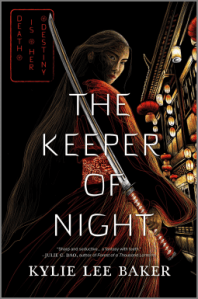







































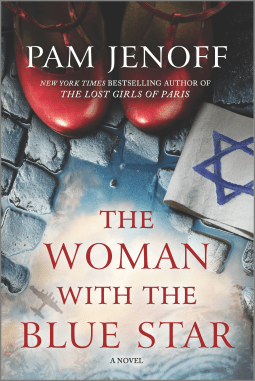








 Past Midnight Book Reviews & More